 Preview
 Send
Send Share
Share
 Details

 Download
 Similars
 X-Ray
X-Ray Diaporama
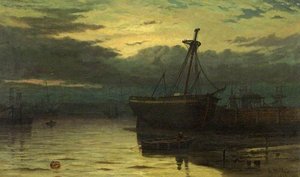
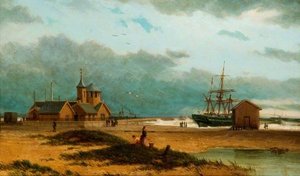
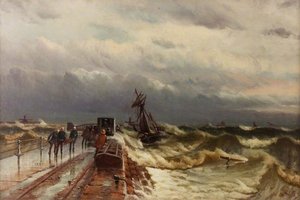
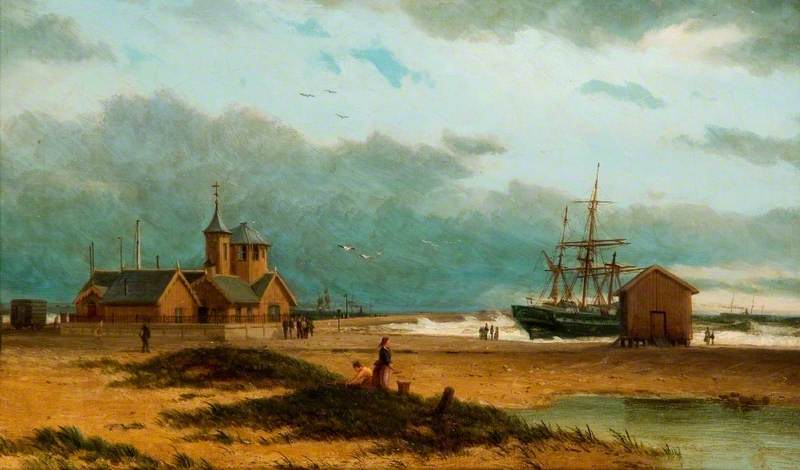
The Wreck off the South Pier
 1897
1897 31.0 x 46.0 cm
 South Shields Museum And Art Gallery
 Read More
Hand Made Oil Reproduction
Hand-painted oil on canvas in your size and frame, made to order by our artists. ( Buy Print Buy Image)




































Pick from our preset sizes that match the artwork's original proportions.

You may enter your own dimensions to fit a specific frame or space. If your selected size does not match the original image's proportions, we will either crop the artwork or extend the painting with additional hand-painted elements. A digital mockup will be sent for your approval before production begins.
Please note that the on-screen preview does not reflect the actual cropping or extension. Only the mockup will accurately show the final composition.
While custom sizes are available, we recommend selecting a dimension from the predefined list to preserve the original proportions.
After order, ArtsDot.com team will email client for instructions and provide a mockup preview
Worldwide Delivery () in 3/4 weeks instead of standard 5 weeks. (25 August). No compromise on quality.

Free Worldwide Express Shipping

High-Quality Linen Canvas

Full Shipping Insurance

Customs Tax Refund Guarantee

True Color Matching Guarantee

60-Day Return Policy (Defects Only)

100% Money-Back Guarantee

Bulk Discount Offer
 Glass option is only available in size under 110 CM

The Wreck off the South Pier
Reproduction Medium
Reproduction Size
-


Total Price
$ 263
Related Artworks









Artist Biography
The Tempestuous Soul of the North Sea
Duncan Fraser Mclea (1841–1916) remains a pivotal figure in the annals of Scottish marine art, a master whose brush captured the very heartbeat of the turbulent North Sea. Born in Edinburgh during an era defined by the sweeping emotional currents of Romanticism, Mclea’s life and work were deeply intertwined with the Victorian fascination with the sublime. His artistic journey was not merely one of technical progression but a profound exploration of the awe-inspiring power of nature. Through his eyes, the sea was never a static backdrop; it was a living, breathing entity, capable of both terrifying destruction and desolate grandeur.
The foundations of Mclea’s mastery were laid under the guidance of Robert Watson, a respected landscape painter whose influence is etched into every tonal gradation and atmospheric nuance found in Mclea's oeuvre. From Watson, he inherited a disciplined appreciation for how light interacts with mist and spray, a skill that would become essential when depicting the heavy, salt-laden air of the Scottish coastlines. As he honed his craft at the Royal Scottish Academy, Mclea moved beyond mere imitation, developing a distinctive visual language that favored gritty realism over idealized beauty. He sought to document the raw, unvarnished truth of the maritime experience, where the boundary between the sky and the churning deep is often lost in a haze of storm and spray.
A Symphony of Shadow and Salt
To encounter a Mclea seascape is to be swept into a drama of light and motion. His technique was characterized by a sophisticated duality: he employed a loose, expressive brushstroke to capture the frantic energy of crashing waves, yet balanced this with meticulous layering to achieve a remarkable textural depth and luminosity. This interplay allowed him to render the heavy weight of water and the ephemeral quality of sea foam with equal conviction. His palette was famously bold, dominated by deep, brooding blues and emerald greens that conveyed the immense pressure and cold intensity of a North Sea gale.
Mclea’s compositions were masterfully engineered to evoke a sense of overwhelming scale. Eschewing traditional, centered stability, he frequently utilized dynamic diagonals and asymmetrical arrangements. These structural choices guide the viewer’s gaze across expansive, restless vistas, often pulling the eye toward the focal point of a struggle—be it a solitary vessel battling the swell or the jagged silhouette of an exposed cliffside. His work avoids the purely decorative; instead, every stroke serves the purpose of conveying emotion, inviting the observer to confront the sublime experience of facing forces far greater than human comprehension.
Legacy of the Maritime Sublime
The historical significance of Duncan Fraser Mclea lies in his ability to bridge the gap between traditional maritime documentation and the emotional depth of Romantic expressionism. While many of his contemporaries focused on the picturesque or the tranquil, Mclea leaned into the chaos. His depictions of shipwrecks and coastal storms—such as his evocative renderings of Marsden Bay or the tragic Wreck of the Barque 'Jacob Rothenberg'—serve as haunting reminders of the precariousness of life on the edge of the ocean.
His enduring legacy is found in the way he transformed the North Sea from a mere geographic location into a psychological landscape. Through his commitment to capturing the essence of nature through meticulous observation, Mclea ensured that the roar of the waves and the salt-stained atmosphere of 19th-century Scotland would remain eternally preserved on canvas. He remains a cornerstone of Scottish marine art, a painter who did not just observe the storm, but invited us all to feel its power.
duncan fraser mclea
1841 - 1916
Quick Facts
- Artistic Movement Or Style: Marine Art
- Artists Or Movements Influenced By This Artist: ['Romanticism']
- Artists Who Influenced This Artist:
- William Turner
- Albert Bierstadt
- Date Of Birth: 1841
- Date Of Death: 1916
- Full Name: Duncan Fraser Mclea
- Nationality: Scottish
- Notable Artworks:
- The Tempest
- North Sea Coast
- Place Of Birth: Scotland