

 Preview
 Send
Send Share
Share
 Details

 Download
 Similars
 X-Ray
X-Ray Diaporama
Logic of Disappearance, A Marx Archive


 Read More
Purchase a high-resolution, enhanced digital image, far superior to the online preview.
Each file is meticulously prepared by our in-house specialists using advanced tools and expert manual retouching. We ensure every image has exceptional clarity, precise color accuracy, and fine detail.
The final file is delivered via email within 72 hours, optimized for immediate use in professional, editorial, and print environments. This is the same quality trusted by top-tier design studios, publishers, and galleries.
Digital Image
Download a high-resolution file for personal display, printing, and creative projects. ( Buy Print Buy Hand Made Painting)
Included in Every Digital Image Order
Expert Digital Delivery, Guaranteed
When you choose ArtsDot.com, you're not just getting an image - you're receiving a professionally enhanced digital artwork, crafted with precision and backed by a satisfaction guarantee. Here's everything that comes with your order, automatically:

Fast Email Delivery
Your high-resolution digital image file will be emailed to you within 72 hours of ordering - ready for immediate use.

AI-Enhanced Digital File
Your artwork is professionally optimized using advanced AI tools and manual editing, ensuring maximum detail, clarity, and color accuracy.

Free Lifetime Re-Delivery
Accidentally deleted or lost your file? No worries - we'll resend it to you anytime, free of charge.

No Import Fees - Ever
Enjoy your artwork instantly with zero customs, duties, or delivery fees - digital downloads are always tax-free.

Color Accuracy Guarantee
We ensure your digital image reflects the original colors as closely as possible using professional tools and color management.

60-Day Satisfaction Guarantee
If you're not satisfied with your digital image, we'll revise it or refund 100% within 60 days - no questions asked.

100% Money-Back Guarantee
Not satisfied? Get a full refund within 60 days of receiving your digital file - no questions asked.

Bulk Order Discounts
Buy 3 images, save 10% - Buy 5, save 15% - Buy 10+, save 20%. Great for creative projects, galleries, and agencies.
Collectible Description
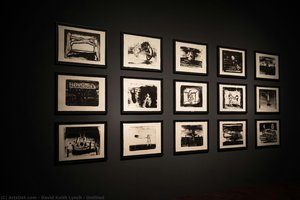
Logic of Disappearance, A Marx Archive – An Exploration of Form and History
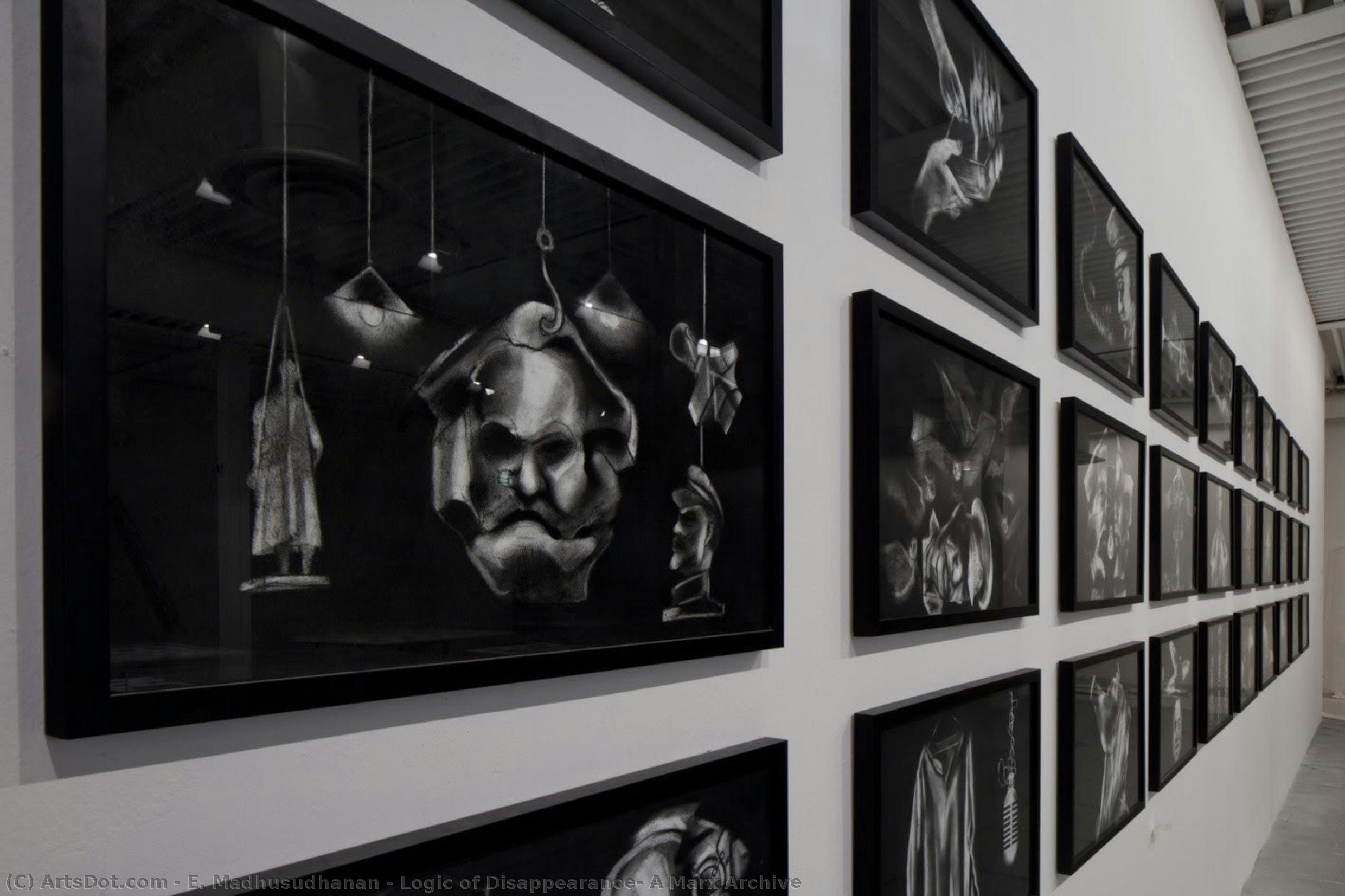
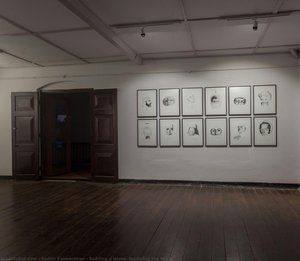
Madhusudhanan’s “Logic of Disappearance, A Marx Archive” isn't merely a collection of drawings; it’s an invitation into a contemplative dialogue between artistic expression and the weighty concerns of intellectual history. Born in Allapuzha, Kerala, India, in 1956, Madhusudhanan is a filmmaker whose profound understanding of visual storytelling informs his equally compelling approach to painting. His oeuvre consistently prioritizes drawing as its foundational element—a practice that imbues his work with an inherent stillness and meticulous observation—resulting in pieces like “Logic of Disappearance” which resonate deeply with viewers interested in both artistic nuance and conceptual depth.The Visual Language: Charcoal’s Embrace of Darkness
The drawings themselves are executed in charcoal, a medium chosen deliberately to convey a sense of solemnity and introspection. Each piece is dominated by a pervasive darkness—a sea of shadow that serves as the canvas for sharply defined figures and industrial forms. This masterful use of chiaroscuro – dramatic contrasts between light and dark – isn’t simply stylistic; it's symbolic, mirroring the anxieties surrounding societal shifts and echoing the influence of cinematic techniques on Madhusudhanan’s artistic vision. The artist employs a vintage aesthetic, reminiscent of silent film storyboards, subtly hinting at narratives untold and histories fading into memory.Figures Suspended in Time: Marx, Lenin, Stalin – Fragments of Legacy
Central to each drawing are representations of prominent historical figures—Karl Marx, Vladimir Lenin, and Joseph Stalin—presented as fragmented forms amidst the darkness. These aren’t portraits rendered with conventional realism; rather, they appear as ghostly echoes of a bygone era, simultaneously acknowledging their monumental influence and questioning their role in shaping the present. The inclusion of clocks reinforces this temporal dimension, suggesting an urgency to confront the consequences of past decisions and prompting reflection on the cyclical nature of history.A Synthesis of Cinema and Drawing: Echoes of Filmic Composition
Madhusudhanan’s filmmaking experience profoundly informs his artistic practice. As he himself describes, drawing remains fundamental to his work—a process that allows him to formulate concepts visually before translating them into film. This connection is palpable in the drawings' composition; they subtly evoke film stills or storyboards, demonstrating a deliberate consideration of visual narrative and framing. The artist’s meticulous attention to detail – evident in the rendering of both organic forms (human figures) and geometric elements (clocks)—further underscores this cinematic sensibility.Symbolism Beyond Technique: Confronting Disappearance
Ultimately, “Logic of Disappearance” transcends mere technical proficiency; it engages with profound themes of loss, oppression, and remembrance. The dark backdrop symbolizes the anxieties surrounding neoliberal forces—a critique subtly woven into the artwork’s visual language. Viewing these drawings is akin to embarking on a journey through history itself – a contemplative exploration of legacy and the enduring impact of ideological struggles. They stand as a testament to Madhusudhanan's ability to distill complex ideas into powerfully evocative images, inviting viewers to contemplate the logic of vanishing narratives and confronting the shadows of the past.Related Artworks
Artist Biography
Robert Delaunay: A Pioneer of Color and Rhythm
Robert Delaunay, born Robert-Victor-Felix Delaunay in Paris on April 12, 1885, was a pivotal figure in the early development of modern art. His life, marked by both artistic innovation and personal turmoil, profoundly shaped the trajectory of movements like Orphism and Cubism. Initially apprenticed to a theatrical designer – a surprisingly pragmatic start for an artist destined to revolutionize color theory – Delaunay’s early career laid the groundwork for his later explorations into abstraction. He was deeply influenced by Neo-Impressionism, particularly the work of Paul Gauguin and Georges Seurat, absorbing their emphasis on broken color and meticulous application. However, it wasn't long before he moved beyond mere imitation, seeking a more dynamic and expressive language.The Birth of Orphism
Delaunay’s most significant contribution to the art world is undoubtedly his creation of Orphism – a term he coined alongside his wife, Sonia Delaunay. This movement, emerging in the early 1910s, represented a radical departure from traditional representation. Rather than depicting objects realistically, Delaunay and Sonia focused on capturing the *essence* of color and its inherent rhythms. They employed vibrant, often clashing hues – reds, yellows, blues, greens – arranged in dynamic compositions that evoked feelings of movement, energy, and joy. This was not simply about aesthetics; it was a deliberate attempt to break free from the constraints of objective reality and tap into a more primal, emotional experience. Their studio, “Atelier Pop-Up,” became a hub for experimentation, attracting artists like František Kupka and Robert Duchamp (no relation), further disseminating the principles of Orphism. The influence of this period is evident in works such as *Endless Rhythm* (1913) and *The Eiffel Tower* (1914-15), both characterized by their bold color palettes and geometric forms.Cubist Roots and a Shift Towards Abstraction
While Delaunay’s association with Cubism is often acknowledged, his engagement with the movement was more nuanced than a simple adoption of its techniques. He initially encountered Cubism through his friendship with František Kupka, who had been exposed to Picasso and Braque's work in Paris. Delaunay incorporated some of Cubism’s fragmentation and multiple viewpoints into his compositions, particularly during the period between 1912 and 1914. However, he quickly moved beyond these influences, developing a distinctly personal style that prioritized color and rhythm over form. Following World War I, Delaunay's work became increasingly abstract, with a focus on circular forms, radiating lines, and layered colors. This period saw the creation of his “Disc” series (1912-13), which explored the dynamic relationships between circles and their surrounding space.Later Works and Legacy
In the 1930s, Delaunay’s style evolved further, incorporating elements of Surrealism and exploring new techniques such as collage and lithography. He experimented with large-scale panels and murals, often collaborating with his wife on monumental works that filled entire rooms with vibrant color and rhythmic patterns. During this time he also worked on designs for the Aeronautics pavilion at the 1937 Paris International Exhibition, creating a stunning visual spectacle of colored reliefs. Despite facing challenges during World War II, including the confiscation of his work by the Vichy regime, Delaunay continued to paint until his death in Montpellier on October 25, 1941. Robert Delaunay’s legacy is immense. He fundamentally altered our understanding of color and its expressive potential, paving the way for later abstract artists like Wassily Kandinsky and Paul Klee. His pioneering work in Orphism remains a vibrant testament to the power of pure color and rhythm, continuing to inspire artists and viewers alike. His influence can be seen not only in his own paintings but also in the works of subsequent generations who embraced abstraction and sought new ways to communicate through visual language. He is remembered as a true innovator, a fearless explorer of color, and a key figure in the birth of modern art.
e. madhusudhanan
1941 - 2021 , India
Quick Facts
- Artistic Movement Or Style:
- Divisionism
- Cubism
- Orphic Cubism
- Simultanism
- Artists Or Movements Influenced By This Artist:
- Klee
- Marc
- Artists Who Influenced This Artist:
- Cézanne
- Neo-Impressionism
- Date Of Birth: 1885-04-12
- Date Of Death: 1941-10-25
- Full Name: Robert Delaunay
- Nationality: French
- Notable Artworks:
- Endless Rhythm
- The Eiffel Tower
- Cityscapes
- Place Of Birth: Paris, France

