

 Preview
 Send
Send Share
Share
 Details

 Download
 Similars
 X-Ray
X-Ray Diaporama
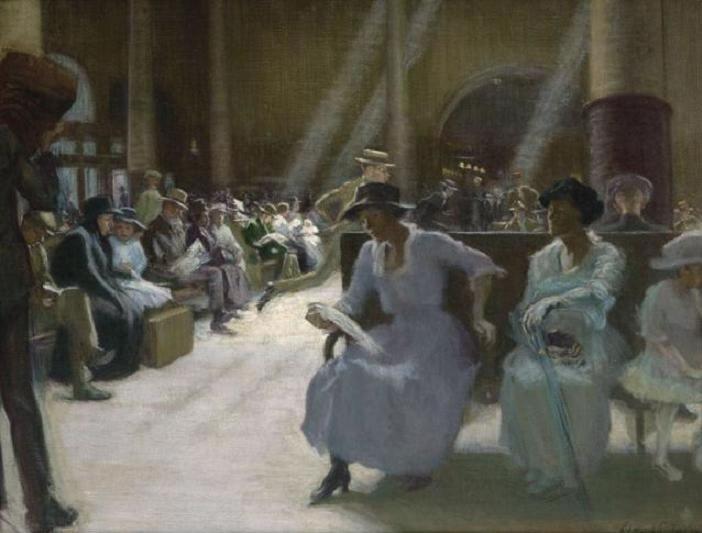
In the Station Waiting Room, Boston


 Read More
Purchase a high-resolution, enhanced digital image, far superior to the online preview.
Each file is meticulously prepared by our in-house specialists using advanced tools and expert manual retouching. We ensure every image has exceptional clarity, precise color accuracy, and fine detail.
The final file is delivered via email within 72 hours, optimized for immediate use in professional, editorial, and print environments. This is the same quality trusted by top-tier design studios, publishers, and galleries.
Digital Image
Download a high-resolution file for personal display, printing, and creative projects. ( Buy Print Buy Hand Made Painting)
Included in Every Digital Image Order
Expert Digital Delivery, Guaranteed
When you choose ArtsDot.com, you're not just getting an image - you're receiving a professionally enhanced digital artwork, crafted with precision and backed by a satisfaction guarantee. Here's everything that comes with your order, automatically:

Fast Email Delivery
Your high-resolution digital image file will be emailed to you within 72 hours of ordering - ready for immediate use.

AI-Enhanced Digital File
Your artwork is professionally optimized using advanced AI tools and manual editing, ensuring maximum detail, clarity, and color accuracy.

Free Lifetime Re-Delivery
Accidentally deleted or lost your file? No worries - we'll resend it to you anytime, free of charge.

No Import Fees - Ever
Enjoy your artwork instantly with zero customs, duties, or delivery fees - digital downloads are always tax-free.

Color Accuracy Guarantee
We ensure your digital image reflects the original colors as closely as possible using professional tools and color management.

60-Day Satisfaction Guarantee
If you're not satisfied with your digital image, we'll revise it or refund 100% within 60 days - no questions asked.

100% Money-Back Guarantee
Not satisfied? Get a full refund within 60 days of receiving your digital file - no questions asked.

Bulk Order Discounts
Buy 3 images, save 10% - Buy 5, save 15% - Buy 10+, save 20%. Great for creative projects, galleries, and agencies.
Collectible Description
A Moment Frozen in Time: Edmund Charles Tarbell’s “In the Station Waiting Room, Boston”
“In the Station Waiting Room, Boston,” painted by Edmund Charles Tarbell in 1915, isn't merely a depiction of a train station scene; it’s a masterful encapsulation of Edwardian society and a poignant exploration of human connection amidst urban bustle. Tarbell, a prominent figure within the American Impressionist movement—specifically championed as one of “Ten American Painters”—captured not just what he saw but how he felt about it, imbuing his canvas with an atmosphere of quiet contemplation that belies its busy subject matter. The painting’s monochrome palette – predominantly shades of grey and brown – immediately establishes a mood of subdued elegance. Tarbell eschewed vibrant colors characteristic of Impressionism, opting instead for tonal variations to convey the diffused light filtering through the station windows and reflecting off the polished surfaces of benches and luggage cases. This deliberate choice underscores Tarbell's commitment to portraying not visual spectacle but psychological nuance—a technique that aligns perfectly with his broader artistic vision. Notice how Tarbell skillfully uses hatching and cross-hatching to build up texture, simulating the worn wood grain of the benches and adding depth to the shadowy recesses of the room. Beyond its technical prowess, “In the Station Waiting Room” resonates deeply with viewers due to its subtle narrative elements. The figures scattered throughout the waiting room—a woman clutching a suitcase, several men seated on benches—represent individuals caught in the everyday rhythms of life, each carrying their own unspoken stories. There’s an undeniable sense of melancholy woven into the composition; perhaps reflecting the anxieties and uncertainties prevalent during the period leading up to World War I. The positioning of the figures suggests a carefully considered arrangement, inviting contemplation about human relationships and the passage of time—themes that continue to captivate audiences today. The painting's historical context is crucial to understanding its significance. Created in 1915, “In the Station Waiting Room” reflects the anxieties surrounding the impending conflict, capturing a snapshot of pre-war Boston society. Tarbell’s decision to forgo color aligns with the broader stylistic trends of the time, where artists sought to convey emotion and atmosphere through tonal harmonies rather than flamboyant visual displays. It stands as a testament to Tarbell's ability to distill complex psychological states into a single image—a feat that cemented his place among the most influential American Impressionists. Ultimately, “In the Station Waiting Room, Boston” transcends its subject matter to become an enduring symbol of human experience. Tarbell’s masterful use of light and texture, combined with his astute observation of social dynamics, creates a painting that speaks to our deepest emotions—a quiet reminder of beauty found in simplicity and connection amidst the complexities of life. Its timeless appeal ensures that Tarbell's vision continues to inspire artists and collectors alike.Related Artworks
Artist Biography
Early Life and Education
- Born: Groton, United States of America (1862)
- Died: 1938
- Edmund Charles Tarbell was born into a family with deep American roots. His father, Edmund Whitney, passed away when Tarbell was young, leaving his mother, Mary Sophia Fernald, to remarry and raise him and his sister in West Groton, Massachusetts.
- His early artistic training began at the Massachusetts Normal Art School.
- He further honed his skills through an apprenticeship at Forbes Lithographic Company in Boston.
- From 1879 to 1880, he studied under Otto Grundmann at the School of the Museum of Fine Arts in Boston, a pivotal period shaping his artistic foundation.
Artistic Career and Style
- Tarbell's career encompassed illustration, private art instruction, and portrait painting. He married Emeline Souther in 1888, who also studied art.
- His style is characterized as American Impressionism, reflecting a focus on capturing fleeting moments of light and atmosphere.
- He was known for his luminous portraits, intimate domestic scenes, and depictions of Colonial Revival interiors.
- Notable works include Self Portrait, Benjamin Rush, and After the Ball.
- In the Orchard (1891) is considered a defining work, showcasing his ability to portray everyday life with sensitivity and skill.
Membership in "Ten American Painters" and Guild of Boston Artists
- Tarbell was a founding member of the influential group known as “Ten American Painters,” formed in 1897. This collective aimed to promote American art and provide an alternative exhibition venue to established institutions.
- The group included prominent artists like John H. White, Joseph Penway Dodge, and others who shared a commitment to portraying contemporary life with realism and Impressionistic techniques.
- In 1914, he co-founded the Guild of Boston Artists and served as its first president until 1924, further demonstrating his dedication to supporting fellow artists and fostering an artistic community.
Major Achievements and Legacy
- Tarbell's works are held in prestigious collections including the Smithsonian American Art Museum, the Corcoran Gallery of Art, the National Academy of Design, and even the White House.
- His ability to capture the essence of domestic life and portray individuals with warmth and authenticity earned him widespread recognition during his lifetime.
- He is remembered as a significant figure in American Impressionism, contributing to the development of a distinctly American artistic voice.
- Tarbell's influence can be seen in subsequent generations of artists who embraced his focus on everyday subjects and his commitment to portraying life with honesty and sensitivity.
Historical Significance
- As a member of "Ten American Painters," Tarbell played a crucial role in challenging the dominance of European artistic styles and promoting a uniquely American aesthetic.
- His work reflects the changing social landscape of late 19th and early 20th century America, capturing the values and aspirations of a burgeoning middle class.
- Tarbell's legacy extends beyond his individual paintings; he helped to establish Boston as a center for artistic innovation and contributed to the growth of American art on a national stage.
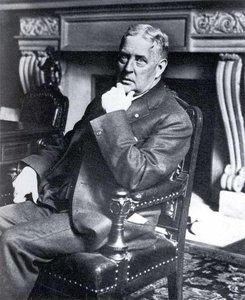
Edmund Charles Tarbell
1862 - 1938 , United States of America
Quick Facts
- Artistic Movement Or Style: American Impressionism
- Date Of Birth: April 26, 1862
- Date Of Death: 1938
- Full Name: Edmund Charles Tarbell
- Nationality: American
- Notable Artworks:
- In the Orchard
- In a Garden
- Girl with Sailboat
- Mercie Cutting Flowers
- Place Of Birth: West Groton, USA

