 Preview
 Send
Send Share
Share
 Details

 Download
 Similars
 X-Ray
X-Ray Diaporama
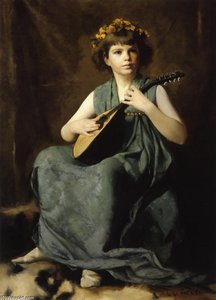
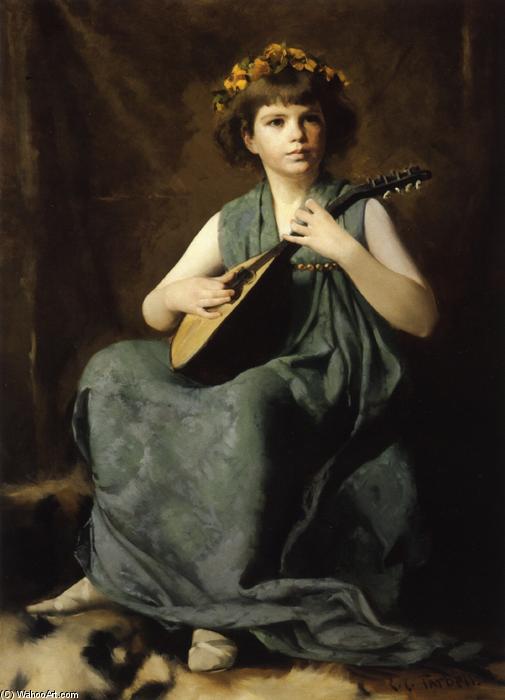
Marion Hiller Fenno at Nine as Mandolinata


 Read More
Hand Made Oil Reproduction
Hand-painted oil on canvas in your size and frame, made to order by our artists. ( Buy Print Buy Image)




P118B $10

P118H $10

P118W $10

P438Z $10

P508JH $12

P508YH $12

P805H $10

P805Z $10

P919BZ $10

P919G $10

P919XJ $10

P959ZH $10

P968JZ $12

W106C $8

W218G $10

W218JH $8

W218Y $10

W307PJ $10

W316G $10

W316PJ $8

W316Y $10

W398PJ $8

W4111J $10

W500HY $15

W500JH $15

W692G $12

W849H $8

W940BG $15

W953PJ $8




Pick from our preset sizes that match the artwork's original proportions.

You may enter your own dimensions to fit a specific frame or space. If your selected size does not match the original image's proportions, we will either crop the artwork or extend the painting with additional hand-painted elements. A digital mockup will be sent for your approval before production begins.
Please note that the on-screen preview does not reflect the actual cropping or extension. Only the mockup will accurately show the final composition.
While custom sizes are available, we recommend selecting a dimension from the predefined list to preserve the original proportions.
After order, ArtsDot.com team will email client for instructions and provide a mockup preview
Worldwide Delivery () in 3/4 weeks instead of standard 5 weeks. (16 August). No compromise on quality.

Free Worldwide Express Shipping

High-Quality Linen Canvas

Full Shipping Insurance

Customs Tax Refund Guarantee

True Color Matching Guarantee

60-Day Return Policy (Defects Only)

100% Money-Back Guarantee

Bulk Discount Offer
 Glass option is only available in size under 110 CM

Marion Hiller Fenno at Nine as Mandolinata
Reproduction Medium
Reproduction Size
-


Total Price
$ 263
Artwork Description
A Moment Suspended in Blue Hues
The vision presented by Marion Hiller Fenno at Nine as Mandolinata is more than a mere portrait; it is an exquisite capture of youthful grace and artistic contemplation. The subject, seated gently upon the ground, draws the viewer into an intimate space where time seems to slow its hurried passage. Dressed in a flowing gown of serene blue, she embodies a tranquility that speaks directly to the soul. Her posture, combined with the delicate placement of a single flower nestled within her hair, suggests a harmony between nature's quiet beauty and human artistry. The entire composition breathes an atmosphere of profound calm, inviting us to pause our modern rush and simply observe.
The Artistry of Tarbell’s Touch
Painted by Edmund Charles Tarbell in 1887, this work stands as a beautiful testament to the height of American Impressionism. Tarbell's technique is masterful; one can almost feel the soft brushstrokes that lend such luminosity to the scene. His ability to capture fleeting moments of light and atmosphere is palpable here. The background elements—the simple wall adorned with a vase—are rendered not as mere backdrop, but as integral parts of the mood, grounding the ethereal quality of the figure without ever distracting from her gentle presence. It is in these subtle gradations of color and shadow that Tarbell’s genius truly shines.
Symbolism of Music and Maidenhood
The mandolin itself serves as a potent symbol within the painting's narrative. It represents creativity, melody, and the expressive power of art—a silent invitation for the viewer to listen to the music that might soon fill the air. Coupled with the flower in her hair, which traditionally symbolizes ephemeral beauty or burgeoning life, the portrait speaks eloquently of maidenhood at a point of blossoming artistic self-discovery. The blue dress often carries connotations of serenity and depth, reinforcing the overall sense of peaceful introspection surrounding the young woman.
Bringing Salon Elegance Home
For the discerning collector or interior designer, this piece offers an unparalleled opportunity to infuse a space with historical romance and refined artistry. Reproducing such a work allows one to curate an environment that feels both timelessly elegant and deeply personal. Imagine this scene gracing a drawing-room wall; it becomes an immediate focal point, whispering tales of late 19th-century salon culture and artistic refinement. Owning or displaying a reproduction of Marion Hiller Fenno at Nine as Mandolinata is not just acquiring art; it is curating an emotional sanctuary.
Related Artworks

Artist Biography
Early Life and Education
- Born: Groton, United States of America (1862)
- Died: 1938
- Edmund Charles Tarbell was born into a family with deep American roots. His father, Edmund Whitney, passed away when Tarbell was young, leaving his mother, Mary Sophia Fernald, to remarry and raise him and his sister in West Groton, Massachusetts.
- His early artistic training began at the Massachusetts Normal Art School.
- He further honed his skills through an apprenticeship at Forbes Lithographic Company in Boston.
- From 1879 to 1880, he studied under Otto Grundmann at the School of the Museum of Fine Arts in Boston, a pivotal period shaping his artistic foundation.
Artistic Career and Style
- Tarbell's career encompassed illustration, private art instruction, and portrait painting. He married Emeline Souther in 1888, who also studied art.
- His style is characterized as American Impressionism, reflecting a focus on capturing fleeting moments of light and atmosphere.
- He was known for his luminous portraits, intimate domestic scenes, and depictions of Colonial Revival interiors.
- Notable works include Self Portrait, Benjamin Rush, and After the Ball.
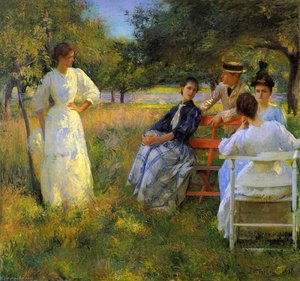
- In the Orchard (1891) is considered a defining work, showcasing his ability to portray everyday life with sensitivity and skill.
Membership in "Ten American Painters" and Guild of Boston Artists
- Tarbell was a founding member of the influential group known as “Ten American Painters,” formed in 1897. This collective aimed to promote American art and provide an alternative exhibition venue to established institutions.
- The group included prominent artists like John H. White, Joseph Penway Dodge, and others who shared a commitment to portraying contemporary life with realism and Impressionistic techniques.
- In 1914, he co-founded the Guild of Boston Artists and served as its first president until 1924, further demonstrating his dedication to supporting fellow artists and fostering an artistic community.
Major Achievements and Legacy
- Tarbell's works are held in prestigious collections including the Smithsonian American Art Museum, the Corcoran Gallery of Art, the National Academy of Design, and even the White House.
- His ability to capture the essence of domestic life and portray individuals with warmth and authenticity earned him widespread recognition during his lifetime.
- He is remembered as a significant figure in American Impressionism, contributing to the development of a distinctly American artistic voice.
- Tarbell's influence can be seen in subsequent generations of artists who embraced his focus on everyday subjects and his commitment to portraying life with honesty and sensitivity.
Historical Significance
- As a member of "Ten American Painters," Tarbell played a crucial role in challenging the dominance of European artistic styles and promoting a uniquely American aesthetic.
- His work reflects the changing social landscape of late 19th and early 20th century America, capturing the values and aspirations of a burgeoning middle class.
- Tarbell's legacy extends beyond his individual paintings; he helped to establish Boston as a center for artistic innovation and contributed to the growth of American art on a national stage.
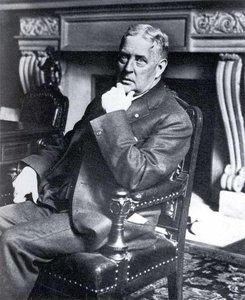
Edmund Charles Tarbell
1862 - 1938 , United States of America
Quick Facts
- Artistic Movement Or Style: American Impressionism
- Date Of Birth: April 26, 1862
- Date Of Death: 1938
- Full Name: Edmund Charles Tarbell
- Nationality: American
- Notable Artworks:
- In the Orchard
- In a Garden
- Girl with Sailboat
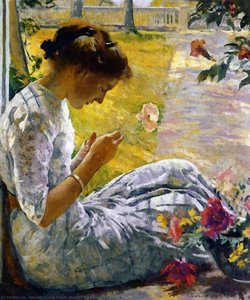
- Mercie Cutting Flowers
- Place Of Birth: West Groton, USA
Related Articles
Slate Blue Masterpieces: 10 Iconic Paintings & Timeless Home Decor Ideas
Immerse yourself in the captivating world of slate blue! Explore 10 iconic paintings by Monet, Van Gogh & Renoir. Discover their stories, techniques & find museum-quality art reproductions for your home at .

Serene Blue Backgrounds: Discover Soulful Art to Transform Your Space with Timeless Elegance
Transform your home with soulful blue art. From serene Monet impressions to modern textured sculptures, discover curated masterpieces designed to inspire calm. Explore expert art consultations and bespoke hand-painted reproductions to create your personal sanctuary.
Edmund Charles Tarbell: Illuminating American Life Through Intimate Realism
Explore the captivating world of Edmund Charles Tarbell, a leading American Impressionist. Discover his luminous portraits, mastery of light, and lasting influence on the Boston School. Learn about his life, art, and legacy at ArtsDot.
Frederick Childe Hassam: American Impressionism's Chronicler of Light & Modern Life
Explore the captivating world of Frederick Childe Hassam, a pioneer of American Impressionism. Discover his iconic paintings capturing light, urban life & coastal beauty. Learn about his legacy and influence on American art history.

Capturing a Nation's Light: Exploring the American Impressionist Movement
Explore the captivating world of American Impressionism! Discover key artists, techniques & its lasting impact on art history. Find museum-quality reproductions and expert guidance at ArtsDot.