 Preview
 Send
Send Share
Share
 Details

 Download
 Similars
 X-Ray
X-Ray Diaporama
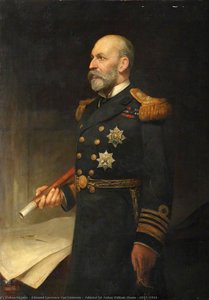
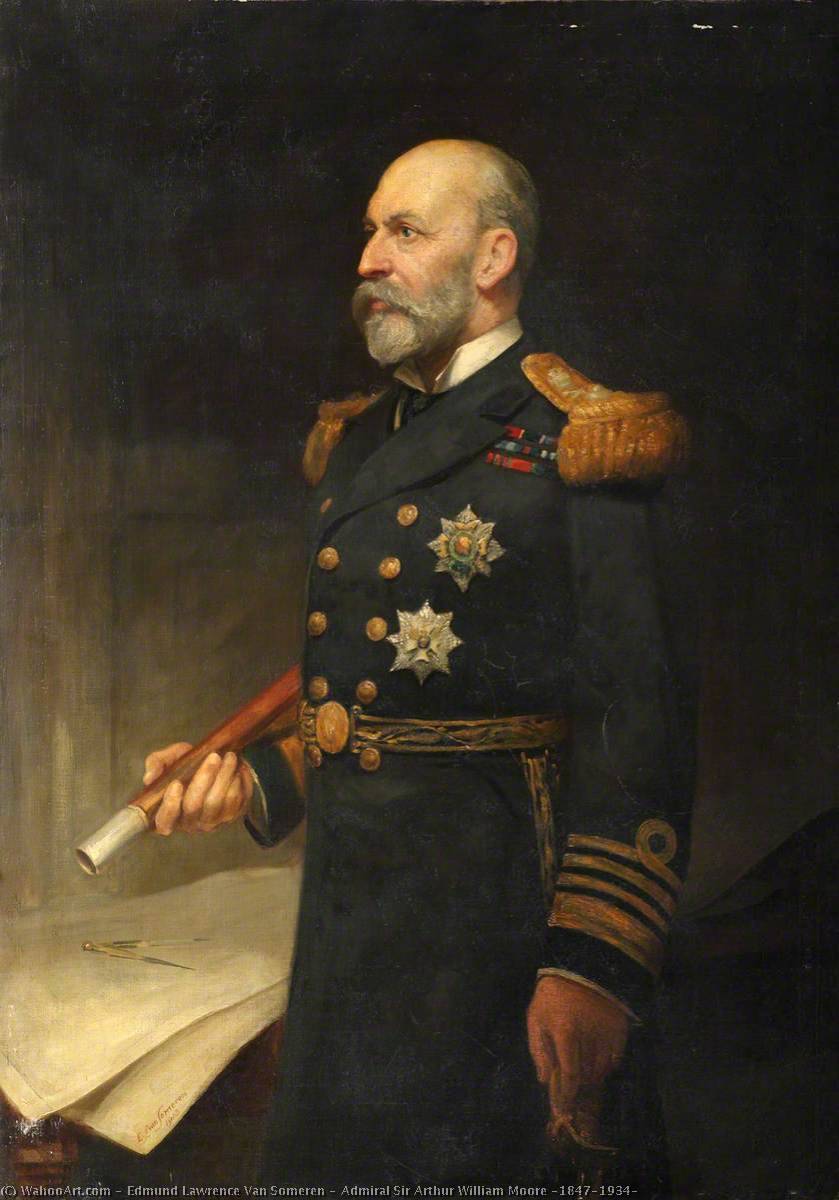
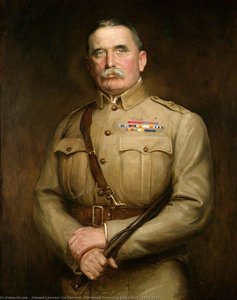
Admiral Sir Arthur William Moore (1847–1934)
 Contemporary Realism
 1913
1913 135.0 x 97.0 cm
 Read More
Hand Made Oil Reproduction
Hand-painted oil on canvas in your size and frame, made to order by our artists. ( Buy Print Buy Image)




































Pick from our preset sizes that match the artwork's original proportions.

You may enter your own dimensions to fit a specific frame or space. If your selected size does not match the original image's proportions, we will either crop the artwork or extend the painting with additional hand-painted elements. A digital mockup will be sent for your approval before production begins.
Please note that the on-screen preview does not reflect the actual cropping or extension. Only the mockup will accurately show the final composition.
While custom sizes are available, we recommend selecting a dimension from the predefined list to preserve the original proportions.
After order, ArtsDot.com team will email client for instructions and provide a mockup preview
Worldwide Delivery () in 3/4 weeks instead of standard 5 weeks. (29 August). No compromise on quality.

Free Worldwide Express Shipping

High-Quality Linen Canvas

Full Shipping Insurance

Customs Tax Refund Guarantee

True Color Matching Guarantee

60-Day Return Policy (Defects Only)

100% Money-Back Guarantee

Bulk Discount Offer
 Glass option is only available in size under 110 CM

Admiral Sir Arthur William Moore (1847–1934)
Reproduction Medium
Reproduction Size
-


Total Price
$ 263
Related Artworks
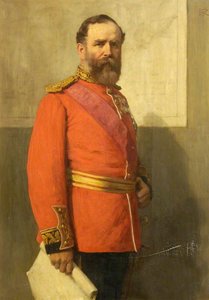
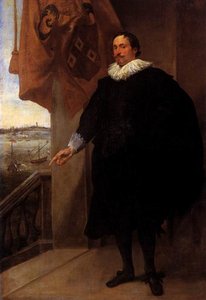
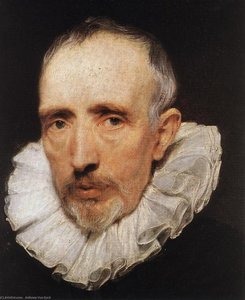
Artist Biography
A Life Forged in Service and Spirit
The story of Edmund Lawrence Van Someren is one of profound contrasts, a life shaped by the disciplined rigors of military service and the delicate nuances of fine art. Born on July 4th, 1875, in the vibrant landscape of Bangalore, India, his origins were rooted in the colonial era, the son of Colonel Gotlieb James Van Someren of the Madras Infantry and Sarah Marsden. This early connection to a world of duty and global movement would later manifest in an artistic eye capable of capturing both the vastness of nature and the intimate depths of human character. His formative years took him from the prestigious Linton House School in Worthing to the rigorous academic environment of the Dresden Academy in Germany, providing him with a diverse European foundation that would define his classical sensibilities.
In 1895, Van Someren arrived at the Royal Academy Schools in London, a pivotal moment that signaled his ascent within the British art establishment. His talent was recognized almost immediately through prestigious accolades, including two Silver Medals and the esteemed Landseer Scholarship. These honors were not merely academic triumphs but precursors to a career defined by technical mastery and an unwavering commitment to the traditions of oil painting.
The Crucible of War and the Evolution of Vision
The trajectory of Van Someren’s life was irrevocly altered by the shadows of the First World War. Enlisting with the Lancashire Fusiliers, he faced the harrowing realities of the Western Front. While such experiences often fracture the creative spirit, for Van Someren, the conflict served as a profound, albeit somber, period of observation. The visceral landscapes of war and the raw, unfiltered emotions of those caught in its wake deepened his psychological palette. He emerged from the trenches not just as a survivor, but as an artist with a heightened sensitivity to the human condition—a quality that would breathe life into his later portraits and landscapes.
Following the cessation of hostilities, he sought to rebuild his world through the brush. Establishing a studio in Chelsea and marrying Hildegarde Mary Fullerton in 1912, he entered a period of significant professional growth. His membership in the Royal Institute of Oil Painters, achieved in 1912, placed him among the elite practitioners of his era. His work began to circulate widely through the most venerable institutions of the British art scene, including:
- The Walker Art Gallery
- The New English Art Club
- The Royal Society of Portrait Painters
- The Royal Scottish Academy
A Legacy Captured in Light and Landscape
As his career progressed, Van Someren’s focus drifted toward the serene beauty of the English countryside, particularly after his relocation to Suffolk in 1927. This period allowed him to commune with the light and textures of the landscape, producing a body of work that spanned from 1908 until his passing in 1963. His paintings are characterized by an evocative ability to capture the grandeur of nature—the shifting morning light over Battersea Bridge or the quiet dignity of a portrait subject. With over fifty significant paintings to his name, his output remains a testament to a life lived between the boundaries of duty and devotion.
Though often categorized within the broader tradition of British masters, Van Someren’s unique heritage and wartime perspective lend his work a singular emotional resonance. He did not merely paint scenes; he captured the enduring spirit of the subjects and landscapes he encountered. Today, his legacy persists as a vital link to a transformative era in art history, reminding us that the most profound beauty is often found by those who have looked deeply into the heart of life's greatest struggles.
Quick Facts
- Artistic Movement Or Style: Romanticism
- Artists Or Movements Influenced By This Artist: ['Thomas George Webster']
- Artists Who Influenced This Artist:
- Thomas Barker
- Brian Hatton
- Date Of Birth: 4 July 1875
- Full Name: Edmund Lawrence Van Someren
- Nationality: British
- Notable Artworks:
- The Pilgrim
- Come In!
- Portrait. Miss Elsie Murray
- Place Of Birth: Bangalore, India
Related Articles
Sir Joshua Reynolds' Masterpieces: 25 Portraits of Power & Refinement | ArtsDot
Explore 25 captivating portraits by Sir Joshua Reynolds, a master of British art. Discover stories behind his iconic paintings, elegant style & historical influence. Find museum-quality reproductions and elevate your home decor on ArtsDot.com.
Sir Alfred Munnings' Masterpieces: 25 Paintings That Define Equine Art | ArtsDot
Explore 25 iconic Sir Alfred Munnings paintings! Discover the beauty of British Impressionism, equine art & rural England. Find museum-quality reproductions and elevate your home decor with ArtsDot. Explore the full collection online.

Rembrandt's Masterpieces: Explore 25 Iconic Paintings & Prints | ArtsDot
Journey through Rembrandt van Rijn's 25 most iconic paintings & etchings. Explore Dutch Golden Age masterpieces, dramatic chiaroscuro, and timeless portraits. Find museum-quality art reproductions to elevate your home decor on ArtsDot.com.
Early Netherlandish Masters: 10 Paintings That Revolutionized Art & Decor
Journey into the world of Early Netherlandish painting! Explore 10 masterpieces by Jan van Eyck, Rogier van der Weyden & more. Discover stunning detail, symbolism & Renaissance art for your home decor. Find museum-quality reproductions on ArtsDot.com

Oil on Canvas: A Historical & Technical Exploration of a Timeless Artistic Medium
Explore the rich history & enduring techniques of oil painting on canvas. Discover the science behind its longevity, conservation practices, and contemporary relevance. Expert insights for art enthusiasts.