 Preview
 Send
Send Share
Share
 Details

 Download
 Similars
 X-Ray
X-Ray Diaporama
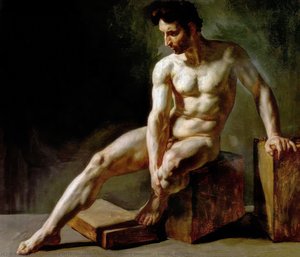
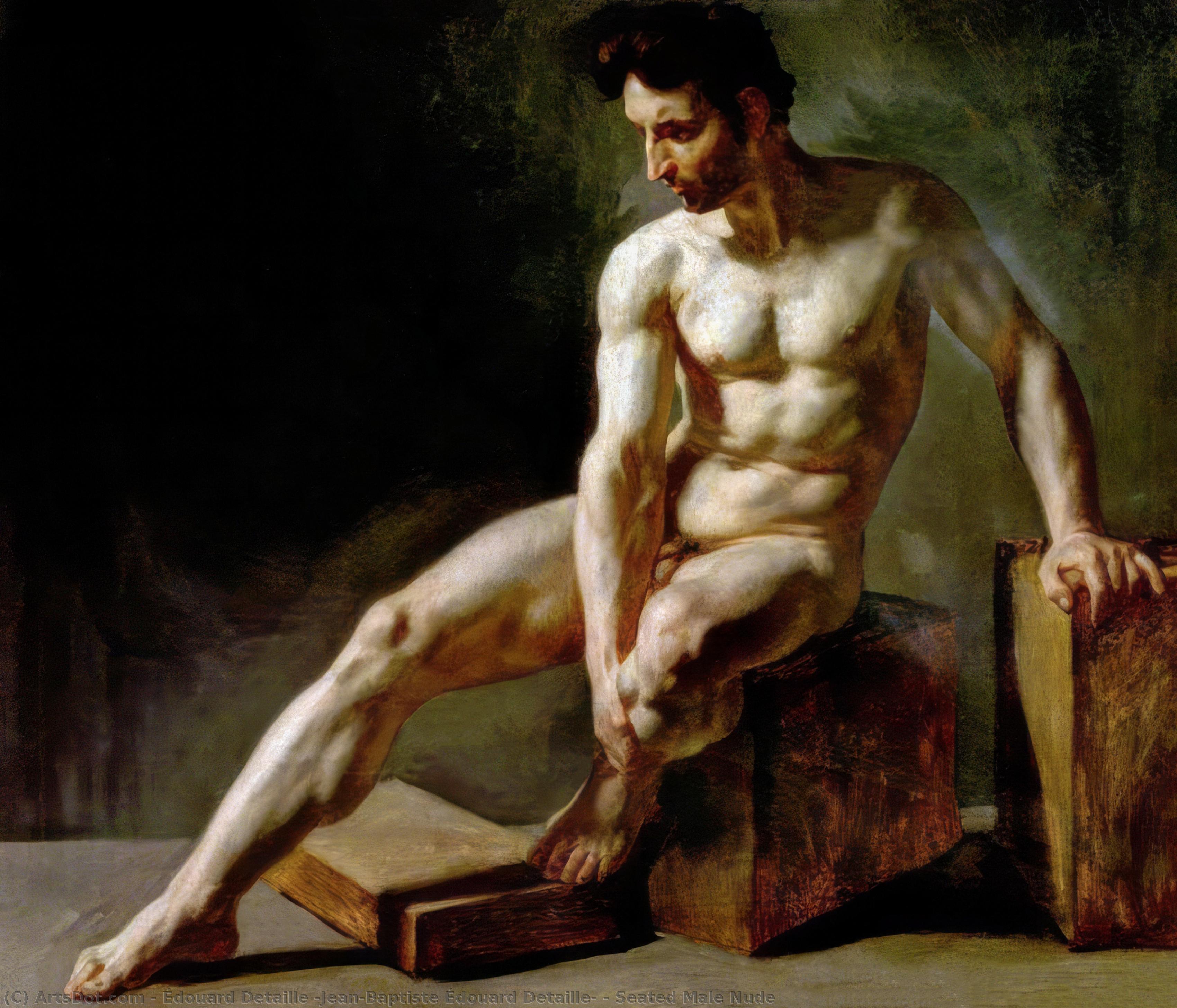
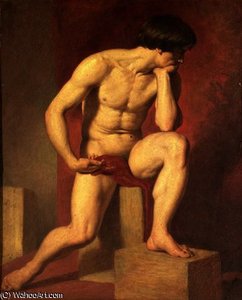
Seated Male Nude
 Read More
Hand Made Oil Reproduction
Hand-painted oil on canvas in your size and frame, made to order by our artists. ( Buy Print Buy Image)




































Pick from our preset sizes that match the artwork's original proportions.

You may enter your own dimensions to fit a specific frame or space. If your selected size does not match the original image's proportions, we will either crop the artwork or extend the painting with additional hand-painted elements. A digital mockup will be sent for your approval before production begins.
Please note that the on-screen preview does not reflect the actual cropping or extension. Only the mockup will accurately show the final composition.
While custom sizes are available, we recommend selecting a dimension from the predefined list to preserve the original proportions.
After order, ArtsDot.com team will email client for instructions and provide a mockup preview
Worldwide Delivery () in 3/4 weeks instead of standard 5 weeks. (16 August). No compromise on quality.

Free Worldwide Express Shipping

High-Quality Linen Canvas

Full Shipping Insurance

Customs Tax Refund Guarantee

True Color Matching Guarantee

60-Day Return Policy (Defects Only)

100% Money-Back Guarantee

Bulk Discount Offer
 Glass option is only available in size under 110 CM

Seated Male Nude
Reproduction Medium
Reproduction Size
-


Total Price
$ 263
Related Artworks
Artist Biography
Gustave Caillebotte: A Parisian Observer of Modern Life
Gustave Caillebotte, born in Paris in 1848 and tragically passing away in 1894, remains a pivotal figure in the transition from Realism to Impressionism within French art. Often overshadowed by his more flamboyant contemporaries like Monet or Renoir, Caillebotte’s unique perspective—a meticulous observation of everyday Parisian life filtered through a distinctly modern sensibility—offers a compelling window into the burgeoning urban landscape of late 19th-century France. Unlike many artists of his era who sought grand historical or mythological subjects, Caillebotte focused on the ordinary: bustling streets, intimate interiors, and the quiet moments of domesticity. His work isn’t characterized by dramatic brushstrokes or vibrant palettes; instead, it's defined by a remarkable precision in detail, a subtle use of light and shadow, and an almost photographic realism that captures the essence of his subjects with startling accuracy.
Caillebotte’s early life was marked by privilege. He came from a wealthy family—his father was a successful stockbroker—which afforded him access to art education and a comfortable lifestyle. However, this stability also fostered a certain detachment from the struggles of ordinary Parisians. This distance is evident in his paintings, which often depict scenes of leisure and social gatherings, reflecting the upper-class world he inhabited. Despite this background, Caillebotte was deeply influenced by the Impressionist movement, particularly by artists like Monet and Pissarro. He initially experimented with plein air painting, attempting to capture the fleeting effects of light and atmosphere, but soon developed his own distinct style—one that prioritized observation and meticulous rendering over spontaneous expression.
- Key Early Works: His early works, such as Paris Street; Rainy Day (1877), are perhaps his most famous. This painting exemplifies his approach – a detailed depiction of a busy Parisian street scene, rendered with remarkable precision and an almost clinical detachment. The figures in the painting seem to exist within a slightly surreal space, their faces obscured by hats and umbrellas, creating a sense of anonymity and urban alienation.
- The Influence of Photography: Caillebotte’s work was profoundly influenced by the rise of photography. He studied photographs intently, analyzing their composition, lighting, and perspective. This influence is evident in his paintings' sharp focus, accurate depiction of detail, and often asymmetrical arrangements—techniques borrowed from the photographic medium.
- A Quiet Revolutionary: While not as overtly expressive as some Impressionists, Caillebotte’s work quietly challenged the conventions of academic art. He rejected the idealized representations favored by the Salon and instead offered a more realistic and nuanced portrayal of modern life.
The Symbolist Echoes in Caillebotte's Vision
Although often categorized as an Impressionist, Caillebotte’s work increasingly reveals affinities with the emerging Symbolist movement. This shift is particularly noticeable in his later paintings, where he begins to explore themes of memory, loss, and psychological states. The meticulous detail that characterized his earlier work becomes less about objective representation and more about conveying a sense of inner experience. His use of muted colors and subtle tonal variations creates an atmosphere of melancholy and introspection—a far cry from the bright optimism of many Impressionist paintings.
The influence of Symbolism is evident in works like L’Assomoir (1877), a painting depicting a group of men gathered on a dockside. The figures are rendered with a remarkable degree of realism, but their faces are largely obscured, and the overall mood is one of quiet contemplation and unspoken longing. The painting's composition—a carefully constructed arrangement of lines and shapes—creates a sense of unease and ambiguity, inviting viewers to interpret the scene in their own way. Caillebotte’s exploration of psychological themes anticipates many of the concerns that would later define Symbolist art.
Furthermore, his interest in capturing fleeting moments of emotion and atmosphere aligns with the Symbolists' desire to express subjective experience rather than objective reality. He wasn’t interested in simply *seeing* a scene; he was trying to *feel* it—to capture its essence and convey it to the viewer through subtle nuances of color, light, and composition.
Technique and Innovation
Caillebotte's artistic technique is characterized by a remarkable attention to detail and a mastery of perspective. He employed a rigorous method of measuring and sketching before applying paint to his canvases, ensuring that every element in the painting was precisely positioned and accurately rendered. This meticulous approach is evident in his paintings’ sharp focus, realistic lighting, and convincing sense of depth.
- The Use of Foreshortening: Caillebotte was particularly adept at using foreshortening—the technique of depicting objects as they appear to diminish in size when viewed from an oblique angle. This skill is demonstrated in his painting La Classe de dessin (1876-77), which depicts a drawing class in Paris. The figures are arranged in a complex spatial configuration, and Caillebotte’s skillful use of perspective creates a sense of realism and immediacy.
- Multiple Studies: He was known for creating numerous preparatory sketches and studies before committing his ideas to canvas. These preliminary drawings reveal the painstaking process by which he developed his compositions—a testament to his dedication to precision and accuracy.
- Limited Palette: Caillebotte often employed a limited palette of muted colors, favoring browns, grays, and blues. This restrained approach allowed him to create subtle tonal variations and atmospheric effects without resorting to bright, saturated hues.
Legacy and Historical Significance
Despite his relatively short career, Gustave Caillebotte left a significant mark on the development of modern art. His meticulous observation, innovative technique, and quiet exploration of urban life paved the way for later artists who sought to capture the complexities of the modern world. While he may not be as widely celebrated as some of his Impressionist contemporaries, Caillebotte’s work deserves recognition as a crucial link between Realism and Modernism—a testament to the power of observation and the enduring appeal of everyday life.
Caillebotte's influence can be seen in the works of later artists such as Edgar Degas and George Seurat, who both admired his technical skill and his ability to capture the essence of modern Parisian society. His legacy continues to inspire artists today who seek to explore the relationship between art and reality—to find beauty and meaning in the ordinary moments of human experience.
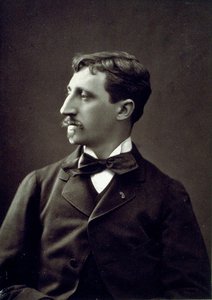
édouard detaille (jean-baptiste édouard detaille)
1848 - 1912 , France
Quick Facts
- Artistic Movement Or Style:
- Post-Impressionism
- Symbolism
- Synthetism
- Artists Or Movements Influenced By This Artist:
- Nabis
- Fauvism
- Artists Who Influenced This Artist:
- Cézanne
- van Gogh
- Date Of Birth: June 7, 1848
- Date Of Death: May 8, 1903
- Full Name: Paul Gauguin
- Nationality: French
- Notable Artworks:
- Vision of the Sermon
- Where Do We Come From?
- Iahona and Teha
- Place Of Birth: Paris, France