 Preview
 Send
Send Share
Share
 Details

 Download
 Similars
 X-Ray
X-Ray Diaporama
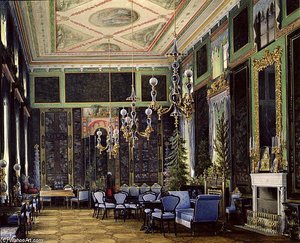
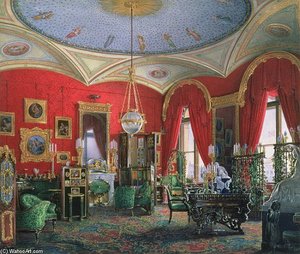
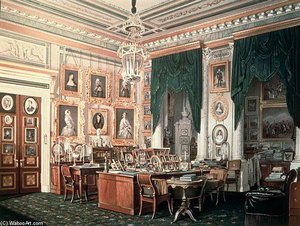
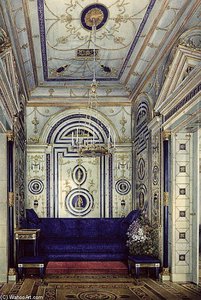
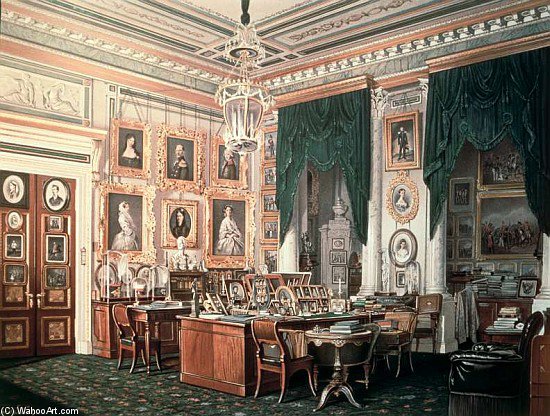
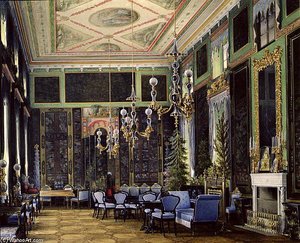
The Study Of Alexander Iii
 Read More
Hand Made Oil Reproduction
Hand-painted oil on canvas in your size and frame, made to order by our artists. ( Buy Print Buy Image)




































Pick from our preset sizes that match the artwork's original proportions.

You may enter your own dimensions to fit a specific frame or space. If your selected size does not match the original image's proportions, we will either crop the artwork or extend the painting with additional hand-painted elements. A digital mockup will be sent for your approval before production begins.
Please note that the on-screen preview does not reflect the actual cropping or extension. Only the mockup will accurately show the final composition.
While custom sizes are available, we recommend selecting a dimension from the predefined list to preserve the original proportions.
After order, ArtsDot.com team will email client for instructions and provide a mockup preview
Worldwide Delivery () in 3/4 weeks instead of standard 5 weeks. (22 August). No compromise on quality.

Free Worldwide Express Shipping

High-Quality Linen Canvas

Full Shipping Insurance

Customs Tax Refund Guarantee

True Color Matching Guarantee

60-Day Return Policy (Defects Only)

100% Money-Back Guarantee

Bulk Discount Offer
 Glass option is only available in size under 110 CM

The Study Of Alexander Iii
Reproduction Medium
Reproduction Size
-


Total Price
$ 263
Related Artworks
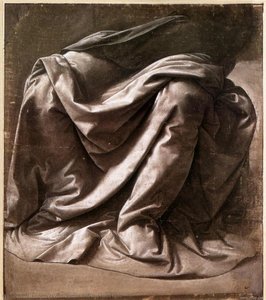
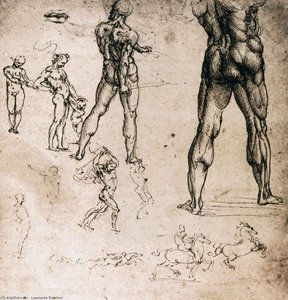
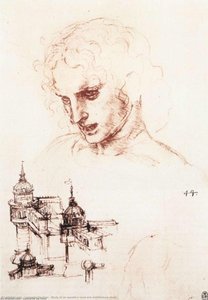
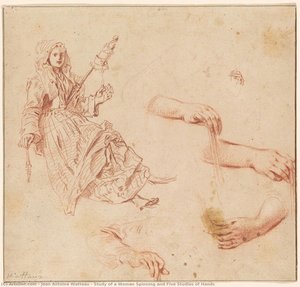
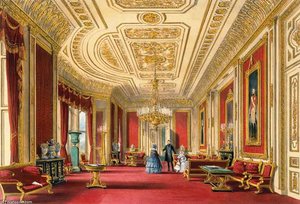
Artist Biography
The Architect of Imperial Splendor: The Life and Legacy of Eduard Hau
In the grand, gilded corridors of the nineteenth-century Russian Empire, few artists possessed the ability to freeze the ephemeral majesty of imperial life as effectively as Eduard Hau. A Baltic German painter whose brush acted as a window into the most secluded and opulent chambers of power, Hau did more than merely record architecture; he captured the very soul of an era defined by breathtaking grandeur. Born in 1807 in Tallinn—then known as Reval within the Russian Empire—Hau was a child of the vibrant German community of Estonia. His artistic lineage was deeply rooted in tradition, being the son of the respected painter Johannes Hau, who had brought his northern German sensibilities to the Baltic shores decades earlier. This early immersion in a world of meticulous craftsmanship and classical aesthetics laid the foundation for a career that would eventually decorate the most prestigious halls of Saint Petersburg.
Hau’s formal evolution was shaped by the rigorous academic standards of the Dresden Academy of Fine Arts, where he studied between 1830 and 1832. It was here that he mastered the delicate balance of disegno and light, honing a technical proficiency that would become his hallmark. This period of intense training instilled in him a reverence for architectural precision and the subtle interplay of shadow across vast, ornate spaces. Following his studies, Hau’s journey took him to Tartu, or Dorpat, where he served as a professor at the University. In this intellectual hub, his talent expanded beyond the structural to the human; he became a sought-after portraitist, capturing the likenesses of luminaries such as Nikolay Pirogov and Friedrich Georg Wilhelm Struve. These portraits were not merely anatomical studies but psychological explorations, rendered with a grace that reflected his deep understanding of character.
A Master of the Interior Portrait
The true zenith of Hau’s career, however, was reached when his gaze turned toward the imperial residences of Saint Petersburg and its environs. He became the preeminent chronicler of the Russian court's architectural splendor, securing prestigious commissions to document the interiors of the Winter Palace, Peterhof, and the Gatchina Palace. His work during this period is characterized by what many critics have described as a "jeweler-like precision." Whether working in oil or watercolor, Hau possessed an uncanny ability to render the smallest details—the shimmer of silk drapery, the cold glint of marble, and the intricate gold leaf of Baroque and Rococo moldings—with such startling realism that the viewer feels transported into the room itself.
His repertoire of significant works serves as a historical map of imperial luxury. Some of his most celebrated achievements include:
- The Main Staircase in the Hermitage (1853), a breathtaking study of scale and light.
- Perspective View of the Hall of the Russian School, showcasing his mastery of deep architectural perspective.
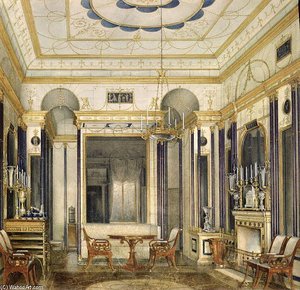
- The Blue Study in the Grand Palais in Tsarkoye Selo, where color and atmosphere converge to create a sense of serene majesty.
- The Drawing Room of the Empress Maria Alexandrovna, an exquisite testament to his ability to capture the intimate elegance of royal living quarters.
Beyond the walls of the palaces, Hau’s reach extended to Moscow, where he documented the Grand Kremlin Palace and the Nicholas Palace. His ability to navigate the complex textures of different architectural styles—from the heavy grandeur of classical halls to the delicate flourishes of Rococo salons—ensured his place as a vital documentarian of the era's aesthetic diversity.
Historical Significance and Artistic Endurance
The historical importance of Eduard Hau lies in his role as a visual custodian of a vanished world. Through his meticulous interior portraits, he preserved the architectural heritage of the Romanov dynasty, providing a window into spaces that have since been altered by time, war, and revolution. His work stands as a bridge between the rigid academicism of the early nineteenth century and the more atmospheric, light-sensitive approaches of later decades. While his technical skill was rooted in the classical tradition, his ability to convey the atmosphere of a room—the quiet stillness of a sunlit gallery or the imposing weight of a throne room—elevated his work from mere documentation to high art.
Though he spent much of his later life in Tartu, his artistic impact remained inextricably linked to the imperial heart of Russia. Hau’s legacy is not found merely in museums, but in the way he taught us to see the grandeur of the past. He remains a pivotal figure in Baltic German art, a visionary who used the precision of a draughtsman and the soul of a poet to immortalize the fleeting splendor of an empire.
Eduard Hau
1807 - 1888 , Estonia
Quick Facts
- Artistic Movement Or Style: Interior Painting
- Artists Or Movements Influenced By This Artist: ['Baroque/Rococo']
- Artists Who Influenced This Artist: ['Johannes Hau']
- Date Of Birth: July 28, 1807
- Date Of Death: January 3, 1888
- Full Name: Eduard Hau
- Nationality: Baltic German
- Notable Artworks:
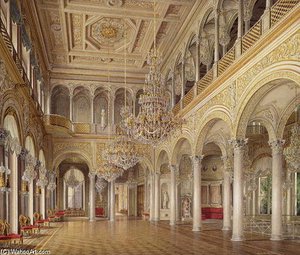
- The Pavilion Hall
- The Blue Study In The Grand Palais In Tsarkoye Selo
- Place Of Birth: Tallinn, Estonia