

 Preview
 Send
Send Share
Share
 Details

 Download
 Similars
 X-Ray
X-Ray Diaporama
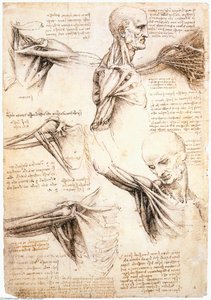
The anatomy of the human head and neck, 1896.10.4


 Read More
Purchase a high-resolution, enhanced digital image, far superior to the online preview.
Each file is meticulously prepared by our in-house specialists using advanced tools and expert manual retouching. We ensure every image has exceptional clarity, precise color accuracy, and fine detail.
The final file is delivered via email within 72 hours, optimized for immediate use in professional, editorial, and print environments. This is the same quality trusted by top-tier design studios, publishers, and galleries.
Digital Image
Download a high-resolution file for personal display, printing, and creative projects. ( Buy Print Buy Hand Made Painting)
Included in Every Digital Image Order
Expert Digital Delivery, Guaranteed
When you choose ArtsDot.com, you're not just getting an image - you're receiving a professionally enhanced digital artwork, crafted with precision and backed by a satisfaction guarantee. Here's everything that comes with your order, automatically:

Fast Email Delivery
Your high-resolution digital image file will be emailed to you within 72 hours of ordering - ready for immediate use.

AI-Enhanced Digital File
Your artwork is professionally optimized using advanced AI tools and manual editing, ensuring maximum detail, clarity, and color accuracy.

Free Lifetime Re-Delivery
Accidentally deleted or lost your file? No worries - we'll resend it to you anytime, free of charge.

No Import Fees - Ever
Enjoy your artwork instantly with zero customs, duties, or delivery fees - digital downloads are always tax-free.

Color Accuracy Guarantee
We ensure your digital image reflects the original colors as closely as possible using professional tools and color management.

60-Day Satisfaction Guarantee
If you're not satisfied with your digital image, we'll revise it or refund 100% within 60 days - no questions asked.

100% Money-Back Guarantee
Not satisfied? Get a full refund within 60 days of receiving your digital file - no questions asked.

Bulk Order Discounts
Buy 3 images, save 10% - Buy 5, save 15% - Buy 10+, save 20%. Great for creative projects, galleries, and agencies.
A Window into Scientific Inquiry
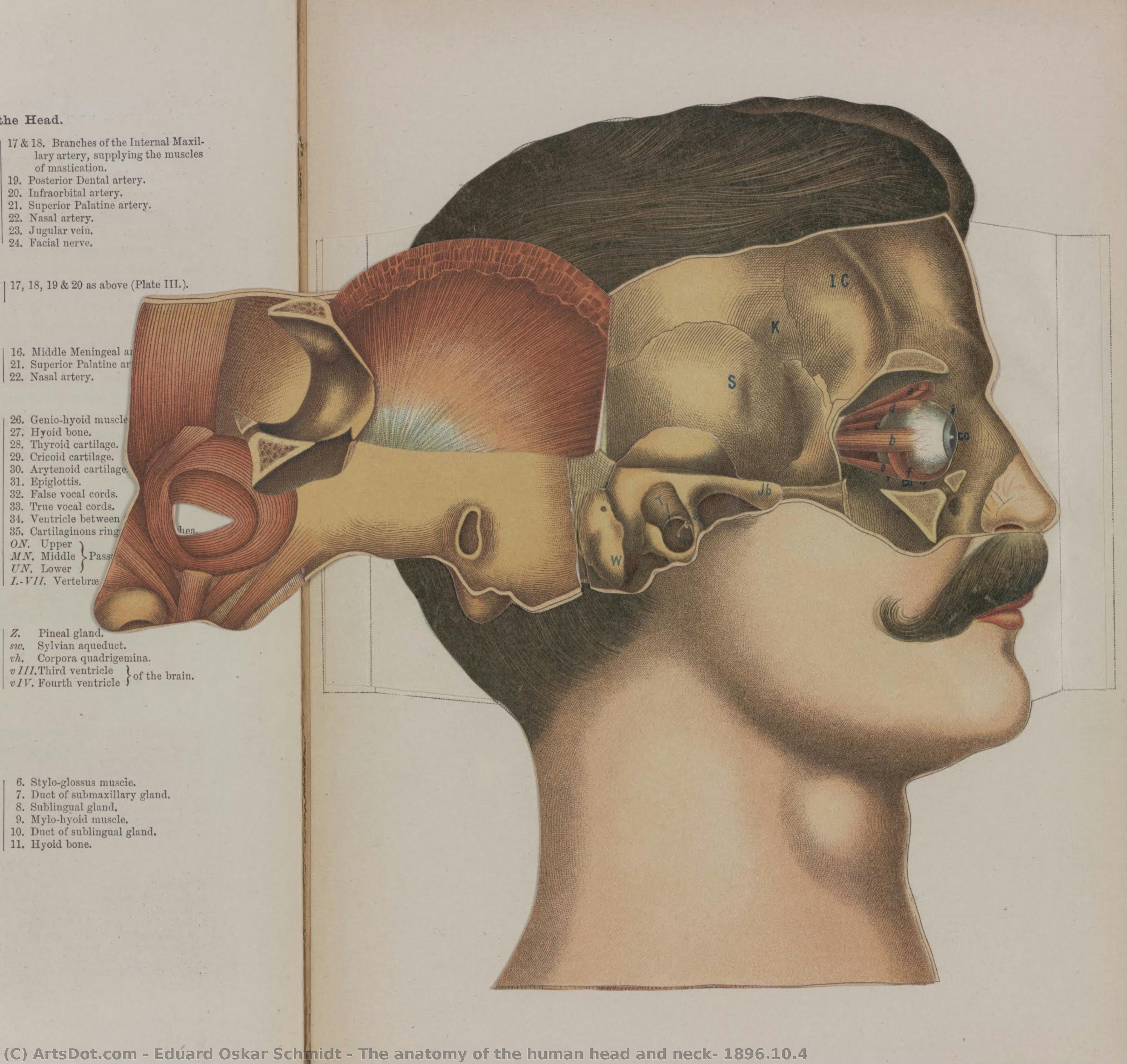
In the quiet intersection of biological precision and human curiosity lies The anatomy of the human head and neck, a captivating piece that transcends the boundaries between scientific documentation and portraiture. Created in 1895 by the esteemed German zoologist Eduard Oskar Schmidt, this work invites the viewer into a moment of profound intellectual discovery. The composition presents a striking close-up of a man’s visage, characterized by a thoughtful gaze and a ruggedly textured beard and mustache. Yet, the true magic of the piece resides in its layered narrative; behind the subject, an open book reveals intricate anatomical illustrations that mirror the very essence of the human form. It is a visual dialogue between the living observer and the studied specimen, capturing the nineteenth-century obsession with understanding the mechanics of life.
The style of this work reflects the meticulous spirit of the late Victorian era, where the rigor of the scientific method met the aesthetic sensibilities of classical realism. There is an undeniable intimacy in the way the light falls across the subject's features, highlighting the textures of skin and hair with a soft, almost reverent clarity. This technique does more than merely replicate reality; it imbues the scene with a sense of quiet contemplation. For the collector or interior designer, this piece offers a sophisticated layer of depth, acting as a focal point that rewards prolonged study. The interplay between the sharp focus on the man's face and the scholarly backdrop creates a rhythmic visual experience that is both intellectually stimulating and aesthetically soothing.
The Legacy of Observation
To understand the emotional weight of this work, one must consider the historical context of its creator. Eduard Oskar Schmidt was not merely an artist of observation but a pioneer of biological research, renowned for his groundbreaking studies on Porifera and his early advocacy for Darwinian evolution. This piece serves as a poignant symbol of that era's transformative intellectual landscape. The presence of the anatomical book is not incidental; it represents the bridge between the tangible world we inhabit and the hidden, complex structures that define our existence. It evokes a sense of wonder at the complexity of nature, making it an ideal acquisition for those who find beauty in the marriage of art and science.
Integrating such a reproduction into a curated space brings an air of academic elegance and timelessness. Whether placed in a private library, a study, or a modern living area, The anatomy of the human head and neck serves as a conversation starter that celebrates the pursuit of knowledge. It carries an emotional resonance of curiosity and discovery, reminding us that every glance at the world around us is an opportunity to uncover a deeper truth. For the discerning enthusiast, this artwork is more than a decoration; it is a tribute to the enduring human desire to map the unknown and find beauty in the very architecture of our being.
Related Artworks
Artist Biography
Eduard Oskar Schmidt: Pioneer of Porifera Research and Early Darwinian Thought
Eduard Oscar Schmidt (1823-1886) stands as a significant figure in 19th-century zoology, particularly recognized for his meticulous investigations into sponges—specifically Adriatic species—and his unwavering advocacy for Charles Darwin’s theory of evolution. Born in Torgau, Germany, Schmidt embarked on a scholarly journey that spanned across institutions like Halle and Berlin, where he absorbed the intellectual currents championed by luminaries such as Christian Gottfried Ehrenberg and Johannes Peter Müller.
- Early Life & Education: Schmidt’s formative years were marked by a dedication to mathematics and science at Halle University. Subsequently, his pursuit of knowledge continued in Berlin, fostering connections with influential thinkers who shaped his scientific worldview.
- Academic Career: He secured his habilitation at Jena University in 1847, establishing himself as an associate professor shortly thereafter. Recognizing his aptitude for teaching and research, Schmidt was appointed Professor of Zoology at Cracow University in 1855, furthering his scholarly pursuits at Graz (from 1857) and Strasbourg (until his death in 1886).
- Darwinian Influence: Schmidt’s intellectual fervor found its expression in embracing Darwin's groundbreaking concept of natural selection. This conviction fueled his commitment to studying organisms—most notably sponges—and documenting their intricate adaptations to marine environments.
Schmidt’s Contributions to Porifera Biology
Schmidt’s legacy rests primarily on his pioneering research into porifera, commonly known as sponges. He conducted extensive expeditions to the Adriatic Sea, meticulously cataloging and analyzing sponge species—a remarkable feat for its time. His detailed observations and taxonomic descriptions established him as a cornerstone of porifera biology.
- Adriatic Expeditions: Schmidt’s voyages yielded invaluable data on sponge diversity and distribution, contributing substantially to the burgeoning field of marine zoology.
- Notable Discoveries: He identified and named 277 taxa—a testament to his meticulous scientific approach and unwavering dedication to uncovering the natural world's secrets.
- Experimental Investigations: Schmidt’s groundbreaking experiments demonstrated that sponge fragments could regenerate into complete sponges, foreshadowing concepts central to Darwinian evolution.
Beyond Porifera: Exploring Phycology
While porifera research cemented Schmidt’s reputation as a zoologist, he also ventured into the realm of phycology—the study of algae. His investigations broadened his scientific horizons and underscored his commitment to understanding the complexities of aquatic ecosystems.
- Algae Research: Schmidt's work contributed to advancing knowledge about algal species and their roles in marine environments.
Legacy & Influence
Eduard Oscar Schmidt’s impact extends beyond his individual research accomplishments. He served as a mentor to younger scientists, fostering intellectual curiosity and promoting the acceptance of Darwinian evolutionary theory—a pivotal moment in shaping modern biology.
His meticulous observations and taxonomic descriptions continue to inspire researchers today, solidifying his place as a foundational figure in zoological history.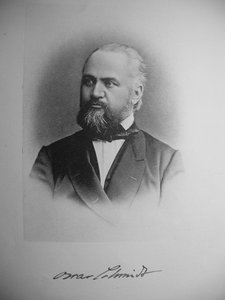
eduard oskar schmidt
1823 - 1886 , Germany
Quick Facts
- Artistic Movement Or Style: Darwinian Evolution
- Artists Or Movements Influenced By This Artist: ['Darwin']
- Artists Who Influenced This Artist:
- Christian Gottfried Ehrenberg
- Johannes Peter Müller
- Date Of Birth: February 21, 1823
- Full Name: Eduard Oskar Schmidt
- Nationality: German
- Notable Artworks: ['The anatomy of the human head and neck']
- Place Of Birth: Torgau, Germany

