 Preview
 Send
Send Share
Share
 Details

 Download
 Similars
 X-Ray
X-Ray Diaporama
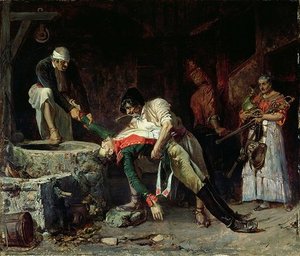
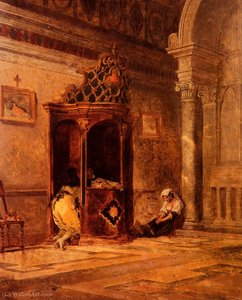
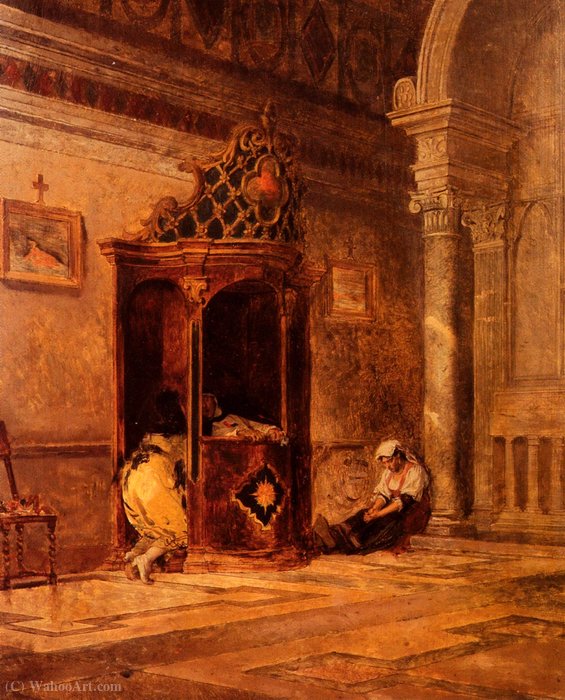
Rival confessors
 Read More
Hand Made Oil Reproduction
Hand-painted oil on canvas in your size and frame, made to order by our artists. ( Buy Print Buy Image)




































Pick from our preset sizes that match the artwork's original proportions.

You may enter your own dimensions to fit a specific frame or space. If your selected size does not match the original image's proportions, we will either crop the artwork or extend the painting with additional hand-painted elements. A digital mockup will be sent for your approval before production begins.
Please note that the on-screen preview does not reflect the actual cropping or extension. Only the mockup will accurately show the final composition.
While custom sizes are available, we recommend selecting a dimension from the predefined list to preserve the original proportions.
After order, ArtsDot.com team will email client for instructions and provide a mockup preview
Worldwide Delivery () in 3/4 weeks instead of standard 5 weeks. (17 August). No compromise on quality.

Free Worldwide Express Shipping

High-Quality Linen Canvas

Full Shipping Insurance

Customs Tax Refund Guarantee

True Color Matching Guarantee

60-Day Return Policy (Defects Only)

100% Money-Back Guarantee

Bulk Discount Offer
 Glass option is only available in size under 110 CM

Rival confessors
Reproduction Medium
Reproduction Size
-


Total Price
$ 263
Related Artworks

Artist Biography
Eduardo Zamacois y Zabala: A Painter of Delicate Moments
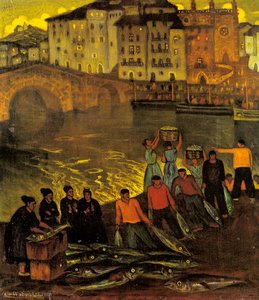
Eduardo Zamacois y Zabala (1841-1871) stands as a singular figure in Spanish Academic painting, remembered not for grand canvases or monumental narratives but for exquisitely rendered scenes capturing the intimacy of everyday life and courtly elegance. Born in Bilbao, Spain, he descended from Basque nobility—his surname originating in Hasparren, France—where it was spelled “samacoys” during the 18th century. This lineage instilled a profound appreciation for artistic heritage and fostered an environment where creativity flourished within his family circle. His father, Miguel Antonio de Zamacois y Berreteaga, established the Santiago de Vizcaya School of Humanities, shaping Eduardo’s intellectual foundation alongside nurturing his burgeoning artistic talent. Surrounded by accomplished relatives – writers, actors, and musicians – he absorbed influences that would permeate his oeuvre. His early artistic training began with Joaquín Balaca, a local artist who instilled in him foundational drawing skills. Recognizing the importance of formal education, Zamacois enrolled at the Real Academia de Bellas Artes de San Fernando in Madrid in 1856, where he studied under Federico de Madrazo, honing his technique and absorbing stylistic precepts prevalent during the era. This formative period cemented his commitment to Academic painting—a style characterized by meticulous observation, idealized beauty, and adherence to classical conventions. A pivotal moment arrived in 1860 when Zamacois ventured to Paris, guided by Madrazo’s counsel, preparing for entry into the École des Beaux-Arts. Despite facing rejection from the prestigious institution, he found mentorship with Ernest Meissonier, securing a position that allowed him to continue his artistic pursuits and immerse himself in the vibrant Parisian art scene. Notably shrewd as a businessman, Zamacois tirelessly pursued opportunities to exhibit his work across Europe, capitalizing on connections cultivated by Vibert and bolstering his reputation within the artistic community. Success swiftly materialized in 1861 when he was commissioned to decorate the quarters of Alfonso XII at the Palacio Real de Madrid—a project that garnered him a grant from the Diputación foral de Vizcaya. This undertaking showcased Zamacois’s versatility and cemented his standing as a respected artist. Subsequent awards at the National Exhibition of Fine Arts in 1862 and 1864 further validated his artistic prowess, demonstrating his dedication to excellence and securing recognition from fellow connoisseurs. In 1865, Zamacois married Louise Marie Héloise Perrin, whom he had met through Vibert’s friendship circle—a union that enriched his life both personally and professionally. Together they welcomed two children: Miguel Louis Pascual, who pursued a literary career, mirroring the artistic inclinations of his father, and Eduardo María Zamacois y Zabala, continuing the family's legacy of creative endeavor. Zamacois’s artistic output focused primarily on small-scale canvases—a deliberate choice that prioritized capturing fleeting moments of grace and subtlety. His paintings often depict scenes from court life, portraying aristocratic figures engaged in refined activities with meticulous detail. Recurring themes include portraits of noble families, landscapes imbued with atmospheric serenity, and depictions of theatrical performances—reflecting his involvement in the cultural milieu of Paris during his formative years. Particularly noteworthy are “Fisherfolk in a Harbour Town” and “The Favourite of the King,” which exemplify Zamacois’s masterful command of light and color, conveying an emotional resonance that transcends mere visual representation. His work stands as testament to the enduring power of Academic painting—a style devoted to capturing beauty and truth with unwavering precision.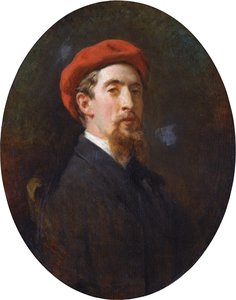
eduardo zamacois y zabala
1841 - 1871
Quick Facts
- Artistic Movement Or Style: Academic Painting
- Artists Or Movements Influenced By This Artist: ['Marià Fortuny']
- Artists Who Influenced This Artist: ['Joaquín Balaca']
- Date Of Birth: July 2, 1841
- Date Of Death: January 12, 1871
- Full Name: Eduardo María Zamacois y Zabala
- Nationality: Spanish
- Notable Artworks:
- Fisherfolk in a Harbour Town
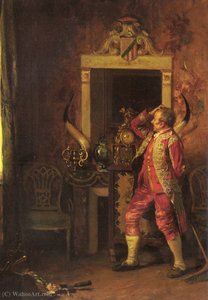
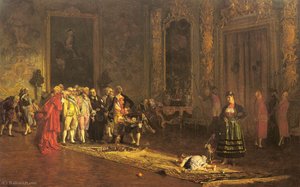
- The favourite of the king
- Place Of Birth: Bilbao, Spain