 Preview
 Send
Send Share
Share
 Details

 Download
 Similars
 X-Ray
X-Ray Diaporama
Evening on Karl Johan Street
 Oil On Canvas
- WallArt
- Expressionism
 1892
1892- 19th Century
 84.0 x 121.0 cm
 Read More
Hand Made Oil Reproduction
Hand-painted oil on canvas in your size and frame, made to order by our artists. ( Buy Print Buy Image)




P118B $10

P118H $10

P118W $10

P438Z $10

P508JH $12

P508YH $12

P805H $10

P805Z $10

P919BZ $10

P919G $10

P919XJ $10

P959ZH $10

P968JZ $12

W106C $8

W218G $10

W218JH $8

W218Y $10

W307PJ $10

W316G $10

W316PJ $8

W316Y $10

W398PJ $8

W4111J $10

W500HY $15

W500JH $15

W692G $12

W849H $8

W940BG $15

W953PJ $8




Pick from our preset sizes that match the artwork's original proportions.

You may enter your own dimensions to fit a specific frame or space. If your selected size does not match the original image's proportions, we will either crop the artwork or extend the painting with additional hand-painted elements. A digital mockup will be sent for your approval before production begins.
Please note that the on-screen preview does not reflect the actual cropping or extension. Only the mockup will accurately show the final composition.
While custom sizes are available, we recommend selecting a dimension from the predefined list to preserve the original proportions.
After order, ArtsDot.com team will email client for instructions and provide a mockup preview
Worldwide Delivery () in 3/4 weeks instead of standard 5 weeks. (16 August). No compromise on quality.

Free Worldwide Express Shipping

High-Quality Linen Canvas

Full Shipping Insurance

Customs Tax Refund Guarantee

True Color Matching Guarantee

60-Day Return Policy (Defects Only)

100% Money-Back Guarantee

Bulk Discount Offer
 Glass option is only available in size under 110 CM

Evening on Karl Johan Street
Reproduction Medium
Reproduction Size
-


Total Price
$ 263
Artwork Description
A Glimpse of Oslo’s Soul: Edvard Munch's ‘Evening on Karl Johan Street’
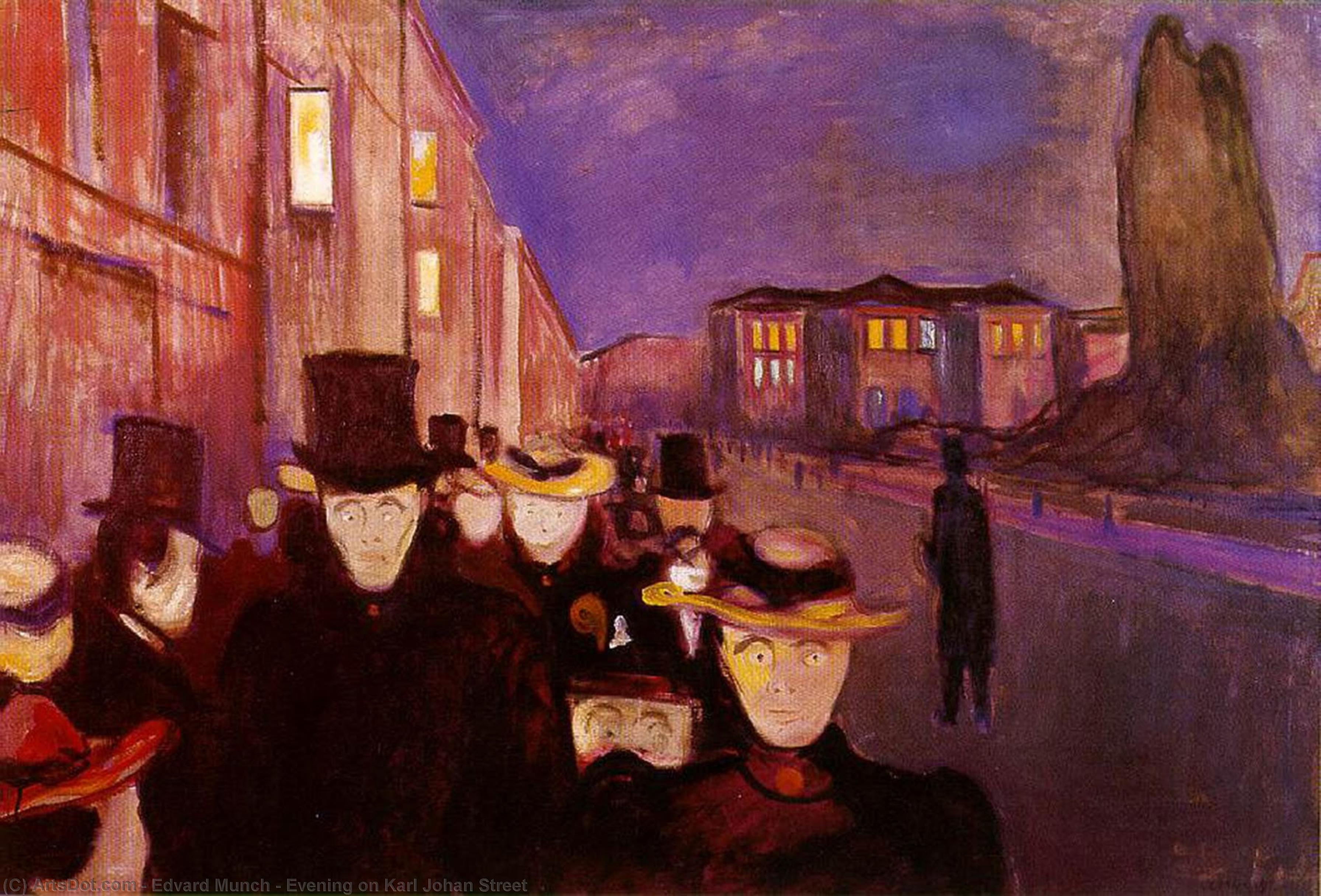
Edvard Munch’s “Evening on Karl Johan Street,” painted in 1892, isn’t merely a depiction of a street scene; it’s a visceral plunge into the anxieties and alienation simmering beneath the surface of modern urban life. This oil-on-canvas masterpiece, currently residing within the Rasmus Meyer Collection in Bergen, Norway, stands as a cornerstone of Expressionism, offering a profoundly unsettling yet undeniably captivating experience for the viewer. Measuring 84.5 x 121 cm, the painting immediately commands attention with its dramatic use of light and shadow, creating an atmosphere thick with psychological tension – a feeling that lingers long after one has turned away.
The scene unfolds on Karl Johan Street in Oslo, a bustling thoroughfare rendered in muted tones and obscured by a pervasive sense of gloom. Munch masterfully employs elongated figures, their faces transformed into ghostly masks devoid of individual expression. These aren’t portraits of individuals; they are embodiments of the collective unconscious, each staring directly at the viewer with an unnerving intensity. This direct gaze forces a confrontation – a feeling that we too are implicated in this unsettling tableau. The composition itself is deliberately jarring: figures surge forward, seemingly driven by an unseen force, while a solitary figure walks against the current, embodying a sense of isolation and resistance within the relentless flow.
The Language of Fear and Isolation
Franziska Müller’s interpretation highlights the painting's potent symbolism. She posits that the perspective creates a sensation of impending doom – a feeling akin to stepping into an abyss or confronting one’s own reflection in the faces of the advancing crowd. Anni Carlsson, drawing on her analysis, identifies fear, horror, and hostility etched onto these spectral visages. Reinhold Heller sees a “threat to the individual by the anonymous mass that presses,” while Nicolas Stang observes the "dead faces of the petty bourgeoisie," suggesting a critique of societal conformity and the dehumanizing effects of urban life. Munch himself described his experience as waiting for a mistress, capturing a moment of profound loneliness and dread – an experience that undoubtedly informed this powerful depiction.
The painting’s color palette—dominated by deep blues, greys, and blacks—further amplifies the sense of unease. The sunset in the background isn't a romantic backdrop; it symbolizes death and decay, casting a pall over the scene. Munch’s technique is equally crucial: he utilizes loose brushstrokes and distorted forms to convey emotional turmoil rather than striving for realistic representation. This deliberate departure from objective reality underscores the painting’s core purpose – to evoke an emotional response in the viewer.
Expressionism, Symbolism, and Munch's Legacy
“Evening on Karl Johan Street” is deeply rooted in the Expressionist movement, a philosophy that prioritized subjective experience over objective truth. Influenced by artists like Edgar Degas and Japanese prints—particularly their use of cropping techniques to create a sense of claustrophobia and menace—Munch employed these strategies to heighten the painting’s unsettling atmosphere. The work also reflects Munch's personal struggles with mental illness, loss, and his profound awareness of mortality – themes that permeate much of his oeuvre. It’s a testament to his ability to translate inner turmoil into a universally resonant visual language.
Beyond its historical context, “Evening on Karl Johan Street” continues to resonate powerfully today. It serves as a haunting reminder of the potential for isolation and anxiety within modern society, capturing a timeless struggle between the individual and the overwhelming forces of the collective. A reproduction offers a unique opportunity to experience this emotionally charged artwork firsthand, bringing its evocative power into any space.
Related Artworks
Artist Biography
A Life Shrouded in Shadow: The World of Edvard Munch
Edvard Munch, born in 1863 amidst the stark landscapes of Norway, was an artist whose work became synonymous with the anxieties and emotional turmoil of the modern age. His life, deeply marked by loss and a pervasive sense of melancholy, served as the wellspring for his profoundly expressive art. From a childhood shadowed by the early deaths of his mother and sister – both claimed by tuberculosis – Munch developed a haunting preoccupation with mortality, sickness, and the fragility of human existence. These experiences weren’t merely biographical details; they became the very core of his artistic vision, fueling a relentless exploration of the inner landscape of fear, grief, and longing. His father's strict religious beliefs and own struggles with mental illness further contributed to a sense of dread that permeated Munch’s world, shaping not only his personal life but also the symbolic language of his paintings. He wasn’t simply depicting scenes; he was externalizing an internal state, translating psychological distress into visual form.
The Genesis of Expression: Influences and Artistic Development
Munch's artistic journey began with formal training at the Royal School of Art and Design in Kristiania (Oslo), but it was his encounter with the bohemian circles and the nihilist philosophy of Hans Jæger that truly ignited his creative fire. Jæger encouraged Munch to abandon conventional academic styles and instead delve into the depths of his own subjective experience, a concept he termed “soul painting.” This pivotal shift marked the beginning of Munch’s distinctive style – one characterized by raw emotion, distorted forms, and a rejection of naturalistic representation. His travels to Paris in the 1890s exposed him to the burgeoning Post-Impressionist movement, where he absorbed influences from artists like Paul Gauguin, Vincent van Gogh, and Henri de Toulouse-Lautrec. The bold use of color, expressive brushstrokes, and psychological intensity of these masters resonated deeply with Munch’s own artistic inclinations. He wasn't merely imitating their techniques; he was synthesizing them into something uniquely his own – a visual language capable of conveying the most profound and unsettling human emotions. His time in Berlin also proved crucial, bringing him into contact with playwright August Strindberg, whose exploration of psychological themes further fueled Munch’s artistic investigations.
Iconic Visions: Major Works and Their Symbolic Weight
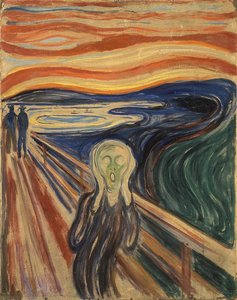
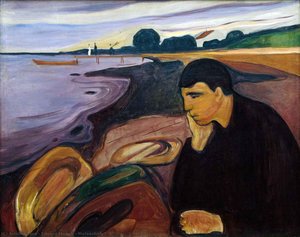
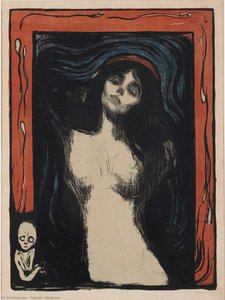
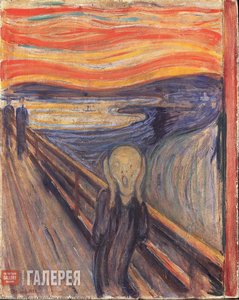
Munch's oeuvre is populated by images that have become deeply ingrained in the collective consciousness. The Scream, perhaps his most iconic work, transcends its status as a painting to become a universal symbol of existential angst. The swirling, fiery landscape and the figure’s contorted face embody a primal scream against the indifference of the universe. Madonna, a controversial and deeply personal piece, explores themes of sexuality, motherhood, and mortality with unsettling frankness. Recurring motifs like The Sick Child – inspired by the loss of his sister Sophie – serve as poignant reminders of Munch’s childhood trauma and the ever-present specter of death. Melancholy I & II, powerful depictions of profound sadness and isolation, reveal a vulnerability that is both deeply personal and universally relatable. These works aren't simply representations of external reality; they are windows into the artist’s soul, offering viewers an unflinching glimpse into the darkest corners of the human psyche. Munch didn’t aim to create beautiful images; he sought to convey truth – even if that truth was painful and unsettling.
A Lasting Legacy: Historical Significance and Enduring Influence
Edvard Munch's contribution to modern art is immeasurable. He stands as a pivotal figure in the development of Expressionism, paving the way for artists who prioritized subjective emotion over objective representation. His unflinching exploration of universal human experiences – love, loss, anxiety, and death – continues to resonate with audiences today, solidifying his place as one of the most influential and enduring figures in art history. His work profoundly impacted subsequent generations of artists, influencing movements like German Expressionism and beyond. He dared to confront the darker aspects of the human condition, challenging conventional notions of beauty and artistic representation. Even after achieving fame and recognition – culminating in the establishment of the Munch Museum in Oslo – his personal life remained turbulent, marked by periods of mental instability and isolation. Yet, through it all, he continued to create, leaving behind a body of work that continues to provoke, challenge, and inspire. Munch’s legacy isn't just about the paintings themselves; it’s about the courage to confront the complexities of human existence and to translate those experiences into art that speaks to the deepest parts of our being.
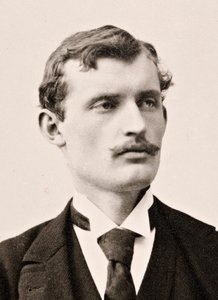
Edvard Munch
1863 - 1944 , Sweden
Quick Facts
- Artistic Movement Or Style: Expressionism
- Artists Or Movements Influenced By This Artist: ['German Expressionism']
- Artists Who Influenced This Artist:
- Paul Gauguin
- Van Gogh
- Toulouse-Lautrec
- Date Of Birth: December 12, 1863
- Date Of Death: January 23, 1944
- Full Name: Edvard Munch
- Nationality: Norwegian
- Notable Artworks:
- The Scream
- Madonna
- The Sick Child
- Melancholy I & II
- Place Of Birth: Ådalsbruk, Sweden
Related Articles
Edvard Munch's Masterpieces: 25 Iconic Paintings for Art Lovers | ArtsDot
Explore 25 iconic Edvard Munch paintings, from 'The Scream' to lesser-known masterpieces. Discover the stories behind Expressionism’s most emotional works & find museum-quality art reproductions for your home at ArtsDot.com.
Edvard Munch: Anxiety, Modernity & the Dawn of Expressionism
Explore the profound world of Edvard Munch, pioneer of Expressionism. Discover the origins of 'The Scream' & his haunting depictions of anxiety, mortality, and love. Expert analysis & high-quality reproductions at ArtsDot.
Expressionism's Soul: 10 Masterpieces for Your Home |
Journey into the soul of Expressionism! Explore 10 iconic paintings by Munch, Kirchner, Kandinsky & more. Discover their stories, bold colors & lasting impact. Find museum-quality art reproductions at .
The Raw Emotion of Expressionism: A Deep Dive into its History, Characteristics & Enduring Influence
Explore the raw emotion of Expressionism with ArtsDot. Discover its history, key artists like Kirchner & Munch, and lasting influence on modern art. Expert insights for collectors & enthusiasts.
German Expressionism's 10 Defining Masterpieces | Art for Your Home
Explore 10 defining German Expressionism masterpieces – from Munch's 'The Scream' to Kandinsky’s abstracts. Discover the artists, stories & bold colors behind this powerful art movement. Find museum-quality reproductions at ArtsDot.com.