 Preview
 Send
Send Share
Share
 Details

 Download
 Similars
 X-Ray
X-Ray Diaporama
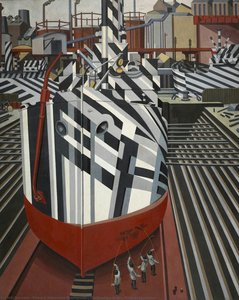
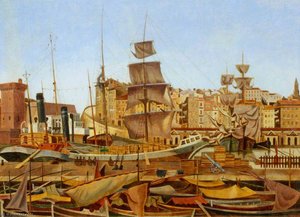
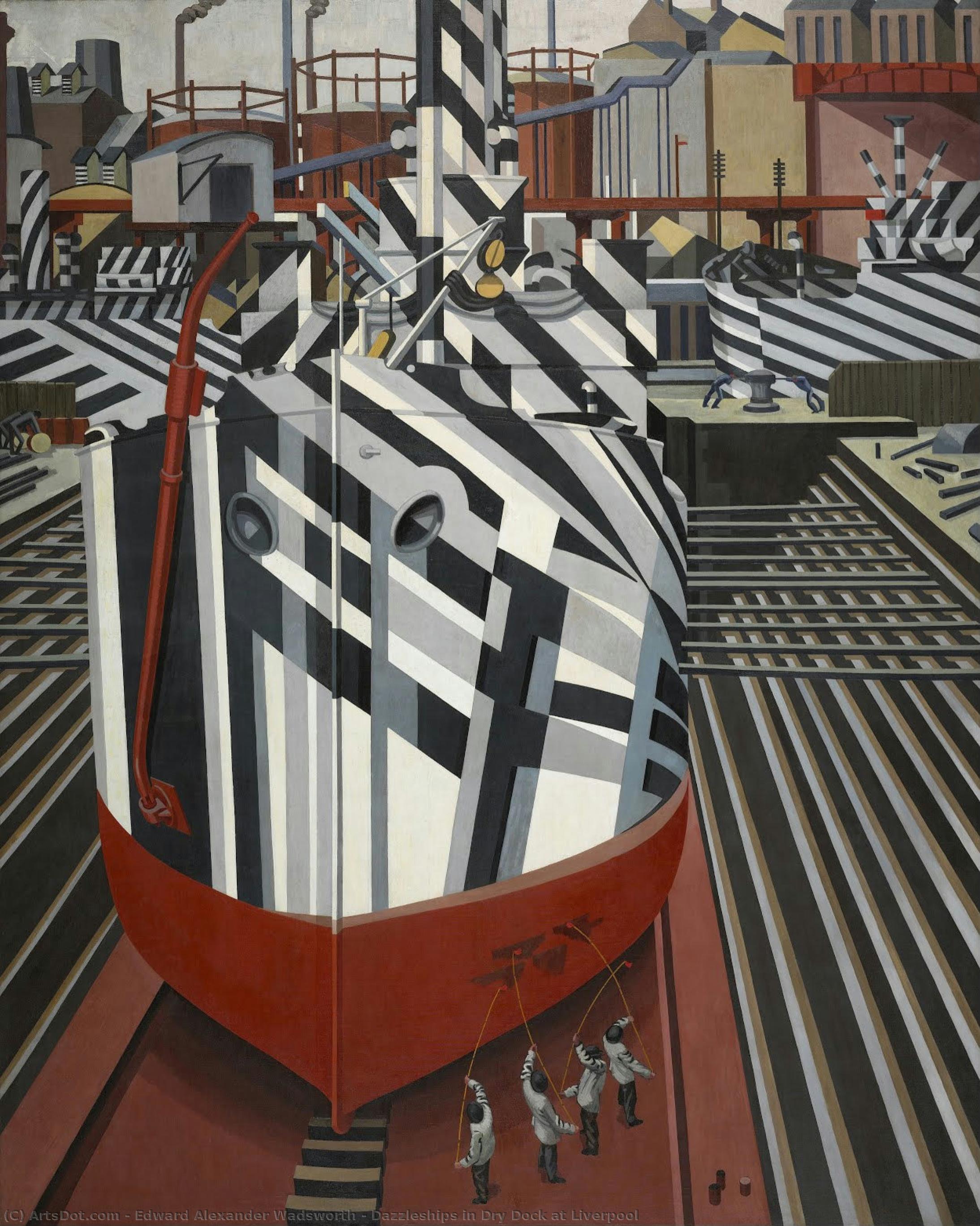
Dazzleships in Dry Dock at Liverpool
 Acrylic On Canvas
- WallArt
- Vorticism
 1919
1919 304.0 x 243.0 cm
 National Gallery of Canada
 Read More
Hand Made Oil Reproduction
Hand-painted oil on canvas in your size and frame, made to order by our artists. ( Buy Print Buy Image)




P118B $10

P118H $10

P118W $10

P438Z $10

P508JH $12

P508YH $12

P805H $10

P805Z $10

P919BZ $10

P919G $10

P919XJ $10

P959ZH $10

P968JZ $12

W106C $8

W218G $10

W218JH $8

W218Y $10

W307PJ $10

W316G $10

W316PJ $8

W316Y $10

W398PJ $8

W4111J $10

W500HY $15

W500JH $15

W692G $12

W849H $8

W940BG $15

W953PJ $8




Pick from our preset sizes that match the artwork's original proportions.

You may enter your own dimensions to fit a specific frame or space. If your selected size does not match the original image's proportions, we will either crop the artwork or extend the painting with additional hand-painted elements. A digital mockup will be sent for your approval before production begins.
Please note that the on-screen preview does not reflect the actual cropping or extension. Only the mockup will accurately show the final composition.
While custom sizes are available, we recommend selecting a dimension from the predefined list to preserve the original proportions.
After order, ArtsDot.com team will email client for instructions and provide a mockup preview
Worldwide Delivery () in 3/4 weeks instead of standard 5 weeks. (22 August). No compromise on quality.

Free Worldwide Express Shipping

High-Quality Linen Canvas

Full Shipping Insurance

Customs Tax Refund Guarantee

True Color Matching Guarantee

60-Day Return Policy (Defects Only)

100% Money-Back Guarantee

Bulk Discount Offer
 Glass option is only available in size under 110 CM

Dazzleships in Dry Dock at Liverpool
Reproduction Medium
Reproduction Size
-


Total Price
$ 263
Artwork Description
A Symphony of Steel and Light: Edward Wadsworth’s “Dazzleships in Dry Dock at Liverpool”
Edward Alexander Wadsworth's "Dazzleships in Dry Dock at Liverpool," painted in 1919, isn’t merely a depiction of a shipyard; it’s a potent distillation of wartime innovation and the burgeoning anxieties of modernity. This oil on canvas, now residing within the National Gallery of Canada, captures a pivotal moment – the meticulous application of dazzle camouflage to a Royal Navy vessel preparing for deployment amidst the chaos of World War I. More than just a technical illustration, it’s a visual poem exploring themes of disruption, transformation, and the unsettling beauty born from necessity.
The scene unfolds within the controlled environment of a dry dock, a space typically associated with quiet industry now rendered vibrant with activity. A large, predominantly red ship dominates the composition, its form aggressively fragmented and distorted by the layers of geometric patterns that constitute the dazzle camouflage. These aren’t haphazard markings; they are carefully calculated disruptions designed to confuse enemy gunners, making it virtually impossible for them to accurately target the vessel. The artist masterfully employs a limited palette – primarily blues, greens, yellows, and reds – creating a striking contrast against the muted tones of the dockyard surroundings. Wadsworth’s brushwork is loose and expressive, conveying both the precision of the camouflage process and the inherent dynamism of the shipyard scene.
The Birth of Dazzle: A Response to War
“Dazzleships in Dry Dock at Liverpool” stands as a crucial artifact within the history of art and warfare. Following the disastrous losses experienced by the Royal Navy during the Gallipoli campaign, the British government sought radical solutions to protect its ships. Wyndham Lewis, a key figure in the Vorticist movement – an early 20th-century avant-garde group that embraced geometric abstraction – spearheaded the development of dazzle camouflage. Lewis’s designs were based on principles of optical illusion and disruption, aiming to render ships unrecognizable from any angle. Wadsworth was one of the artists tasked with translating these complex patterns onto the hulls of the vessels.
The painting itself reflects this process. The fragmented forms, bold colors, and seemingly random arrangement of shapes are not accidental; they represent a deliberate attempt to break down traditional notions of form and perspective. Wadsworth’s work embodies the spirit of Vorticism – a movement that sought to capture the dynamism and energy of modern life through abstract geometric forms. It's a fascinating intersection of artistic innovation and military strategy, demonstrating how art could be directly employed in the service of national defense.
Symbolic Layers: Disruption and Transformation
Beyond its immediate depiction of a shipyard scene, “Dazzleships in Dry Dock at Liverpool” is rich with symbolic meaning. The act of painting over the ship’s form represents a profound transformation – not just of the vessel itself, but also of the world around it. The disruption of shapes and colors mirrors the broader societal upheaval caused by war, suggesting a breakdown of established order and a shift towards an uncertain future.
Furthermore, the painting can be interpreted as a metaphor for the psychological impact of war on both sailors and observers. The distorted forms create a sense of unease and disorientation, mirroring the anxieties and uncertainties experienced during wartime. The bright colors, however, offer a glimmer of hope – a testament to human ingenuity and resilience in the face of adversity. The scene is not one of despair, but rather of determined adaptation.
A Legacy in Reproduction: Capturing the Essence
Reproductions of “Dazzleships in Dry Dock at Liverpool” offer a remarkable opportunity to experience the power and complexity of Wadsworth’s vision. The original's vibrant colors and dynamic composition are faithfully rendered in high-quality prints, allowing viewers to appreciate the artist’s meticulous attention to detail and his masterful use of color and form. Whether displayed as a statement piece in a contemporary interior or studied as an important historical document, this painting continues to resonate with audiences today, reminding us of the enduring power of art to reflect and shape our understanding of the world.
Related Artworks
Artist Biography
Early Life and Artistic Awakening
Edward Alexander Wadsworth, born in Cleckheaton, West Yorkshire, in 1889, entered a world shadowed by early loss. The death of his mother shortly after his birth profoundly shaped his upbringing, leaving him largely raised by an aunt while his father managed the family’s wool-spinning business. This somewhat solitary childhood fostered a contemplative nature, perhaps laying the groundwork for the introspective quality that would later characterize his art. His formal education began at Fettes College in Edinburgh, but it was a sojourn to Munich in 1906 that proved pivotal. Initially enrolled to study engineering – a path dictated by paternal expectations – Wadsworth found himself irresistibly drawn to the artistic currents swirling within the city. At the Knirr School, he discovered a passion for drawing and woodcut printing, igniting a creative spark that would ultimately lead him away from the world of mechanics and towards a life dedicated to visual expression. This marked not merely a change in academic pursuit but a fundamental shift in his identity, a turning toward the realm of aesthetic exploration. Further honing his skills at Bradford School of Art and then the prestigious Slade School of Art in London, Wadsworth found himself amongst a remarkable cohort of future luminaries – Stanley Spencer, Mark Gertler, and others who would define British art for generations to come.The Vortex and Wartime Innovation
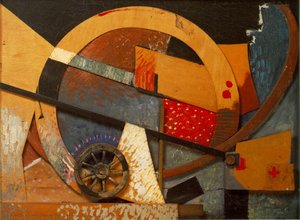
Wadsworth’s artistic trajectory took a dramatic turn with his introduction to Wyndham Lewis and the burgeoning Vorticist movement. Initially influenced by Roger Fry's groundbreaking Post-Impressionist exhibitions, he quickly embraced the radical energy of Vorticism, an avant-garde aesthetic that sought to capture the dynamism of the modern age through abstraction and geometric forms. He became a key contributor to the movement, signing the Vorticist Manifesto in 1914 and exhibiting works that embodied its bold, fragmented style. However, Wadsworth’s engagement with modernity wasn't confined to the canvas. The outbreak of World War I saw him enlist in the Royal Naval Volunteer Reserve, where he put his artistic principles to an unexpectedly practical use. Tasked with designing dazzle camouflage – also known as razzle dazzle – for Allied ships, he applied Vorticist concepts of abstraction and disruption to confuse enemy submarines. These striking patterns, a fusion of art and naval strategy, weren’t intended to render vessels invisible but rather to make it difficult to determine their course and speed, thereby hindering accurate targeting. This period demonstrated Wadsworth's unique ability to bridge the gap between artistic innovation and real-world application, showcasing the power of abstract thought in a time of conflict.Post-War Transformations and Maritime Visions
The aftermath of the war brought about a significant shift in Wadsworth’s artistic style. While he had been at the forefront of abstraction with Vorticism, he gradually moved towards a more representational approach, though one still imbued with a distinctive sensibility. His wartime experiences profoundly influenced his subject matter, leading to an enduring fascination with maritime themes. Ships – symbols of both conflict and exploration – became recurring motifs in his work, often depicted with a haunting stillness or set within dreamlike, surreal landscapes. He explored still life compositions and landscapes as well, frequently incorporating elements of the uncanny and employing muted color palettes that evoked a sense of melancholy and introspection. In 1934, Wadsworth joined Unit One, a group dedicated to promoting modern British art, further solidifying his position within the evolving artistic landscape of the time. This association reflected his commitment to pushing boundaries while remaining rooted in a distinctly British aesthetic tradition.Surreal Echoes and Lasting Legacy
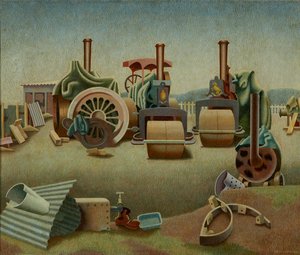
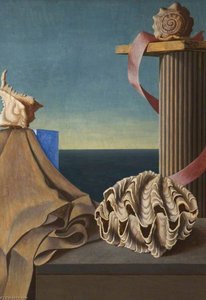
In his later years, Wadsworth’s work became increasingly infused with surrealist undertones, though he never formally aligned himself with the Surrealist movement. His paintings from this period often feature enigmatic juxtapositions of objects and spaces, creating a sense of unease and mystery. Works like Dazzle-ships in Drydock at Liverpool (1919), The Perspective of Idleness II (1942), and Sussex Pastoral (1941) exemplify his evolving style, showcasing a unique blend of abstraction, realism, and surrealism. He died in 1949, leaving behind a body of work that continues to captivate and intrigue. Wadsworth’s legacy extends beyond his paintings; his dazzle camouflage designs have experienced a resurgence of interest in contemporary graphic design, demonstrating the enduring relevance of his innovative visual language. He remains a pivotal figure in the development of modern British art, celebrated for his pioneering role in Vorticism, his wartime contributions, and his distinctive artistic vision that seamlessly blended abstraction with evocative realism. His ability to find beauty and meaning in both the mechanical world and the natural landscape ensures his place as one of the most compelling artists of his generation.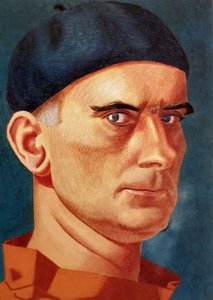
Edward Alexander Wadsworth
1889 - 1949 , United Kingdom
Quick Facts
- Artistic Movement Or Style: Vorticism, Surrealism
- Artists Or Movements Influenced By This Artist: ['Contemporary design']
- Artists Who Influenced This Artist:
- Roger Fry
- Wyndham Lewis
- Date Of Birth: October 29, 1889
- Date Of Death: June 21, 1949
- Full Name: Edward Alexander Wadsworth
- Nationality: British
- Notable Artworks:
- Dazzle-ships in Drydock
- The Perspective of Idleness II
- Sussex Pastoral
- Pendent
- Gasteropoda
- Place Of Birth: Cleckheaton, UK
Related Articles

Shipping & Returns
APS delivers expert worldwide art shipping with museum-grade care, full tracking, and a 30-day money-back guarantee. From customs support to Priority Production, trust transparent service, secure packaging, and reliable delivery for collectors, designers, and galleries.
Edward Hopper's Masterpieces: 25 Iconic Paintings & Their Enduring Legacy | ArtsDot
Explore 25 iconic Edward Hopper paintings & their stories. Discover American realism, urban loneliness, and timeless beauty through his masterpieces. Find museum-quality art reproductions & curated decor ideas at ArtsDot.com.
Norman Wilkinson: Camouflage, Colour & the Artistic Response to Modern Warfare
Explore the fascinating story of Norman Wilkinson, the British artist behind Dazzle Camouflage. Discover his innovative techniques, wartime art, and enduring legacy in naval painting & abstract design. ArtsDot offers high-quality reproductions.

F.A.Q.: Worldwide Free Shipping – Ensuring Your Art Arrives Safely, Globally
ensures your valuable artwork arrives safely worldwide with our expert packaging & secure shipping. Learn about our global logistics, customs support, and 100% satisfaction guarantee for elite collectors.
Rolled Canvas Shipping: A Secure & Economical Art Delivery Solution for Hotels
Discover secure & cost-effective rolled canvas shipping solutions for hotel art projects with . Expert packaging, global delivery, and peace of mind guaranteed.