

 Preview
 Send
Send Share
Share
 Details

 Download
 Similars
 X-Ray
X-Ray Diaporama
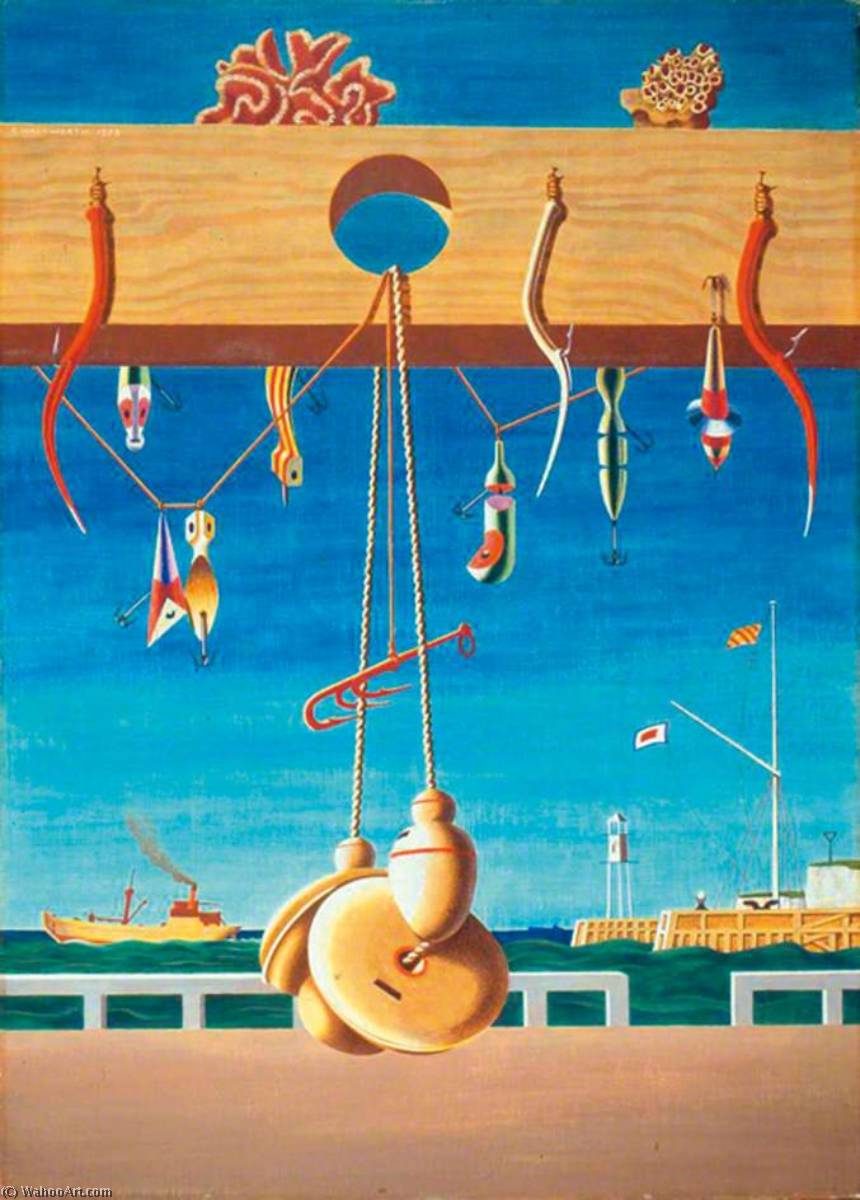
The First of the Ebb, the Sailor and the Sea


 Read More
Purchase a high-resolution, enhanced digital image, far superior to the online preview.
Each file is meticulously prepared by our in-house specialists using advanced tools and expert manual retouching. We ensure every image has exceptional clarity, precise color accuracy, and fine detail.
The final file is delivered via email within 72 hours, optimized for immediate use in professional, editorial, and print environments. This is the same quality trusted by top-tier design studios, publishers, and galleries.
Digital Image
Download a high-resolution file for personal display, printing, and creative projects. ( Buy Print Buy Hand Made Painting)
Included in Every Digital Image Order
Expert Digital Delivery, Guaranteed
When you choose ArtsDot.com, you're not just getting an image - you're receiving a professionally enhanced digital artwork, crafted with precision and backed by a satisfaction guarantee. Here's everything that comes with your order, automatically:

Fast Email Delivery
Your high-resolution digital image file will be emailed to you within 72 hours of ordering - ready for immediate use.

AI-Enhanced Digital File
Your artwork is professionally optimized using advanced AI tools and manual editing, ensuring maximum detail, clarity, and color accuracy.

Free Lifetime Re-Delivery
Accidentally deleted or lost your file? No worries - we'll resend it to you anytime, free of charge.

No Import Fees - Ever
Enjoy your artwork instantly with zero customs, duties, or delivery fees - digital downloads are always tax-free.

Color Accuracy Guarantee
We ensure your digital image reflects the original colors as closely as possible using professional tools and color management.

60-Day Satisfaction Guarantee
If you're not satisfied with your digital image, we'll revise it or refund 100% within 60 days - no questions asked.

100% Money-Back Guarantee
Not satisfied? Get a full refund within 60 days of receiving your digital file - no questions asked.

Bulk Order Discounts
Buy 3 images, save 10% - Buy 5, save 15% - Buy 10+, save 20%. Great for creative projects, galleries, and agencies.
A Symphony of Blue: The Living Pulse of the Ocean
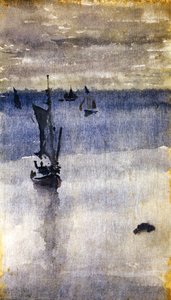
In the mesmerizing expanse of The First of the Ebb, the Sailor and the Sea, Edward Alexander Wadsworth invites us into a world where the boundaries between sky and sea dissolve into a singular, rhythmic motion. Painted in 1938, this evocative masterpiece captures a moment of profound vitality within the maritime landscape. The canvas is dominated by a breathtaking palette of blues, ranging from the deep, mysterious indigo of the ocean depths to the lighter, translucent cerulean of the surface. Within this aquatic theater, a sailboat glides with quiet purpose, its sails catching the unseen breath of the wind, while a solitary figure stands near the vessel, embodying a sense of peaceful coexistence with the vastness of nature. The scene is far from static; it is a breathing ecosystem, teeming with life as birds dance through the salt-misted air and silver fish dart beneath the undulating waves, creating a tapestry of movement that feels both spontaneous and eternal.
Wadsworth, a master of capturing the structural essence of his subjects, utilizes a technique that balances precision with fluid emotion. While he is often celebrated for his contributions to Vorticism and the sharp, geometric complexities of dazzle camouflage, this particular work reveals a more lyrical side of his genius. The brushwork, though controlled, possesses a rhythmic quality that mimics the ebb and flow of the tide itself. There is a subtle interplay of light and shadow upon the water's surface, suggesting the sun's filtered descent through a maritime haze. For the discerning collector or interior designer, this painting offers more than mere decoration; it provides a window into a serene yet powerful natural order, making it an ideal centerpiece for spaces designed to evoke tranquility, contemplation, and a connection to the elemental forces of our planet.
Historical Resonance and the Spirit of the Sea
To understand the depth of this work, one must consider the era in which it was conceived. Created on the precipice of global upheaval in 1938, the painting carries an underlying tension between the tranquility of the seascape and the shifting tides of history. Wadsworth’s ability to find harmony within a complex environment—where birds, fish, humans, and vessels all occupy a shared, delicate balance—serves as a poignant metaphor for resilience. The symbolism of the "ebb" suggests a period of transition, a receding tide that reveals the hidden wonders of the seabed while preparing the way for what is to come. This duality of movement—the retreating water and the advancing life within it—imbues the piece with a profound emotional weight.
For those seeking to integrate fine art into a sophisticated interior, The First of the Ebb, the Sailor and the Sea offers an unparalleled opportunity to introduce narrative depth. Its cool tones and expansive composition can breathe life into a room, providing a sense of openness and calm. Whether displayed in a sun-drenched coastal villa or a stately urban study, this reproduction serves as a testament to Wadsworth's ability to translate the raw energy of the sea into a timeless visual poem. It is an invitation to pause, to breathe with the ocean, and to find beauty in the rhythmic cycles of the natural world.
Related Artworks


Artist Biography
Early Life and Artistic Awakening
Edward Alexander Wadsworth, born in Cleckheaton, West Yorkshire, in 1889, entered a world shadowed by early loss. The death of his mother shortly after his birth profoundly shaped his upbringing, leaving him largely raised by an aunt while his father managed the family’s wool-spinning business. This somewhat solitary childhood fostered a contemplative nature, perhaps laying the groundwork for the introspective quality that would later characterize his art. His formal education began at Fettes College in Edinburgh, but it was a sojourn to Munich in 1906 that proved pivotal. Initially enrolled to study engineering – a path dictated by paternal expectations – Wadsworth found himself irresistibly drawn to the artistic currents swirling within the city. At the Knirr School, he discovered a passion for drawing and woodcut printing, igniting a creative spark that would ultimately lead him away from the world of mechanics and towards a life dedicated to visual expression. This marked not merely a change in academic pursuit but a fundamental shift in his identity, a turning toward the realm of aesthetic exploration. Further honing his skills at Bradford School of Art and then the prestigious Slade School of Art in London, Wadsworth found himself amongst a remarkable cohort of future luminaries – Stanley Spencer, Mark Gertler, and others who would define British art for generations to come.The Vortex and Wartime Innovation
Wadsworth’s artistic trajectory took a dramatic turn with his introduction to Wyndham Lewis and the burgeoning Vorticist movement. Initially influenced by Roger Fry's groundbreaking Post-Impressionist exhibitions, he quickly embraced the radical energy of Vorticism, an avant-garde aesthetic that sought to capture the dynamism of the modern age through abstraction and geometric forms. He became a key contributor to the movement, signing the Vorticist Manifesto in 1914 and exhibiting works that embodied its bold, fragmented style. However, Wadsworth’s engagement with modernity wasn't confined to the canvas. The outbreak of World War I saw him enlist in the Royal Naval Volunteer Reserve, where he put his artistic principles to an unexpectedly practical use. Tasked with designing dazzle camouflage – also known as razzle dazzle – for Allied ships, he applied Vorticist concepts of abstraction and disruption to confuse enemy submarines. These striking patterns, a fusion of art and naval strategy, weren’t intended to render vessels invisible but rather to make it difficult to determine their course and speed, thereby hindering accurate targeting. This period demonstrated Wadsworth's unique ability to bridge the gap between artistic innovation and real-world application, showcasing the power of abstract thought in a time of conflict.Post-War Transformations and Maritime Visions
The aftermath of the war brought about a significant shift in Wadsworth’s artistic style. While he had been at the forefront of abstraction with Vorticism, he gradually moved towards a more representational approach, though one still imbued with a distinctive sensibility. His wartime experiences profoundly influenced his subject matter, leading to an enduring fascination with maritime themes. Ships – symbols of both conflict and exploration – became recurring motifs in his work, often depicted with a haunting stillness or set within dreamlike, surreal landscapes. He explored still life compositions and landscapes as well, frequently incorporating elements of the uncanny and employing muted color palettes that evoked a sense of melancholy and introspection. In 1934, Wadsworth joined Unit One, a group dedicated to promoting modern British art, further solidifying his position within the evolving artistic landscape of the time. This association reflected his commitment to pushing boundaries while remaining rooted in a distinctly British aesthetic tradition.Surreal Echoes and Lasting Legacy
In his later years, Wadsworth’s work became increasingly infused with surrealist undertones, though he never formally aligned himself with the Surrealist movement. His paintings from this period often feature enigmatic juxtapositions of objects and spaces, creating a sense of unease and mystery. Works like Dazzle-ships in Drydock at Liverpool (1919), The Perspective of Idleness II (1942), and Sussex Pastoral (1941) exemplify his evolving style, showcasing a unique blend of abstraction, realism, and surrealism. He died in 1949, leaving behind a body of work that continues to captivate and intrigue. Wadsworth’s legacy extends beyond his paintings; his dazzle camouflage designs have experienced a resurgence of interest in contemporary graphic design, demonstrating the enduring relevance of his innovative visual language. He remains a pivotal figure in the development of modern British art, celebrated for his pioneering role in Vorticism, his wartime contributions, and his distinctive artistic vision that seamlessly blended abstraction with evocative realism. His ability to find beauty and meaning in both the mechanical world and the natural landscape ensures his place as one of the most compelling artists of his generation.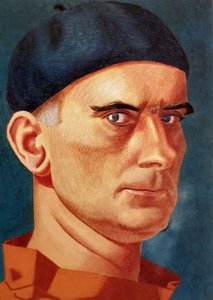
Edward Alexander Wadsworth
1889 - 1949 , United Kingdom
Quick Facts
- Artistic Movement Or Style: Vorticism, Surrealism
- Artists Or Movements Influenced By This Artist: ['Contemporary design']
- Artists Who Influenced This Artist:
- Roger Fry
- Wyndham Lewis
- Date Of Birth: October 29, 1889
- Date Of Death: June 21, 1949
- Full Name: Edward Alexander Wadsworth
- Nationality: British
- Notable Artworks:
- Dazzle-ships in Drydock
- The Perspective of Idleness II
- Sussex Pastoral
- Pendent
- Gasteropoda
- Place Of Birth: Cleckheaton, UK

