 Preview
 Send
Send Share
Share
 Details

 Download
 Similars
 X-Ray
X-Ray Diaporama
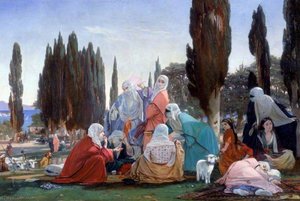
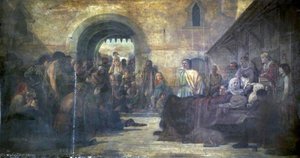
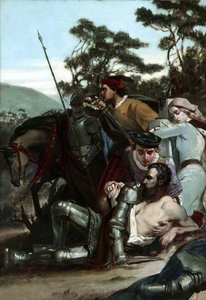
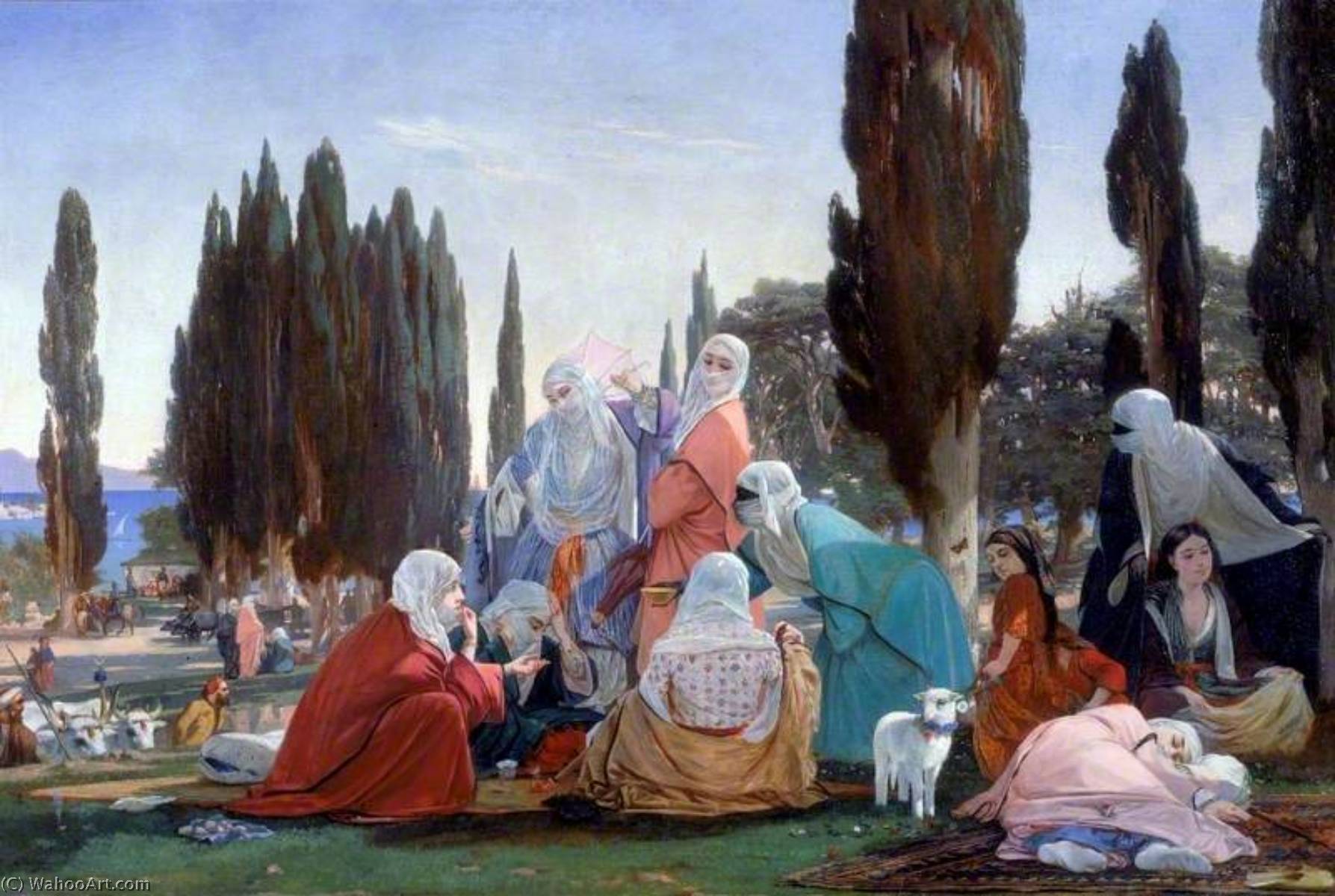
Souvenir of Scutari
 1857
1857 122.0 x 183.0 cm
 Laing Art Gallery
 Read More
Hand Made Oil Reproduction
Hand-painted oil on canvas in your size and frame, made to order by our artists. ( Buy Print Buy Image)




































Pick from our preset sizes that match the artwork's original proportions.

You may enter your own dimensions to fit a specific frame or space. If your selected size does not match the original image's proportions, we will either crop the artwork or extend the painting with additional hand-painted elements. A digital mockup will be sent for your approval before production begins.
Please note that the on-screen preview does not reflect the actual cropping or extension. Only the mockup will accurately show the final composition.
While custom sizes are available, we recommend selecting a dimension from the predefined list to preserve the original proportions.
After order, ArtsDot.com team will email client for instructions and provide a mockup preview
Worldwide Delivery () in 3/4 weeks instead of standard 5 weeks. (21 August). No compromise on quality.

Free Worldwide Express Shipping

High-Quality Linen Canvas

Full Shipping Insurance

Customs Tax Refund Guarantee

True Color Matching Guarantee

60-Day Return Policy (Defects Only)

100% Money-Back Guarantee

Bulk Discount Offer
 Glass option is only available in size under 110 CM

Souvenir of Scutari
Reproduction Medium
Reproduction Size
-


Total Price
$ 263
Artwork Description
Artistic Significance
This beautiful painting depicts a group of people gathered in a park-like setting, surrounded by trees and accompanied by dogs and a horse. The scene exudes a sense of social gathering and community, showcasing the artist's ability to capture the essence of human interaction. The presence of animals adds a lively atmosphere to the painting, making it a truly unique and captivating piece. Key Features of the painting include:- The use of oil on canvas, which gives the painting a rich and textured appearance
- The depiction of everyday life in the 19th century, providing a glimpse into the past
- The artist's attention to detail, evident in the intricate rendering of the trees, animals, and human figures
Artist and Museum
Edward Armitage was a talented artist known for his works such as Souvenir of Scutari and The Cities of the Plain. His paintings can be found at the Laing Art Gallery, which is also home to works by other notable artists like Charles Napier Hemy and Ralph Bullock. For more information on these artists and their works, visit /art/list/?Filter=AQS6TS-Edward-Armitage-Souvenir-of-Scutari or /art/list/?Filter=ARAKXU-Ralph-Bullock-Farm.The Laing Art Gallery is a must-visit destination for art enthusiasts, offering a diverse collection of paintings and artworks. To learn more about the gallery and its collections, visit https://ArtsDot.com or check out the Wikipedia page on Laing Art Gallery.
Related Artworks








Artist Biography
Early Life and Family Roots
Edward Armitage, born in London on May 20th, 1817, emerged from a background steeped in the burgeoning industrial wealth of Yorkshire. Though his initial years were spent within the capital’s confines, his lineage was firmly anchored in the north of England, specifically to the Armitage family of Farnley Hall, just south of Leeds. His father, James Armitage, was a prominent ironmaster, one of seven sons descended from a line that had acquired Farnley Hall in 1799. This familial foundation—a blend of established land ownership and entrepreneurial spirit—would subtly shape the artist’s trajectory, providing both opportunity and a degree of independence.
The Armitage family's involvement extended beyond ironworks; his brother, Thomas Rhodes Armitage, notably founded the Royal National Institute of the Blind, demonstrating a commitment to social betterment. This sense of purpose, though not directly artistic, resonates within the often-grand and morally weighty themes that would come to define Edward’s work. He was connected through family to several notable figures including Robert Armitage (MP) and Robert Selby Armitage.
Artistic Formation in Paris
Recognizing his son's inclination towards art, James Armitage supported Edward’s pursuit of formal training, leading him to Paris in 1837. The École des Beaux-Arts became the crucible where young Armitage honed his skills under the tutelage of Paul Delaroche, a history painter at the zenith of his fame. Delaroche's influence proved profound; he instilled in Armitage a meticulous draughtsmanship, a dedication to historical accuracy, and a penchant for dramatic narrative—qualities that would become hallmarks of his style.
Armitage wasn’t merely a student but an active participant in Delaroche’s ambitious projects. He was selected as one of four assistants tasked with the monumental fresco *Hémicycle* within the Palais des Beaux-Arts, even reputedly serving as a model for the head of Masaccio—a testament to his developing physical presence and artistic aptitude. His early Parisian works, such as *Prometheus Bound* (1842), already hinted at the power he would later wield, earning praise for its skillful execution but also noted for an almost “brutally energetic” quality.
The Westminster Palace Competitions and Early Success
Returning to London in 1843, Armitage entered a period of intense competition with the ambitious project to decorate the new Palace of Westminster. Following the devastating fire of 1834, Queen Victoria’s consort, Prince Albert, spearheaded an initiative to adorn the rebuilt Houses of Parliament with frescoes depicting scenes from British history and literary masterpieces—Spenser, Shakespeare, and Milton being key sources of inspiration.
The ensuing cartoon competitions were fiercely contested. Armitage quickly distinguished himself, securing first prizes for *The Landing of Julius Caesar in Britain* (1843) and later for *The Spirit of Religion* (1845). While these designs weren’t ultimately realized as frescoes—a consequence of the technical challenges inherent in the London climate—they established his reputation and led to commissions for two significant works within the Poets' Gallery: *The Thames and its Tributaries* (from Pope) and *The Death of Marmion* (from Scott). These early successes, coupled with the Queen’s purchase of his large-scale oil painting *The Battle of Meeanee* (1847), cemented Armitage’s position within the Victorian art world.
A Career Defined by Historical Grandeur
Following a period of study in Rome, Armitage consistently exhibited at the Royal Academy from 1848 until 1893. His oeuvre became characterized by large-scale historical and biblical paintings—works that demanded both technical skill and an understanding of complex narratives. *Retribution* (1858), now housed in the Leeds Museum, stands as a particularly striking example; its allegorical depiction of the suppression of the Indian Mutiny, embodied in a colossal female figure grappling with a tiger, exemplifies his dramatic flair and moral seriousness.
His travels during the Crimean War informed paintings like *The Bottom of the Ravine at Inkerman* (1856) and *Souvenir of Scutari*, demonstrating an engagement with contemporary events. However, it was his ability to translate grand historical themes—such as *Samson* (1851) and *Hagar* (1852)—into visually compelling narratives that truly defined his artistic legacy.
Legacy and Historical Significance
Edward Armitage’s career unfolded within a Victorian art landscape increasingly fascinated by historical spectacle and moral allegory. While he consciously emulated the style of Paul Delaroche, his work also reflects a uniquely British sensibility—a blend of meticulous detail, dramatic composition, and a commitment to narrative clarity.
Though his frescoes proved vulnerable to the ravages of time, Armitage’s oil paintings continue to captivate viewers with their scale, ambition, and technical mastery. He represents a significant figure in Victorian art, bridging the gap between academic tradition and a growing interest in contemporary events. His dedication to “high purposes,” as one critic noted, irrespective of immediate reward, underscores his enduring appeal—a testament to an artist who sought not merely to depict history but to imbue it with meaning and moral weight.
Edward Armitage
1817 - 1896
Quick Facts
- Artistic Movement Or Style: Victorian Painting
- Artists Or Movements Influenced By This Artist: Romanticism
- Artists Who Influenced This Artist: Paul Delaroche
- Date Of Birth: 1817
- Date Of Death: 1896
- Full Name: Edward Armitage RA
- Nationality: English
- Notable Artworks: ['Retribution']
- Place Of Birth: London, England