

 Preview
 Send
Send Share
Share
 Details

 Download
 Similars
 X-Ray
X-Ray Diaporama
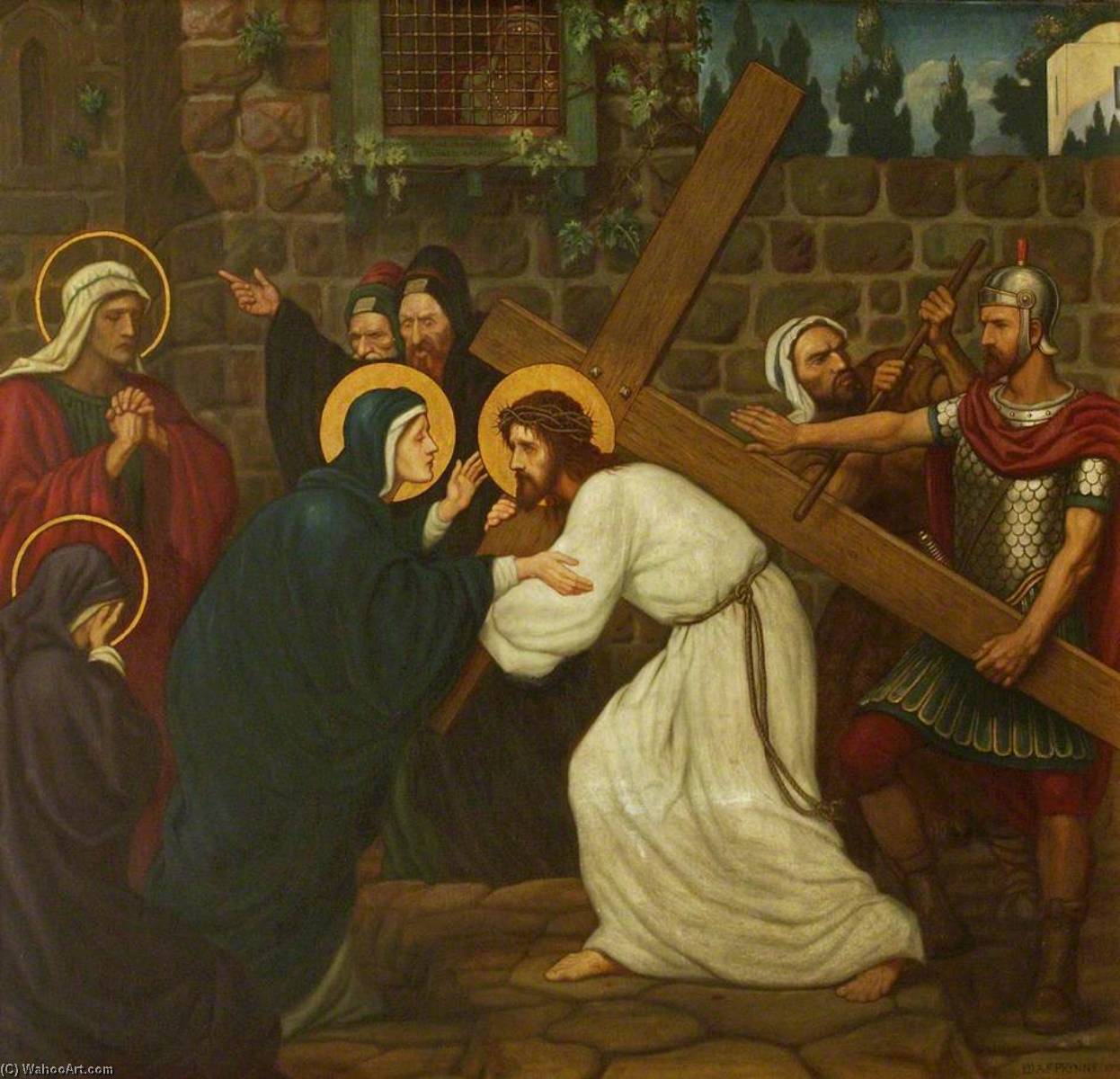
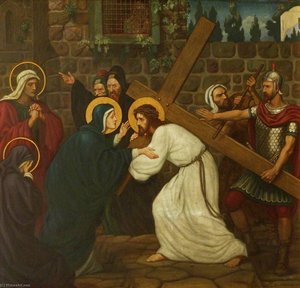
Jesus Meets His Mother (part of ‘Stations of the Cross’)
 Oil
Oil- WallArt
- Pre-Raphaelite
 1919
1919- 19th Century
 96.0 x 105.0 cm
 st Stephen's House
 Read More
Purchase a high-resolution, enhanced digital image, far superior to the online preview.
Each file is meticulously prepared by our in-house specialists using advanced tools and expert manual retouching. We ensure every image has exceptional clarity, precise color accuracy, and fine detail.
The final file is delivered via email within 72 hours, optimized for immediate use in professional, editorial, and print environments. This is the same quality trusted by top-tier design studios, publishers, and galleries.
Digital Image
Download a high-resolution file for personal display, printing, and creative projects. ( Buy Print Buy Hand Made Painting)
Included in Every Digital Image Order
Expert Digital Delivery, Guaranteed
When you choose ArtsDot.com, you're not just getting an image - you're receiving a professionally enhanced digital artwork, crafted with precision and backed by a satisfaction guarantee. Here's everything that comes with your order, automatically:

Fast Email Delivery
Your high-resolution digital image file will be emailed to you within 72 hours of ordering - ready for immediate use.

AI-Enhanced Digital File
Your artwork is professionally optimized using advanced AI tools and manual editing, ensuring maximum detail, clarity, and color accuracy.

Free Lifetime Re-Delivery
Accidentally deleted or lost your file? No worries - we'll resend it to you anytime, free of charge.

No Import Fees - Ever
Enjoy your artwork instantly with zero customs, duties, or delivery fees - digital downloads are always tax-free.

Color Accuracy Guarantee
We ensure your digital image reflects the original colors as closely as possible using professional tools and color management.

100-Day Satisfaction Guarantee
If you're not satisfied with your digital image, we'll revise it or refund 100% within 100 days - no questions asked.

100% Money-Back Guarantee
Not satisfied? Get a full refund within 100 days of receiving your digital file - no questions asked.

Bulk Order Discounts
Buy 3 images, save 10% - Buy 5, save 15% - Buy 10+, save 20%. Great for creative projects, galleries, and agencies.
A Moment of Divine Tenderness
In the quiet, evocative depths of Edward Arthur Fellowes Prynne’s 1919 masterpiece, Jesus Meets His Mother, we are invited into a profound moment of human vulnerability and divine destiny. As part of his monumental ‘Stations of the Cross’ series, this painting transcends mere religious illustration to become a visceral encounter with grief and love. The composition centers on the intimate connection between Jesus and Mary; he kneels before her, a gesture of both filial devotion and heavy-hearted resignation, while she pulls him close to her chest in a desperate attempt to shield him from the impending sacrifice. This central embrace serves as the emotional heartbeat of the work, anchoring the viewer in a scene that is as much about the bond between mother and son as it is about the weight of salvation.
Prynne, a painter deeply influenced by the Pre-Raphaelite tradition, utilizes a rich, textured approach to bring this biblical encounter to life. The artist’s technique breathes movement into the surrounding crowd, where figures sit and kneel in various states of witness and sorrow. Through careful use of light and shadow, Prynne directs our gaze toward the central figures, while the presence of two crosses in the periphery serves as a haunting foreshadowing of the crucifixion. The setting—an outdoor space defined by the rugged texture of a brick wall—provides a grounded, earthly reality to the spiritual event, making the divine drama feel tangibly present and historically rooted.
The Legacy of Pre-Raphaelite Devotion
To understand the soul of this painting, one must look to the artist’s unique heritage. Born into a family where art and ecclesiastical tradition were inextricably linked, Prynne possessed a rare ability to marry aesthetic beauty with profound theological depth. His work does not merely depict a story; it seeks to evoke the sanctity of the moment. The subtle interplay of colors and the meticulous rendering of the figures reflect the Pre-Raphaelite commitment to truth and detail, yet there is an added layer of spiritual intensity derived from his upbringing in the Tractarian tradition. This allows the painting to function as both a piece of fine art and a meditative tool for contemplation.
For the discerning collector or interior designer, this reproduction offers more than just a visual focal point; it provides a sense of historical gravity and emotional resonance. The artwork’s scale and somber palette make it an exquisite addition to spaces designed for reflection, such as private libraries, chapels, or sophisticated study areas. It is a piece that commands attention through its quiet strength, inviting anyone who gazes upon it to pause and reflect on the universal themes of sacrifice, maternal love, and the enduring power of faith. Owning such a work is an opportunity to preserve a fragment of Edward Arthur Fellowes Prynne’s visionary legacy within a modern setting.
Related Artworks
Artist Biography
Edward Arthur Fellowes Prynne: A Pre-Raphaelite Visionary of Faith and Form
The world of Victorian art often presents a dazzling array of styles, yet within that landscape, Edward Arthur Fellowes Prynne carved out a distinctive niche—one deeply rooted in religious devotion and exquisitely rendered Pre-Raphaelite aesthetics. Born in Plymouth in 1854 into a family steeped in artistic and ecclesiastical tradition, Prynne’s life was inextricably linked to both the beauty of visual representation and the profound significance of faith. His story is not one of immediate fame, yet his legacy endures through the enduring power of his paintings—particularly his monumental ‘Stations of the Cross’ and his contributions to the sacred spaces of churches across England.
Prynne's artistic lineage was remarkable. His father, George Rundle Prynne, was a prominent Tractarian clergyman and ritualist, deeply involved in restoring traditional Catholic practices within the Church of England. This environment instilled in young Edward a reverence for beauty, tradition, and spiritual contemplation—qualities that would profoundly shape his artistic vision. His elder brother, George Fellowes Prynne, followed a path as an architect, specializing in ecclesiastical design, further cementing the family’s connection to sacred spaces and their aesthetic enhancement. This familial influence created a unique synergy, with Edward drawing inspiration from his brother's architectural projects while simultaneously exploring the expressive potential of painting.
Early training provided Prynne with a solid foundation in artistic technique. He began his formal education at Eastman’s Royal Naval Academy in Southsea, initially intending to pursue a career in the navy. However, recognizing his true calling, he was encouraged by Frederic Leighton—a leading figure of the Pre-Raphaelite Brotherhood—to embrace painting as his vocation. This pivotal decision led him to travel extensively throughout Europe, immersing himself in the artistic traditions of Antwerp, Florence, Paris, and Rome. These formative years exposed him to the works of masters like Charles Verlat, whose influence is readily apparent in Prynne’s early paintings, characterized by a rich palette and meticulous detail.
The Stations of the Cross: A Dramatic Narrative
Prynne's most celebrated achievement undoubtedly lies in his series of ‘Stations of the Cross,’ monumental depictions of Christ’s journey to Calvary. These works are not merely devotional images; they are dramatic narratives rendered with a palpable sense of pathos and spiritual intensity. Each station is meticulously composed, employing vibrant colors, intricate details, and carefully chosen symbolism to convey the suffering and sacrifice of Christ. The series demonstrates Prynne's ability to seamlessly blend Pre-Raphaelite aesthetics—characterized by lush textures, luminous light, and idealized beauty—with a deeply felt religious sensibility.
The ‘Stations’ were commissioned for various churches throughout England, including St John Evangelist in Iffley Road, Oxford. These paintings are not simply decorative; they serve as visual meditations on the central tenets of Christian faith. The depiction of Christ's arrest, for example, is particularly arresting—a moment of profound vulnerability and defiance captured with remarkable sensitivity. The series’ impact extended beyond their aesthetic qualities; they transformed churches into spaces of contemplation and spiritual engagement.
Beyond the Stations: Portraits and Church Decoration
While the ‘Stations of the Cross’ secured Prynne's reputation, his artistic output encompassed a broader range of subjects. He was a highly skilled portrait painter, creating dignified and evocative portraits of prominent figures from Victorian society—including members of the Royal Family and notable politicians. His portraits are distinguished by their psychological depth and subtle nuances of expression. He skillfully captured not only physical likeness but also the inner character and personality of his subjects.
Furthermore, Prynne’s artistic talents extended to the realm of church decoration. He designed and executed a multitude of altar panels, reredos, and stained-glass windows for churches across Cornwall and Devon—regions where he maintained strong ties to his family heritage. These decorative works are integral components of the churches' architectural fabric, enhancing their spiritual atmosphere and providing visual narratives that complement the liturgical services. His work at Ladock Church in Cornwall is a particularly notable example of this facet of his career.
A Legacy of Faith and Beauty
Edward Arthur Fellowes Prynne’s artistic legacy is one of quiet distinction—a testament to the power of faith, beauty, and meticulous craftsmanship. Despite not achieving widespread fame during his lifetime, his paintings continue to resonate with viewers today, offering a glimpse into the spiritual and aesthetic sensibilities of Victorian England. His ‘Stations of the Cross,’ in particular, stand as enduring monuments to his artistic vision—powerful depictions of suffering, sacrifice, and redemption that speak across generations.
Prynne’s work reflects a deep engagement with both religious iconography and Pre-Raphaelite aesthetics, creating a unique visual language that is both profoundly moving and exquisitely beautiful. His contributions to the sacred spaces of churches—through his paintings, altar panels, and stained-glass windows—have left an indelible mark on the architectural landscape of England, reminding us of the enduring power of art to inspire contemplation and deepen our understanding of faith.
edward arthur fellowes prynne
1854 - 1921
Quick Facts
- Artistic Movement Or Style: Pre-Raphaelite
- Artists Or Movements Influenced By This Artist:
- Evelyn de Morgan
- Marianne Stokes
- Artists Who Influenced This Artist:
- Charles Verlat
- Frederic Leighton
- Date Of Birth: 14 Oct 1854
- Date Of Death: 28 Dec 1921
- Full Name: Edward Arthur Fellowes Prynne
- Nationality: British
- Notable Artworks:
- Jesus Meets His Mother
- Stations of the Cross
- Magnificat
- Ladock Church altar
- Place Of Birth: Plymouth, England