 Preview
 Send
Send Share
Share
 Details

 Download
 Similars
 X-Ray
X-Ray Diaporama
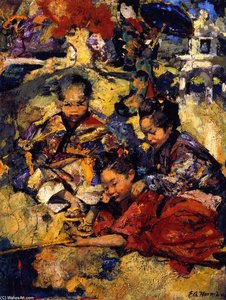
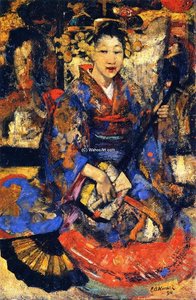
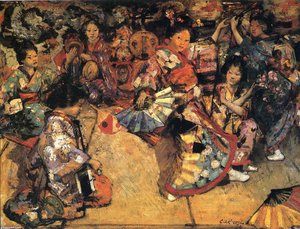
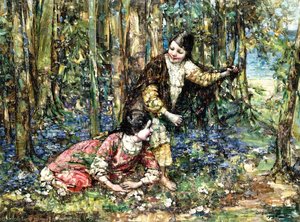
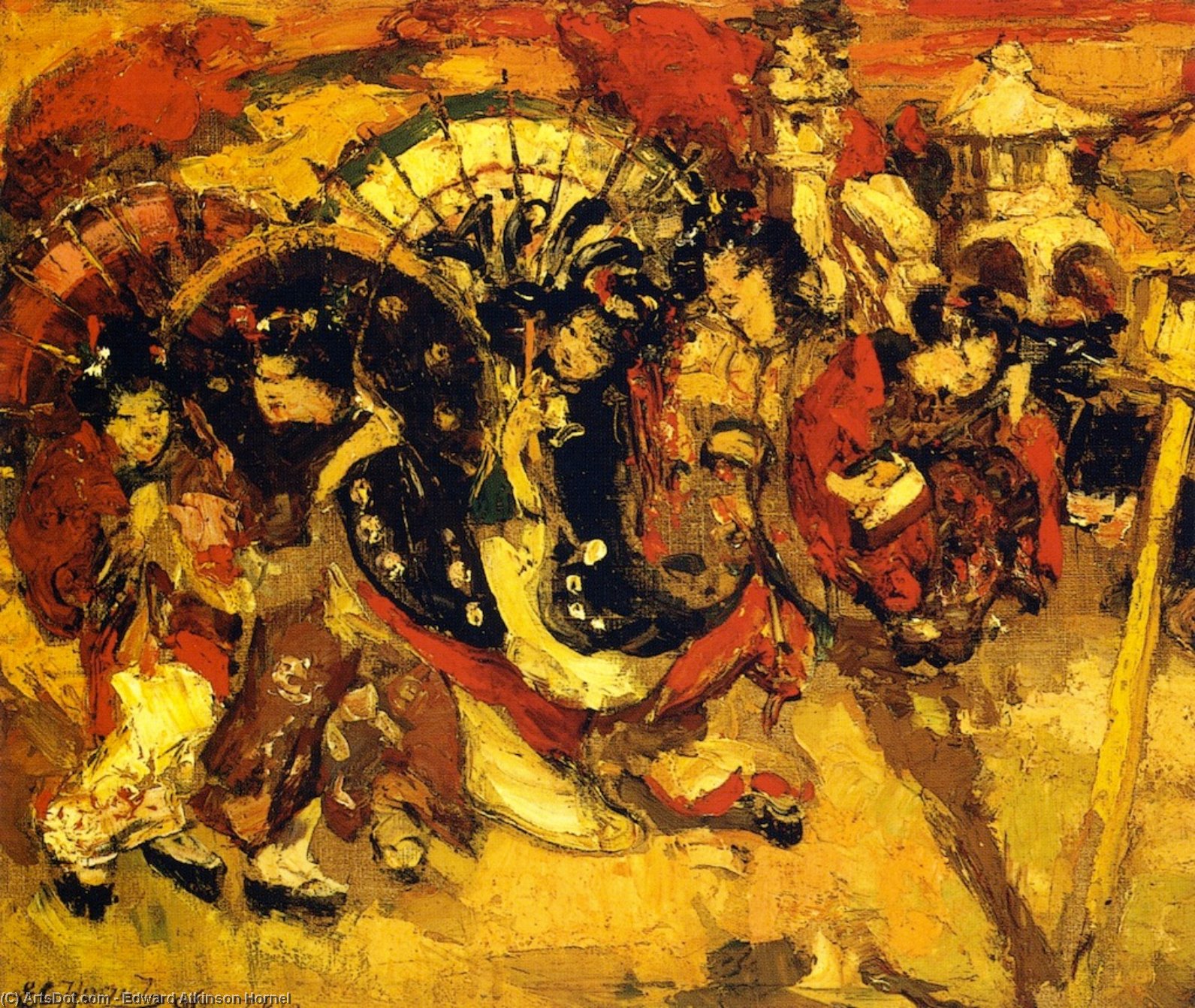
Japanese Figures in a Garden


 Read More
Hand Made Oil Reproduction
Hand-painted oil on canvas in your size and frame, made to order by our artists. ( Buy Print Buy Image)




































Pick from our preset sizes that match the artwork's original proportions.

You may enter your own dimensions to fit a specific frame or space. If your selected size does not match the original image's proportions, we will either crop the artwork or extend the painting with additional hand-painted elements. A digital mockup will be sent for your approval before production begins.
Please note that the on-screen preview does not reflect the actual cropping or extension. Only the mockup will accurately show the final composition.
While custom sizes are available, we recommend selecting a dimension from the predefined list to preserve the original proportions.
After order, ArtsDot.com team will email client for instructions and provide a mockup preview
Worldwide Delivery () in 3/4 weeks instead of standard 5 weeks. (16 August). No compromise on quality.

Free Worldwide Express Shipping

High-Quality Linen Canvas

Full Shipping Insurance

Customs Tax Refund Guarantee

True Color Matching Guarantee

60-Day Return Policy (Defects Only)

100% Money-Back Guarantee

Bulk Discount Offer
 Glass option is only available in size under 110 CM

Japanese Figures in a Garden
Reproduction Medium
Reproduction Size
-


Total Price
$ 388
Artwork Description
The Artist and His Style
Edward Atkinson Hornel was a Scottish painter who was known for his beautiful and delicate depictions of landscapes and figures. His style is characterized by the use of soft colors and gentle brushstrokes, which gives his paintings a sense of serenity and calmness. In Japanese Figures in a Garden, Hornel's style is evident in the way he captures the beauty of the natural world and the people in it.The Painting
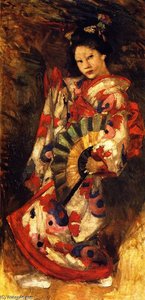
The painting depicts a group of people in a garden setting, surrounded by beautiful trees and flowers. The figures are dressed in traditional Japanese clothing and are engaged in various activities, such as playing music and enjoying tea. The painting is full of intricate details and subtle colors, which gives it a sense of depth and complexity. Key Features of the painting include:- The use of soft colors and gentle brushstrokes to create a sense of serenity and calmness
- The depiction of traditional Japanese clothing and activities
- The intricate details and subtle colors used to create a sense of depth and complexity
Reproductions and Prints
For those who are interested in owning a piece of this beautiful painting, ArtsDot.com offers high-quality reproductions and prints on canvas. These reproductions are made using the latest technology and are available in a range of sizes to suit any space.The Museum Sudbury Town Hall is also a great resource for those who want to learn more about the painting and its history. With its extensive collection of artworks, including paintings by Edward Atkinson Hornel, the museum is a must-visit for art lovers.
In conclusion, Japanese Figures in a Garden by Edward Atkinson Hornel is a captivating painting that showcases the artist's unique style and skill. With its beautiful depiction of a garden setting and intricate details, this painting is a must-see for anyone who loves art.
Related Artworks
Artist Biography
Edward Atkinson Hornel: A Scottish Impressionist Embracing Japonisme
Edward Atkinson Hornel (1864 – 1933) stands as a prominent figure in late Victorian and early twentieth-century Scottish art, inextricably linked to the Glasgow Boys movement and profoundly impacted by Japanese aesthetics. Born in Bacchus Marsh, Victoria, Australia—a testament to his Scottish heritage—Hornel’s formative years instilled within him an appreciation for both landscape painting and meticulous botanical detail. Following his family's relocation back to Kirkcudbright in 1866, he pursued formal artistic training at Edinburgh Art School and Antwerp under Professor Verlat, honing skills that would define his distinctive style. Returning to Scotland in 1885, Hornel found kinship with George Henry and established a collaborative partnership that yielded masterpieces like “Druids Bringing In The Mistletoe” (1890), an ambitious depiction of druidic ritual imbued with vibrant color palettes and textural experimentation. This collaboration cemented Hornel’s reputation for bold artistic vision—specifically his masterful manipulation of paint surfaces through layering, scraping, roughening, smoothing, and staining techniques—a method that prioritized expressive effect over photographic realism. The year 1893–94 witnessed Hornel and Henry embarking on a transformative journey to Japan, where they absorbed the principles of decorative design and spatial arrangement championed by Japanese artists. This immersion profoundly influenced Hornel’s artistic sensibilities, propelling him toward a more atmospheric approach characterized by refined color harmonies and nuanced drawing—elements that combined sensual appeal with poetic contemplation. By 1901, he politely declined membership to the Royal Scottish Academy, prioritizing his dedication to Glasgow Art Club where he continued to exhibit annually. Hornel's home became Broughton House in Kirkcudbright, a Victorian townhouse meticulously designed alongside Elizabeth Hornel—his sister—incorporating elements inspired by Japanese garden design. This residence served as a crucible for artistic innovation and fostered an environment conducive to experimentation with color and texture. Notably, he commissioned the construction of a gallery specifically for showcasing his paintings, ensuring their preservation and accessibility for future generations. His legacy extends beyond individual artworks; Broughton House itself is now cared for by the National Trust for Scotland, safeguarding Hornel’s artistic vision and providing insight into his creative process. Hornel's oeuvre includes celebrated pieces housed in museums across Britain—Aberdeen, Buffalo, Bradford, St. Louis—demonstrating the enduring resonance of his distinctive style within the broader context of British art history. His paintings exemplify the Glasgow Boys' commitment to Impressionistic principles while simultaneously reflecting the influence of Japonisme and Pre-Raphaelitism, securing his place as a pivotal figure in shaping the aesthetic landscape of the Edwardian era.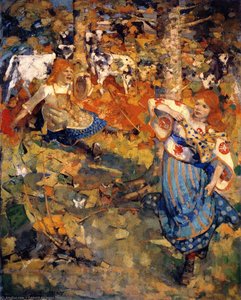
Edward Atkinson Hornel
1864 - 1933 , Australia
Quick Facts
- Artistic Movement Or Style: Glasgow Boys
- Artists Or Movements Influenced By This Artist:
- Impressionism
- Japonisme
- Artists Who Influenced This Artist:
- James Hornell
- George Henry
- Date Of Birth: 1864
- Full Name: Edward Atkinson Hornel
- Nationality: Scottish
- Notable Artworks:
- Japanese Figures in a Garden
- Dancing Geisha
- Place Of Birth: Kirkcudbright, Scotland
Related Articles
Edward Hopper's Masterpieces: 25 Iconic Paintings & Their Enduring Legacy | ArtsDot
Explore 25 iconic Edward Hopper paintings & their stories. Discover American realism, urban loneliness, and timeless beauty through his masterpieces. Find museum-quality art reproductions & curated decor ideas at ArtsDot.com.
Cultivating Paradise: A Historical & Artistic Exploration of Gardens in Painting
Explore the rich history of gardens in painting! Discover masterpieces from Renaissance to Impressionism & beyond. Learn about symbolism, artists like Monet & Klimt, and find your perfect artwork at ArtsDot.
Beyond Light & Color: Impressionism vs. Post-Impressionism for the Discerning Collector
Explore the nuances of Impressionism & Post-Impressionism with . Expert insights for collectors on style, investment, and acquiring museum-quality reproductions.
Post-Impressionism's 10 Defining Masterpieces: Art for Your Home |
Journey through Post-Impressionism's 10 defining masterpieces – Van Gogh, Monet & more. Explore iconic paintings, art history & find museum-quality reproductions for your home at . Discover all masterpieces online!
Beyond Impressionism: Exploring the Emotional Depth of Post-Impressionist Painting
Explore the profound emotional depth & innovative techniques of Post-Impressionism with ArtsDot. Discover Cézanne, Van Gogh, Gauguin & more – and their lasting impact on modern art.