

 Preview
 Send
Send Share
Share
 Details

 Download
 Similars
 X-Ray
X-Ray Diaporama
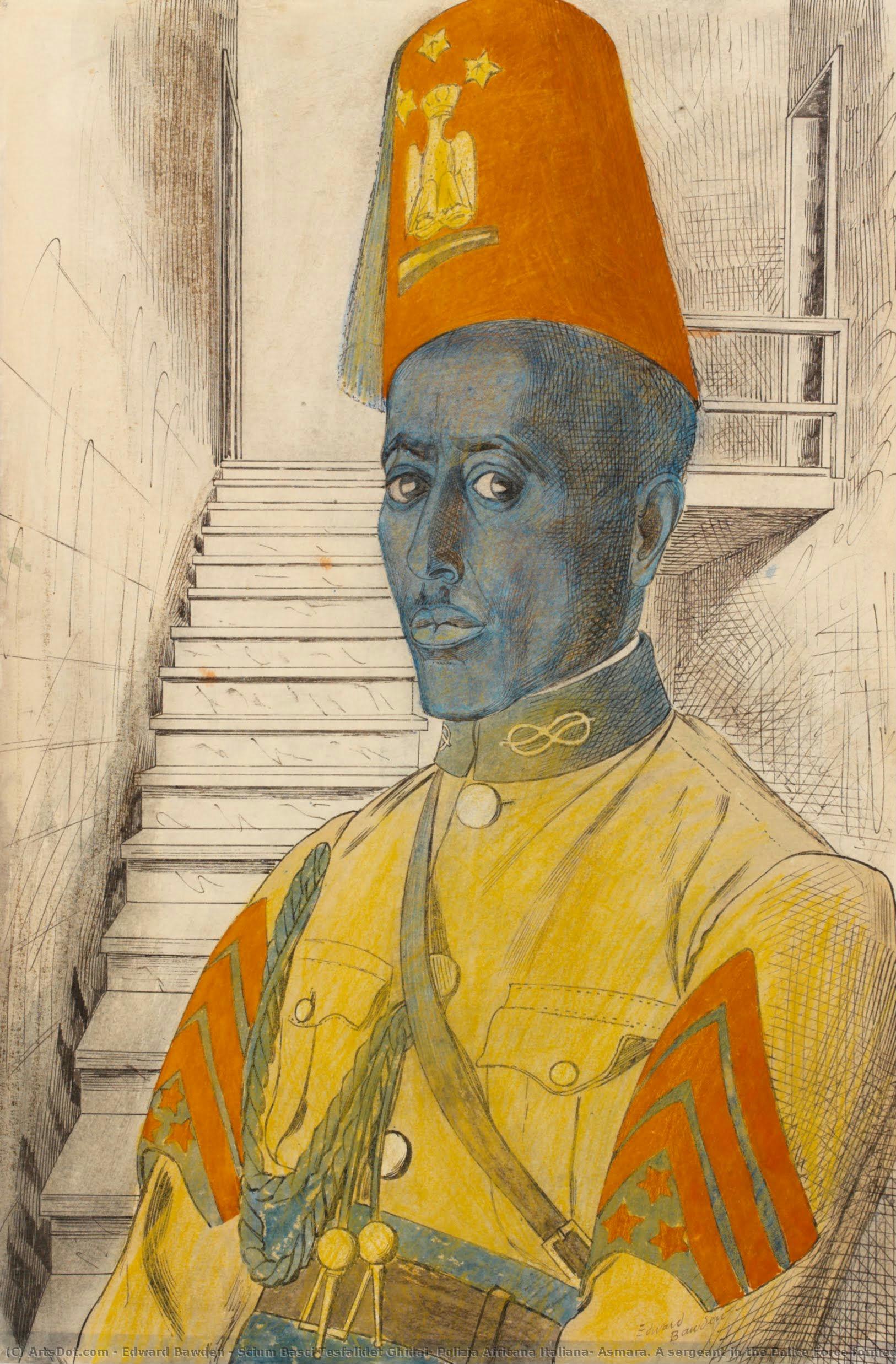
Scium Basci Tesfalidet Ghidai: Polizia Africana Italiana, Asmara. A sergeant in the Police Force formed by the Italians
 Acrylic On Canvas
- WallArt
- British War Art
 1942
1942 33.0 x 50.0 cm
 Imperial War Museums
 Read More
Purchase a high-resolution, enhanced digital image, far superior to the online preview.
Each file is meticulously prepared by our in-house specialists using advanced tools and expert manual retouching. We ensure every image has exceptional clarity, precise color accuracy, and fine detail.
The final file is delivered via email within 72 hours, optimized for immediate use in professional, editorial, and print environments. This is the same quality trusted by top-tier design studios, publishers, and galleries.
Digital Image
Download a high-resolution file for personal display, printing, and creative projects. ( Buy Print Buy Hand Made Painting)
Included in Every Digital Image Order
Expert Digital Delivery, Guaranteed
When you choose ArtsDot.com, you're not just getting an image - you're receiving a professionally enhanced digital artwork, crafted with precision and backed by a satisfaction guarantee. Here's everything that comes with your order, automatically:

Fast Email Delivery
Your high-resolution digital image file will be emailed to you within 72 hours of ordering - ready for immediate use.

AI-Enhanced Digital File
Your artwork is professionally optimized using advanced AI tools and manual editing, ensuring maximum detail, clarity, and color accuracy.

Free Lifetime Re-Delivery
Accidentally deleted or lost your file? No worries - we'll resend it to you anytime, free of charge.

No Import Fees - Ever
Enjoy your artwork instantly with zero customs, duties, or delivery fees - digital downloads are always tax-free.

Color Accuracy Guarantee
We ensure your digital image reflects the original colors as closely as possible using professional tools and color management.

60-Day Satisfaction Guarantee
If you're not satisfied with your digital image, we'll revise it or refund 100% within 60 days - no questions asked.

100% Money-Back Guarantee
Not satisfied? Get a full refund within 60 days of receiving your digital file - no questions asked.

Bulk Order Discounts
Buy 3 images, save 10% - Buy 5, save 15% - Buy 10+, save 20%. Great for creative projects, galleries, and agencies.
Collectible Description
A Sergeant’s Gaze: Bawden Captures Asmara's Vitality
Edward Bawden’s “Scium Basci Tesfalidet Ghidai: Polizia Africana Italiana, Asmara,” painted in 1942, is more than a simple portrait; it’s a vibrant snapshot of a pivotal moment – the British advance into Ethiopia and the burgeoning presence of Italian colonial forces. Bawden, already renowned for his meticulous illustrations and distinctive graphic style, found himself documenting this complex transition as an official war artist, tasked with capturing the essence of a rapidly changing landscape and its inhabitants. The painting immediately draws the eye to the central figure: a sergeant in the Polizia Africana Italiana, seated with a quiet intensity that belies the turbulent events unfolding around him. His uniform, a striking yellow punctuated by a bold red hat, speaks volumes about his role – a symbol of Italian authority amidst a shifting power dynamic. Yet, it’s not merely military attire; there's an undeniable theatricality to the garment, hinting at a carefully constructed image designed to project strength and control.A Watercolor World: Technique and Atmosphere
Bawden’s masterful use of watercolor is central to the painting’s impact. He eschews photographic realism in favor of a looser, more expressive approach, capturing not just the physical appearance of the sergeant but also the atmosphere of Asmara itself. The background – a pale wash of muted blues and greens – creates a sense of distance and suggests an expansive, almost dreamlike quality to the city. Bawden’s brushstrokes are visible, adding texture and movement to the scene. Notice how he builds up layers of color to define the sergeant's uniform, using subtle variations in tone to create depth and form. The careful rendering of his face – a slight furrow of the brow, a hint of weariness in his eyes – conveys a quiet dignity and an underlying sense of observation. The inclusion of two figures in the background, one on the left and another further back on the right, adds a layer of narrative complexity, hinting at the social fabric of this colonial outpost.Echoes of Colonialism: Context and Symbolism
Painted during World War II, “Scium Basci Tesfalidet Ghidai” offers a poignant glimpse into the complexities of colonialism. The Polizia Africana Italiana was comprised largely of Italian nationals serving in East Africa, alongside indigenous African recruits. Bawden’s portrayal subtly acknowledges this hybridity, presenting the sergeant as an individual caught between two worlds – representing both Italian authority and the realities of colonial administration. The title itself—a direct translation from Italian—underscores the painting's historical context. It speaks to the specific unit depicted and the broader military campaign unfolding in Ethiopia. The choice of Asmara, a strategically important city and a hub for Italian operations, highlights the significance of this moment in the war’s trajectory. The vibrant colors of the uniform stand out against the subdued background, symbolizing the assertive presence of the Italian forces within the region.A Moment Frozen in Time: Emotional Resonance
Beyond its historical and artistic merits, “Scium Basci Tesfalidet Ghidai” possesses a remarkable emotional resonance. The sergeant’s gaze – direct and unwavering – invites the viewer to contemplate his thoughts and experiences. There's a sense of quiet contemplation, perhaps even melancholy, in his expression, suggesting the weight of responsibility and the uncertainties of war. Bawden masterfully captures this intangible quality, transforming a simple portrait into a powerful meditation on identity, power, and the human condition. The painting’s enduring appeal lies not only in its technical skill but also in its ability to evoke a sense of place and time, transporting us back to a pivotal moment in history—a moment captured with remarkable sensitivity and artistic vision. Reproductions of this artwork offer a tangible connection to this fascinating period, allowing viewers to appreciate Bawden’s artistry and the historical context of this compelling image.Related Artworks
Artist Biography
Edward Bawden: A Life in Art
- Born: March 10, 1903, Braintree, Essex, England
- Died: November 21, 1989
- Nationality: English
- Known for: Painting, Illustration, Graphic Art, Prints, Book Covers, Posters, Garden Metalwork Furniture
Early Life and Education
- Bawden's early life was shaped by a solitary childhood spent drawing and exploring nature. His parents, Methodist Christians, encouraged his artistic inclinations.
- He attended Braintree High School and later the Friends’ School at Saffron Walden.
- From 1919 to 1921, he studied at Cambridge School of Art.
- In 1922, he received a scholarship to the Royal College of Art School of Design in London, where he studied illustration until 1925. It was here that he met Eric Ravilious, forming a significant artistic partnership.
- During this period, Bawden demonstrated early talent with commissions like the tiles for the London Underground exhibited at the International Building Trades Exhibition in 1928.
Artistic Development and Key Works
- Early Commercial Work: Bawden's career involved extensive commercial work for companies such as London Transport, Westminster Bank, Twinings, Poole Potteries, Shell-Mex & BP, the Folio Society, Chatto & Windus, and Penguin Books. This honed his skills in graphic design and illustration.
- Mural at Morley College: A significant early project was the mural created with Ravilious and Charles Mahoney for Morley College in London (1928-1930).
- The Great Bardfield Artists: Bawden became a central figure in the Great Bardfield Arts Group, alongside artists like Eric Ravilious. This community fostered collaboration and shared artistic values.
- War Artist: During World War II, Bawden served as an official war artist for the British Army, documenting his experiences in France, North Africa, the Middle East, and Iraq. These works provide a valuable historical record of wartime life.
- Distinctive Style: Bawden developed a distinctive style characterized by detailed observation, linear precision, and a blend of humor and melancholy. His watercolours are particularly celebrated for their evocative depictions of landscapes and everyday scenes.
Influences and Legacy
- Early Influences: Bawden was influenced by artists like Louis Wain, Burne Jones, Aubrey Beardsley, Richard Doyle, and William Morris.
- Contemporary Collaboration: His close collaboration with Eric Ravilious significantly shaped his artistic development.
- Later Recognition: Bawden's work gained wider recognition later in life, influencing graphic artists like Edward Gorey and David Gentleman.
- Historical Significance: Bawden’s contributions to British art are significant for his versatility as an illustrator, painter, and designer. His wartime documentation provides a unique perspective on the era, while his commercial designs helped shape the visual landscape of mid-20th century Britain.
Family and Later Years
- In 1932, Bawden married Charlotte Epton, also an artist and potter. They had two children, Joanna and Richard, both of whom became artists.
- The couple lived in Great Bardfield, Essex, for several decades, becoming integral to the local artistic community.
- After his wife's death in 1970, Bawden moved to Saffron Walden where he continued working until his death in 1989.
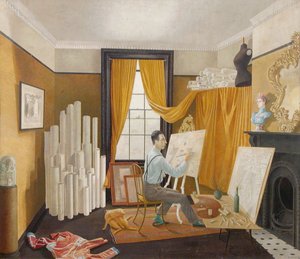
Edward Bawden
1903 - 1989 , United Kingdom
Quick Facts
- Artistic Movement Or Style: Graphic art, Illustration
- Artists Or Movements Influenced By This Artist:
- Edward Gorey
- David Gentleman
- Artists Who Influenced This Artist:
- Aubrey Beardsley
- Richard Doyle
- William Morris
- Paul Nash
- Date Of Birth: March 10, 1903
- Date Of Death: November 21, 1989
- Full Name: Edward Bawden
- Nationality: English
- Place Of Birth: Braintree, United Kingdom

