 Preview
 Send
Send Share
Share
 Details

 Download
 Similars
 X-Ray
X-Ray Diaporama
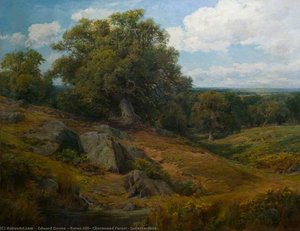
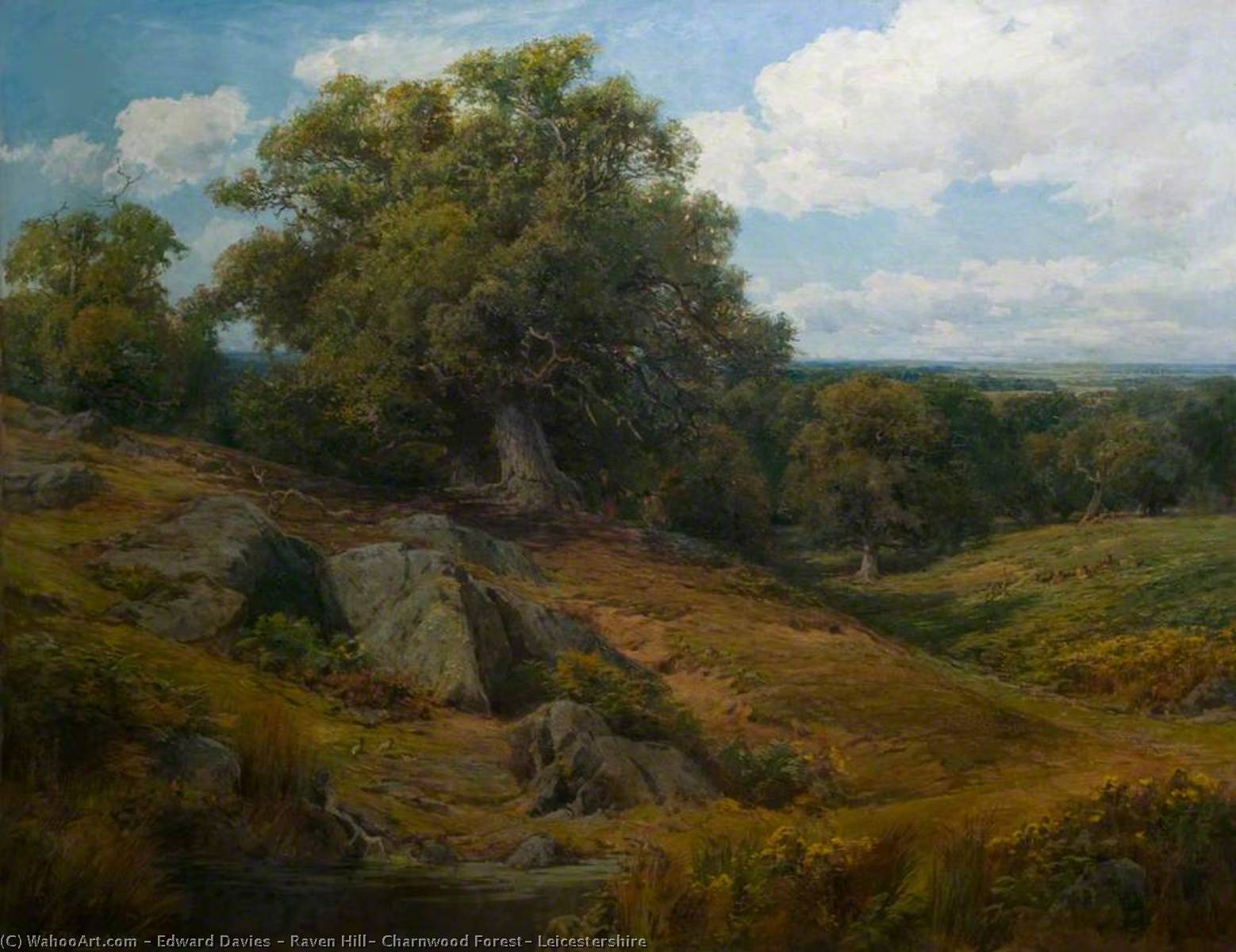
Raven Hill, Charnwood Forest, Leicestershire
 1901
1901 138.0 x 183.0 cm
 Read More
Giclée / Art Print
Museum-quality giclée or canvas print with fast production and flexible finish options. ( Buy Hand Made Painting Buy Image)




































Pick from our preset sizes that match the artwork's original proportions.

You may enter your own dimensions to fit a specific frame or space. If your selected size does not match the original image's proportions, we will either crop the artwork or extend the image with a mirrored or solid-fill edge. A digital mockup will be sent for your approval before production begins.
Please note that the on-screen preview does not reflect the actual cropping or extension. Only the mockup will accurately show the final composition.
While custom sizes are available, we recommend selecting a dimension from the predefined list to preserve the original proportions.
Worldwide Delivery () in 2 weeks instead of standard 4/5 weeks. (22 August)

Free Worldwide Express Shipping

High-Quality Linen Canvas

Full Shipping Insurance

Customs Tax Refund Guarantee

True Color Matching Guarantee

60-Day Return Policy (Defects Only)

100% Money-Back Guarantee

Bulk Discount Offer
 Glass option is only available in size under 110 CM

Raven Hill, Charnwood Forest, Leicestershire
Giclée / Art Print
Reproduction Size
-


Total Price
$ 63
Related Artworks








Artist Biography
George Edward Davis: Bridging Art and Engineering – A Legacy of Vision
George Edward Davis (1850-1907) stands as a singular figure in American art history, an artist whose creative pursuits intersected profoundly with the burgeoning field of chemical engineering. While often overshadowed by contemporaries like Sargent and Munnings—artists who graced ArtsDot alongside him—Davis’s contribution transcends mere artistic accomplishment; he fundamentally reshaped how we perceive landscape painting and championed a new approach to scientific illustration. Born in Wellesley, Massachusetts, Davis possessed an innate fascination with both the natural world and mathematical precision. This dual passion fueled his groundbreaking work on “The Handbook of Chemical Engineering,” published in 1893. Unlike traditional topographical sketches intended solely for aesthetic appreciation, Davis’s handbook meticulously documented industrial processes—factories, refineries, and laboratories—employing a revolutionary technique: stereoscopic projection. He painstakingly recreated scenes using twin cameras positioned slightly apart, capturing depth perception that would have been impossible with conventional painting methods. This innovative approach wasn't merely about accuracy; it aimed to educate viewers about the complexities of modern industry while simultaneously elevating landscape art to new heights of realism and scientific rigor. His meticulous attention to detail—the subtle gradations of light, the textures of machinery—became a hallmark of his style and influenced generations of illustrators. Davis’s artistic output extended beyond engineering diagrams. He produced evocative watercolors depicting scenes from New England's coastline and interior landscapes, capturing the mood and atmosphere with remarkable sensitivity. Works like “Mrs. Edward Davis and Her Son, Livingston” and “Mrs. Edward L. Davis and Her Son Livingston,” executed by John Singer Sargent—a fellow Wellesley resident and collaborator—demonstrate Davis’s masterful command of tonal harmony and compositional balance. These paintings are celebrated on ArtsDot for their serene beauty and understated elegance. Similarly, "Wolf Point," a dramatic depiction of Maine's coastline, showcases his ability to convey the power of nature through nuanced brushstrokes and careful observation. Davis’s artistic influences stemmed from Romantic landscape painters like Turner and Constable, whom he admired for their expressive use of color and light. However, unlike many artists of his time who prioritized idealized beauty, Davis sought to represent reality as faithfully as possible—a conviction that underpinned both his scientific endeavors and his artistic creations. He believed that art could serve a didactic purpose, informing viewers about the world around them while simultaneously inspiring wonder and contemplation. His legacy extends beyond individual artworks; Davis established the Wellesley Art Museum in 1907, ensuring that his passion for preserving and disseminating visual culture would endure. Today, ArtsDot continues to honor his pioneering spirit by showcasing reproductions of his paintings alongside those of other influential artists—a testament to the enduring power of creativity and intellectual curiosity.
Quick Facts
- Artistic Movement Or Style: Regionalist Art Style
- Artists Who Influenced This Artist: ['John Singer Sargent']
- Date Of Birth: (1850)
- Date Of Death: (1907)
- Full Name: George Edward Davis
- Nationality: American
- Notable Artworks:
- Wolf Point
- Mrs. Edward Davis and her Son, Livingston
- Mrs. Edward L. Davis and Her Son Livingston
- Place Of Birth: Philadelphia, Pennsylvania