 Preview
 Send
Send Share
Share
 Details

 Download
 Similars
 X-Ray
X-Ray Diaporama
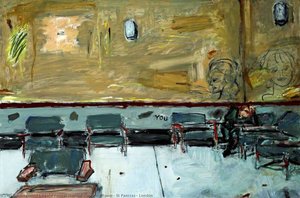
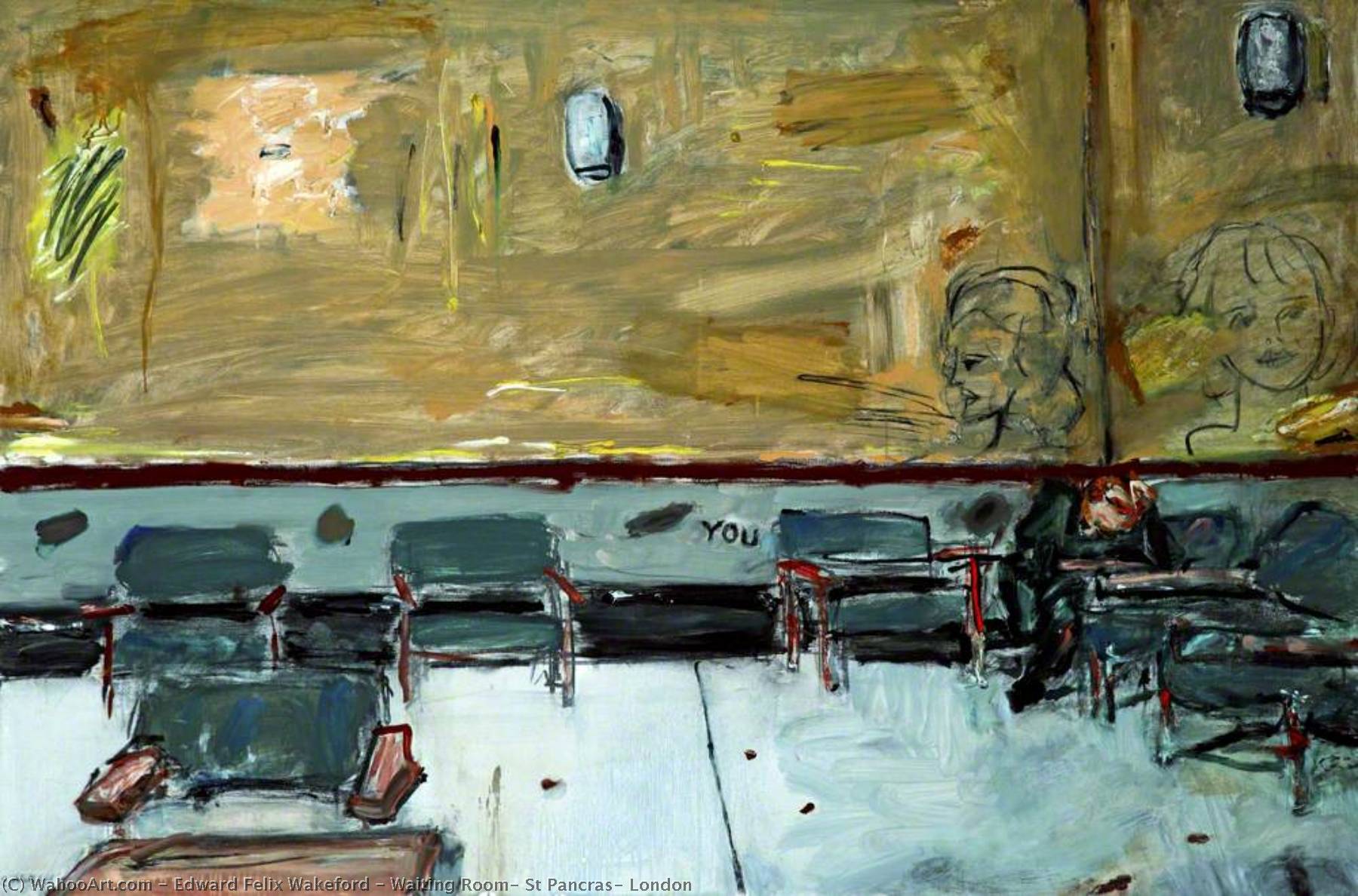
Waiting Room, St Pancras, London
 101.0 x 151.0 cm
 Read More
Giclée / Art Print
Museum-quality giclée or canvas print with fast production and flexible finish options. ( Buy Hand Made Painting Buy Image)




































Pick from our preset sizes that match the artwork's original proportions.

You may enter your own dimensions to fit a specific frame or space. If your selected size does not match the original image's proportions, we will either crop the artwork or extend the image with a mirrored or solid-fill edge. A digital mockup will be sent for your approval before production begins.
Please note that the on-screen preview does not reflect the actual cropping or extension. Only the mockup will accurately show the final composition.
While custom sizes are available, we recommend selecting a dimension from the predefined list to preserve the original proportions.
Worldwide Delivery () in 2 weeks instead of standard 4/5 weeks. (29 August)

Free Worldwide Express Shipping

High-Quality Linen Canvas

Full Shipping Insurance

Customs Tax Refund Guarantee

True Color Matching Guarantee

60-Day Return Policy (Defects Only)

100% Money-Back Guarantee

Bulk Discount Offer
 Glass option is only available in size under 110 CM

Waiting Room, St Pancras, London
Giclée / Art Print
Reproduction Size
-


Total Price
$ 63
Related Artworks










Artist Biography
The Luminous Legacy of Edward Felix Wakeford
To encounter the work of Edward Felix Wakeford is to step into a world where light and texture perform a delicate, silent dance. While the annals of art history often spotlight the radical ruptures of the avant-garde, Wakeford carved out a profound space within the British tradition, mastering a style that bridged the gap between Victorian realism and a more modern, atmospheric observation. Born in 1914 on the Isle of Man, his journey through the artistic landscape of the twentieth century was marked by a deep reverence for the physical world and an uncanny ability to capture the ephemeral qualities of light as it settles upon stone, sky, and skin.
His formal education provided the bedrock for this technical mastery. Studying at the prestigious Chelsea School of Art—where he would eventually return as a teacher—and the Royal College of Art, Wakeford immersed himself in the rigorous traditions of draftsmanship and composition. This academic foundation allowed him to develop a versatile hand, capable of moving between the meticulous precision required for architectural studies and the more fluid, expressive demands of portraiture and collage. His training instilled in him a profound respect for tonal harmony, a quality that would become the hallmark of his most evocative canvases.
A Synthesis of Realism and Atmosphere
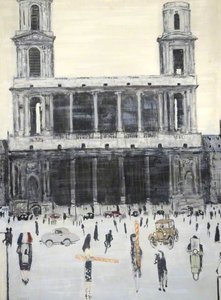
The true magic of Wakeford’s oeuvre lies in its ability to evoke emotion through restraint. Unlike many of his contemporaries who sought to shock the viewer with jarring color palettes, Wakeford favored a more nuanced approach. He possessed a singular talent for tonal precision, using subtle gradations of color to create depth and a sense of palpable atmosphere. In his landscapes, one can almost feel the dampness of a British morning or the warmth of sunlight filtering through a Parisian street. His works, such as the hauntingly beautiful St Sulpice, Paris, demonstrate how he could populate a scene with figures that feel integral to the environment, rather than mere additions to it.
This mastery extended into his exploration of texture. Whether rendering the rugged surfaces of Northumberland scenery or the intricate details of architectural facades, Wakeford treated the canvas as a tactile medium. His attention to the physical dimension of his subjects—the way light catches a rough stone wall or reflects off a polished surface—adds a remarkable layer of physicality to his compositions. This commitment to textural nuance ensured that even his most quiet, contemplative pieces possessed an underlying energy and presence.
Recognition and Artistic Evolution
Throughout his career, Wakeford’s contributions to the British art scene were recognized by his peers and institutions alike. His appointment as an Associate of the Royal Academy (ARA) in 1968 stands as a testament to his standing within the artistic community. He was a frequent presence in notable galleries, exhibiting at the Hanover Gallery and the Brook Street Gallery, and his work has been preserved in significant collections, including those of the British Council and the Contemporary Art Society.
Beyond the realm of traditional painting, Wakeford was an artist of remarkable breadth. He explored the experimental possibilities of collage and contributed illustrative work to major entities like Shell-Mex and BP, proving that his artistic vision was not confined by medium or subject matter. Even in his literary endeavors, such as his book A Prize for Art (1961), he demonstrated a deep intellectual engagement with the creative process. His life, which concluded in London in 1973, left behind a legacy of works that continue to resonate with those who find beauty in the quiet, meticulously rendered truths of the visible world.
Quick Facts
- Artistic Movement Or Style: Realism
- Date Of Birth: (Living)
- Full Name: Edward Felix Wakeford
- Nationality: British
- Notable Artworks:
- St Sulpice, Paris
- Embleton, Northumberland
- Two Horses (recto)
- Place Of Birth: Stourbridge