 Preview
 Send
Send Share
Share
 Details

 Download
 Similars
 X-Ray
X-Ray Diaporama
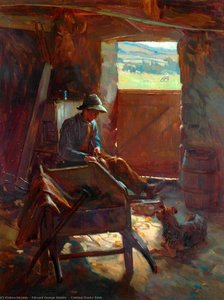
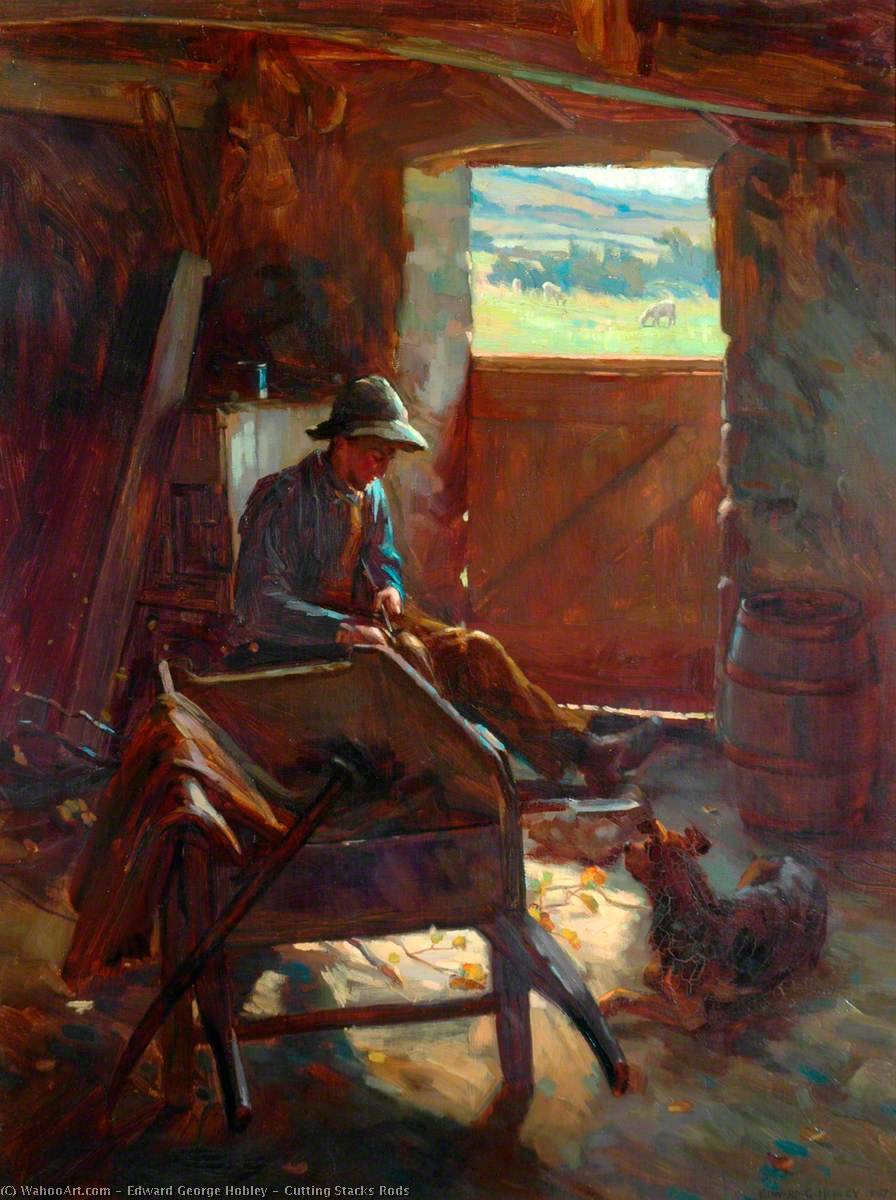
Cutting Stacks Rods
 1897
1897 97.0 x 74.0 cm
 Read More
Giclée / Art Print
Museum-quality giclée or canvas print with fast production and flexible finish options. ( Buy Hand Made Painting Buy Image)




































Pick from our preset sizes that match the artwork's original proportions.

You may enter your own dimensions to fit a specific frame or space. If your selected size does not match the original image's proportions, we will either crop the artwork or extend the image with a mirrored or solid-fill edge. A digital mockup will be sent for your approval before production begins.
Please note that the on-screen preview does not reflect the actual cropping or extension. Only the mockup will accurately show the final composition.
While custom sizes are available, we recommend selecting a dimension from the predefined list to preserve the original proportions.
Worldwide Delivery () in 2 weeks instead of standard 4/5 weeks. (21 August)

Free Worldwide Express Shipping

High-Quality Linen Canvas

Full Shipping Insurance

Customs Tax Refund Guarantee

True Color Matching Guarantee

60-Day Return Policy (Defects Only)

100% Money-Back Guarantee

Bulk Discount Offer
 Glass option is only available in size under 110 CM

Cutting Stacks Rods
Giclée / Art Print
Reproduction Size
-


Total Price
$ 63
Related Artworks









Artist Biography
Early Life and Artistic Beginnings
Edward George Hobley, born in Wallingford, Berkshire in the final quarter of 1866, emerged from a family that fostered an appreciation for the visual world, though details of his earliest upbringing remain somewhat elusive. He was the eldest of three sons born to Frederick and Mary (née Parker) Hobley. His initial artistic training took place at the Leeds Academy under the tutelage of Mr. John Snowdon, where he began to hone the skills that would later define his distinctive style. Even during these formative years, a dedication to meticulous detail and an observant eye were apparent, qualities that set him apart as a promising young artist. By 1891, Hobley had progressed sufficiently to participate in exhibitions at the Academy, showcasing works that hinted at a burgeoning talent. A period of study in Paris followed, exposing him to broader artistic currents and further refining his technique—a common trajectory for aspiring British painters of the era seeking to immerse themselves in European art traditions.A Rising Talent: Portraits and Early Recognition
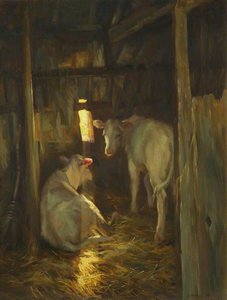
Hobley’s early career was marked by versatility, encompassing both landscapes and portraiture. In 1893, he garnered attention with a home portrait of Joseph White from Bradford, exhibited at the city's Art Museum. This recognition signaled his ability to capture not only likeness but also character—a crucial element in establishing himself as a sought-after artist. He continued to exhibit landscapes, including scenes of Morecambe Bay in 1895, demonstrating a growing confidence in depicting natural settings with nuanced light and atmosphere. However, it was the painting “A Shaft of Light,” exhibited at the Royal Academy in 1898, that truly propelled him into prominence. The work, now held in the collection of the Walker Art Gallery in Liverpool, depicts calves within a barn illuminated by a single, dramatic beam of sunlight. Critics lauded Hobley’s mastery of light and shadow, drawing comparisons to artists like Clausen and Stanhope Forbes—respected figures known for their realistic depictions of rural life.Penrith and the Cumberland Landscape
Around this time, Hobley settled in Penrith, Cumbria, a move that profoundly influenced his artistic focus. The rugged beauty of the Cumberland Hills became a central theme in his work, inspiring a series of detailed paintings that captured the region’s unique character. He secured a position as Art Master at the Penrith Technical School, further integrating himself into the local community and solidifying his presence within the art scene. His connection to Penrith wasn't solely professional; it was also personal, shaping both his life and artistic vision. The landscapes he produced during this period are characterized by their meticulous attention to detail, a sense of quiet observation, and an ability to convey the atmospheric conditions of the Cumbrian countryside.Industrial Scenes and Family Life
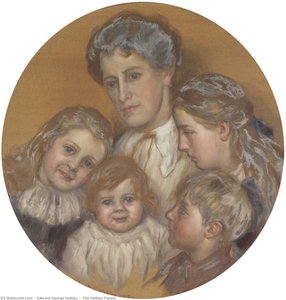
While celebrated for his landscapes, Hobley also explored industrial subjects, offering a glimpse into the changing face of Victorian England. Paintings like “Cutting Stacks Rods” depict scenes of labor and industry with a similar level of detail as his naturalistic works. These paintings are not merely documentary; they reveal a fascination with the interplay of light and shadow on metallic surfaces and the human element within industrial processes. Alongside these professional pursuits, Hobley documented his family life in numerous portraits, offering intimate glimpses into domestic scenes. “The Hobley Family” is a particularly poignant example, showcasing his ability to capture the warmth and affection of everyday moments.Tragic End and Lasting Legacy
Hobley’s career was tragically cut short on May 11th, 1916, when he died in an accident at Swarthbeck Gill (Ghyll) near Ullswater while painting. Despite his relatively brief artistic life, Edward George Hobley left behind a significant body of work that reflects the Victorian era’s fascination with realism, detail, and the changing social landscape. His paintings offer valuable insights into both the natural beauty of Cumberland and the industrial realities of the time. While perhaps not as widely recognized as some of his contemporaries, Hobley's meticulous technique, evocative landscapes, and sensitive portraits continue to resonate with art enthusiasts today, securing his place as a noteworthy figure in British Victorian painting. His works stand as testaments to a life dedicated to capturing the beauty and complexity of the world around him—a legacy preserved through the enduring power of his art.
Quick Facts
- Artistic Movement Or Style: Victorian Art
- Date Of Death: 1916
- Full Name: Edward George Hobley
- Nationality: British
- Notable Artworks:
- The Hobley Family
- Cutting Stacks Rods
- A Shaft of Light
- Place Of Birth: Wallingford, UK