 Preview
 Send
Send Share
Share
 Details

 Download
 Similars
 X-Ray
X-Ray Diaporama
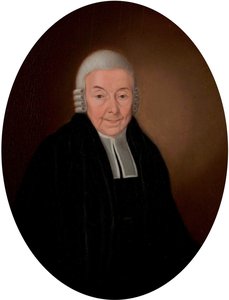
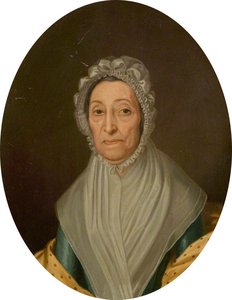
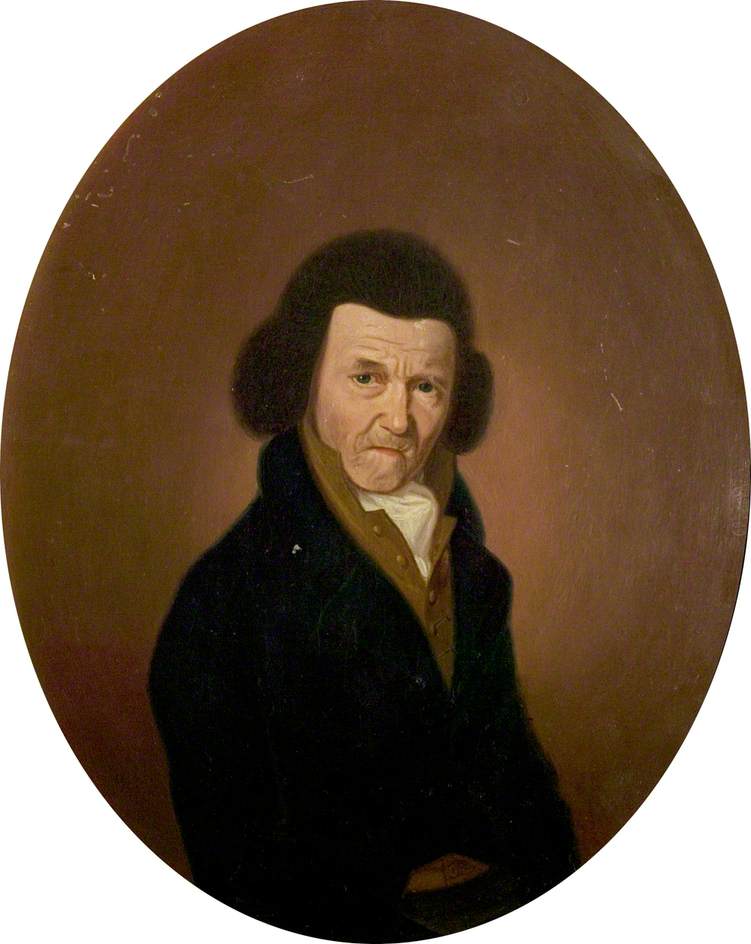
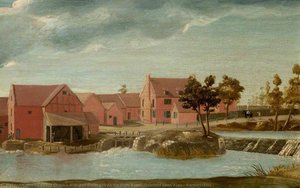
John Lord, Esq., Mayor of Stratford (1787–1788)
 1788
1788 30.0 x 24.0 cm
 Stratford-upon-avon Town Hall
 Read More
Hand Made Oil Reproduction
Hand-painted oil on canvas in your size and frame, made to order by our artists. ( Buy Print Buy Image)




































Pick from our preset sizes that match the artwork's original proportions.

You may enter your own dimensions to fit a specific frame or space. If your selected size does not match the original image's proportions, we will either crop the artwork or extend the painting with additional hand-painted elements. A digital mockup will be sent for your approval before production begins.
Please note that the on-screen preview does not reflect the actual cropping or extension. Only the mockup will accurately show the final composition.
While custom sizes are available, we recommend selecting a dimension from the predefined list to preserve the original proportions.
After order, ArtsDot.com team will email client for instructions and provide a mockup preview
Worldwide Delivery () in 3/4 weeks instead of standard 5 weeks. (30 August). No compromise on quality.

Free Worldwide Express Shipping

High-Quality Linen Canvas

Full Shipping Insurance

Customs Tax Refund Guarantee

True Color Matching Guarantee

60-Day Return Policy (Defects Only)

100% Money-Back Guarantee

Bulk Discount Offer
 Glass option is only available in size under 110 CM

John Lord, Esq., Mayor of Stratford (1787–1788)
Reproduction Medium
Reproduction Size
-


Total Price
$ 263
Related Artworks









Artist Biography
The Visionary Hand of Edward Grubb
In the shifting light of the Georgian era, a period defined by both industrial upheaval and refined elegance, the works of Edward Grubb (c.1740–1816) emerged as profound meditations on the human spirit. Born into the rugged landscape of Cornwall, England, Grubb was far more than a mere chronicler of faces; he was an artist who sought to bridge the gap between the physical likeness and the internal essence of his subjects. While history often remembers him through the lens of his multifaceted talents—as a stonemason, sculptor, and painter—it is his ability to infuse classical precision with a soulful, almost intuitive sensitivity that secures his place in the annals of British art. His journey from the industrial heartlands of Cornwall to the cultural epicenter of Stratford-upon-Avon represents a remarkable ascent of an autodidact who defied the rigid academic constraints of his century.
Grubb’s early life was deeply intertwined with the iron-rich heritage of his family, particularly through his father, Peter Grubb, a figure central to the establishment of Cornwall Furnace. This connection to the burgeoning industrial revolution provided a unique backdrop to his formative years, perhaps instilling in him a respect for the structural integrity and permanence found in stone and metal—qualities that would later manifest in the meticulous anatomical accuracy of his portraiture. Though he lacked the formal pedigree of the great academy-trained masters, Grubb’s self-taught path allowed for a rare freedom of expression. Through apprenticeship and rigorous personal study, he mastered the nuances of tonal modulation and perspective, developing a technique that felt both grounded in classical tradition and vibrantly alive with individual character.
A Legacy Carved in Stone and Canvas
As Grubb moved through the English Midlands, his artistic footprint expanded from the sculptural to the painterly. His time in Birmingham marked a significant milestone, where he distinguished himself as the first unambiguously fine art sculptor to work within the city. This period of his life was characterized by a monumental approach to art, creating works that occupied public and sacred spaces alike. One of his most enduring achievements includes the creation of various monuments for local churches and the striking, non-ecclesiastic sculpture of a boy and girl at the Blue Coat School entrance. These figures, modeled after real pupils, demonstrate his ability to capture the innocence and vitality of youth, blending the permanence of stone with the fleeting grace of life.
However, it was in Stratford-upon-Avon that Grubb truly found his voice as a master portraitist. Settling in the birthplace of Shakespeare, he became a sought-after figure among local dignitaries and prominent families. His canvases from this era are not merely records of social standing but are deeply psychological studies. Whether depicting the solemnity of Reverend Edward Rice or the quiet dignity of figures like Susanna Rice, Grubb utilized a sophisticated command of light and shadow to evoke the very soul of his sitters. His work often reflects the transition from the structured elegance of the late Baroque to the more emotive, naturalistic tendencies of the burgeoning Romantic movement.
The significance of Edward Grubb’s oeuvre lies in its remarkable versatility and its enduring emotional resonance. His ability to navigate between the heavy, tactile world of a stonemason and the delicate, ethereal realm of a portrait painter allowed him to offer a complete vision of his era. To look upon a Grubb painting is to witness the intersection of 18th-century craftsmanship and an early modern psychological depth. He remains a testament to the power of the self-taught artist, proving that true mastery is born not just from instruction, but from an unyielding passion for observing the beauty and complexity of the world around us.
Quick Facts
- Artistic Movement Or Style: Romanticism
- Artists Who Influenced This Artist: ['John Seymour Lucas']
- Date Of Birth: 1754
- Full Name: Edward Wilkins Waite
- Nationality: British
- Notable Artworks: ['The Garrick Jubilee, Stratford-upon-Avon']
- Place Of Birth: London