

 Preview
 Send
Send Share
Share
 Details

 Download
 Similars
 X-Ray
X-Ray Diaporama
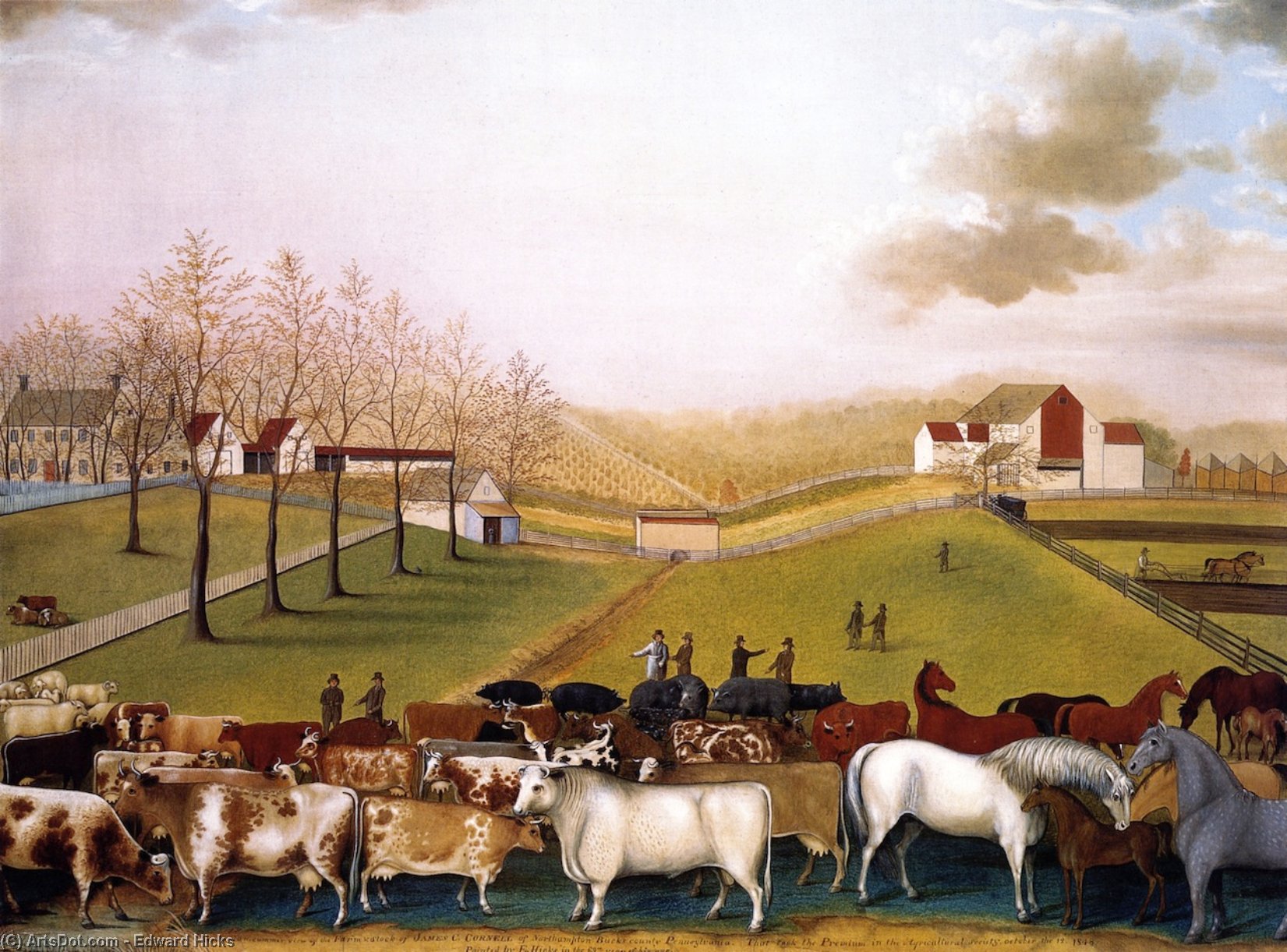
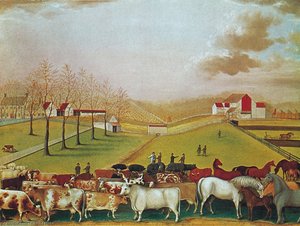
An Indian Summer View of the Farm ^ Stock of James C. Cornell


 Read More
Purchase a high-resolution, enhanced digital image, far superior to the online preview.
Each file is meticulously prepared by our in-house specialists using advanced tools and expert manual retouching. We ensure every image has exceptional clarity, precise color accuracy, and fine detail.
The final file is delivered via email within 72 hours, optimized for immediate use in professional, editorial, and print environments. This is the same quality trusted by top-tier design studios, publishers, and galleries.
Digital Image
Download a high-resolution file for personal display, printing, and creative projects. ( Buy Print Buy Hand Made Painting)
Included in Every Digital Image Order
Expert Digital Delivery, Guaranteed
When you choose ArtsDot.com, you're not just getting an image - you're receiving a professionally enhanced digital artwork, crafted with precision and backed by a satisfaction guarantee. Here's everything that comes with your order, automatically:

Fast Email Delivery
Your high-resolution digital image file will be emailed to you within 72 hours of ordering - ready for immediate use.

AI-Enhanced Digital File
Your artwork is professionally optimized using advanced AI tools and manual editing, ensuring maximum detail, clarity, and color accuracy.

Free Lifetime Re-Delivery
Accidentally deleted or lost your file? No worries - we'll resend it to you anytime, free of charge.

No Import Fees - Ever
Enjoy your artwork instantly with zero customs, duties, or delivery fees - digital downloads are always tax-free.

Color Accuracy Guarantee
We ensure your digital image reflects the original colors as closely as possible using professional tools and color management.

100-Day Satisfaction Guarantee
If you're not satisfied with your digital image, we'll revise it or refund 100% within 100 days - no questions asked.

100% Money-Back Guarantee
Not satisfied? Get a full refund within 100 days of receiving your digital file - no questions asked.

Bulk Order Discounts
Buy 3 images, save 10% - Buy 5, save 15% - Buy 10+, save 20%. Great for creative projects, galleries, and agencies.
An Exploration of Rural Tranquility: Examining Edward Hicks’ “The Cornell Farm”
Edward Hicks' "The Cornell Farm," completed in 1848, stands as a cornerstone of American Naïve Art—a genre characterized by its unpolished aesthetic and profound spiritual resonance. More than just a depiction of livestock, this oil on canvas masterpiece embodies the Quaker ethos of simplicity, peace, and an unwavering connection to the natural world, offering viewers a glimpse into a bygone era infused with moral contemplation. Its current residence at the National Gallery of Art in Washington D.C., underscores its enduring significance within American art history.Composition and Technique: Capturing Light and Movement
The painting’s visual impact begins immediately with its expansive horizontal format—a deliberate choice that maximizes the sense of openness and tranquility. Hicks meticulously arranges a considerable herd of cows, numbering at least fourteen, traversing the left side of the canvas towards the right edge, creating an arresting visual rhythm. These animals are rendered in varying shades of cream, tawny, russet, and dark brown, skillfully capturing the nuances of light and shadow—a hallmark of Hicks’ technique. Complementing this bovine procession is a solitary horse positioned on the right, further enhancing the dynamism of the scene. The artist's attention to detail extends beyond the animals themselves; he painstakingly portrays buildings scattered throughout the background, subtly hinting at the industriousness of rural life. Notably, Hicks employs a muted palette dominated by earthy tones—greens, browns, and pale yellows—reflecting the subdued beauty of an Indian summer day.Symbolism Rooted in Quaker Belief
Beyond its aesthetic merits, “The Cornell Farm” carries deep symbolic weight rooted in Hicks’ Quaker faith. The inscription along the bottom edge – "An Indian Summer View of the Farm & Stock of James C. Cornell of Northampton Bucks county Pennsylvania. Tat took the Premium in the Agricultural society, october the 12, 1848 Painted by E. Hicks in the 69th year of his age.”—is not merely a factual statement but a declaration of artistic conviction. Hicks wrestled with reconciling his vocation as a minister and his passion for painting, recognizing that art could serve as a conduit for spiritual contemplation. The depiction of animals—particularly cows—represents humility and industriousness—values central to Quaker theology. Furthermore, the serene landscape symbolizes God’s benevolent provision and invites viewers to contemplate the harmony between humanity and nature.Historical Context: Naïve Art and Its Legacy
“The Cornell Farm” emerged during a period marked by significant social and intellectual ferment in America. The rise of Transcendentalism—fueled by thinkers like Ralph Waldo Emerson and Henry David Thoreau—challenged prevailing orthodoxies and championed individualism alongside reverence for the natural world. Hicks’ work aligns perfectly with this movement's spirit, embodying its belief in intuition and moral responsibility. As a testament to his artistic prowess and spiritual vision, “The Cornell Farm” continues to inspire admiration and serves as an enduring emblem of American Naïve Art—a genre that prioritizes sincerity and direct observation over academic convention. Its presence at the National Gallery of Art ensures that this captivating portrayal of rural life remains accessible to generations of art enthusiasts.- Artist: Edward Hicks
- Birth Year: 1780
- Death Year: 1849
- Birth City: Attleboro
- Birth Country: United States of America
Related Artworks
Artist Biography
A Life Rooted in Faith and Vision
Edward Hicks, born April 4th, 1780, in the tranquil landscape of Attleboro (now Langhorne), Bucks County, Pennsylvania, was a figure uniquely positioned at the intersection of religious conviction and artistic expression. His story is not simply that of a self-taught painter, but of a dedicated Quaker minister whose spiritual journey profoundly shaped his distinctive visual language. Though born to Anglican parents, young Edward’s life took a pivotal turn when he came under the care of Matron Elizabeth Twining, a devout Quaker who instilled in him the core tenets of this faith – simplicity, peace, and an unwavering belief in the “inner light.” This early exposure would become the bedrock upon which his artistic vision was built. From the age of thirteen, Hicks apprenticed with coach makers William and Henry Tomlinson, mastering the techniques of decorative painting that would initially sustain him. However, even as he honed his skills in rendering ornate designs on carriages, a deeper calling resonated within him, one that would ultimately lead him down a path less traveled – a path where faith and artistry converged. By 1803, Hicks had fully embraced the Society of Friends, marrying Sarah Worstall and embarking on a life of itinerant preaching throughout Philadelphia, all while continuing to support his growing family through his painting skills.The Evolving Canvas: From Coachwork to Spiritual Landscapes
Hicks’s artistic development was far from conventional. He wasn't formally trained in the academic traditions of the time; instead, he cultivated a distinctly American folk art style born from observation, necessity, and deeply held beliefs. Initially, his paintings served practical purposes – house painting, coach decoration, tavern signs, and even decorative work on furniture and farm equipment. These early commissions provided financial stability but often conflicted with the Quaker emphasis on plainness and eschewal of worldly vanities. A period of hardship in 1815 saw Hicks briefly abandon ornamental painting for farming, a venture that proved unsuccessful. It was through encouragement from friends that he returned to his brushes in 1816, a turning point that allowed him to reconcile his artistic talents with his spiritual calling. This return wasn’t merely a resumption of previous work; it marked the beginning of a unique exploration of religious themes and allegorical landscapes. He began to imbue his paintings with symbolic meaning, reflecting his Quaker worldview and personal interpretations of scripture. His canvases became vehicles for conveying messages of peace, harmony, and the promise of a divinely ordained order.The Peaceable Kingdom: A Vision of Harmony
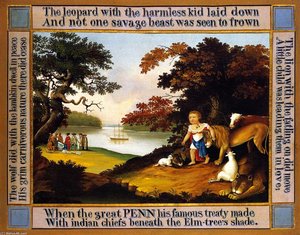
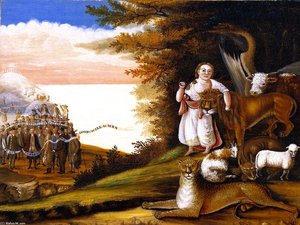
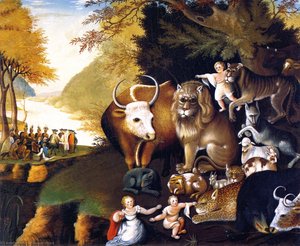
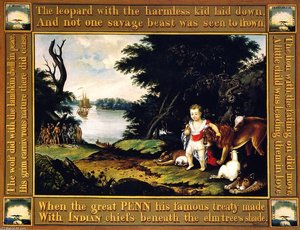
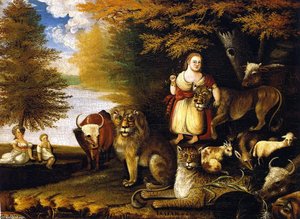
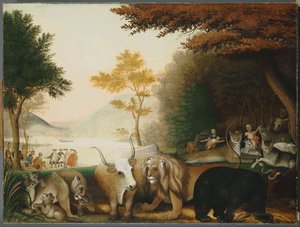
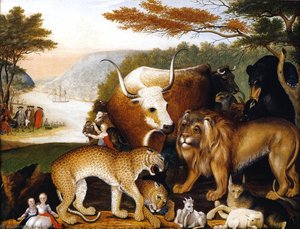
Edward Hicks is most celebrated today for his series of paintings known collectively as *The Peaceable Kingdom*. Comprising over sixty variations created throughout his life, these works are arguably the most iconic examples of American folk art. Inspired by Isaiah 11:6-9 – a passage foretelling a time when natural predators would coexist peacefully – Hicks depicted scenes of wild animals and children living in idyllic harmony. The paintings often feature figures from colonial Pennsylvania history, such as William Penn negotiating treaties with Native Americans, further grounding the biblical vision within an American context. *The Peaceable Kingdom* is not simply a charming depiction of animal life; it’s a powerful statement about Hicks's belief that Pennsylvania represented a fulfillment of this prophetic ideal – a place where peace and justice could prevail. Each version of *The Peaceable Kingdom* possesses subtle variations in composition, color palette, and detail, reflecting Hicks’s evolving artistic sensibilities and deepening spiritual understanding. Notable examples include *Peaceable Kingdom (31)* housed at Yale University Art Gallery, and *Peaceable Kingdom (34)* which portrays Noah's Ark amidst a serene landscape.Beyond the Kingdom: A Broader Artistic Scope
While *The Peaceable Kingdom* remains his signature achievement, Edward Hicks’s artistic output extended beyond this celebrated series. He painted landscapes, portraits, and historical scenes, each imbued with his characteristic folk art style and Quaker sensibility. His *Falls of Niagara*, now at the Abby Aldrich Rockefeller Folk Art Center, demonstrates his ability to capture the grandeur of nature while maintaining a sense of simplicity and reverence. Similarly, his depiction of *George Washington with his army crossing the Delaware* – also held at the Abby Aldrich Rockefeller Folk Art Center – offers a unique folk perspective on this iconic moment in American history. Even seemingly mundane subjects like *Grave of William Penn at Jordans in England*, reveal Hicks’s deep connection to Quaker heritage and his ability to find spiritual significance in everyday scenes. These works, taken together, demonstrate the breadth of Hicks's artistic vision and his commitment to using art as a means of expressing his faith and values.A Lasting Legacy: The Folk Art Icon
Edward Hicks passed away on August 23rd, 1849, in Newtown, Pennsylvania, leaving behind a body of work that continues to resonate with audiences today. He is now recognized as a pivotal figure in American folk art, celebrated for his distinctive style, recurring themes, and profound spiritual depth. His paintings offer invaluable insights into the beliefs and values of the Society of Friends during the 19th century, providing a visual record of their commitment to peace, simplicity, and social justice. Hicks’s unique ability to blend religious faith with artistic expression created a body of work that is both visually compelling and spiritually meaningful. His legacy extends beyond the museums and collections where his paintings are displayed; it lives on in the continued appreciation for his art and the enduring power of his vision – a vision of a “peaceable kingdom” where harmony reigns between humanity, nature, and the divine. He remains a testament to the power of self-taught artistry and the profound impact that faith can have on creative expression.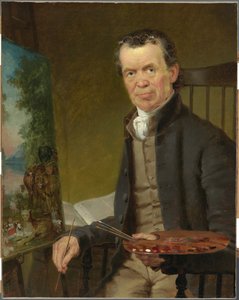
Edward Hicks
1780 - 1849 , United States of America
Quick Facts
- Artistic Movement Or Style: Folk Art
- Date Of Birth: April 4, 1780
- Date Of Death: August 23, 1849
- Full Name: Edward Hicks
- Nationality: American
- Notable Artworks:
- Peaceable Kingdom (31)
- Falls of Niagara
- George Washington crossing...
- Peaceable Kingdom (34)
- Place Of Birth: Langhorne, USA