 Preview
 Send
Send Share
Share
 Details

 Download
 Similars
 X-Ray
X-Ray Diaporama
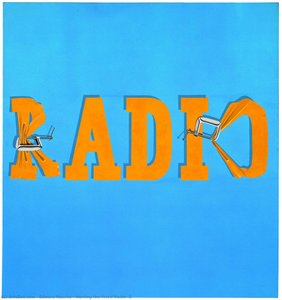
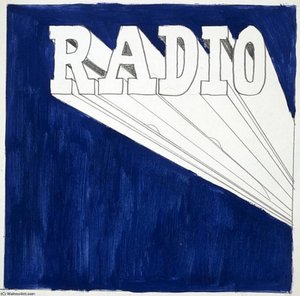
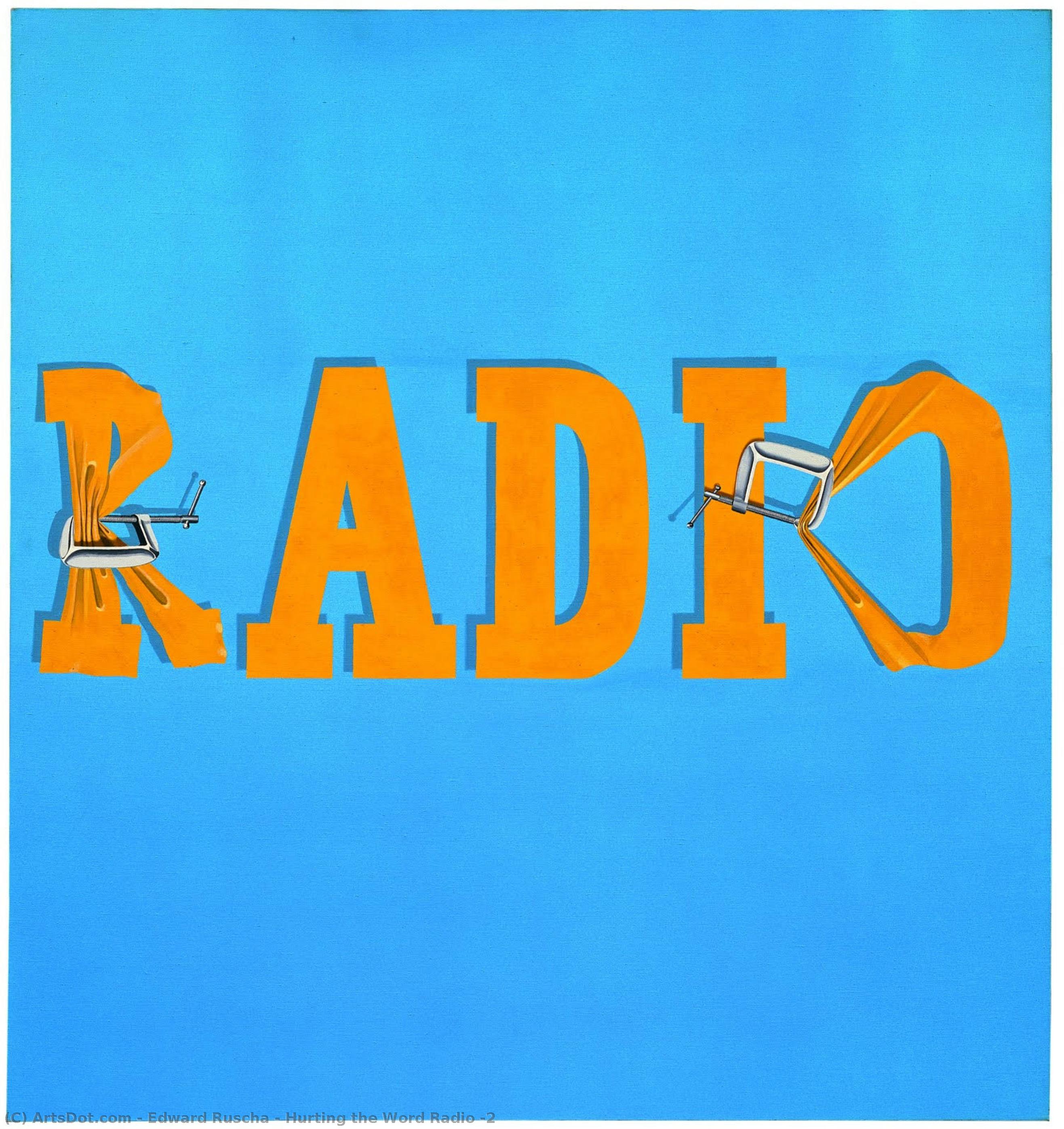
Hurting the Word Radio #2
 Acrylic On Canvas
- WallArt
- Pop Art
 1964
1964- Modern
 149.0 x 139.0 cm
 Hayward Gallery
 Read More
Hand Made Oil Reproduction
Hand-painted oil on canvas in your size and frame, made to order by our artists. ( Buy Print Buy Image)




P118B $10

P118H $10

P118W $10

P438Z $10

P508JH $12

P508YH $12

P805H $10

P805Z $10

P919BZ $10

P919G $10

P919XJ $10

P959ZH $10

P968JZ $12

W106C $8

W218G $10

W218JH $8

W218Y $10

W307PJ $10

W316G $10

W316PJ $8

W316Y $10

W398PJ $8

W4111J $10

W500HY $15

W500JH $15

W692G $12

W849H $8

W940BG $15

W953PJ $8




Pick from our preset sizes that match the artwork's original proportions.

You may enter your own dimensions to fit a specific frame or space. If your selected size does not match the original image's proportions, we will either crop the artwork or extend the painting with additional hand-painted elements. A digital mockup will be sent for your approval before production begins.
Please note that the on-screen preview does not reflect the actual cropping or extension. Only the mockup will accurately show the final composition.
While custom sizes are available, we recommend selecting a dimension from the predefined list to preserve the original proportions.
After order, ArtsDot.com team will email client for instructions and provide a mockup preview
Worldwide Delivery () in 3/4 weeks instead of standard 5 weeks. (17 August). No compromise on quality.

Free Worldwide Express Shipping

High-Quality Linen Canvas

Full Shipping Insurance

Customs Tax Refund Guarantee

True Color Matching Guarantee

60-Day Return Policy (Defects Only)

100% Money-Back Guarantee

Bulk Discount Offer
 Glass option is only available in size under 110 CM

Hurting the Word Radio #2
Reproduction Medium
Reproduction Size
-


Total Price
$ 263
Artwork Description
Hurting the Word Radio #2: A Distortion of Communication
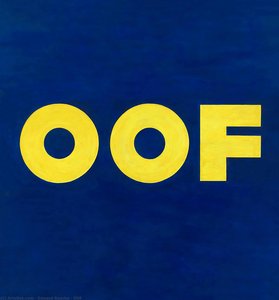
Ed Ruscha’s “Hurting the Word Radio #2” (1964) is more than just a depiction of the word ‘radio’; it's a potent meditation on communication, meaning, and the very nature of representation. Created during a pivotal moment in Pop Art’s evolution, this work exemplifies Ruscha’s innovative approach to painting – one that deliberately disrupts traditional notions of image-making and invites viewers into an unsettling dialogue.
The artwork immediately arrests attention with its stark contrast: a pale blue ground punctuated by bold, yellow lettering. The letters themselves are rendered in a decal-like style, appearing almost bruised or squeezed – the first and last letters dramatically distorted by the application of C-clamps. This technique, far from simply spelling out the word, actively undermines it, creating a visual tension that speaks to the fragility of signals and the potential for interference. Ruscha’s deliberate manipulation evokes a sense of decay and damage, suggesting a breakdown in the transmission of information – a concept particularly relevant in an era increasingly reliant on electronic communication.
Technique and Materials: A Calculated Disruption
- Decal Application: Ruscha masterfully employs the decal technique, layering the yellow letters onto the blue background. This process, often involving multiple layers of adhesive and pressure, creates a textured surface that contributes to the work’s distressed aesthetic.
- C-Clamp Distortion: The strategic use of C-clamps is crucial. These industrial tools physically deform the lettering, transforming them from recognizable forms into unsettling, fleshy shapes. This technique elevates the painting beyond a simple word association and introduces an element of physical violence.
- Pale Blue Ground: The muted blue background serves not as a neutral backdrop but as an active participant in the artwork’s narrative. It represents the void, the space where communication fails to reach its intended destination.
Historical Context and Influences
"Hurting the Word Radio #2" emerged from a vibrant artistic landscape of the early 1960s, deeply influenced by Pop Art’s embrace of everyday imagery and its questioning of traditional art hierarchies. Ruscha's work aligns with the Ferus Gallery group in Los Angeles, a hub for experimental artists pushing boundaries. His influences are diverse – from Jasper Johns’ meticulous depictions of American icons to Marcel Duchamp’s conceptual challenges to the definition of art itself. The echoes of Edward Hopper’s *Gas* (1940), particularly its sense of isolation and unease, can be discerned in Ruscha's exploration of disrupted communication.
Symbolism and Emotional Impact
The title itself – “Hurting the Word Radio” – is deliberately provocative. It forces us to confront the idea that words, symbols of meaning, are not immune to damage or distortion. The image’s unsettling quality evokes a sense of anxiety and disorientation, mirroring the potential for miscommunication in a world saturated with information. Ruscha's work isn't simply about a broken radio signal; it’s a profound commentary on the vulnerability of language and the challenges of conveying truth in an increasingly complex world. The empty chairs within the composition further amplify this sense of isolation and silence, suggesting a failure to connect.
Related Artworks
Artist Biography
Edward Joseph Ruscha IV: A Pioneer of Pop Art
Early Life and Education
- Born on December 16, 1937, in Omaha, Nebraska, Edward Joseph Ruscha IV grew up in a Roman Catholic family.
- He showed an early interest in art, particularly cartooning, nurtured by his mother’s support.
- Ruscha moved to Los Angeles in 1956 and studied at the Chouinard Art Institute (now CalArts) from 1956-1960 under Robert Irwin and Emerson Woelffer.
- During his time at Chouinard, he co-edited the journal *Orb*, a precursor to alternative newspapers.
Artistic Development and Influences
- Ruscha’s artistic journey began in the early 1960s, aligning him with the Ferus Gallery group in Los Angeles.
- He was influenced by a diverse range of artists including Jasper Johns, John McLaughlin, H.C. Westermann, Arthur Dove, Alvin Lustig, and Marcel Duchamp.
- The work of Edward Hopper, particularly his painting *Gas* (1940), also resonated with Ruscha’s developing style.
- His early works explored the visual language of commercialism and everyday American life.
Key Themes and Style
- Ruscha is renowned for his incorporation of text and phrases into paintings, often presented in a flat, deadpan aesthetic.
- He frequently depicted commonplace subjects like gas stations, motels, and landscapes of Southern California.
- His photographic books, such as Every Building on the Sunset Strip (1966), are iconic examples of his conceptual approach to art.
- A key theme in Ruscha’s work is the exploration of vernacular language and the visual culture of Los Angeles.
Major Achievements and Notable Works
- Some of his most celebrated works include:
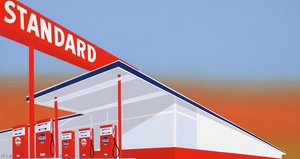
- Standard Station (1966): A quintessential representation of American roadside architecture.
- Large Trademark (1962): An early example of his word-based paintings.
- Hollywood (1982): Reflecting the iconic imagery of Los Angeles.
- Every Building on the Sunset Strip (1966): A groundbreaking photographic book documenting a stretch of Sunset Boulevard.
- Ruscha’s work challenged traditional notions of painting and photography, blurring the boundaries between art forms.
Historical Significance and Legacy
- Ruscha is considered a pivotal figure in the Pop Art movement, though his style often transcends easy categorization.
- His influence extends to contemporary artists working with language, photography, and conceptual art.
- He helped establish Los Angeles as a significant center for artistic innovation during the 1960s.
- Ruscha continues to live and work in Culver City, California, remaining an active and influential force in the art world.

edward joseph ruscha iv
1937 - , United States of America
Quick Facts
- Birth Date: December 16, 1937
- Birth Place: Omaha, Nebraska, United States
- Influenced By:
- Jasper Johns
- John McLaughlin
- H.C. Westermann
- Arthur Dove
- Alvin Lustig
- Marcel Duchamp
- Edward Hopper
- Movement: Pop Art
- Name: Edward Joseph Ruscha IV
- Nationality: American
- Notable Works:
- Standard Station (1966)
- Large Trademark (1962)
- Hollywood (1982)
- Every Building on the Sunset Strip (1966)
Related Articles

Slate Blue Masterpieces: 10 Iconic Paintings & Timeless Home Decor Ideas
Immerse yourself in the captivating world of slate blue! Explore 10 iconic paintings by Monet, Van Gogh & Renoir. Discover their stories, techniques & find museum-quality art reproductions for your home at .
The Allure of Azure: Exploring the Symbolic & Aesthetic Depths of Blue in Art History
Explore the rich history of blue in art! Discover its symbolism, from ancient pigments to modern masterpieces by Kandinsky & Seurat. Uncover the psychological impact and cultural meanings behind this captivating hue.
Pop Art Icons: 10 Masterpieces That Revolutionized Modern Decor |
Explore 10 defining Pop Art masterpieces – from Warhol’s iconic Marilyn to Lichtenstein's bold dots. Discover the stories behind these revolutionary artworks & find museum-quality reproductions for your home at .
Challenging Conventions: Pop Art's Origins, Evolution & Enduring Legacy
Explore the fascinating history of Pop Art, from its rebellious origins to its enduring influence on contemporary artists. Discover key figures like Warhol & Lichtenstein and learn about collecting this iconic movement.
Azure Visions: Exploring Representations of the Blue Dress in Western Art History
Explore the rich history of the blue dress in Western art! Discover its symbolism, from Renaissance masterpieces to modern interpretations by artists like Martin & Schiele. Uncover cultural meanings and artistic techniques.