

 Preview
 Send
Send Share
Share
 Details

 Download
 Similars
 X-Ray
X-Ray Diaporama
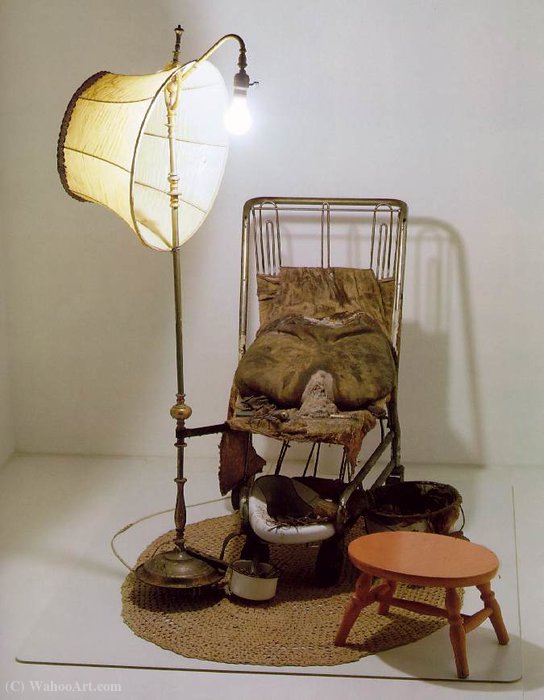
The illegal operation, (149.9 x 121.9 CM) (1962)
 Read More
Purchase a high-resolution, enhanced digital image, far superior to the online preview.
Each file is meticulously prepared by our in-house specialists using advanced tools and expert manual retouching. We ensure every image has exceptional clarity, precise color accuracy, and fine detail.
The final file is delivered via email within 72 hours, optimized for immediate use in professional, editorial, and print environments. This is the same quality trusted by top-tier design studios, publishers, and galleries.
Digital Image
Download a high-resolution file for personal display, printing, and creative projects. ( Buy Print Buy Hand Made Painting)
Included in Every Digital Image Order
Expert Digital Delivery, Guaranteed
When you choose ArtsDot.com, you're not just getting an image - you're receiving a professionally enhanced digital artwork, crafted with precision and backed by a satisfaction guarantee. Here's everything that comes with your order, automatically:

Fast Email Delivery
Your high-resolution digital image file will be emailed to you within 72 hours of ordering - ready for immediate use.

AI-Enhanced Digital File
Your artwork is professionally optimized using advanced AI tools and manual editing, ensuring maximum detail, clarity, and color accuracy.

Free Lifetime Re-Delivery
Accidentally deleted or lost your file? No worries - we'll resend it to you anytime, free of charge.

No Import Fees - Ever
Enjoy your artwork instantly with zero customs, duties, or delivery fees - digital downloads are always tax-free.

Color Accuracy Guarantee
We ensure your digital image reflects the original colors as closely as possible using professional tools and color management.

60-Day Satisfaction Guarantee
If you're not satisfied with your digital image, we'll revise it or refund 100% within 60 days - no questions asked.

100% Money-Back Guarantee
Not satisfied? Get a full refund within 60 days of receiving your digital file - no questions asked.

Bulk Order Discounts
Buy 3 images, save 10% - Buy 5, save 15% - Buy 10+, save 20%. Great for creative projects, galleries, and agencies.
Related Artworks





Artist Biography
A Life Forged in Discomfort: The Provocative World of Edward Kienholz
Edward Ralph Kienholz, a name synonymous with unsettling installations and raw social commentary, emerged as a pivotal figure in American art during the latter half of the 20th century. Born in 1927 on a wheat farm in Fairfield, Washington, his artistic trajectory was anything but conventional. The austere religious upbringing and isolated rural environment fostered within him a deep-seated desire for escape, a yearning that would later manifest as a relentless interrogation of American values and societal norms through his art. Before dedicating himself fully to the creative realm, Kienholz embarked on a diverse series of jobs – orderly in a psychiatric hospital, dance band manager, used car salesman, even a vacuum cleaner peddler – experiences which proved invaluable in shaping his keen observations of human behavior and the often-gritty realities of everyday life. These encounters with the underbelly of American society would become recurring themes in his powerfully evocative work.From Assemblage to Immersive Environments
Kienholz’s artistic journey began in the vibrant, burgeoning avant-garde scene of 1950s Los Angeles. He co-founded both the Now Gallery (1956) and the Ferus Gallery (1957), crucial platforms for a new generation of artists pushing boundaries and challenging conventions. Initially working with collage paintings and reliefs constructed from salvaged materials, Kienholz quickly transitioned towards larger, more ambitious projects. His carpentry skills, honed during his youth, proved instrumental in constructing complex, room-sized installations that blurred the lines between sculpture, theater, and social critique. This shift marked a significant turning point, allowing him to create immersive environments that directly confronted viewers with uncomfortable truths. Roxy's (1961), a meticulously recreated Nevada brothel from 1943, complete with vintage furniture and eerily lifelike figures assembled from found objects, stands as a landmark achievement of this period. It wasn’t merely a representation; it was an experience, forcing audiences to confront the complexities of desire, exploitation, and societal hypocrisy.Challenging Taboos and Provoking Debate
Perhaps Kienholz's most notorious work, Back Seat Dodge '38 (1964), ignited a firestorm of controversy. The assemblage depicted a couple engaged in sexual activity within the confines of a car, sparking outrage and accusations of obscenity. This piece wasn’t intended to titillate; it was designed to challenge societal taboos surrounding sexuality and expose the hypocrisy inherent in American moral codes. Kienholz deliberately courted confrontation, using his art as a weapon against complacency and conventional thinking. He continued this provocative approach with his “concept tableaux” series, beginning in 1966, offering buyers detailed descriptions of artworks that didn’t yet exist, inviting them to commission their creation – a unique blend of artistic vision and collaborative engagement. His signature style involved the meticulous arrangement of found objects—what he termed "the detritus of modern existence"—often incorporating life-cast figures, creating a visceral and unsettling effect. He frequently integrated defunct or operating radios, televisions, and even live animals into his installations to amplify the sense of unease and contrast decay with vitality.A Legacy of Social Commentary and Artistic Innovation
Kienholz’s work resonated deeply with the Beat Generation writers – Allen Ginsberg, William Burroughs, Norman Mailer – sharing a similar exploration of societal darkness and alienation. He is also often associated with the Funk art movement, embracing unconventional materials and an irreverent approach to artistic traditions. However, his impact extends far beyond these affiliations. Kienholz’s art served as a powerful critique of American consumerism, political corruption, and the treatment of marginalized groups. His influence on installation art is undeniable; he pushed boundaries with his immersive environments, challenging viewers to confront uncomfortable truths about themselves and their society. While initially more appreciated in Europe than in the United States, Kienholz’s work has gained increasing recognition within American museums since the 1990s, solidifying his place as a major figure in postwar art.The Collaborative Vision with Nancy Reddin Kienholz
From 1972 onwards, Edward Kienholz's artistic output was profoundly shaped by his collaboration with his wife and artistic partner, Nancy Reddin Kienholz. Their partnership wasn’t merely a division of labor; it was a synergistic fusion of creative vision. Nancy played a crucial role in the conceptualization and fabrication of their later works, contributing significantly to their thematic depth and technical execution. Joint creations such as The State Hospital and Five Car Stud are testaments to their shared concerns about American society, exploring themes of institutional control, violence, and societal alienation with unflinching honesty. The Kienholzes’ collaborative approach redefined the boundaries of artistic creation, demonstrating the power of shared vision and mutual inspiration. Their legacy continues to inspire artists today, reminding us that art can be a powerful force for social commentary and transformative change.- Born: Fairfield, Washington (1927)
- Died: 1994
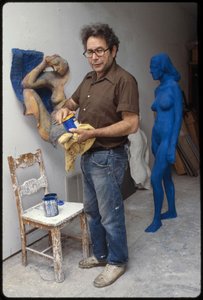
Edward Kienholz
1927 - 1994 , United States of America
Quick Facts
- Artistic Movement Or Style: Assemblage, Installation Art
- Artists Or Movements Influenced By This Artist:
- Installation Art
- Funk art
- Artists Who Influenced This Artist:
- Allen Ginsberg
- William Burroughs
- Date Of Birth: 1927
- Date Of Death: 1994
- Full Name: Edward Ralph Kienholz
- Nationality: American
- Notable Artworks:
- Roxy's
- Back Seat Dodge '38
- The State Hospital
- Place Of Birth: Fairfield, USA

