 Preview
 Send
Send Share
Share
 Details

 Download
 Similars
 X-Ray
X-Ray Diaporama
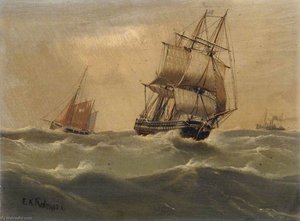
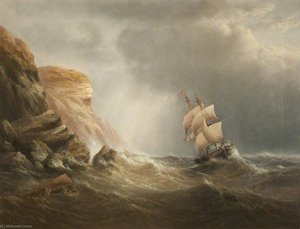
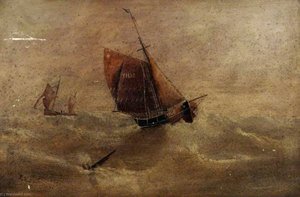
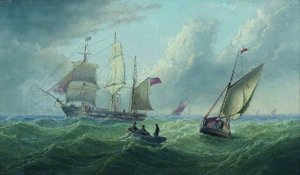
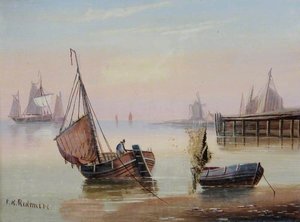
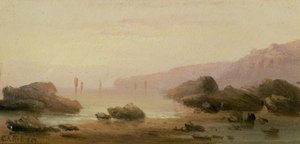
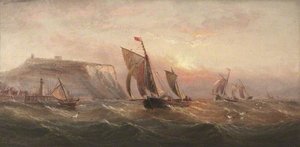
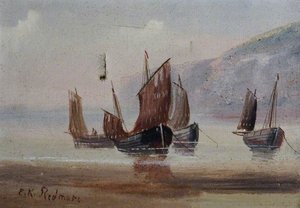
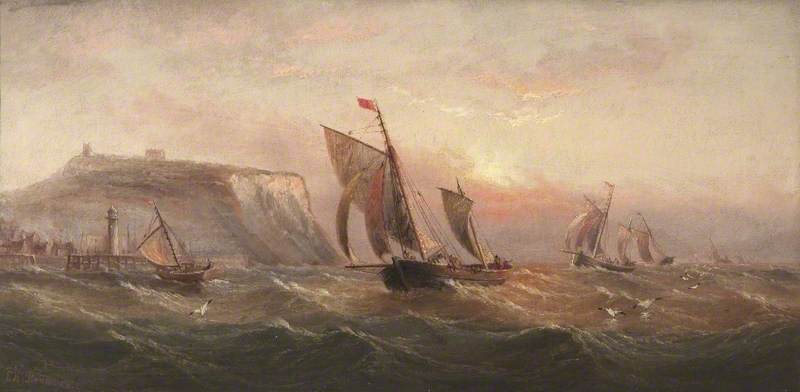
Fishing Vessels off the Coast
 29.0 x 60.0 cm
 Fishing Heritage Centre
 Read More
Giclée / Art Print
Museum-quality giclée or canvas print with fast production and flexible finish options. ( Buy Hand Made Painting Buy Image)




































Pick from our preset sizes that match the artwork's original proportions.

You may enter your own dimensions to fit a specific frame or space. If your selected size does not match the original image's proportions, we will either crop the artwork or extend the image with a mirrored or solid-fill edge. A digital mockup will be sent for your approval before production begins.
Please note that the on-screen preview does not reflect the actual cropping or extension. Only the mockup will accurately show the final composition.
While custom sizes are available, we recommend selecting a dimension from the predefined list to preserve the original proportions.
Worldwide Delivery () in 2 weeks instead of standard 4/5 weeks. (27 August)

Free Worldwide Express Shipping

High-Quality Linen Canvas

Full Shipping Insurance

Customs Tax Refund Guarantee

True Color Matching Guarantee

60-Day Return Policy (Defects Only)

100% Money-Back Guarantee

Bulk Discount Offer
 Glass option is only available in size under 110 CM

Fishing Vessels off the Coast
Giclée / Art Print
Reproduction Size
-


Total Price
$ 63
Related Artworks









Artist Biography
The Quiet Observer: The Life and Legacy of Edward King Redmore
Edward King Redmore (1860–1941) occupied a unique space within the vibrant, often turbulent landscape of Victorian and Edwardian art. Born in Stourbridge, Worcestershire, Redmore was far more than a mere chronicler of his era; he was a painter of profound empathy, dedicated to capturing the subtle rhythms of everyday existence. While the grand galleries of his time were often preoccupied with sweeping historical epics and mythological dramas, Redmore turned his gaze inward, toward the hearth, the village, and the sea. His work serves as a window into a vanishing world, preserving the quiet dignity of domesticity and the raw, unyielding power of the natural elements through a lens of meticulous realism. His artistic journey began with formal training at the Birmingham School of Art, an institution that provided him with a rigorous foundation in technique. During his formative years, the air of the British art world was thick with the influence of the Pre-Raphaelites and the burgeoning Aesthetic movement. One can sense the lingering echoes of Burne-Jones in Redmore’s commitment to narrative detail and the evocative use of light. However, rather than retreating into the ethereal or the symbolic, Redmore utilized these refined sensibilities to ground his subjects in a palpable reality. He possessed a rare ability to infuse the mundane with a sense of importance, transforming a simple domestic interior or a coastal vista into a profound meditation on human presence and the passage of time.Mastery of Light and Atmosphere
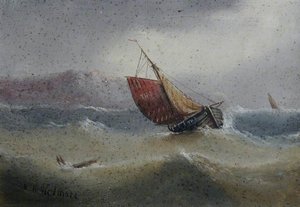
Redmore’s technical prowess is perhaps most evident in his command over atmosphere and texture. He was an artist who understood that light does not merely illuminate a scene; it defines its emotional temperature. In his maritime works, such as the captivating "Ships in a Storm" and "Fishing Smacks in a Storm," he employs dramatic lighting to convey the visceral tension of life at sea. The viewer is not merely looking at a painting of boats; they are witnessing the struggle between man and nature. Through his skillful application of paint, particularly in works like "Seascape," Redmore utilized a textured impasto technique to render the misty, salt-sprayed air of the coast, allowing the physical substance of the oil paint to mirror the ruggedness of the landscape itself. This mastery extended seamlessly into his genre paintings, where the atmosphere shifted from the tempestuous to the tranquil. Redmore excelled at creating interiors that felt lived-in and warm, using soft, diffused light to highlight the textures of fabric, wood, and porcelain. These scenes of domesticity were never static; they breathed with the quiet energy of daily routines. Whether depicting a moment of familial affection or the solitary stillness of a room, his compositions possessed a rhythmic balance that guided the eye through layers of subtle social commentary and tender observation.A Lasting Impression on Victorian Realism
The historical significance of Edward King Redmore lies in his role as a practitioner of a refined, observational realism. He belonged to a generation of artists who sought to find truth in the "unfiltered" world, rejecting the polished idealism of previous eras in favor of an honest portrayal of life. His work embodies the values of his time—industriousness, family unity, and a deep-seated respect for the natural world—yet it transcends mere period piece through its universal emotional resonance. While he may not have achieved the widespread fame of his more flamboyant contemporaries, Redmore’s contribution to the British tradition of genre painting is undeniable. His legacy is found in:- The elevation of the everyday: Proving that ordinary domestic scenes possess as much narrative weight as historical triumphs.
- Technical innovation within realism: Using textured brushwork and dramatic chiaroscuro to bring a tactile reality to maritime and landscape subjects.
- Preservation of cultural identity: Providing a visual record of the social customs, aesthetics, and landscapes of late 19th-century Britain.
edward king redmore
1860 - 1941
Quick Facts
- Artistic Movement Or Style: Victorian Genre Painting
- Artists Or Movements Influenced By This Artist: ['Aestheticism']
- Artists Who Influenced This Artist: ['Burne-Jones']
- Date Of Birth: 1860
- Date Of Death: 1941
- Full Name: Edward King Redmore
- Nationality: British
- Notable Artworks:
- Ships in a Storm
- Seascape
- Place Of Birth: Stourbridge