 Preview
 Send
Send Share
Share
 Details

 Download
 Similars
 X-Ray
X-Ray Diaporama
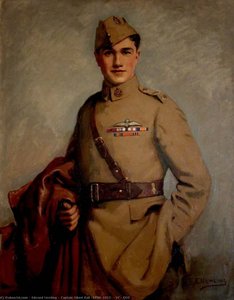
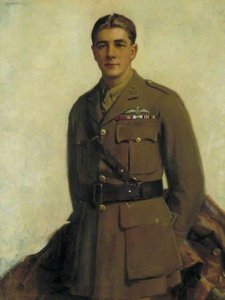
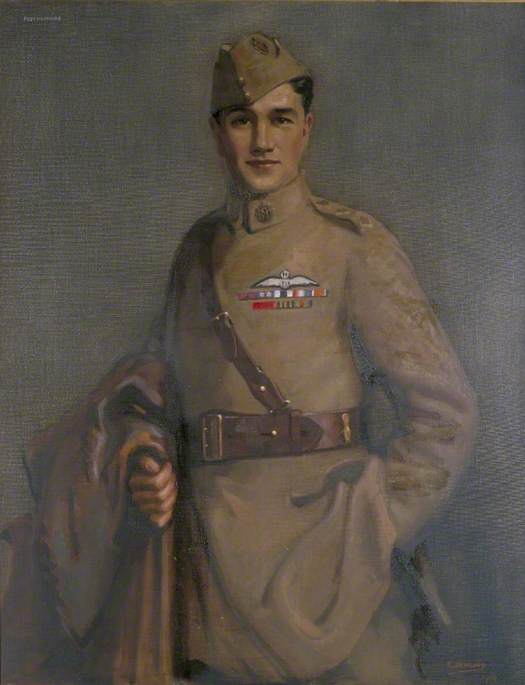
Captain Albert Ball (1896–1917), VC, DSO, MC, Nottinghamshire and Derby Regiment and Royal Flying Corps
 1919
1919 112.0 x 87.0 cm
 Read More
Giclée / Art Print
Museum-quality giclée or canvas print with fast production and flexible finish options. ( Buy Hand Made Painting Buy Image)




































Pick from our preset sizes that match the artwork's original proportions.

You may enter your own dimensions to fit a specific frame or space. If your selected size does not match the original image's proportions, we will either crop the artwork or extend the image with a mirrored or solid-fill edge. A digital mockup will be sent for your approval before production begins.
Please note that the on-screen preview does not reflect the actual cropping or extension. Only the mockup will accurately show the final composition.
While custom sizes are available, we recommend selecting a dimension from the predefined list to preserve the original proportions.
Worldwide Delivery () in 2 weeks instead of standard 4/5 weeks. (27 August)

Free Worldwide Express Shipping

High-Quality Linen Canvas

Full Shipping Insurance

Customs Tax Refund Guarantee

True Color Matching Guarantee

60-Day Return Policy (Defects Only)

100% Money-Back Guarantee

Bulk Discount Offer
 Glass option is only available in size under 110 CM

Captain Albert Ball (1896–1917), VC, DSO, MC, Nottinghamshire and Derby Regiment and Royal Flying Corps
Giclée / Art Print
Reproduction Size
-


Total Price
$ 63
Related Artworks








Artist Biography
The Painter of Victorian Valor: The Life and Legacy of Edward Newling
Edward Newling (1890-1964) stands as a quietly significant figure in 20th-century British art, primarily remembered for his evocative and dignified portraits of WWI heroes and members of the aristocracy. Born in Melbourne, Australia, in 1890, he later relocated to England, establishing himself as a respected artist specializing in capturing the solemnity and inherent dignity of those who served their country during a period of immense national upheaval. His work offers a poignant glimpse into the Victorian sensibilities that persisted even amidst the horrors of modern warfare, blending traditional portraiture techniques with an understated emotional depth.
Newling’s artistic journey began with a formal education in art, though details remain somewhat sparse. He honed his skills primarily through self-study and observation, developing a distinctive style characterized by meticulous detail, subtle tonal gradations, and a remarkable ability to convey both physical presence and inner character. Unlike many of his contemporaries who embraced the bold brushstrokes and expressive distortions of modernism, Newling remained firmly rooted in academic traditions, favoring a controlled and refined approach that lent an air of timelessness to his subjects. His portraits were not flamboyant celebrations; they were quiet meditations on duty, sacrifice, and the weight of experience.
A Mastery of Character and Tradition
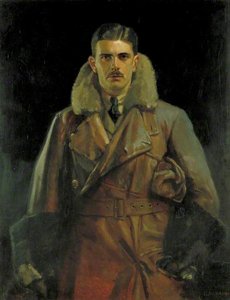
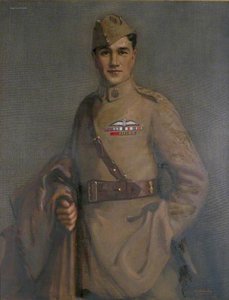
The essence of Newling's oeuvre revolves around his profound depictions of military figures, particularly those involved in the First World War. He produced a substantial body of work featuring legendary aviators such as Albert Ball, a Royal Flying Corps officer whose tragic death during a training flight left a void in the hearts of many, and McCudden, another celebrated pilot of the era. These portraits are far more than mere likenesses; they are imbued with a profound sense of respect and sorrow. Newling meticulously researched his subjects, often obtaining photographs and personal accounts to ensure an accurate representation of their character and the gravity of their service.
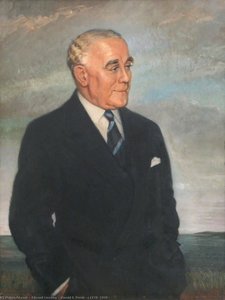
Beyond the battlefield, Newling’s talent extended to the depiction of the British upper echelons, capturing the essence of the aristocracy with a similar level of reverence. His ability to render textures—from the crispness of a military uniform to the soft folds of formal attire—demonstrates his technical prowess. Notable works such as Sir Arbuthnot Lane and Frederick Shum showcase his capacity for realism and his skill in creating compositions that feel both intimate and monumental.
Historical Significance and Artistic Impression
The historical significance of Edward Newling lies in his role as a visual chronicler of an era defined by transition. As the world moved away from the structured certainties of the Victorian age into the fragmented reality of the modern era, Newling’s art provided a sense of continuity. His work serves as a bridge, preserving the dignity of a vanishing social order and the heroism of those who faced the unprecedented challenges of the early 20th century.
To study Newling's collection is to encounter a legacy of:
- Academic Precision: A commitment to the classical techniques of portraiture that eschewed the fleeting trends of modernism.
- Emotional Resonance: The ability to translate historical tragedy into deeply moving, humanized imagery.
- Historical Documentation: Providing a vital visual record of key figures in British military and social history.
Ultimately, Newling’s contribution to the art world is found in his restraint. By avoiding the sensationalism of his age, he created works that possess an enduring, quiet power, ensuring that the faces of the past remain etched in the collective memory with all their original grace and solemnity.
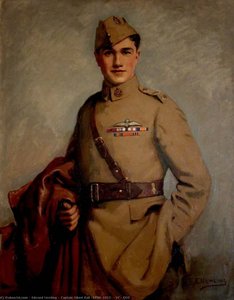
edward newling
1890 - 1964
Quick Facts
- Artistic Movement Or Style: Portraiture
- Date Of Birth: 1890
- Date Of Death: 1964
- Full Name: Edward Newling
- Nationality: British
- Notable Artworks:
- Albert Ball
- McCudden
- Place Of Birth: WahooArt