

 Preview
 Send
Send Share
Share
 Details

 Download
 Similars
 X-Ray
X-Ray Diaporama
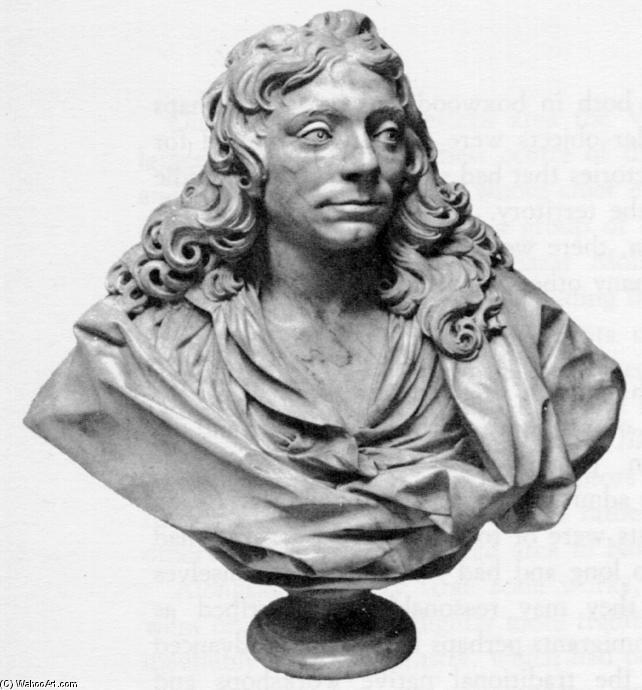
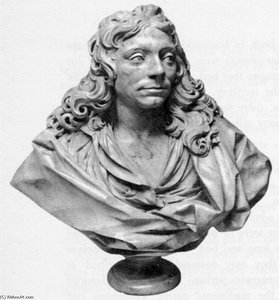
Bust of Sir Christopher Wren


 Read More
Hand Made Oil Reproduction
Hand-painted oil on canvas in your size and frame, made to order by our artists. ( Buy Print Buy Image)




































Pick from our preset sizes that match the artwork's original proportions.

You may enter your own dimensions to fit a specific frame or space. If your selected size does not match the original image's proportions, we will either crop the artwork or extend the painting with additional hand-painted elements. A digital mockup will be sent for your approval before production begins.
Please note that the on-screen preview does not reflect the actual cropping or extension. Only the mockup will accurately show the final composition.
While custom sizes are available, we recommend selecting a dimension from the predefined list to preserve the original proportions.
After order, ArtsDot.com team will email client for instructions and provide a mockup preview
Worldwide Delivery () in 3/4 weeks instead of standard 5 weeks. (20 August). No compromise on quality.

Free Worldwide Express Shipping

High-Quality Linen Canvas

Full Shipping Insurance

Customs Tax Refund Guarantee

True Color Matching Guarantee

60-Day Return Policy (Defects Only)

100% Money-Back Guarantee

Bulk Discount Offer
 Glass option is only available in size under 110 CM

Bust of Sir Christopher Wren
Reproduction Medium
Reproduction Size
-


Total Price
$ 263
Related Artworks
Artist Biography
The Architect of Civic Grandeur: The Life and Legacy of Edward Pearce Casey
In the grand tapestry of American architectural history, few names resonate with the structural elegance and civic importance of Edward Pearce Casey. Born on June 18, 1864, in Portland, Maine, Casey emerged from a lineage steeped in service and discipline, being the son of Brigadier-General Thomas Lincoln Casey. This foundation of precision and duty would later manifest in his profound ability to shape the very skyline of the nation's capital. His journey was not merely one of building structures, but of sculpting the monumental identity of a burgeoning American empire through stone, bronze, and meticulous design.
Casey’s intellectual formation was as rigorous as the classical forms he would later master. After receiving early instruction at the Emerson Institute in Washington, D.C., he pursued advanced studies at the School of Mines of Columbia University, earning degrees in both civil engineering and architecture by 1888. However, it was his time in Paris, studying at the prestigious Ecole des Beaux-Arts, that truly refined his aesthetic sensibilities. This exposure to the French tradition of monumental classicism infused his work with a sophisticated understanding of symmetry, proportion, and the dramatic use of space, allowing him to bridge the gap between utilitarian engineering and high art.
A Visionary Presence in Washington and New York
The trajectory of Casey’s career is inextricably linked to the transformation of Washington, D.C., into a world-class capital. In 1892, he stepped into a monumental role, succeeding Paul J. Pelz as the architect for the completion of the Library of Congress—a project that remains one of the most exquisite examples of Beaux-Arts architecture in the United States. His ability to navigate such immense historical responsibility was further proven through his competitive triumphs, including winning the design prize for the Taft Bridge over Rock Creek and the prestigious commission for the Ulysses S. Grant Memorial on the National Mall.
As his reputation expanded, Casey’s influence stretched beyond the federal corridors of D.C. to the vibrant urban landscape of New York City. His practice became a conduit for architectural excellence, where he applied his mastery of classical ornamentation to diverse projects, such as the redesign of the rectory at the Episcopal Church of the Incarnation in Manhattan. Whether designing the national headquarters for the Daughters of the American Revolution or contributing to the intricate urban fabric of Georgetown, Casey’s work always sought a harmonious balance between historical reverence and functional modernity.
The Enduring Impression of a Master Designer
To examine the work of Edward Pearce Casey is to witness the physical manifestation of American ambition during the late Victorian and early twentieth-century eras. His stylistic hallmark was a seamless integration of meticulous realism and monumental grandeur. He did not merely design buildings; he designed legacies. Through his careful attention to detail—from the sweeping vistas of the Lincoln Memorial Reflecting Pool to the intricate sculptural elements of his memorials—he created spaces that invite contemplation and inspire awe.
Though he passed away on January 2, 1940, and was laid to rest in the serene Casey Farm in Rhode Island, his architectural fingerprints remain indelible. His contributions continue to serve as the backdrop for American civic life, reminding every passerby of a period when architecture was used to communicate permanence, dignity, and the enduring strength of democratic institutions. Through his vision, the stone and mortar of the past were transformed into the timeless monuments of our collective history.
edward pearce
1864 - 1940 , United States of America
Quick Facts
- Artistic Movement Or Style: Victorian Art Style
- Artists Who Influenced This Artist: ['Gustav Dore']
- Date Of Birth: June 18, 1864
- Date Of Death: January 2, 1940
- Full Name: Edward Pearce Casey
- Nationality: American
- Notable Artworks: ['Washington Monument Design']
- Place Of Birth: Portland, United States
Related Articles
Sir Joshua Reynolds' Masterpieces: 25 Portraits of Power & Refinement | ArtsDot
Explore 25 captivating portraits by Sir Joshua Reynolds, a master of British art. Discover stories behind his iconic paintings, elegant style & historical influence. Find museum-quality reproductions and elevate your home decor on ArtsDot.com.
Edward Hopper's Masterpieces: 25 Iconic Paintings & Their Enduring Legacy | ArtsDot
Explore 25 iconic Edward Hopper paintings & their stories. Discover American realism, urban loneliness, and timeless beauty through his masterpieces. Find museum-quality art reproductions & curated decor ideas at ArtsDot.com.

Bronze Sculptures That Defined Art History | ArtsDot
Journey through art history with our Top 10 bronze sculptures! Explore masterpieces by Rodin, Michelangelo & more. Discover stories behind iconic statues and find museum-quality reproductions for your home decor at ArtsDot.com.
Sir Alfred Munnings' Masterpieces: 25 Paintings That Define Equine Art | ArtsDot
Explore 25 iconic Sir Alfred Munnings paintings! Discover the beauty of British Impressionism, equine art & rural England. Find museum-quality reproductions and elevate your home decor with ArtsDot. Explore the full collection online.

The Enduring Form: Exploring Themes & Techniques in Sculpture Across Historical Periods
Explore the rich history of sculpture from ancient masterpieces to contemporary innovations. Discover key techniques, influential artists & investment potential for discerning art collectors.

