 Preview
 Send
Send Share
Share
 Details

 Download
 Similars
 X-Ray
X-Ray Diaporama
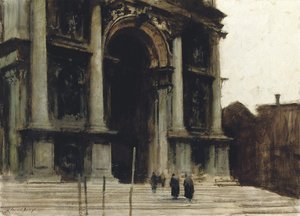
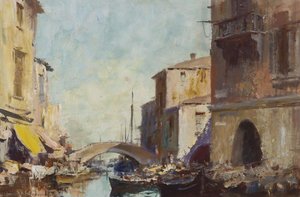
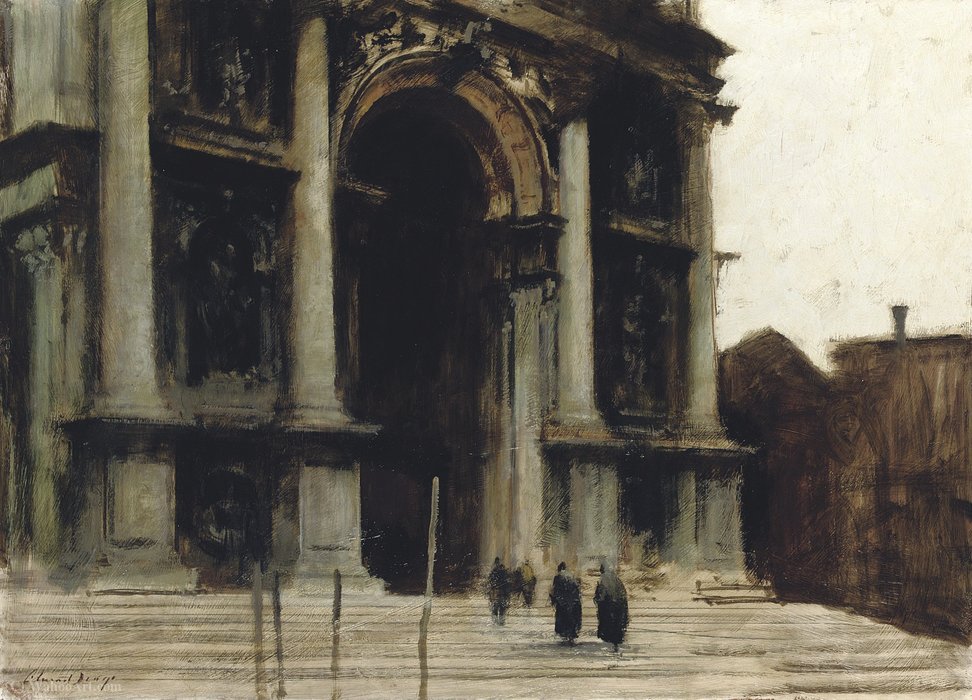
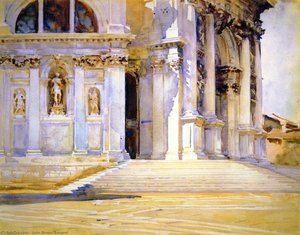
The Doorway, Santa Maria della Salute, Venice

 Read More
Hand Made Oil Reproduction
Hand-painted oil on canvas in your size and frame, made to order by our artists. ( Buy Print Buy Image)




































Pick from our preset sizes that match the artwork's original proportions.

You may enter your own dimensions to fit a specific frame or space. If your selected size does not match the original image's proportions, we will either crop the artwork or extend the painting with additional hand-painted elements. A digital mockup will be sent for your approval before production begins.
Please note that the on-screen preview does not reflect the actual cropping or extension. Only the mockup will accurately show the final composition.
While custom sizes are available, we recommend selecting a dimension from the predefined list to preserve the original proportions.
After order, ArtsDot.com team will email client for instructions and provide a mockup preview
Worldwide Delivery () in 3/4 weeks instead of standard 5 weeks. (28 August). No compromise on quality.

Free Worldwide Express Shipping

High-Quality Linen Canvas

Full Shipping Insurance

Customs Tax Refund Guarantee

True Color Matching Guarantee

60-Day Return Policy (Defects Only)

100% Money-Back Guarantee

Bulk Discount Offer
 Glass option is only available in size under 110 CM

The Doorway, Santa Maria della Salute, Venice
Reproduction Medium
Reproduction Size
-


Total Price
$ 263
The Doorway, Santa Maria della Salute, Venice by Edward Seago: A Glimpse of Venetian Grace
- Artist: Edward Seago (1910-1974)
- Date: Unknown
- Medium: Black and White Painting (likely watercolor or charcoal – further research needed to confirm)
Subject & Setting
Edward Seago's "The Doorway, Santa Maria della Salute, Venice" offers a captivating monochrome study of one of Venice’s most iconic landmarks. The painting focuses on the entrance to the Basilica di Santa Maria della Salute, a magnificent Baroque church situated on the Grand Canal. The scene depicts two figures emerging from the doorway, with another standing nearby – perhaps observing or awaiting someone. The imposing clock tower and intricate facade details of the basilica rise in the background, establishing a sense of grandeur and historical significance.
Style & Technique
Seago’s work is generally associated with Impressionism and Post-Impressionism, though this particular piece's black and white palette lends it a unique character. The absence of color emphasizes form, texture, and light, creating a dramatic and atmospheric effect. The artist skillfully uses tonal variations to define the architectural details – the statues adorning the facade, the intricate carvings around the doorway, and the imposing presence of the clock tower. While the exact technique remains unconfirmed without further analysis, it is likely Seago employed either watercolor or charcoal, given his known preference for capturing fleeting moments and atmospheric conditions with a relatively quick execution.
Historical Context & Symbolism
Santa Maria della Salute was built in the early 17th century as a votive offering to the Virgin Mary following a devastating plague that ravaged Venice. The church's design, featuring a distinctive onion-shaped dome, became an emblem of Venetian resilience and devotion. Seago’s choice of this location is significant; it speaks to the enduring power of faith and the beauty of Venetian architecture. The figures exiting the church add a human element to the scene, suggesting themes of pilgrimage, community, and perhaps even contemplation. The black and white rendering could symbolize a sense of timelessness or a focus on the essential forms and structures rather than superficial details.
Emotional Impact & Artistic Appeal
“The Doorway, Santa Maria della Salute, Venice” evokes a feeling of quiet reverence and understated beauty. The monochrome palette creates a mood of introspection, inviting viewers to contemplate the scene's historical weight and spiritual significance. The composition is balanced and harmonious, drawing the eye through the architectural details towards the figures in the foreground. This painting would be an excellent addition to any collection seeking to capture the essence of Venice – its history, its artistry, and its enduring charm. It’s a piece that resonates with both art enthusiasts and those who appreciate the beauty of architectural detail.
Related Artworks
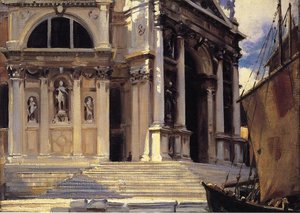
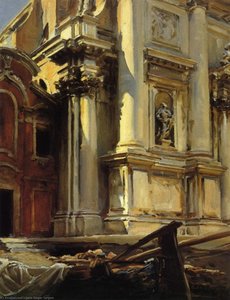
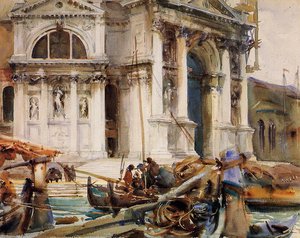
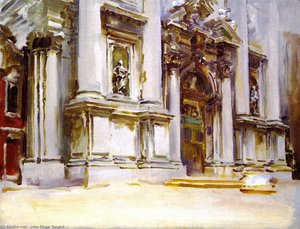
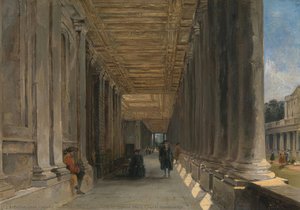
![Sotoportego [underpass] In Venice — Mariano Fortuny Y Madrazo, Impressionistic Realism](/media/artworks/images-thumb/eb/d2/ebd21bdd6e0de7c6b1d041d9d41d03b1.jpg)
Artist Biography
The Light of East Anglia: The Life and Legacy of Edward Seago
To wander through the canvases of Edward Seago is to embark on a sensory journey through the heart of the English landscape, where the air feels heavy with salt spray and the light dances upon the Norfolk marshes. Born in Norwich on March 31, 1910, Seago was a man whose destiny was inextricably linked to the soil and sea of East Anglia. Though he was the son of a coal merchant, his spirit was never tethered to the mundane; instead, it was drawn toward the fleeting brilliance of the natural world. His early years were marked by a profound connection to his surroundings, a bond that would later manifest in works that breathe with an almost palpable vitality. Even as a young boy, Seago faced the challenges of a rare heart condition, paroxysmal tachycardia, which often confined him to his home. Yet, it was during these periods of forced stillness that his observational powers flourished, allowing him to study the subtle shifts in light and shadow that would become the hallmarks of his mature style.
Seago’s artistic evolution was a masterful blend of self-directed passion and the influence of great masters. While he was largely a self-taught artist, his path was illuminated by the guidance of luminaries such as Sir Alfred Munnings and Bertram Priestman. This exposure helped refine his ability to marry a grounded sense of realism with the loose, expressive brushwork characteristic of late Impressionism. His technique, often compared to the luminous touch of John Singer Sargent, relied on careful color modulation to evoke atmosphere rather than mere topographical accuracy. Whether working in the fluid transparency of watercolors or the rich, textured depths of oils, Seago possessed a rare ability to capture the "essence" of a moment—the way a storm gathers over a Suffolk beach or the quiet, muted solitude of a winter garden.
A Vision Forged in War and Royalty
The trajectory of Seago’s career was profoundly shaped by the turbulent era of World War II. While many artists found their work interrupted by conflict, Seago’s unique talents were pressed into the service of his country. Enlisted by the Royal Engineers, he utilized his keen eye for color and form to develop camouflage, a task that required an intimate understanding of how light and texture blend within a landscape. This period of service did not stifle his creativity but rather deepened his technical command over the deceptive nature of sight. As the world emerged from the shadows of war, Seago’s reputation ascended to new heights, earning him the admiration of the highest echelons of British society.
His ability to document the beauty of the English coast and rural life resonated deeply with the British Royal Family. The prestige of being collected by figures such as Queen Elizabeth The Queen Mother and Prince Philip solidified his standing as a premier chronicler of the British landscape. His oeuvre expanded beyond the familiar Norfolk horizons to include evocative scenes from travels in France, notably his serene depictions of Rouen, where he captured the river's dusk with a masterful use of muted tones and loose, atmospheric strokes. This breadth of subject matter—ranging from intimate street scenes to expansive, stormy seascapes like Suffolk Beach—demonstrates an artist who was as much a traveler as he was a local observer.
The Enduring Impression of a Master
As we reflect on the life of Edward Seago, which came to an end in London in 1974, we see an artist who successfully bridged the gap between traditional realism and the emotive freedom of Impressionism. His significance lies not merely in his technical skill, but in his role as a custodian of a vanishing way of life. Through his eyes, we witness the timeless beauty of the Norfolk coastlines, the rhythmic movement of windmills in Thurne, and the quiet dignity of maritime life in Half-Tide, Pin Mill. His works serve as a nostalgic window into a landscape that feels both intimately familiar and ethereally beautiful.
Today, Seago’s legacy is preserved in prestigious institutions across the globe, ensuring that his "life painted in light" continues to inspire new generations of collectors and admirers. His contributions to British art can be summarized through several enduring themes:
- Mastery of Atmosphere: The ability to use color modulation to recreate the specific humidity, light, and weather of the English countryside.
- Technical Versatility: A seamless transition between the delicate nuances of watercolor and the robust textures of oil painting.
- Cultural Connection: A deep-seated devotion to the landscapes of East Anglia, making him a definitive voice in British landscape painting.
- Historical Resonance: An artistic journey that mirrored the resilience of the British spirit through the mid-20th century.

Edward Seago
1910 - 1974
Quick Facts
- Artistic Movement Or Style: Impressionism
- Artists Or Movements Influenced By This Artist: ['Post-Impressionism']
- Artists Who Influenced This Artist: ['Claude Monet']
- Date Of Birth: 1910
- Date Of Death: 1974
- Full Name: Edward Brian Seago
- Nationality: British
- Notable Artworks: ['Winter Morning']
- Place Of Birth: Norwich, England
Related Articles
Edward Hopper's Masterpieces: 25 Iconic Paintings & Their Enduring Legacy | ArtsDot
Explore 25 iconic Edward Hopper paintings & their stories. Discover American realism, urban loneliness, and timeless beauty through his masterpieces. Find museum-quality art reproductions & curated decor ideas at ArtsDot.com.
Edward Seago: A Life Painted in Light – Nostalgia & the British Landscape Tradition
Explore the life & art of Edward Seago, a celebrated British Impressionist painter known for evocative landscapes & seascapes. Discover his captivating works and find high-quality reproductions at ArtsDot.
Luca della Robbia: Renaissance Sculpture & the Innovation of Terracotta Glazing
Discover the innovative terracotta glazing techniques of Luca della Robbia, a Renaissance master sculptor. Explore his iconic works, legacy, and collecting tips with ArtsDot.
Maria Primachenko: A Legacy of Ukrainian Folk Art & Naive Expression
Discover the captivating world of Maria Primachenko, Ukraine's celebrated naive artist. Explore her vibrant paintings, unique style, and enduring legacy with ArtsDot – your source for authentic art insights & reproductions.

Edward Lear: A Life Beyond Nonsense – Landscape, Illustration & the Poetics of Isolation
Explore the life of Edward Lear beyond his nonsense poems. Discover his stunning landscape paintings, travel illustrations & the poignant themes of isolation in this expert art history analysis.