 Preview
 Send
Send Share
Share
 Details

 Download
 Similars
 X-Ray
X-Ray Diaporama
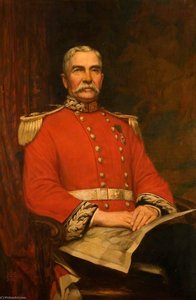
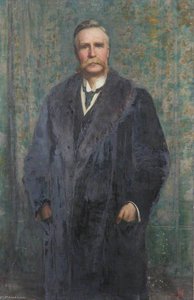
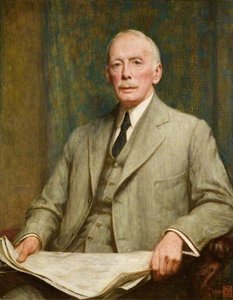
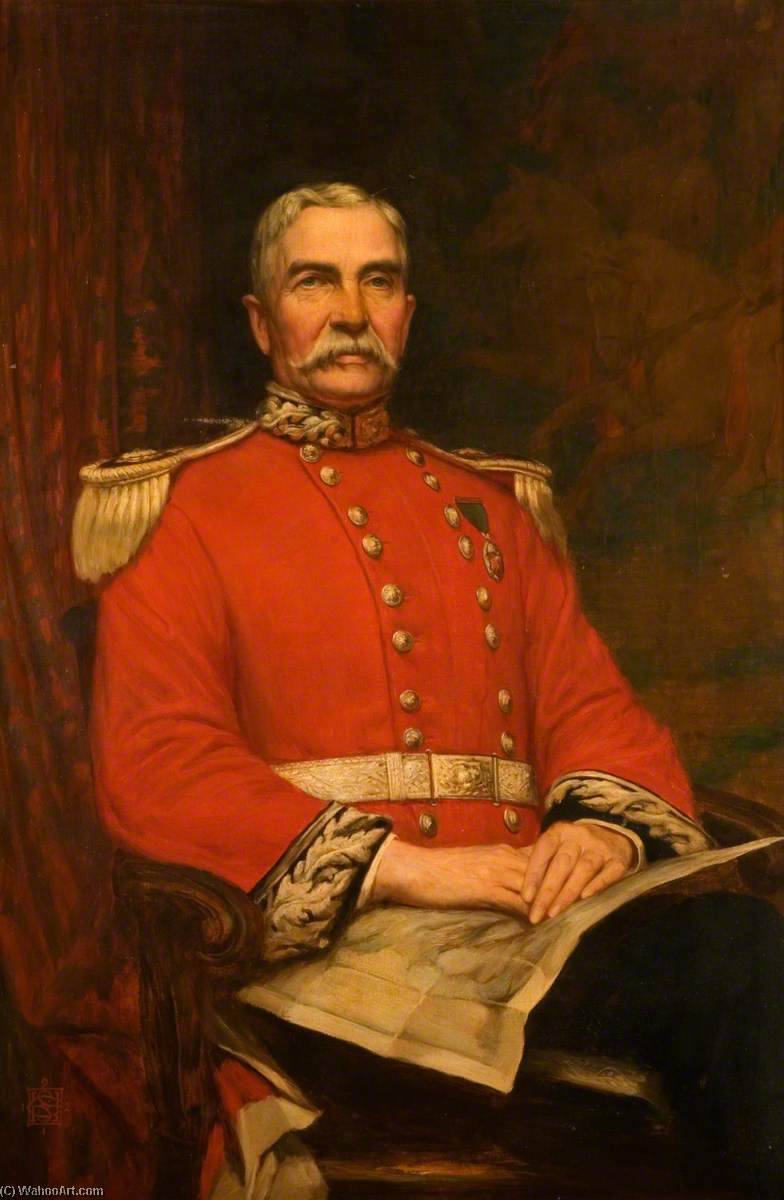
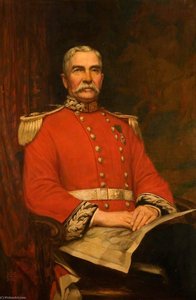
Lieutenant Colonel Joseph Henry Wilkinson (1845–1931), DL, JP, VD
 1921
1921 126.0 x 84.0 cm
 Staffordshire County Buildings
 Read More
Giclée / Art Print
Museum-quality giclée or canvas print with fast production and flexible finish options. ( Buy Hand Made Painting Buy Image)




































Pick from our preset sizes that match the artwork's original proportions.

You may enter your own dimensions to fit a specific frame or space. If your selected size does not match the original image's proportions, we will either crop the artwork or extend the image with a mirrored or solid-fill edge. A digital mockup will be sent for your approval before production begins.
Please note that the on-screen preview does not reflect the actual cropping or extension. Only the mockup will accurately show the final composition.
While custom sizes are available, we recommend selecting a dimension from the predefined list to preserve the original proportions.
Worldwide Delivery () in 2 weeks instead of standard 4/5 weeks. (29 August)

Free Worldwide Express Shipping

High-Quality Linen Canvas

Full Shipping Insurance

Customs Tax Refund Guarantee

True Color Matching Guarantee

60-Day Return Policy (Defects Only)

100% Money-Back Guarantee

Bulk Discount Offer
 Glass option is only available in size under 110 CM

Lieutenant Colonel Joseph Henry Wilkinson (1845–1931), DL, JP, VD
Giclée / Art Print
Reproduction Size
-


Total Price
$ 63
Related Artworks









Artist Biography
The Soul of the Canvas: The Life and Legacy of Edward Steel Harper II
In the quiet, mist-laden landscapes of the British Isles, where history feels etched into every stone and riverbank, the work of Edward Steel Harper II resonates with a profound, lingering presence. Born in 1878, an era poised between the rigid traditions of the Victorian age and the burgeoning experimentalism of the modern world, Harper developed a visual language that bridged these two disparate realms. His artistic journey, rooted in the textures of Lyme Regis and the industrious spirit of Birmingham, was never merely about the replication of sight; it was an endeavor to capture the very breath of his subjects, blending meticulous realism with an evocative, almost psychological depth.
The foundation of Harper’s mastery can be traced back to his formative years under the guidance of Joseph Henry Wilkinson. A celebrated landscape painter, Wilkinson imparted more than just technical proficiency; he instilled in Harper a reverence for tonal harmony and the subtle, atmospheric shifts that define the British countryside. Through this mentorship, Harper learned to perceive light not as a static element, but as a transformative force capable of altering the mood of a portrait or the weight of a landscape. This early training in capturing atmospheric conditions became the cornerstone of his style, allowing him to render skin textures and drapery with an accuracy that felt both tangible and ethereal.
A Mastery of Light and Shadow
As Harper’s career progressed, his palette underwent a sophisticated refinement. Eschewing the garish or the overly bright, he gravitated toward a restrained, contemplative selection of muted browns, greys, and ochres. This deliberate choice allowed him to prioritize tonal gradation, creating works where the transition from shadow to light felt seamless and organic. In his portraits, this technique served a higher purpose than mere aesthetics; it provided a vessel for emotional storytelling. When viewing his depictions of prominent figures—ranging from academics to industrialists—one does not simply see a likeness, but rather a window into a complex inner life.
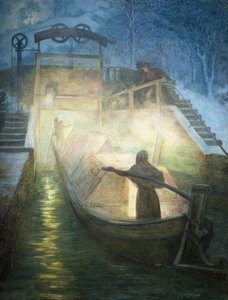
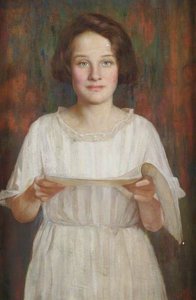
His ability to manipulate light is perhaps most strikingly evident in works such as Guillotine Lock at Lifford. In this piece, the interplay of shadow directs the viewer’s gaze inward, mirroring the psychological complexity of the subject. Similarly, in his more tender compositions like Prelude, Portrait of a Young Girl, Harper utilized light to illuminate innocence and vulnerability, proving that his technical prowess was always at the service of human emotion. His landscapes, too, benefited from this mastery, as seen in the evocative Evening in South Devon, where the fading light suggests the ephemeral nature of time itself.
Historical Significance and Artistic Heritage
The significance of Edward Steel Harper II lies in his ability to act as a custodian of tradition during a period of rapid artistic upheaval. While Impressionism began to dissolve form into light, Harper remained steadfast in his commitment to structural realism and historical narrative. His work carries the DNA of late Pre-Raphaelitism—a devotion to detail and truth—yet it possesses a modern sensibility that prevents it from feeling like a mere relic of the past. He captured a specific moment in British history, documenting the dignity of its people and the enduring character of its geography.
Today, his legacy is preserved through the profound impact of his compositions on the tradition of British portraiture and landscape painting. His life’s work remains a testament to the power of observation and the enduring relevance of the classical approach. To study Harper is to revisit an era where every brushstroke was an act of devotion to the subject, ensuring that the fleeting moments of the nineteenth and early twentieth centuries remain eternally captured in the amber of his art.
Quick Facts
- Artistic Movement Or Style: Victorian Painting
- Artists Who Influenced This Artist: ['Joseph Henry Wilkinson']
- Date Of Birth: 1878
- Date Of Death: Living
- Full Name: Edward Steel Harper II
- Nationality: British
- Notable Artworks:
- Guillotine Lock at Lifford
- Prelude, Portrait of a Young Girl
- Place Of Birth: Lyme Regis, England