 Preview
 Send
Send Share
Share
 Details

 Download
 Similars
 X-Ray
X-Ray Diaporama
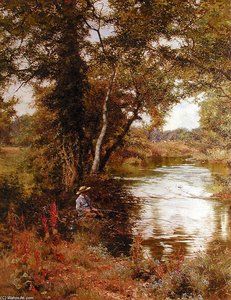
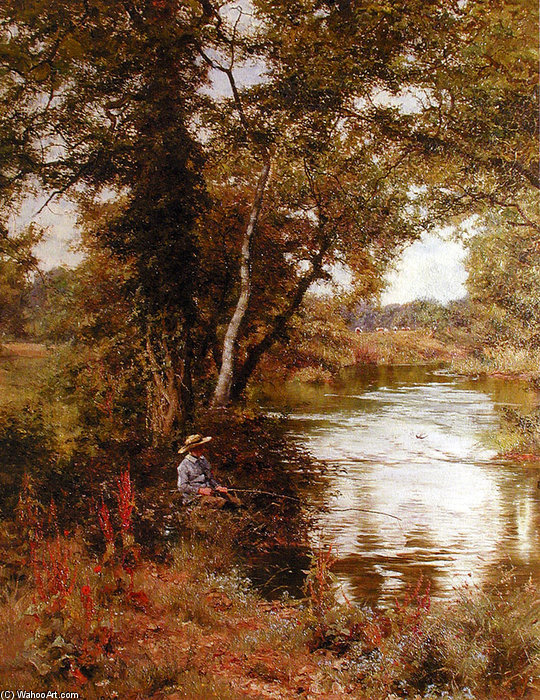
Fishing

 Read More
Hand Made Oil Reproduction
Hand-painted oil on canvas in your size and frame, made to order by our artists. ( Buy Print Buy Image)




P118B $10

P118H $10

P118W $10

P438Z $10

P508JH $12

P508YH $12

P805H $10

P805Z $10

P919BZ $10

P919G $10

P919XJ $10

P959ZH $10

P968JZ $12

W106C $8

W218G $10

W218JH $8

W218Y $10

W307PJ $10

W316G $10

W316PJ $8

W316Y $10

W398PJ $8

W4111J $10

W500HY $15

W500JH $15

W692G $12

W849H $8

W940BG $15

W953PJ $8




Pick from our preset sizes that match the artwork's original proportions.

You may enter your own dimensions to fit a specific frame or space. If your selected size does not match the original image's proportions, we will either crop the artwork or extend the painting with additional hand-painted elements. A digital mockup will be sent for your approval before production begins.
Please note that the on-screen preview does not reflect the actual cropping or extension. Only the mockup will accurately show the final composition.
While custom sizes are available, we recommend selecting a dimension from the predefined list to preserve the original proportions.
After order, ArtsDot.com team will email client for instructions and provide a mockup preview
Worldwide Delivery () in 3/4 weeks instead of standard 5 weeks. (17 August). No compromise on quality.

Free Worldwide Express Shipping

High-Quality Linen Canvas

Full Shipping Insurance

Customs Tax Refund Guarantee

True Color Matching Guarantee

60-Day Return Policy (Defects Only)

100% Money-Back Guarantee

Bulk Discount Offer
 Glass option is only available in size under 110 CM

Fishing
Reproduction Medium
Reproduction Size
-


Total Price
$ 263
Related Artworks
Artist Biography
John Martin: Architect of the Sublime
John Martin (1789–1854) wasn’t merely a painter; he was an architect of the sublime, a visionary who conjured landscapes of immense scale and terrifying beauty. Born in Haydon Bridge, Northumberland, into a family with roots in fencing and heraldry, his early life offered little indication of the dramatic artistic world he would forge. His apprenticeship to a coachbuilder and then a china painter provided a grounding in technique but ultimately led him to London, where he began his ascent as an artist. Martin’s career was marked by both immense popularity – he became arguably the most commercially successful painter of his day – and critical disdain, particularly from figures like John Ruskin who found his work excessively theatrical and lacking in genuine emotion. Despite this mixed reception, Martin's influence on subsequent generations of Romantic artists is undeniable, shaping a visual language defined by vastness, drama, and an exploration of the limits of human perception.Early Influences and Artistic Development
Martin’s artistic development was profoundly shaped by his early exposure to various disciplines. His initial training in heraldic painting instilled a meticulous attention to detail and a deep understanding of composition – skills he would later apply to his monumental landscapes. Crucially, however, his time spent studying perspective and architecture under the guidance of Bonafide Musso, an Italian artist specializing in decorative arts, provided him with the theoretical framework for creating illusions of depth and scale. This technical mastery was then fused with a burgeoning interest in classical literature, particularly the Bible and Milton’s *Paradise Lost*, which served as primary sources of inspiration for his most iconic works. The influence of these sources is evident in his dramatic depictions of biblical scenes – floods, plagues, and apocalyptic events – rendered on an epic scale that dwarfed the human figure, emphasizing the overwhelming power of divine judgment.The Grand Vision: Key Works and Techniques
Martin’s most celebrated paintings are characterized by their sheer size and theatricality. *Belshazzar's Feast* (1819), depicting the final night of the Babylonian king, is a prime example of his ability to create an atmosphere of impending doom through carefully orchestrated light and shadow. The painting’s intricate details – the opulent banquet hall, the ghostly figures, and the swirling flames – combine to evoke a sense of both grandeur and terror. Similarly, *The Last Judgement* (1824) presents a chaotic vision of heaven and hell, populated by screaming souls and angelic warriors engaged in an apocalyptic battle. Martin’s technique involved layering numerous thin washes of paint to achieve the desired atmospheric effects, often working directly onto large canvases without preliminary sketches. He employed a limited palette dominated by dark blues, browns, and greys, punctuated by flashes of intense color – particularly red – to heighten the drama. His engravings, meticulously produced from these paintings, further disseminated his vision to a wider audience.Critical Reception and Lasting Legacy
Despite his immense popularity with the public, Martin’s work was consistently criticized by leading critics of the day, most notably John Ruskin, who condemned it as “mere theatricality” and lacking in genuine emotional depth. Ruskin argued that Martin's paintings were merely clever illusions designed to impress the eye without engaging the intellect or soul. However, this critical opposition arguably contributed to Martin’s mystique, solidifying his reputation as a visionary artist ahead of his time. His influence extended far beyond his own era. Artists like J.M.W. Turner and Eugène Delacroix drew inspiration from Martin's exploration of light, color, and dramatic composition. The concept of the “sublime,” defined by Edmund Burke as an experience of awe and terror evoked by vastness and power, became inextricably linked with Martin’s artistic vision.A Man of Vision: Later Life and Death
In his later years, Martin turned his attention to urban planning, designing improvements for London's infrastructure. He also continued to paint, producing a series of dramatic landscapes depicting the River Thames and the surrounding countryside. Sadly, he suffered a debilitating stroke in 1853, leaving him paralyzed and unable to paint. He died in Douglas, Isle of Man, in February 1854. Despite his relatively short life and the critical challenges he faced, John Martin remains one of the most important and influential figures in Romantic art, a master of atmosphere and scale who continues to captivate viewers with his haunting visions of the sublime.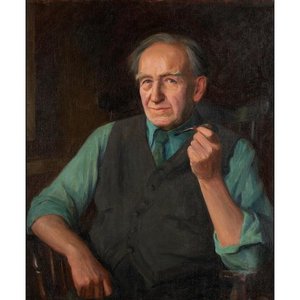
edward wilkins waite
1854 - 1924 , United Kingdom
Quick Facts
- Artistic Movement Or Style: Impressionism, Realism
- Artists Or Movements Influenced By This Artist:
- Post-Impressionism
- American Impressionism
- Artists Who Influenced This Artist:
- William Merritt Chase
- Jean-Léon Gérôme
- Date Of Birth: January 12, 1856
- Date Of Death: November 3, 1925
- Full Name: John Singer Sargent
- Nationality: American
- Notable Artworks:
- Madame X
- Carnation Women
- The Daughters of Edward Darley Boit
- Place Of Birth: Florence, Italy
Related Articles
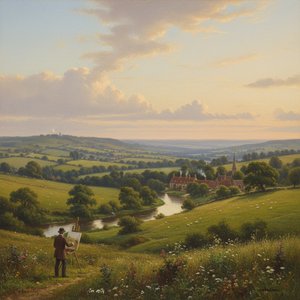
Edward Wilkins Waite: A Victorian Vision of Surrey's Serene Landscapes & Artistic Legacy
Explore the serene landscapes of Edward Wilkins Waite (1854-1924), a prolific Victorian painter celebrated for his depictions of Surrey's countryside. Discover his artistic influences, career highlights & collecting guide.
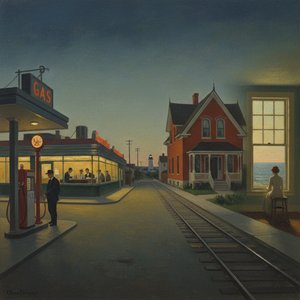
Edward Hopper's Masterpieces: 25 Iconic Paintings & Their Enduring Legacy | ArtsDot
Explore 25 iconic Edward Hopper paintings & their stories. Discover American realism, urban loneliness, and timeless beauty through his masterpieces. Find museum-quality art reproductions & curated decor ideas at ArtsDot.com.

Beyond the Horizon: 10 Landscape Masterpieces for Your Home Decor
Journey through 10 breathtaking landscape paintings by Monet, Van Gogh & more! Explore iconic artworks, artistic techniques & find inspiration for your home decor. Museum-quality reproductions at ArtsDot.com. Discover all masterpieces on ArtsDot.com

Impressionistic Landscapes: 10 Masterpieces That Changed Art & Decor
Journey into the heart of Impressionism! Explore 10 masterpieces by Monet, Renoir & Degas that revolutionized landscape art. Discover their stories, techniques & find museum-quality reproductions to elevate your home decor on ArtsDot.com.
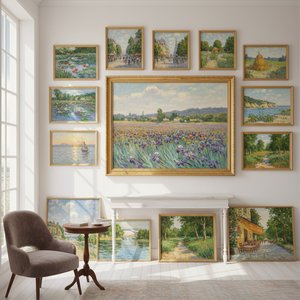
Impressionist Landscapes: 10 Masterpieces for Your Home | ArtsDot
Journey through 10 iconic Impressionist landscapes by Monet, Renoir & Degas. Explore the history, techniques & emotions behind these masterpieces. Find museum-quality reproductions for your home at ArtsDot.com – where art comes to life! Discover all masterpieces on ArtsDot.com