 Preview
 Send
Send Share
Share
 Details

 Download
 Similars
 X-Ray
X-Ray Diaporama
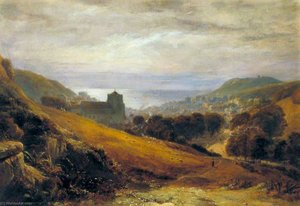
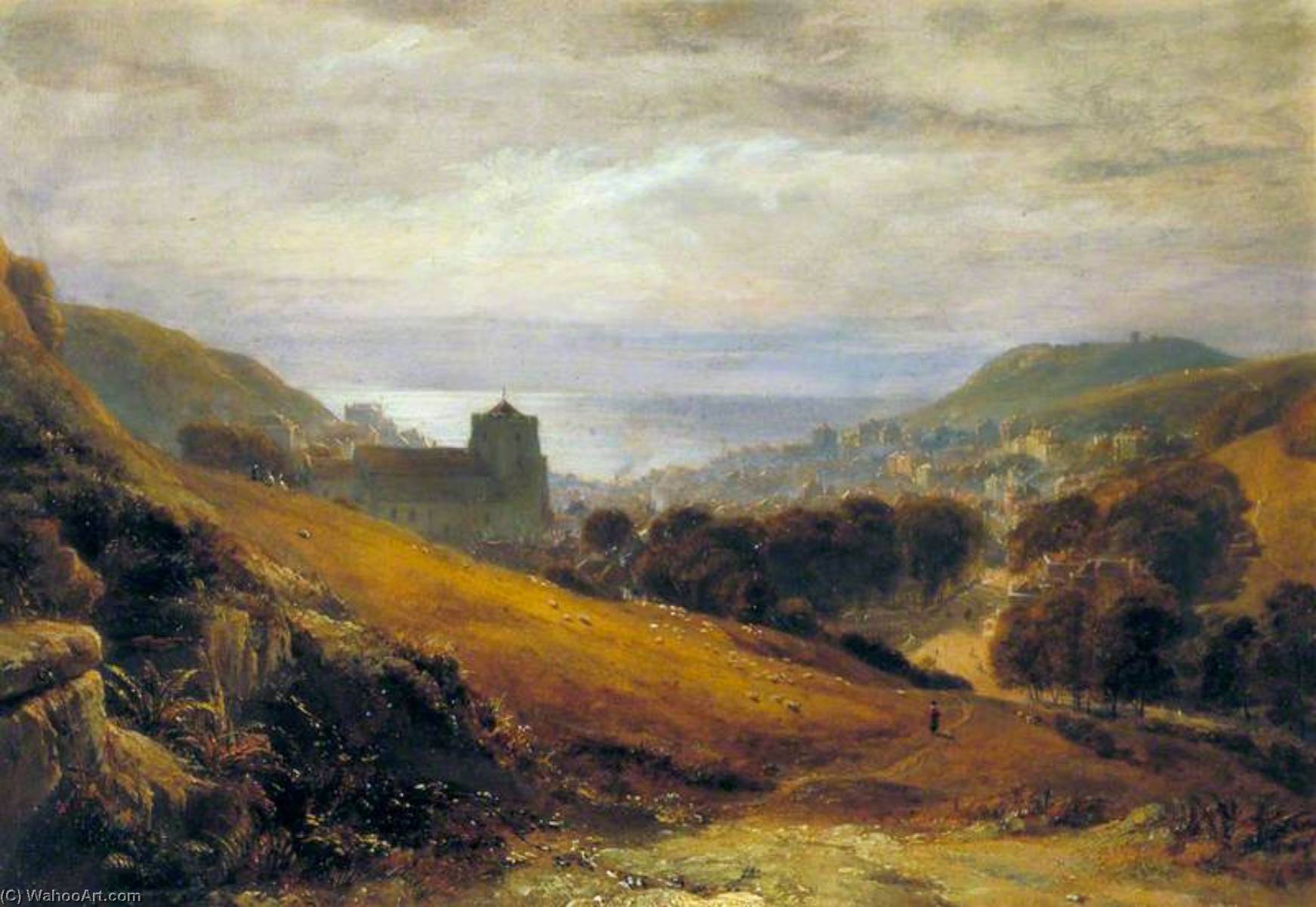
Old Hastings
 1835
1835 25.0 x 36.0 cm
 Read More
Hand Made Oil Reproduction
Hand-painted oil on canvas in your size and frame, made to order by our artists. ( Buy Print Buy Image)




































Pick from our preset sizes that match the artwork's original proportions.

You may enter your own dimensions to fit a specific frame or space. If your selected size does not match the original image's proportions, we will either crop the artwork or extend the painting with additional hand-painted elements. A digital mockup will be sent for your approval before production begins.
Please note that the on-screen preview does not reflect the actual cropping or extension. Only the mockup will accurately show the final composition.
While custom sizes are available, we recommend selecting a dimension from the predefined list to preserve the original proportions.
After order, ArtsDot.com team will email client for instructions and provide a mockup preview
Worldwide Delivery () in 3/4 weeks instead of standard 5 weeks. (17 August). No compromise on quality.

Free Worldwide Express Shipping

High-Quality Linen Canvas

Full Shipping Insurance

Customs Tax Refund Guarantee

True Color Matching Guarantee

60-Day Return Policy (Defects Only)

100% Money-Back Guarantee

Bulk Discount Offer
 Glass option is only available in size under 110 CM

Old Hastings
Reproduction Medium
Reproduction Size
-


Total Price
$ 263
Artwork Description
The Painting's Composition
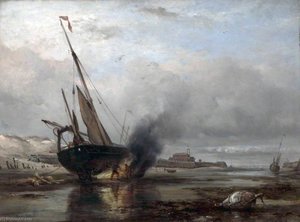
The scene depicts a picturesque village situated on the side of a hill, surrounded by trees and with mountains in the background. A church is prominently located at the center of the scene, with a large body of water nearby. In the foreground, two people are seen standing near the edge of the image, possibly enjoying the view or taking a stroll through the area. The painting's composition is characterized by its use of soft colors and gentle brushstrokes, creating a sense of tranquility and peace.Artist's Style and Influences
Edward William Cooke's style is reminiscent of other notable artists, such as Claude Gellée, who was known for his landscapes and use of light. Cooke's work can be seen in the context of the broader art historical movement, with influences from the Realism and Landscape genres. For more information on Cooke's style and influences, visit the ArtsDot.com page dedicated to his work.Importance of the Painting
The painting Old Hastings is a significant example of rural landscape painting in the 19th century. It showcases the artist's ability to capture the essence of rural life and the beauty of nature. The painting's importance can be understood in the context of the culture of the United Kingdom, where landscape painting played a significant role in shaping the country's artistic identity.- The painting is a representation of the serene and peaceful aspects of rural life.
- It showcases the artist's mastery in capturing the essence of nature and the beauty of the landscape.
- The painting is an example of the Realism and Landscape genres, which were popular during the 19th century.
For more information on Edward William Cooke and his work, visit the ArtsDot.com page dedicated to his painting Old Hastings. To learn more about the Victoria and Albert Museum, visit their website or explore the culture of England on Wikipedia.
Related Artworks

Artist Biography
A Life Immersed in Light and Water
Edward William Cooke, born in Pentonville, London, in 1811, was destined to become a pivotal figure in 19th-century British art. His artistic lineage was firmly established from the outset; his father, George Cooke, was a respected line engraver, and his uncle, William Bernard Cooke, followed a similar path. This familial environment wasn’t merely professional—it fostered an atmosphere where artistry was woven into the very fabric of life. Even as a child, Edward exhibited remarkable talent, demonstrating advanced engraving skills by the age of nine, particularly in depictions of ships. But his early inclinations weren't solely maritime; pastoral landscapes and animal studies also captured his attention, revealing a nascent aesthetic deeply influenced by the serene beauty of 17th-century Dutch masters like Nicolaes Berchem, Paulus Potter, and Karel Dujardin. This initial exposure to their work would become a defining characteristic of his mature style—a commitment to capturing atmosphere and nuanced detail. His formal training began with botanical illustrations for John Loudon’s *Encyclopaedia of Plants*, followed by extensive work at George Loddiges’ *Botanical Cabinet*. These years honed his meticulous observation skills and instilled in him an appreciation for the natural world, qualities that would permeate all his subsequent endeavors.From Botanical Precision to Marine Mastery
Despite early success with botanical illustration—producing hundreds of wood engravings and around 400 watercolors within the vibrant ecosystem of Hackney nursery grounds—Cooke’s true passion lay with ships and the sea. Recognizing this inclination, he sought practical knowledge by studying under Captain Burton of the West-Indiaman *Thetis*. This experience proved invaluable, providing firsthand insight into the intricacies of vessels and maritime life – details he meticulously documented in his sketchbooks. He began painting in oils in 1833, formally studying under James Stark in 1834, and by 1835 had already exhibited at both the Royal Academy and the British Institution, marking a significant step in his artistic career. Even at this early stage, his style was clearly defined: detailed depictions of marine scenes and landscapes rendered with remarkable precision. He quickly gained recognition as a principal follower of Clarkson Stanfield, benefiting immensely from the older artist’s advice and guidance. Stanfield's influence is evident in Cooke’s ability to capture not just the physical appearance of ships and seascapes but also their atmosphere—the play of light on water, the drama of changing weather conditions, and the sense of vastness that characterizes the marine environment. He wasn’t simply recording what he saw; he was conveying a feeling, an experience.A Wanderer's Palette: Travels and Artistic Development
Cooke’s artistic development was profoundly shaped by his extensive travels throughout Europe and North Africa. A pivotal journey to the Netherlands in 1837 ignited a lifelong fascination with Dutch marine art, which became a cornerstone of his style. He returned repeatedly over the next two decades, immersing himself in the coastal landscapes and studying the unique quality of light that defined the region. These trips weren’t merely about replication; they were about understanding the underlying principles of composition, color, and atmosphere that made Dutch marine painting so compelling. Beyond Holland, his travels took him to Normandy, Belgium, France, Scotland, Ireland, Scandinavia, Spain, and Venice. Each location offered new subject matter and broadened his artistic horizons. He masterfully captured the dramatic effects of weather—turbulent storms, tranquil sunsets, misty mornings—and the diverse topography of each region, demonstrating a remarkable ability to convey both the power and the beauty of nature. His sketches from these journeys weren’t just preparatory studies; they were works of art in their own right, imbued with a sense of immediacy and observation.Recognition, Scholarship, and Enduring Legacy
Edward William Cooke achieved considerable recognition during his lifetime, solidifying his position as a leading figure in 19th-century British art. He was elected an Associate of the Royal Academy in 1851 and became a full Royal Academician in 1863—a testament to his artistic skill and standing within the art world. His international acclaim extended beyond Britain, with his election as an honorary academician to the National Academy of Design in 1858. Throughout his career, Cooke exhibited over 120 works at the Royal Academy, consistently receiving critical praise for his technical mastery and evocative depictions of marine scenes and landscapes. However, his achievements weren’t limited to the realm of art; he was also a respected scientist, elected as a Fellow of the Royal Society in 1863, alongside memberships in the Geological, Linnean, and other learned societies. This intellectual breadth distinguished him from many artists of his time, highlighting his curiosity and dedication to understanding the world around him. Hay Barge off Greenwich (1835), *Venetian Lagoons – Sunset*, *Salerno, Italy* (1849), and *Brighton Sands* (1837) continue to captivate audiences today. Edward William Cooke died on January 4, 1880, leaving behind a substantial body of work that stands as a testament to his skill, vision, and enduring legacy as both an accomplished painter and a respected scholar. He is remembered for his meticulous attention to detail, combined with his ability to capture the atmosphere of coastal scenes—a master of light, water, and the subtle nuances of the natural world.A Lasting Influence
- Technical Mastery: Cooke’s skill in rendering detail and capturing atmospheric effects remains highly admired.
- Dutch Inspiration: His embrace of Dutch marine painting traditions enriched British art with a new sensibility.
- Scientific Curiosity: His scientific pursuits informed his artistic vision, adding depth and accuracy to his work.
- Broad Appeal: Cooke’s paintings continue to resonate with audiences today, offering glimpses into a bygone era of maritime life and coastal beauty.
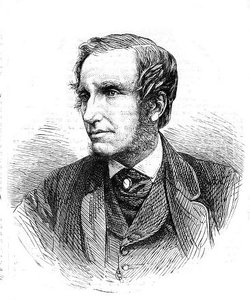
Edward William Cooke
1811 - 1880 , United Kingdom
Quick Facts
- Artistic Movement Or Style: Marine & Landscape
- Artists Who Influenced This Artist:
- Clarkson Stanfield
- Dutch Masters
- Date Of Birth: March 27, 1811
- Date Of Death: January 4, 1880
- Full Name: Edward William Cooke
- Nationality: British
- Notable Artworks:
- Hay Barge off Greenwich
- Venetian Lagoons - Sunset
- Salerno, Italy
- Brighton Sands
- Place Of Birth: Pentonville, UK