

 Preview
 Send
Send Share
Share
 Details

 Download
 Similars
 X-Ray
X-Ray Diaporama
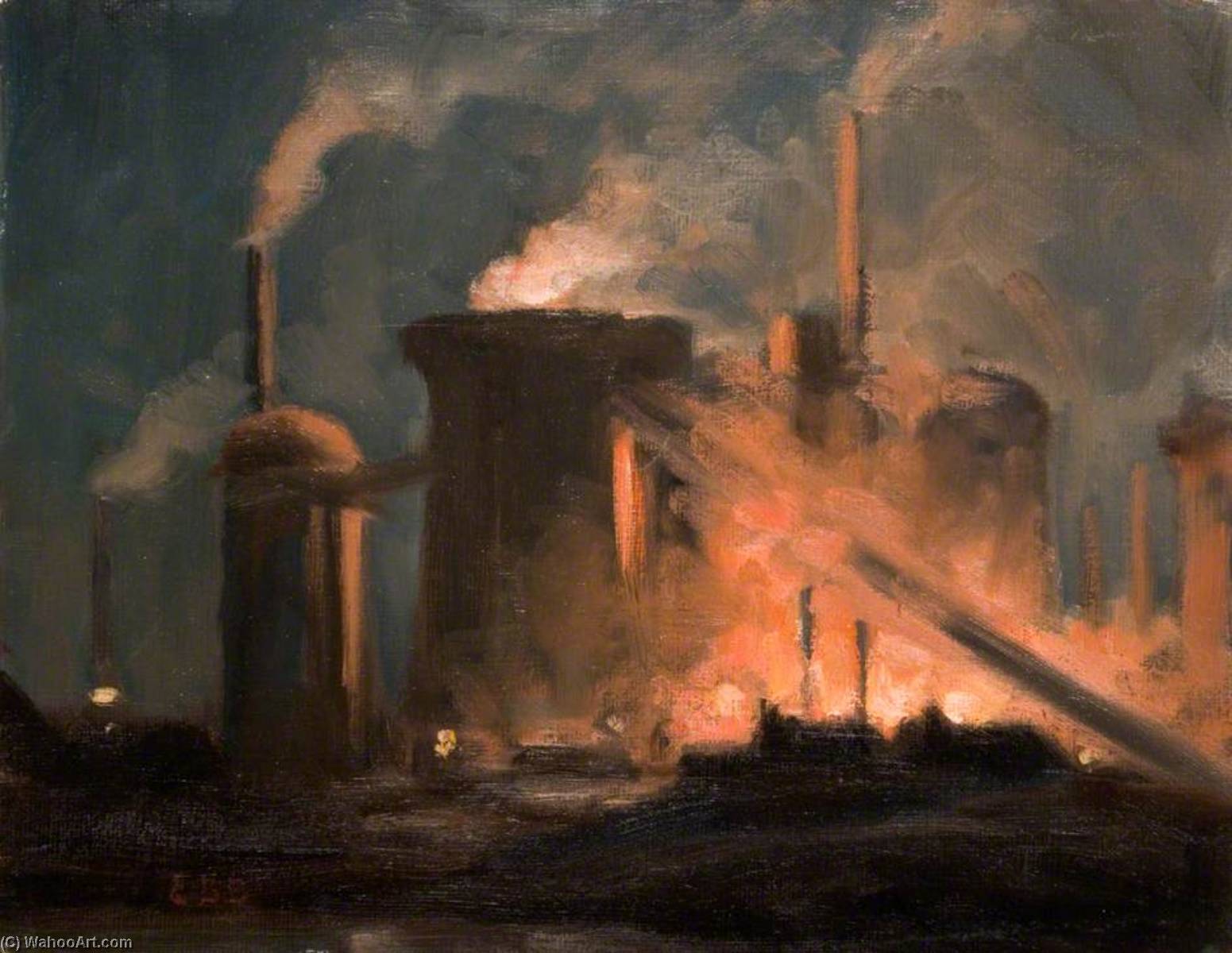
Blast Furnaces, Night
 40.0 x 55.0 cm
 Wolverhampton Art Gallery
 Read More
Purchase a high-resolution, enhanced digital image, far superior to the online preview.
Each file is meticulously prepared by our in-house specialists using advanced tools and expert manual retouching. We ensure every image has exceptional clarity, precise color accuracy, and fine detail.
The final file is delivered via email within 72 hours, optimized for immediate use in professional, editorial, and print environments. This is the same quality trusted by top-tier design studios, publishers, and galleries.
Digital Image
Download a high-resolution file for personal display, printing, and creative projects. ( Buy Print Buy Hand Made Painting)
Included in Every Digital Image Order
Expert Digital Delivery, Guaranteed
When you choose ArtsDot.com, you're not just getting an image - you're receiving a professionally enhanced digital artwork, crafted with precision and backed by a satisfaction guarantee. Here's everything that comes with your order, automatically:

Fast Email Delivery
Your high-resolution digital image file will be emailed to you within 72 hours of ordering - ready for immediate use.

AI-Enhanced Digital File
Your artwork is professionally optimized using advanced AI tools and manual editing, ensuring maximum detail, clarity, and color accuracy.

Free Lifetime Re-Delivery
Accidentally deleted or lost your file? No worries - we'll resend it to you anytime, free of charge.

No Import Fees - Ever
Enjoy your artwork instantly with zero customs, duties, or delivery fees - digital downloads are always tax-free.

Color Accuracy Guarantee
We ensure your digital image reflects the original colors as closely as possible using professional tools and color management.

60-Day Satisfaction Guarantee
If you're not satisfied with your digital image, we'll revise it or refund 100% within 60 days - no questions asked.

100% Money-Back Guarantee
Not satisfied? Get a full refund within 60 days of receiving your digital file - no questions asked.

Bulk Order Discounts
Buy 3 images, save 10% - Buy 5, save 15% - Buy 10+, save 20%. Great for creative projects, galleries, and agencies.
Related Artworks










Artist Biography
Early Life and the Black Country Landscape
Edwin Butler Bayliss, a name perhaps less familiar than some of his contemporaries, nevertheless holds a significant place in British art history as a keen observer and powerful interpreter of the industrial heartland of England. Born in 1874 in Wolverhampton, to Samuel Bayliss, an influential industrialist, and Emma Bayliss (née Butler), he was steeped in both wealth and the burgeoning dynamism of the Black Country from his earliest years. His childhood home, The Woodhouse in Tettenhall, provided a backdrop of privilege and observation – a vantage point from which to witness the dramatic transformations reshaping this region. Unlike many artists of his era who sought idyllic rural scenes, Bayliss’s gaze was firmly fixed on the gritty reality of factories, furnaces, and the ever-present haze of smoke that defined the landscape. This early exposure, combined with a family connection to industry through his father's business, laid the foundation for his unique artistic vision. He received some rudimentary training at Rydal Mount School in Colwyn Bay, Wales, but it was largely self-taught, driven by an intense curiosity and a desire to capture the essence of his surroundings.A Painter of Industry: Technique and Style
Bayliss’s artistic journey wasn't marked by formal academic instruction; instead, he honed his skills through diligent observation and experimentation. He initially worked in charcoal, pastel, and watercolour, mastering the fundamentals before transitioning to oil painting – a medium that allowed him to achieve the rich textures and dramatic lighting effects crucial to conveying the atmosphere of the Black Country. His style is often described as realist, yet imbued with an emotional depth rarely found in purely documentary works. He wasn’t simply depicting factories; he was portraying the lives and conditions within them. His brushwork is characterized by a deliberate roughness, mirroring the weathered surfaces and imposing scale of his subjects. Thick impasto layers build up texture, while loose, expressive strokes capture the movement of smoke, the glint of metal, and the weariness of the workers. The use of color is equally significant – muted greys, browns, and blues dominate, punctuated by the fiery reds and yellows of the furnaces, creating a powerful visual contrast that underscores the region’s industrial might and inherent drama.The Inspiration: Ironworks and the Black Country
Bayliss's most enduring subject matter was undoubtedly the ironworks and foundries of the Black Country – specifically those associated with figures like Sir Alfred Hickman, whose steelworks provided him with unparalleled access to his chosen subjects. This proximity allowed him to witness firsthand the relentless activity, the deafening noise, and the pervasive dust that defined these industrial behemoths. He wasn’t interested in romanticizing industry; instead, he presented a starkly unsentimental portrayal of its realities. Paintings like “Pig Beds Tapping a Furnace” (displayed at Wolverhampton Art Gallery) offer a visceral depiction of this world – a scene of tireless labor, the rhythmic clang of machinery, and the ever-present threat of danger. The inclusion of a solitary horse and man in these scenes adds a layer of melancholy, suggesting the human cost of industrial progress. The landscape itself—slag heaps, canals, and the dense smoke filling the sky—became an integral part of his artistic vocabulary, reflecting both the region’s economic vitality and its environmental impact.Notable Works and Recognition
Throughout his career, Bayliss exhibited extensively in Birmingham and Wolverhampton, gaining recognition for his distinctive style and insightful depictions of industrial life. His work was featured in the Royal Academy exhibitions from 1907 until his death in 1950, a testament to its quality and appeal. Key works include “In the Black Country,” which captures the atmosphere of a typical industrial scene with remarkable detail; "Black Country Landscape," showcasing the bleak beauty of the region’s terrain; and numerous depictions of specific ironworks like Darlaston. His paintings are now held by Wolverhampton Art Gallery, offering visitors a rare glimpse into this often-overlooked corner of British art history. The Dudley Council also holds some of his works, highlighting their importance to local heritage.Legacy and Historical Significance
Edwin Butler Bayliss’s contribution lies not in grand narratives or revolutionary techniques, but in his quiet, persistent observation and honest portrayal of a specific place and time. He captured the spirit of the Black Country—its industry, its hardship, and its beauty—with remarkable skill and sensitivity. His work serves as a valuable historical document, offering insights into the lives of ordinary people who toiled within these industrial landscapes. Bayliss’s legacy is one of understated brilliance – an artist who found profound meaning in the everyday realities of his surroundings, leaving behind a body of work that continues to resonate with viewers today. His paintings are not merely representations of factories and furnaces; they are windows into a vanished world, reminding us of the complex interplay between industry, landscape, and human experience.
edwin butler bayliss
1874 - 1950
Quick Facts
- Artistic Movement Or Style: Industrial landscapes
- Artists Or Movements Influenced By This Artist: ['Impressionism']
- Artists Who Influenced This Artist: ['George Phoenix']
- Date Of Birth: 1874
- Date Of Death: 1950
- Full Name: Edwin Butler Bayliss
- Nationality: British
- Notable Artworks:
- Pig Beds Tapping a Furnace
- In the Black Country
- Black Country Landscape
- Place Of Birth: Wolverhampton, UK

