 Preview
 Send
Send Share
Share
 Details

 Download
 Similars
 X-Ray
X-Ray Diaporama
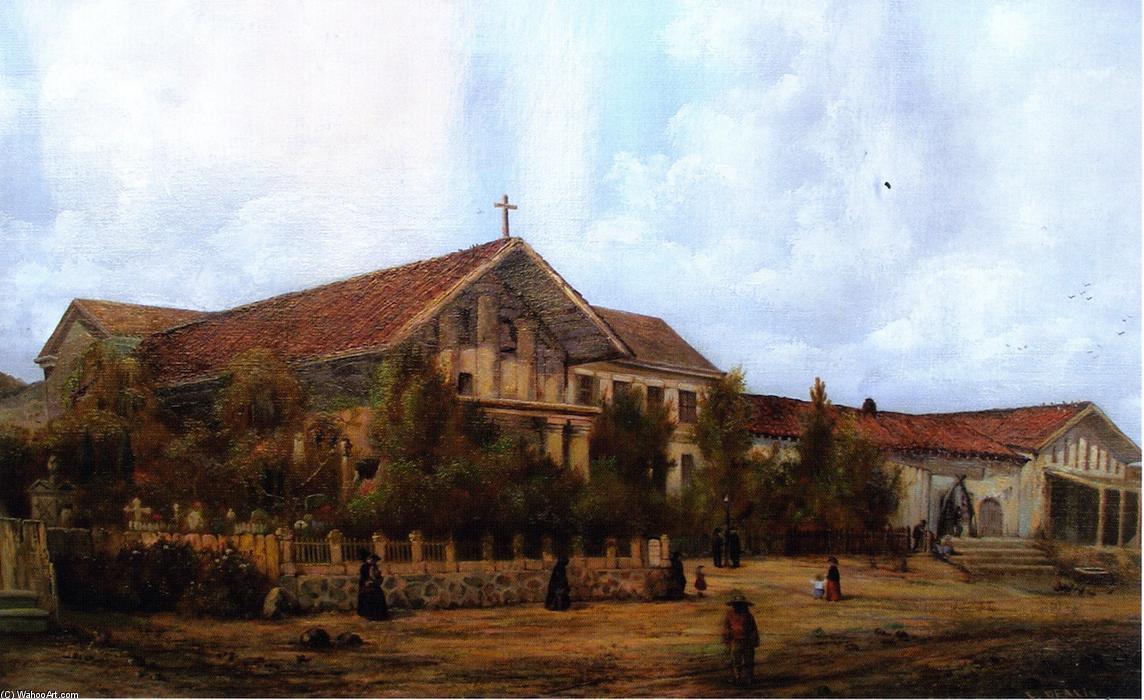
Mission Dolores and the Mansion House, San Francisco, Cal


 Read More
Hand Made Oil Reproduction
Hand-painted oil on canvas in your size and frame, made to order by our artists. ( Buy Print Buy Image)




































Pick from our preset sizes that match the artwork's original proportions.

You may enter your own dimensions to fit a specific frame or space. If your selected size does not match the original image's proportions, we will either crop the artwork or extend the painting with additional hand-painted elements. A digital mockup will be sent for your approval before production begins.
Please note that the on-screen preview does not reflect the actual cropping or extension. Only the mockup will accurately show the final composition.
While custom sizes are available, we recommend selecting a dimension from the predefined list to preserve the original proportions.
After order, ArtsDot.com team will email client for instructions and provide a mockup preview
Worldwide Delivery () in 3/4 weeks instead of standard 5 weeks. (26 August). No compromise on quality.

Free Worldwide Express Shipping

High-Quality Linen Canvas

Full Shipping Insurance

Customs Tax Refund Guarantee

True Color Matching Guarantee

60-Day Return Policy (Defects Only)

100% Money-Back Guarantee

Bulk Discount Offer
 Glass option is only available in size under 110 CM

Mission Dolores and the Mansion House, San Francisco, Cal
Reproduction Medium
Reproduction Size
-


Total Price
$ 288
Artwork Description
A Glimpse of Early San Francisco: Mission Dolores and the Mansion House
Edwin Deakin’s 1870 painting, "Mission Dolores and the Mansion House, San Francisco, Cal," offers a captivating window into a pivotal moment in California's history. The artwork depicts the iconic Mission Dolores (Misión Nuestra Señora de los Dolores) – one of the oldest surviving buildings in San Francisco – alongside what appears to be the Mansion House hotel, suggesting a burgeoning urban landscape nestled within a rural setting. This scene reflects San Francisco’s rapid growth during the Gold Rush era, showcasing the juxtaposition of religious heritage and commercial development that defined the city's character.
Romantic Realism: Style and Technique
Deakin masterfully employs a style rooted in Romanticism, yet grounded in realistic observation. The painting isn’t merely a depiction; it evokes an emotional response through its atmospheric perspective and careful attention to detail. Notice the loose brushwork characteristic of 19th-century oil painting – visible strokes that contribute to the texture and depth of the canvas. The overcast sky creates a diffused lighting, softening shadows and lending a sense of tranquility to the scene. While geometric shapes define the architectural elements—the rectangular church, square pavement—Deakin skillfully layers paint to create a palpable sense of materiality. The composition is somewhat flattened, typical of landscape painting from this period, which draws the viewer's eye directly to the central subject: the imposing Mission Dolores.
Historical Context and Symbolism
The late 1860s were a time of significant change for San Francisco. The Gold Rush had transformed the city from a small settlement into a bustling metropolis, attracting people from all over the world. Mission Dolores, originally built in 1776 as part of a Spanish mission system, stood as a tangible link to California’s colonial past amidst this rapid modernization. The presence of the Mansion House suggests the burgeoning hospitality industry catering to the influx of prospectors and settlers. Symbolically, the church represents faith, community, and enduring tradition, while the surrounding landscape evokes a sense of both tranquility and isolation—a reflection of the challenges and opportunities inherent in frontier life.
Emotional Impact and Artistic Legacy
Deakin’s painting isn't just about documenting a place; it's about capturing a feeling. The muted tones, diffused light, and slightly melancholic atmosphere create a sense of quiet contemplation. The small group of figures in the foreground adds scale and humanizes the scene, inviting viewers to imagine themselves present within this historical moment. Edwin Deakin’s work is celebrated for its romantic depictions of California landscapes and architectural studies of Spanish Missions, helping preserve an image of historic California for generations to come. Owning a reproduction of "Mission Dolores and the Mansion House" allows you to bring a piece of that history—and that evocative atmosphere—into your own space.
Related Artworks

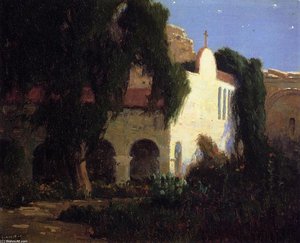
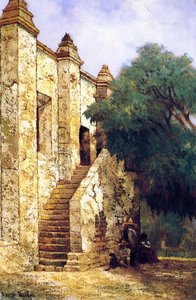
Artist Biography
The Romantic Vision of Edwin Deakin
Edwin Deakin (1838–1923) stands as a vital chronicler of the American West, an artist whose brush captured the soul of a transforming California. Born in Sheffield, England, Deakin’s journey began far from the sun-drenched valleys of the Pacific coast, yet his artistic sensibilities were perfectly primed to embrace the dramatic landscapes of his adopted home. Trained under the esteemed George Frederic Watts in London, Deakin developed a profound mastery of anatomy and light, skills that would later allow him to render the rugged textures of the California terrain with breathtaking realism. His early education instilled in him a disciplined approach to observation, a quality that remained the cornerstone of his prolific career as he transitioned from the misty landscapes of Britain to the vibrant, golden vistas of the United and American West.
Upon relocating to San Francisco in 1879, Deakin found himself at the heart of a burgeoning cultural landscape. He did not merely observe this new world; he sought to preserve its vanishing essence through the lens of Romanticism. His work became a bridge between the historical past and the rapidly advancing present. As an educator at Stanford University, he influenced a new generation of painters, imparting his belief in the sanctity of careful observation and artistic rigor. This period of his life was marked by a deep devotion to the architectural heritage of California, particularly the Spanish Missions. Through meticulous oil paintings, Deakin breathed life into structures like Mission San Gabriel Arcángel and Mission Dolores, capturing their spiritual grandeur and weathered beauty with a sensitivity that transcended mere documentation.
Mastery of Light and Detail
Deakin’s technical prowess was characterized by an exquisite command of the Romantic style, utilizing oil on canvas to create depth and atmosphere. He was a master of glazing, employing a delicate layering process that allowed light to permeate his works, giving them an inner glow that mirrored the natural radiance of the California sun. This technique was particularly effective in his landscapes, where he could manipulate shadows and highlights to evoke the shifting moods of mountainous terrains and serene, sprawling valleys. Whether depicting the sweeping vistas of the coast or the intimate corners of a domestic setting, Deakin’s hand was always guided by an unwavering commitment to detail.
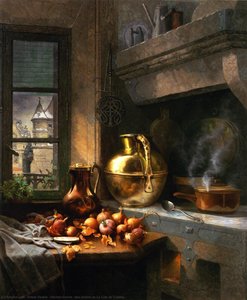
His versatility extended beyond the grand scale of landscapes into the intimate realm of still lifes and genre scenes. In works such as Kitchen Corner (1883), Deakin demonstrated his ability to transform everyday domesticity into something profound and evocative. Through meticulous rendering of textures—the sheen of copper, the softness of cloth, the warmth of a hearth—he invited viewers into a nostalgic, idealized version of nineteenth-century life. This ability to find the extraordinary within the ordinary, combined with his monumental architectural studies like Mission San Juan Capistrano, showcases an artist capable of navigating both the epic and the intimate with equal grace.
A Lasting Legacy of Preservation
The historical significance of Edwin Deakin lies in his role as a visual custodian of California’s romanticized history. At a time when the frontier was rapidly being tamed by industry and expansion, Deakin’s paintings served as a poignant reminder of the state's unique cultural and architectural roots. His depictions of the Spanish Missions were more than just art; they were acts of preservation, capturing the dignity of a colonial era that was slowly fading into memory. By documenting these landmarks with such reverence, he ensured that the spiritual and aesthetic weight of the Mission period would remain accessible to future generations.
Today, Deakin’s oeuvre remains a cornerstone for those studying the development of American landscape art and the cultural evolution of the West Coast. His work continues to resonate because it captures more than just scenery; it captures an era's identity. Through his eyes, we see a California defined by:
- Architectural Grandeur: The enduring strength and spiritual presence of the Spanish Missions.
- Atmospheric Beauty: The interplay of light and shadow across diverse and dramatic landscapes.
- Cultural Nostalgia: A romanticized, detailed glimpse into the domestic and social rhythms of the 19th century.
Edwin Deakin’s legacy is one of profound connection—connecting the traditions of European training with the raw energy of the American frontier, and connecting the fleeting moments of a changing landscape to the permanence of fine art.
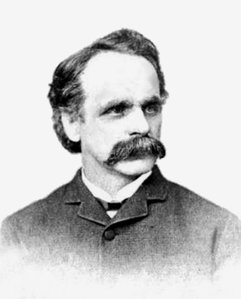
Edwin Deakin
1838 - 1923 , United Kingdom
Quick Facts
- Artistic Movement Or Style: Romantic Landscape
- Date Of Birth: 1838 Sheffield UK
- Date Of Death: 1923
- Full Name: Edwin Deakin
- Nationality: British American
- Notable Artworks:
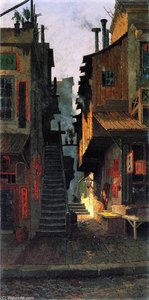
- The Stairway
- An Offering to Bacchus
- Notre Dame, Paris
- Place Of Birth: Sheffield UK
Related Articles
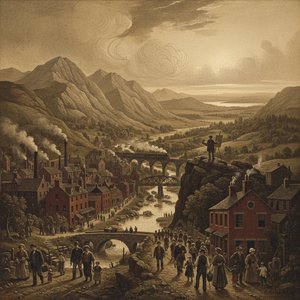
Edwin Deakin: A Victorian Topographer's Vision of Landscape, Industry & Social Change
Explore the captivating world of Edwin Deakin, a Victorian artist who masterfully captured California's landscapes, Spanish missions & Chinatown. Discover his legacy and influence on art history.

Goya's Masterpieces: Explore 25 Iconic Paintings & Art Prints | ArtsDot
Delve into the world of Francisco Goya with ArtsDot. Explore 25 iconic paintings – from 'The Third of May' to his haunting Black Paintings. Discover the stories, techniques & emotions behind these Spanish masterpieces. Find museum-quality art reproductions for your home at ArtsDot.com!
Franz Bischoff: Bridging Tonalism & Impressionism in California Landscape Painting
Explore the captivating art of Franz Bischoff, a pivotal figure bridging Tonalism & California Impressionism. Discover his stunning landscapes, floral works, and lasting legacy with ArtsDot.
Joseph Kleitsch: Bridging Impressionism & California Regionalism – A Study of Light and Identity
Explore the life & work of Joseph Kleitsch, a pivotal California Impressionist painter. Discover his vibrant landscapes, portraits, and legacy within the Laguna Beach art colony. A comprehensive study for collectors & enthusiasts.
Francisco Goya: Darkness & Enlightenment – A Comprehensive Exploration of the Artist's Life, Works, and Enduring Legacy
Explore the life & works of Francisco Goya, Spain's Romantic master. Discover his evolution from court painter to a visionary chronicler of war and social injustice. A comprehensive guide for art enthusiasts.