

 Preview
 Send
Send Share
Share
 Details

 Download
 Similars
 X-Ray
X-Ray Diaporama
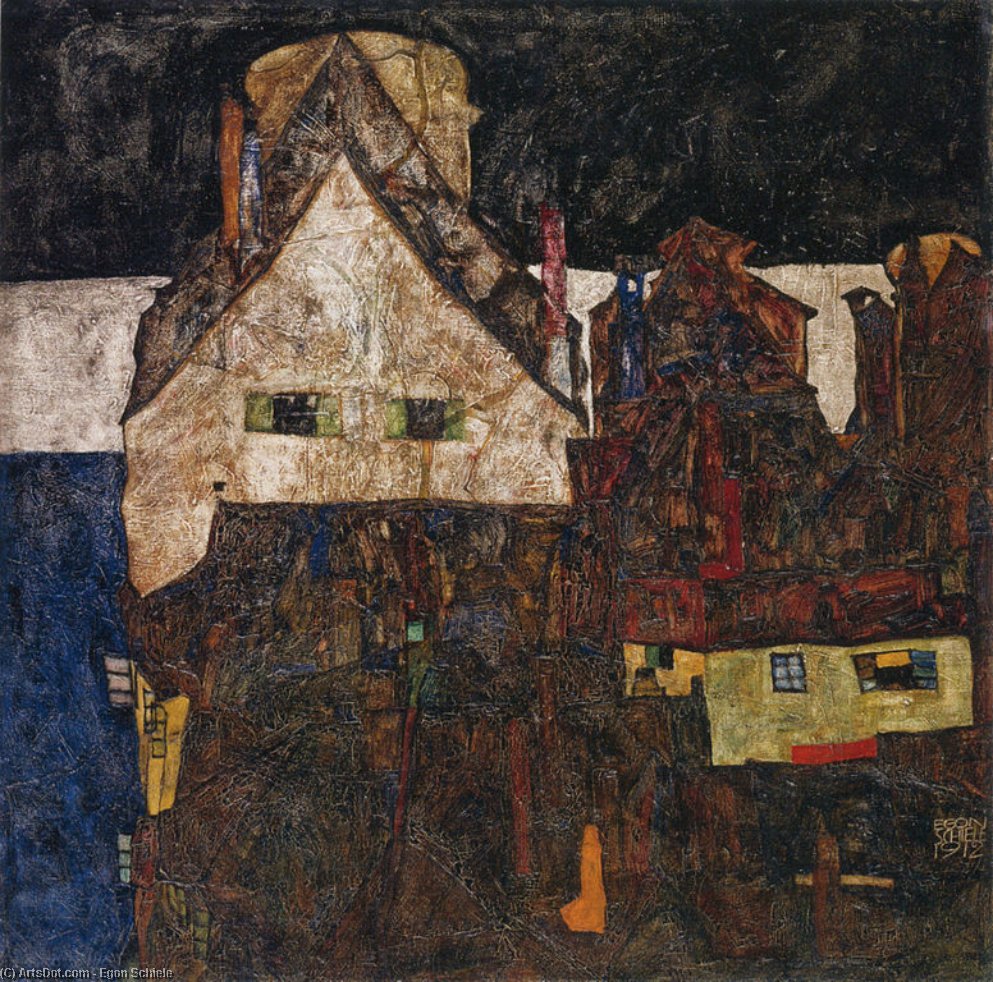
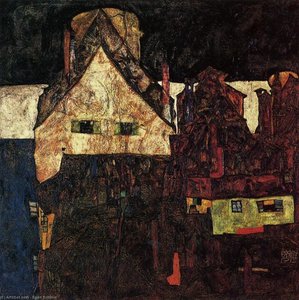
The Small City I (also known as Dead City VI)
 Oil On Canvas
- WallArt
- Expressionism
 1912
1912- Modern
 80.0 x 80.0 cm
 Kunsthaus Zürich
 Read More
Purchase a high-resolution, enhanced digital image, far superior to the online preview.
Each file is meticulously prepared by our in-house specialists using advanced tools and expert manual retouching. We ensure every image has exceptional clarity, precise color accuracy, and fine detail.
The final file is delivered via email within 72 hours, optimized for immediate use in professional, editorial, and print environments. This is the same quality trusted by top-tier design studios, publishers, and galleries.
Digital Image
Download a high-resolution file for personal display, printing, and creative projects. ( Buy Print Buy Hand Made Painting)
Included in Every Digital Image Order
Expert Digital Delivery, Guaranteed
When you choose ArtsDot.com, you're not just getting an image - you're receiving a professionally enhanced digital artwork, crafted with precision and backed by a satisfaction guarantee. Here's everything that comes with your order, automatically:

Fast Email Delivery
Your high-resolution digital image file will be emailed to you within 72 hours of ordering - ready for immediate use.

AI-Enhanced Digital File
Your artwork is professionally optimized using advanced AI tools and manual editing, ensuring maximum detail, clarity, and color accuracy.

Free Lifetime Re-Delivery
Accidentally deleted or lost your file? No worries - we'll resend it to you anytime, free of charge.

No Import Fees - Ever
Enjoy your artwork instantly with zero customs, duties, or delivery fees - digital downloads are always tax-free.

Color Accuracy Guarantee
We ensure your digital image reflects the original colors as closely as possible using professional tools and color management.

60-Day Satisfaction Guarantee
If you're not satisfied with your digital image, we'll revise it or refund 100% within 60 days - no questions asked.

100% Money-Back Guarantee
Not satisfied? Get a full refund within 60 days of receiving your digital file - no questions asked.

Bulk Order Discounts
Buy 3 images, save 10% - Buy 5, save 15% - Buy 10+, save 20%. Great for creative projects, galleries, and agencies.
Collectible Description
A City on the Brink: Decoding Egon Schiele’s ‘The Small City I’
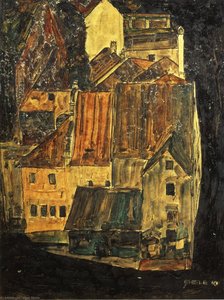
Egon Schiele's 1912 painting, ‘The Small City I’ (also known as ‘Dead City VI’), is not a celebration of urban life, but rather a haunting meditation on isolation and precarity. The work depicts a cluster of buildings clinging to existence against a turbulent, dark sea – a scene rendered with an unsettling angularity that immediately draws the viewer into its emotionally charged atmosphere. It’s a vision far removed from idyllic landscapes; instead, Schiele presents us with a cityscape teetering on the edge of collapse, a visual metaphor for the anxieties and uncertainties of the modern age.
Expressionist Echoes and Personal Turmoil
Schiele was a pivotal figure in early Expressionism, a movement that sought to convey subjective emotion and inner experience rather than objective reality. ‘The Small City I’ exemplifies this approach through its distorted forms, muted color palette – dominated by whites, greys, browns, and blues punctuated with flashes of red and yellow – and the palpable sense of unease it evokes. Born in 1890 into a world grappling with rapid social and political change, Schiele's life was marked by personal tragedy and emotional turmoil. The early death of his father from syphilis, coupled with a complex relationship with his uncle who served as his guardian, deeply impacted his artistic vision. This sense of loss, instability, and psychological tension permeates much of his work, and ‘The Small City I’ is no exception. The painting's fragmented composition and precarious structures can be seen as reflections of Schiele’s own internal struggles and the fractured nature of modern existence.
Technique and Texture: A Study in Impasto
Schiele’s masterful technique further amplifies the emotional impact of ‘The Small City I’. He employed a thick impasto style, applying layers of oil paint with visible brushstrokes that create a rich, tactile texture. This physicality adds to the sense of instability and rawness, as if the city itself is crumbling before our eyes. The flattened perspective contributes to the painting’s two-dimensional quality, intensifying its symbolic power and drawing attention to the formal elements – the sharp angles, the stark contrasts between light and shadow, and the deliberate distortion of architectural forms. The buildings aren't rendered with realistic detail; instead, they are simplified geometric shapes that emphasize their vulnerability and isolation. The turbulent sea below isn’t a calming presence but an ominous force threatening to engulf the city entirely.
Symbolism and Interpretation: A City of Ghosts
While Schiele rarely offered explicit interpretations of his work, ‘The Small City I’ invites multiple readings. Some scholars suggest that the painting reflects the artist's ambivalent feelings towards Vienna, a city he both loved and felt alienated by. The “dead city” motif could symbolize the decay of traditional values and the anxieties surrounding urbanization. Others see it as a more personal expression of Schiele’s own sense of isolation and his struggle to find meaning in a rapidly changing world. The painting's haunting quality and ambiguous symbolism resonate deeply with viewers, prompting introspection and inviting them to project their own emotions onto the scene. It is not merely a depiction of a physical place but a powerful evocation of an emotional state – a sense of loneliness, vulnerability, and impending doom.
Related Artworks
Artist Biography
A Life Forged in Expression
Born in 1890 in the Austrian town of Tulln an der Donau, Egon Schiele’s life was a tempestuous journey marked by both extraordinary artistic vision and profound personal hardship. His early years were shadowed by illness and loss; his father succumbed to syphilis when Egon was just fourteen, a tragedy that would deeply resonate within his work, fueling an obsession with mortality and the fragility of existence. Raised initially by his mother and then under the somewhat controlling guardianship of his uncle Leopold Czihaczek, Schiele’s childhood lacked conventional stability but fostered a fiercely independent spirit. Even as a boy, he displayed an intense fascination with trains—a motif that subtly reappeared in later paintings—and a burgeoning talent for drawing, though this was initially met with disapproval from his father who saw it as a distraction from more practical pursuits. The early death of his sister Elvira also cast a long shadow over the young artist’s psyche. These formative experiences instilled within him a sensitivity and an emotional rawness that would become hallmarks of his artistic expression, a constant grappling with themes of life, death, and the human condition.
The Crucible of Vienna: Artistic Development
Schiele's formal artistic training began at the Kunstgewerbeschule (School of Arts and Crafts) in Vienna, but he quickly found himself stifled by its conservative approach. He transferred to the Akademie der bildenden Künste (Academy of Fine Arts), only to become further disillusioned with its rigid academic traditions. This dissatisfaction led him to abandon formal training altogether, choosing instead to forge his own path, a testament to his unwavering artistic conviction. The influence of Gustav Klimt was pivotal during these early years; Schiele admired Klimt’s decorative style and exploration of symbolism, even receiving mentorship from the established artist. However, Schiele soon diverged from Klimt's aesthetic, developing a distinctly individual voice characterized by its stark honesty and psychological intensity. He co-founded the Neues Wiener Kunstgruppe (New Viennese Art Group) in 1909, aligning himself with other progressive artists who challenged the prevailing artistic norms. His early works, often unsettling portraits and self-portraits, began to emerge as powerful statements of emotional turmoil, featuring distorted figures and a palpable sense of vulnerability. These paintings were not merely representations of physical form but explorations of the inner landscape—the anxieties, desires, and fears that haunted the human psyche. He sought to depict not what he *saw*, but what he *felt*.
Raw Emotion and Unflinching Truth
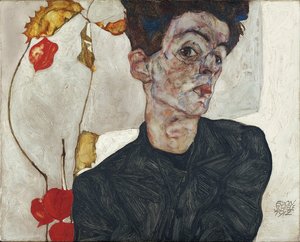
Egon Schiele’s art is immediately recognizable for its raw honesty and psychological depth. He fearlessly confronted themes often considered taboo – sexuality, death, anxiety, isolation – with an unflinching gaze. His distinctive style features elongated figures, contorted poses, and expressive lines that convey a sense of unease and emotional intensity. The human form, particularly the nude, became his primary subject, not as an object of idealized beauty but as a vessel for exploring the complexities of human experience. Self-portraits constitute a significant portion of his oeuvre, offering intimate glimpses into his inner world—a world often marked by loneliness and self-doubt. He didn’t shy away from depicting himself in unflattering or vulnerable poses, revealing a profound level of self-awareness and introspection. Beyond self-portraiture, Schiele created numerous portraits of others, capturing their likenesses with an unsettling realism that seemed to penetrate beneath the surface. His landscapes, while less central to his work than his figurative paintings, demonstrate his mastery of form and color, often reflecting the same emotional intensity as his portraits. The use of line is particularly striking in Schiele’s work; it's not merely a tool for defining shape but an expressive force that conveys emotion and psychological tension. Recurring motifs like the *Physalis* plant – symbolizing death and transience with its delicate, papery husk – further underscore this preoccupation with mortality.
A Legacy Cut Short: Achievements & Significance
Despite facing censorship and legal challenges – including a brief imprisonment for allegedly corrupting minors with his art – Schiele gained recognition within Vienna’s avant-garde circles. His work challenged the conventions of the time, provoking both admiration and outrage. By the time of his untimely death during the Spanish flu pandemic in 1918 at the age of twenty-eight, he had established himself as a leading figure in Austrian Expressionism. Significant works such as Self-Portrait with Physalis, Couple Embracing, and Field Landscape (Kreuzberg near Krumau) stand as testaments to his artistic genius. His influence on subsequent generations of artists is undeniable, particularly those interested in exploring psychological themes and challenging conventional artistic norms. Schiele’s bold approach to form and subject matter continues to resonate with audiences today, making him one of the most important and influential figures in early 20th-century art. His paintings are now held in major museum collections worldwide, including the Leopold Museum in Vienna and the Egon Schiele Art Centrum in Český Krumlov, ensuring his artistic legacy endures. He left behind a body of work that is not merely aesthetically compelling but profoundly human—a testament to the power of art to confront the complexities of existence with honesty, courage, and unwavering vision.
- Key Themes: Mortality, sexuality, isolation, psychological turmoil.
- Influences: Gustav Klimt, Viennese Secession, personal trauma.
- Style Characteristics: Elongated figures, contorted poses, expressive lines, raw emotion.
Egon Schiele
1890 - 1918 , Croatia
Quick Facts
- Artistic Movement Or Style: Expressionism
- Artists Or Movements Influenced By This Artist: ['Expressionism']
- Artists Who Influenced This Artist: ['Gustav Klimt']
- Date Of Birth: 1890
- Date Of Death: 1918
- Full Name: Egon Schiele
- Nationality: Austrian
- Notable Artworks:
- Self-Portrait with Physalis
- Couple Embracing
- Field Landscape (Kreuzberg)
- Place Of Birth: Tulln, Austria

