 Preview
 Send
Send Share
Share
 Details

 Download
 Similars
 X-Ray
X-Ray Diaporama
 Stats
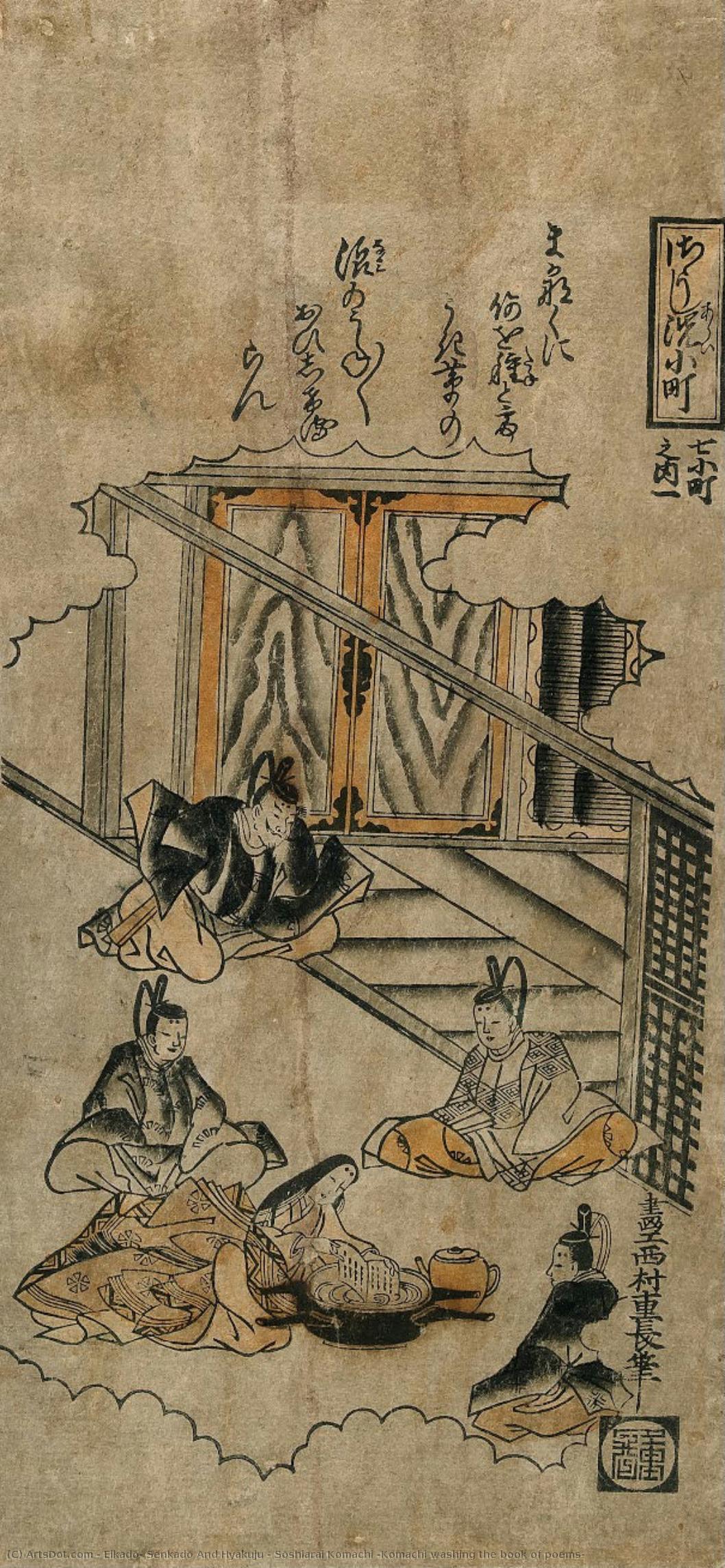
StatsSōshiarai Komachi (Komachi washing the book of poems)

 Read More
Giclée / Art Print
Museum-quality giclée or canvas print with fast production and flexible finish options. ( Buy Hand Made Painting Switch to Digital Image)




































Pick from our preset sizes that match the artwork's original proportions.

You may enter your own dimensions to fit a specific frame or space. If your selected size does not match the original image's proportions, we will either crop the artwork or extend the image with a mirrored or solid-fill edge. A digital mockup will be sent for your approval before production begins.
Please note that the on-screen preview does not reflect the actual cropping or extension. Only the mockup will accurately show the final composition.
While custom sizes are available, we recommend selecting a dimension from the predefined list to preserve the original proportions.
Worldwide Delivery () in 2 weeks instead of standard 4/5 weeks. (10 September)

Free Worldwide Express Shipping

High-Quality Linen Canvas

Full Shipping Insurance

Customs Tax Refund Guarantee

True Color Matching Guarantee

100-Day Return Policy (Defects Only)

100% Money-Back Guarantee

Bulk Discount Offer
 Glass option is only available in size under 110 CM

Sōshiarai Komachi (Komachi washing the book of poems)
Giclée / Art Print
Reproduction Size
-


Total Price
$ 63
Related Artworks










Artist Biography
The Quiet Innovator: Nishimura Shigenaga and the Dawn of Ukiyo-e
Nishimura Shigenaga, more commonly known as Eikadō, Senkadō, or Hyakuju, emerged from the bustling heart of Edo (modern-day Tokyo) in the late 17th century – a period of remarkable transformation and artistic ferment within Japan. Born around 1697, his life unfolded against the backdrop of a rapidly changing society, marked by the rise of the merchant class and an increasing fascination with popular culture. Unlike many artists who benefited from formal training, Shigenaga’s path to mastery was largely self-directed. He began his artistic journey not as a court painter or scholar's assistant, but as a landlord in Tōriabura-chō, later relocating to the vibrant Kanda district where he established a bookshop – a space that simultaneously fueled his passion and provided a means of sustenance. This dual role proved crucial; it immersed him in the world of printed materials and fostered an intimate understanding of visual communication, laying the groundwork for his groundbreaking contributions to *ukiyo-e*, or “pictures of the floating world.”A Diverse Portfolio: Portraits, Landscapes, and Geometric Visions
Shigenaga’s artistic output was remarkably diverse, reflecting a keen interest in capturing the essence of various subjects. He is particularly celebrated for his *yakusha-e* – portraits of Kabuki actors, meticulously rendered to convey their dramatic presence and captivating stage personas. These weren't merely likenesses; Shigenaga possessed an uncanny ability to capture the spirit and emotion of these performers, imbuing each portrait with a palpable sense of theatricality. Beyond the human form, he also dedicated himself to *kachō-e*, depicting scenes from nature – landscapes, birds, flowers, and animals – often imbued with a subtle elegance and a keen observation of detail. However, Shigenaga’s most enduring legacy lies in his innovative approach to perspective and composition. He pioneered the use of “floating pictures,” incorporating geometric principles to create an illusion of depth and space that was revolutionary for its time. These works demonstrated a sophisticated understanding of visual mathematics, challenging traditional artistic conventions and pushing the boundaries of *ukiyo-e* aesthetics.The ‘Genji’ Series: A Masterpiece of Narrative Illustration
Perhaps Shigenaga's most significant achievement is his ambitious series, “Fifty-Four Sheets of Genji,” an adaptation of Murasaki Shikibu’s renowned *Tales of Ise*. This monumental undertaking showcased his technical skill and artistic vision on a grand scale. The series wasn’t simply a reproduction of the text; Shigenaga infused each scene with his own interpretation, capturing the nuanced emotions and intricate relationships within the story. The meticulous detail in depicting clothing, architecture, and courtly rituals offered a window into the world of Heian-era Japan, captivating audiences with its beauty and storytelling prowess. Alongside this monumental work, he produced “The Picture Book of Edo Souvenirs,” further cementing his reputation as a versatile and imaginative artist.Influence and Legacy: Shaping the Future of Ukiyo-e
Nishimura Shigenaga’s impact on the development of *ukiyo-e* is profound, establishing him as a pivotal figure in its early history. His pioneering use of perspective and his diverse subject matter – from Kabuki actors to natural landscapes – paved the way for subsequent generations of artists. He exerted a particularly strong influence on Suzuki Harunobu and Ishikawa Toyonobu, two contemporaries who built upon Shigenaga’s innovations and further popularized *ukiyo-e* during the Edo period. His work demonstrated a willingness to experiment with new techniques and subject matter, contributing significantly to the evolution of this dynamic and influential art form. Though he passed away in 1756, his legacy continues to resonate within Japanese art history, reminding us of the quiet brilliance of an artist who shaped the visual landscape of his time.Further Exploration
- Related Artwork: Sōshiarai Komachi (Komachi washing the book of poems)
eikadō, senkadō and hyakuju
1756 , Japan
Quick Facts
- Artistic Movement Or Style: Ukiyo-e
- Artists Or Movements Influenced By This Artist:
- Suzuki Harunobu
- Ishikawa Toyonobu
- Date Of Birth: Around 1697
- Date Of Death: 1756
- Full Name: Nishimura Shigenaga
- Nationality: Japanese
- Notable Artworks:
- Fifty-four sheets of Genji
- Edo Souvenirs picture book
- Place Of Birth: Tokyo, Japan