

 Send
Send Share
Share
 Details

 Download
 Similars
 Diaporama
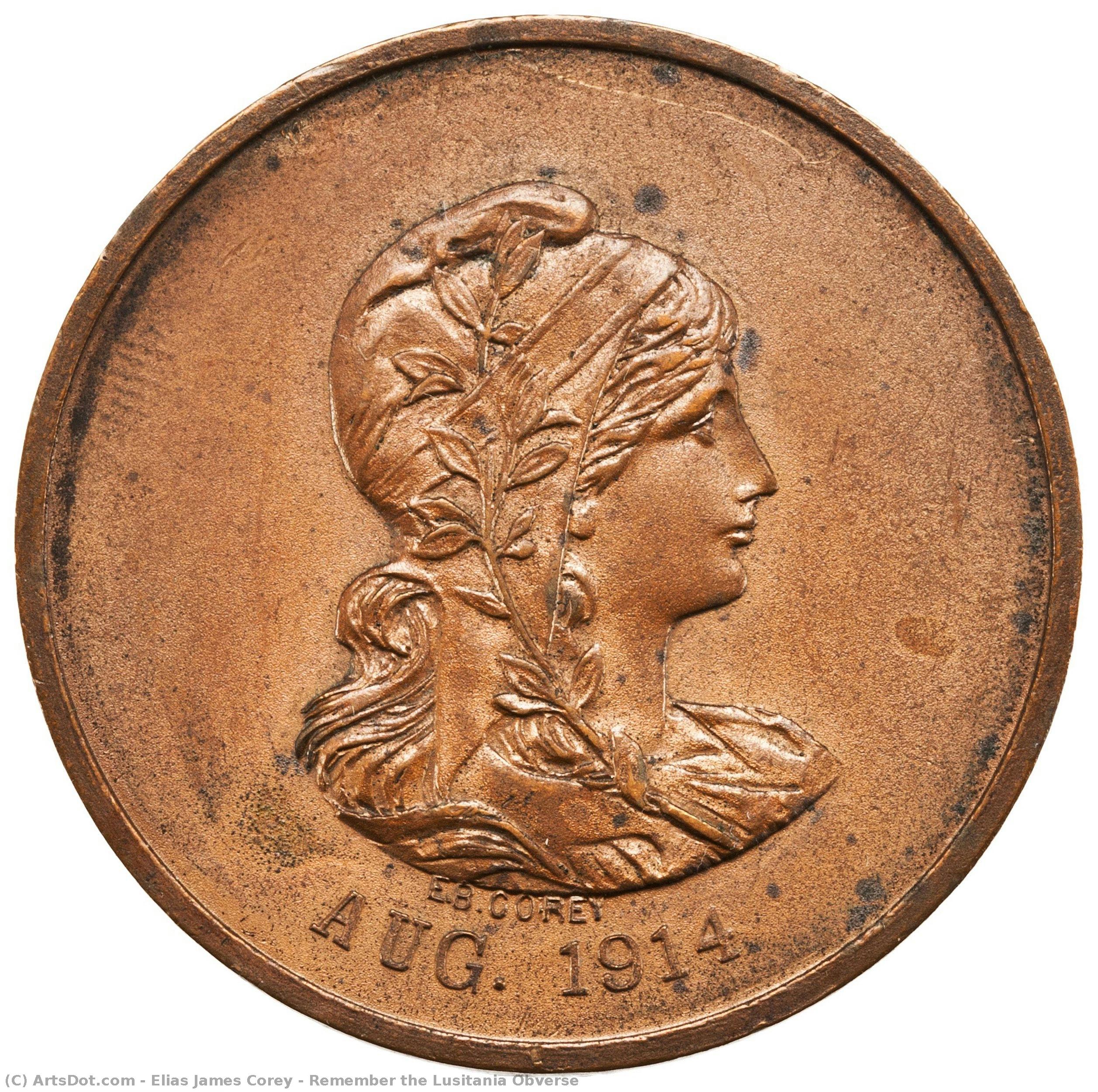
Remember the Lusitania Obverse


 Read More
Purchase a high-resolution, enhanced digital image, far superior to the online preview.
Each file is meticulously prepared by our in-house specialists using advanced tools and expert manual retouching. We ensure every image has exceptional clarity, precise color accuracy, and fine detail.
The final file is delivered via email within 72 hours, optimized for immediate use in professional, editorial, and print environments. This is the same quality trusted by top-tier design studios, publishers, and galleries.
Digital Image
Download a high-resolution file for personal display, printing, and creative projects. ( Buy Print Buy Hand Made Painting)
Included in Every Digital Image Order
Expert Digital Delivery, Guaranteed
When you choose ArtsDot.com, you're not just getting an image - you're receiving a professionally enhanced digital artwork, crafted with precision and backed by a satisfaction guarantee. Here's everything that comes with your order, automatically:

Fast Email Delivery
Your high-resolution digital image file will be emailed to you within 72 hours of ordering - ready for immediate use.

AI-Enhanced Digital File
Your artwork is professionally optimized using advanced AI tools and manual editing, ensuring maximum detail, clarity, and color accuracy.

Free Lifetime Re-Delivery
Accidentally deleted or lost your file? No worries - we'll resend it to you anytime, free of charge.

No Import Fees - Ever
Enjoy your artwork instantly with zero customs, duties, or delivery fees - digital downloads are always tax-free.

Color Accuracy Guarantee
We ensure your digital image reflects the original colors as closely as possible using professional tools and color management.

60-Day Satisfaction Guarantee
If you're not satisfied with your digital image, we'll revise it or refund 100% within 60 days - no questions asked.

100% Money-Back Guarantee
Not satisfied? Get a full refund within 60 days of receiving your digital file - no questions asked.

Bulk Order Discounts
Buy 3 images, save 10% - Buy 5, save 15% - Buy 10+, save 20%. Great for creative projects, galleries, and agencies.
Collectible Description
A Silent Witness to War: Elias Corey’s “Remember the Lusitania Obverse”
Elias James Corey's "Remember the Lusitania Obverse" is more than just a depiction of a copper coin; it’s a poignant artifact of a turbulent era, a tangible link to a maritime tragedy that reverberated across the globe. The artwork captures an unassuming object – a 1915 coin bearing the profile of Augustus – yet through Corey's meticulous hand-painting, it transforms into a powerful symbol of loss, remembrance, and the enduring impact of historical events. The coin’s weathered surface, deliberately rendered with textured brushstrokes, speaks volumes about its journey through time, mirroring the countless untold stories embedded within its metal core.
- Subject Matter: A copper coin featuring a profile portrait of Augustus, likely commemorating the sinking of the Lusitania.
- Artist: Elias James Corey – a contemporary artist whose work often explores themes of historical memory and material culture.
- Date: 1915 – coinciding with the year of the Lusitania’s demise and the subsequent wave of public mourning.
The inscription “AUGUSTUS 1914” is crucial, acting as a direct reference to the event that shaped this coin's creation. The figure depicted, wearing a headband or crown adorned with leaves, immediately evokes imagery of victory and peace – ironic juxtapositions considering the circumstances surrounding the Lusitania’s sinking. This deliberate layering of symbolism elevates the artwork beyond a simple representation of an object; it becomes a meditation on the fragility of hope in the face of devastating loss. Corey's technique is characterized by a delicate realism, meticulously capturing the coin’s details while simultaneously imbuing it with a sense of melancholy and quiet contemplation.
Decoding the Symbolism: Victory and Remembrance
The choice of “Augustus” as the central figure is profoundly significant. Augustus, the first Roman Emperor, represents order, stability, and imperial power – qualities that were shattered by the outbreak of World War I and the subsequent loss of life. The inclusion of leaves within the crown’s adornment further reinforces this theme, suggesting a yearning for peace amidst chaos, a desperate plea for reconciliation that ultimately went unanswered. The coin itself, as a symbol of currency and commerce, represents the everyday lives disrupted by war – the trade routes severed, the economies destabilized, and the human cost measured in lives lost at sea.
Technique and Materiality: A Hand-Painted Masterpiece
Corey’s skill lies not just in his subject matter but also in his masterful execution. The artwork is a testament to painstaking detail, achieved through layers of hand-painted glazes and subtle shading. The textured surface of the coin is meticulously replicated using a variety of brushstrokes – some broad and expressive, others fine and precise – creating a tactile quality that invites close inspection. The use of copper pigments ensures an authentic representation of the original coin’s appearance, while the overall effect is one of remarkable depth and realism. This meticulous attention to detail elevates the reproduction beyond a simple print; it becomes a genuine work of art in its own right.
Historical Context and Emotional Impact
"Remember the Lusitania Obverse" serves as a potent reminder of the human cost of war, specifically the tragic sinking of the RMS Lusitania in 1915. The ship’s demise, a direct result of German U-boat attacks, ignited public outrage and fueled anti-German sentiment across the United States. This artwork captures not just a historical event but also the emotional response to it – the grief, the anger, and the enduring sense of loss that permeated society at the time. It’s a piece that invites reflection on themes of war, peace, and the lasting consequences of human conflict. Its quiet intensity makes it an ideal addition to collections focused on 20th-century history or those seeking pieces with a strong emotional resonance.
Related Artworks

Artist Biography
Elias James Corey: The Architect of Molecular Synthesis
Elias James Corey, a name perhaps less familiar to the general public than those of many Nobel laureates, stands as a towering figure in the world of organic chemistry. Born in Methuen, Massachusetts, in 1928, his journey from a young boy grappling with the loss of his father to a globally recognized pioneer in synthetic methodology is a testament to resilience, intellectual curiosity, and an unwavering dedication to unraveling the secrets of molecular construction. Corey’s work didn't just advance scientific understanding; it fundamentally reshaped how chemists approach complex molecules – a legacy that continues to impact fields ranging from drug discovery to materials science.Early Life and Foundations
Corey’s childhood was profoundly shaped by the sudden death of his father, an event that instilled in him a deep appreciation for family strength and a determination to honor his memory. Raised alongside his mother, Fatina (née Hasham), her sister Naciby, and her husband John Saba – essentially becoming part of a large, close-knit extended family – he developed a strong work ethic and a sense of community rooted in shared experience. Despite the hardships brought on by the Great Depression, this upbringing fostered an independent spirit and a love for sports like baseball, football, and hiking. His initial interest in mathematics at Lawrence High School ultimately led him to MIT, where he initially considered electrical engineering before discovering his true passion: chemistry. The influence of exceptional teachers – Arthur Cope, John Sheehan, Roger Adams, and Carl Marvel – proved pivotal, guiding him toward a career focused on the beauty and relevance of organic synthesis. It was this early exposure to rigorous scientific inquiry and mentorship that laid the groundwork for his future achievements.The Theory of Retrosynthetic Analysis
Corey’s most significant contribution lies in the development of retrosynthetic analysis, a revolutionary approach to designing complex molecules. Traditional organic synthesis often involved painstakingly building a molecule from simple starting materials, a process that could be incredibly time-consuming and inefficient. Corey recognized that chemists could instead “work backward” – mentally dissecting a target molecule into its simpler precursors – essentially tracing the steps needed to construct it. This method, formalized as retrosynthetic analysis, dramatically streamlined the synthesis of intricate compounds, allowing researchers to predict reaction pathways and optimize synthetic strategies with unprecedented accuracy. His work wasn’t simply about devising new reactions; it was about fundamentally changing *how* chemists thought about building molecules. The concept of “molecular architecture” – understanding how a molecule's structure dictates its properties – became central to his approach, influencing generations of chemists.Key Discoveries and Methodologies
Corey’s research extended far beyond retrosynthetic analysis, resulting in several groundbreaking contributions to synthetic chemistry. He pioneered the development of crucial reagents like pyridinium chlorochromate (PCC), a versatile oxidizing agent that remains widely used today, and he introduced protecting groups such as t-butyldimethylsilyl ether (TBS) and methoxyethoxymethyl (MEM), which allowed chemists to selectively manipulate functional groups within complex molecules without unwanted side reactions. His work on ginkgolide B, a naturally occurring compound with potential medicinal properties, exemplified his ability to tackle challenging synthetic problems and demonstrated the practical applications of his theoretical insights. These reagents and methodologies have become staples in organic chemistry laboratories worldwide, solidifying Corey’s impact on the field.Recognition and Legacy
In 1990, Elias James Corey was awarded the Nobel Prize in Chemistry for his development of the theory and methodology of organic synthesis – a recognition that underscored the profound influence of his work. Beyond the prize, he received numerous other honors, including the National Medal of Science and the American Chemical Society’s Priestley Medal. He remained active in research until recently, continuing to mentor students and contribute to advancements in synthetic chemistry at Harvard University. Elias James Corey's legacy extends far beyond his individual discoveries; it resides in the countless chemists he has inspired and the transformative impact of his work on our understanding of molecular construction. His approach continues to shape the field, reminding us that the pursuit of knowledge is a collaborative endeavor built upon the foundations laid by pioneers like himself.
elias james corey
1928 - , United States of America
Quick Facts
- Artistic Movement Or Style: Organic chemistry
- Artists Or Movements Influenced By This Artist: ['Molecular orbital theory']
- Artists Who Influenced This Artist:
- John Sheehan
- Roger Adams
- Carl Marvel
- Date Of Birth: July 12, 1928
- Full Name: Elias James Corey
- Nationality: American
- Place Of Birth: Methuen, Massachusetts, USA

