

 Preview
 Send
Send Share
Share
 Details

 Download
 Similars
 X-Ray
X-Ray Diaporama
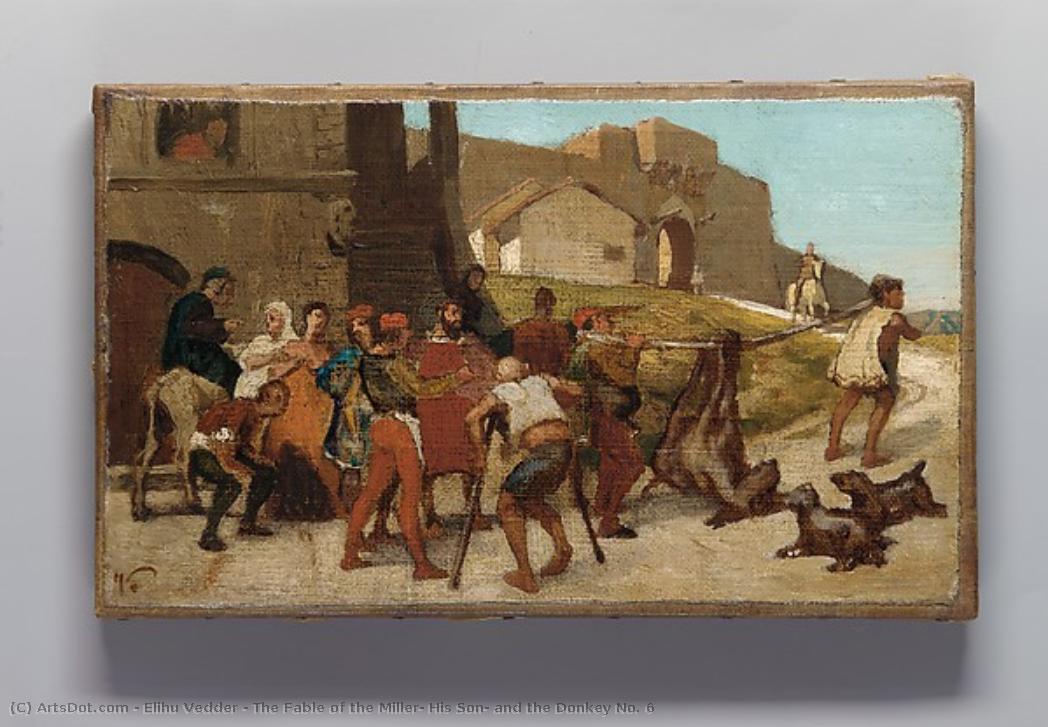
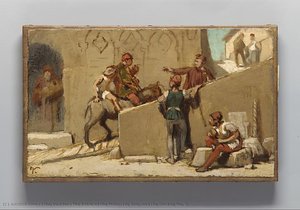
The Fable of the Miller, His Son, and the Donkey No. 6
 Oil On Canvas
- WallArt
- Symbolism
 1867
1867 17.0 x 27.0 cm
 Metropolitan Museum of Art
 Read More
Purchase a high-resolution, enhanced digital image, far superior to the online preview.
Each file is meticulously prepared by our in-house specialists using advanced tools and expert manual retouching. We ensure every image has exceptional clarity, precise color accuracy, and fine detail.
The final file is delivered via email within 72 hours, optimized for immediate use in professional, editorial, and print environments. This is the same quality trusted by top-tier design studios, publishers, and galleries.
Digital Image
Download a high-resolution file for personal display, printing, and creative projects. ( Buy Print Buy Hand Made Painting)
Included in Every Digital Image Order
Expert Digital Delivery, Guaranteed
When you choose ArtsDot.com, you're not just getting an image - you're receiving a professionally enhanced digital artwork, crafted with precision and backed by a satisfaction guarantee. Here's everything that comes with your order, automatically:

Fast Email Delivery
Your high-resolution digital image file will be emailed to you within 72 hours of ordering - ready for immediate use.

AI-Enhanced Digital File
Your artwork is professionally optimized using advanced AI tools and manual editing, ensuring maximum detail, clarity, and color accuracy.

Free Lifetime Re-Delivery
Accidentally deleted or lost your file? No worries - we'll resend it to you anytime, free of charge.

No Import Fees - Ever
Enjoy your artwork instantly with zero customs, duties, or delivery fees - digital downloads are always tax-free.

Color Accuracy Guarantee
We ensure your digital image reflects the original colors as closely as possible using professional tools and color management.

100-Day Satisfaction Guarantee
If you're not satisfied with your digital image, we'll revise it or refund 100% within 100 days - no questions asked.

100% Money-Back Guarantee
Not satisfied? Get a full refund within 100 days of receiving your digital file - no questions asked.

Bulk Order Discounts
Buy 3 images, save 10% - Buy 5, save 15% - Buy 10+, save 20%. Great for creative projects, galleries, and agencies.
Elihu Vedder’s “The Fable of the Miller, His Son, and the Donkey No. 6” – A Vision of Rustic Morality
Elihu Vedder's "The Fable of the Miller, His Son, and the Donkey No. 6," a captivating oil painting from 1867, isn’t merely a depiction of Aesop’s timeless tale; it’s a profound meditation on human folly, societal judgment, and the elusive pursuit of universal approval. Born in New York City amidst a complex family history—his parents cousins—Vedder's early life was shaped by a nomadic existence between Schenectady and Paris, ultimately leading him to establish himself as a pivotal figure in American Symbolism. This particular work, created during his Italian sojourn, exemplifies the influence of the Macchiaioli painters and the evocative landscapes that profoundly impacted his artistic vision. The painting’s power lies not just in its narrative clarity but in Vedder's masterful use of color, texture, and composition to convey a sense of both immediacy and timeless wisdom.
A Scene of Rustic Drama – Composition and Technique
The scene unfolds within a vibrant Italian countryside—a carefully constructed tableau that feels simultaneously familiar and dreamlike. A bustling gathering of figures, rendered with loose, expressive brushstrokes, occupies the foreground, their interactions radiating a palpable sense of tension and judgment. The composition is deliberately chaotic yet dynamic; figures are clustered together, gesturing emphatically, creating a visual rhythm that mirrors the story’s central conflict. Vedder employs an impasto technique—thickly applied paint—to build texture and depth, particularly evident in the rough surfaces of the buildings and the weathered faces of the onlookers. The use of color is equally striking: earthy tones dominate – ochres, browns, and greens – punctuated by flashes of brighter hues that draw attention to key elements within the scene. The flattened perspective, a characteristic of Symbolism, prioritizes narrative impact over strict realism, guiding the viewer’s eye through the unfolding drama.
Symbolic Weight – Donkey, Miller, and the Critique of Societal Expectations
At the heart of the painting lies the symbolic weight of its subject matter. The donkey itself—a humble beast of burden—represents humility, servitude, and perhaps even vulnerability. The miller and his son, caught in a cycle of appeasing critical observers, embody humanity’s inherent desire for validation. Their attempts to satisfy every opinion – from riding the donkey to carrying it on their shoulders – ultimately lead to a tragic outcome: the donkey's demise. Vedder isn’t simply illustrating a fable; he’s offering a sharp critique of societal expectations and the futility of striving to please everyone. The surrounding figures, representing various facets of society—farmers, merchants, onlookers—all contribute to this commentary, highlighting the pervasive nature of judgment and the impossibility of achieving universal approval.
Vedder's Legacy – A Bridge Between Realism and Symbolism
“The Fable of the Miller, His Son, and the Donkey No. 6” stands as a testament to Elihu Vedder’s unique artistic vision—a synthesis of realism and Symbolism that resonated deeply within the American art scene of the late 19th century. Influenced by Italian Renaissance masters and the Macchiaioli movement, Vedder infused his work with emotional intensity and allegorical depth. The painting's enduring appeal lies in its ability to tap into universal themes—the desire for acceptance, the burden of judgment, and the bittersweet wisdom gained through experience. Today, reproductions of this captivating artwork continue to inspire contemplation on the complexities of human relationships and the challenges of navigating a world saturated with conflicting opinions. The Met’s version, particularly, offers a glimpse into Vedder's meticulous process, showcasing his graphite studies alongside the final painting—a testament to his dedication to capturing both narrative clarity and emotional resonance.
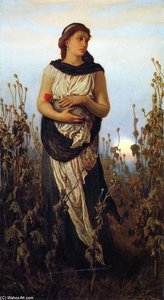
Related Artworks

Artist Biography
Early Life and Artistic Training
- Born: February 26, 1836, New York City, United States
- Died: January 29, 1923, Rome, Italy
Elijah Vedder was born into a family with unique circumstances – his parents were cousins. His early life was shaped by diverse experiences including time spent in Cuba due to his father's relocation and periods between his maternal grandfather’s home in Schenectady and boarding school. Despite initial reservations from his father, Vedder's artistic ambitions were supported by his mother.
- Early Training: Vedder began formal training in New York City under Tompkins H. Matteson.
- European Studies: He furthered his studies in Paris with François-Édouard Picot and later in Italy, where he was profoundly influenced by the Italian Renaissance and the Macchiaioli painters.
- Italian Influence: His time in Italy fostered a deep emotional connection with fellow painter Giovanni Costa, leading to travels before financial constraints forced his return to America.
Career Highlights and Notable Works
Vedder’s career spanned various artistic disciplines, from painting and illustration to mural design and poetry. He cultivated friendships with prominent figures like Walt Whitman and Herman Melville.
- Illustrations for the Rubaiyat: Vedder is best known for his fifty-five illustrations accompanying Edward FitzGerald's translation of The Rubáiyát of Omar Khayyam (deluxe edition). These illustrations are considered masterpieces of Symbolist art.
- Visionary Paintings: Notable paintings include "The Roc’s Egg," “The Fisherman and the Genii,” and “Lair of the Sea Serpent,” showcasing his visionary style and imaginative themes.
- Mural Work: He decorated the hallway of the Reading Room in the Washington Library of Congress with mural paintings.
- Tiffany Collaboration: Vedder collaborated with Louis Comfort Tiffany, designing glassware, mosaics, and statuettes for the Tiffany company.
Artistic Style and Influences
Vedder’s artistic style is characterized by its visionary nature, romantic imagery, and frequent incorporation of Oriental influences.
- Symbolism: Vedder was a key figure in the Symbolist movement, emphasizing emotion and individualism over strict realism.
- Pre-Raphaelites: His time in England exposed him to the Pre-Raphaelite Brotherhood, influencing his artistic style towards greater clarity and detail.
- English and Irish Mystics: He was influenced by the works of William Blake and William Butler Yeats, reflecting a fascination with mysticism and spirituality.
- Italian Renaissance & Macchiaioli: His studies in Italy shaped his understanding of form, color, and composition.
Legacy and Later Life
Vedder’s contributions to American art extended beyond painting. He helped establish the In Arte Libertas group in Italy and left behind a body of written work including autobiographical reflections and poetry.
- Membership: Vedder was a member of the American Academy of Arts and Letters.
- Literary Pursuits: He published The Digressions of V (1910), Miscellaneous Moods in Verse (1914), and Doubt and Other Things (1922).
- Later Years: Vedder spent his later years primarily in Italy, continuing to create art and write until his death in Rome in 1923. His legacy endures through his evocative paintings and illustrations that continue to captivate audiences today.
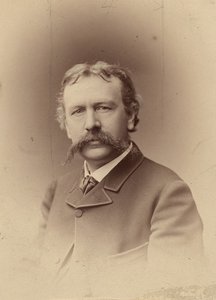
Elihu Vedder
1836 - 1923 , United States of America
Quick Facts
- Artistic Movement Or Style: Symbolism, Romanticism
- Artists Who Influenced This Artist:
- François-Édouard Picot
- Giovanni Costa
- William Blake
- William Butler Yeats
- Date Of Birth: February 26, 1836
- Date Of Death: January 29, 1923
- Full Name: Elihu Vedder
- Nationality: American
- Notable Artworks:
- The Roc’s Egg
- The Fisherman and the Genii
- Lair of the Sea Serpent
- Rubaiyat illustrations
- Place Of Birth: New York City, USA