

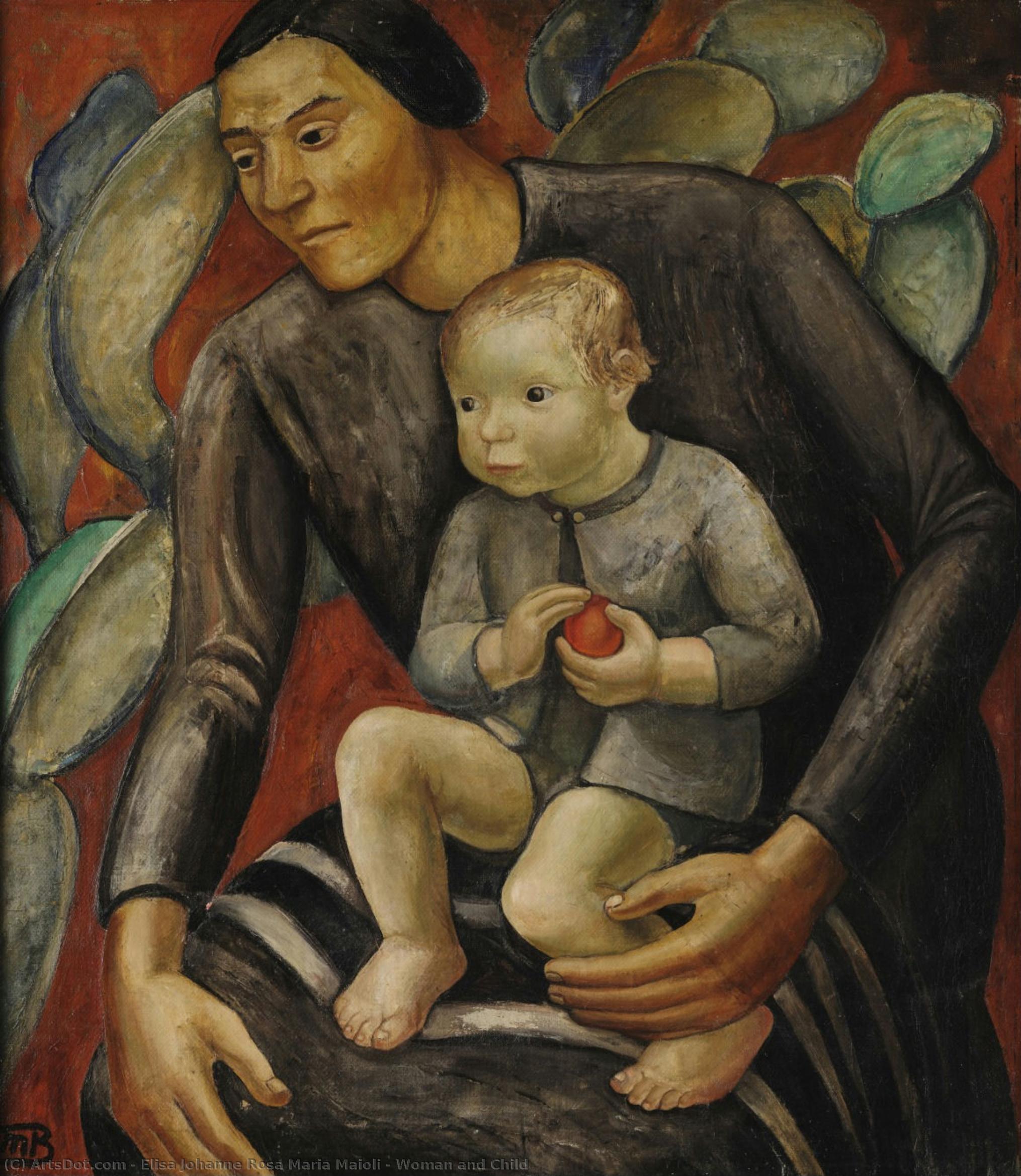
 Preview
 Send
Send Share
Share
 Details

 Download
 Similars
 X-Ray
X-Ray Diaporama
Woman and Child
 1930
1930 95.0 x 84.0 cm
 Read More
Purchase a high-resolution, enhanced digital image, far superior to the online preview.
Each file is meticulously prepared by our in-house specialists using advanced tools and expert manual retouching. We ensure every image has exceptional clarity, precise color accuracy, and fine detail.
The final file is delivered via email within 72 hours, optimized for immediate use in professional, editorial, and print environments. This is the same quality trusted by top-tier design studios, publishers, and galleries.
Digital Image
Download a high-resolution file for personal display, printing, and creative projects. ( Buy Print Buy Hand Made Painting)
Included in Every Digital Image Order
Expert Digital Delivery, Guaranteed
When you choose ArtsDot.com, you're not just getting an image - you're receiving a professionally enhanced digital artwork, crafted with precision and backed by a satisfaction guarantee. Here's everything that comes with your order, automatically:

Fast Email Delivery
Your high-resolution digital image file will be emailed to you within 72 hours of ordering - ready for immediate use.

AI-Enhanced Digital File
Your artwork is professionally optimized using advanced AI tools and manual editing, ensuring maximum detail, clarity, and color accuracy.

Free Lifetime Re-Delivery
Accidentally deleted or lost your file? No worries - we'll resend it to you anytime, free of charge.

No Import Fees - Ever
Enjoy your artwork instantly with zero customs, duties, or delivery fees - digital downloads are always tax-free.

Color Accuracy Guarantee
We ensure your digital image reflects the original colors as closely as possible using professional tools and color management.

60-Day Satisfaction Guarantee
If you're not satisfied with your digital image, we'll revise it or refund 100% within 60 days - no questions asked.

100% Money-Back Guarantee
Not satisfied? Get a full refund within 60 days of receiving your digital file - no questions asked.

Bulk Order Discounts
Buy 3 images, save 10% - Buy 5, save 15% - Buy 10+, save 20%. Great for creative projects, galleries, and agencies.
Related Artworks








Artist Biography
Barnett Newman: Architect of the Sublime
Barnett Newman, born in New York City in 1905 and tragically passing away in 1970, remains one of the most profoundly enigmatic figures in 20th-century art. Often associated with Abstract Expressionism, a label he resisted, Newman carved out a uniquely personal space within the movement, developing a distinctive visual language that explored themes of vastness, spirituality, and the fundamental relationship between the individual and the universe. His work isn’t about depicting recognizable forms; instead, it's an invitation to experience a profound sense of scale and contemplation—a journey into the “sublime,” as he himself termed it.
Newman’s early life was marked by a quiet intellectualism. The son of Polish immigrants, he initially pursued philosophy at City College of New York before finding his vocation in teaching and writing. He deliberately distanced himself from the commercial world, rejecting his father's clothing business, and embraced a life dedicated to artistic creation. His initial foray into painting during the 1930s was characterized by expressionistic tendencies, but he ultimately abandoned this style, recognizing its limitations. A pivotal moment arrived in 1936 with his marriage to Annalee Greenhouse, a fellow teacher who encouraged him to pursue a more authentic and deeply personal artistic vision. This shift marked the beginning of Newman’s evolution towards the monumental color fields that would define his legacy.
The Emergence of ‘Zips’ and Color Fields
Newman's distinctive style emerged gradually, rooted in a rejection of representational art and a desire to capture something beyond the purely visual. He began experimenting with large-scale canvases, initially exploring variations of color—often muted blues, greens, and yellows—that he applied in broad washes. Around 1948, a crucial breakthrough occurred: the introduction of the “zip.” These thin, vertical lines, seemingly arbitrary yet possessing an undeniable structural function, became the defining element of his work. Newman described them not as mere markings but as "divine" or "sacred," acting as boundaries that simultaneously separated and connected the vast fields of color.
The *Onement* series (1948-1957) represents a cornerstone of Newman’s development. These monumental canvases, often measuring over ten feet in height, are dominated by these expansive color fields intersected by the zips. The effect is not one of visual complexity but rather of profound simplicity and stillness. Newman sought to create paintings that would evoke a sense of awe and transcendence—a feeling akin to encountering something beyond human comprehension. He famously stated, “I want to make people feel that they are in a space.”
Influences and Artistic Context
While Newman resisted easy categorization, his work was undeniably shaped by the artistic currents of his time. The influence of Mark Rothko’s color field paintings is evident, particularly in their emphasis on pure color and emotional resonance. However, Newman's approach differed significantly; he wasn’t interested in conveying specific emotions but rather in creating a space for contemplation—a “zone” where viewers could experience the sublime. He also drew inspiration from Minimalism, embracing simplicity and reducing his paintings to their essential elements. Furthermore, Newman was deeply influenced by religious thought, particularly the concept of the infinite and the unknowable. His work can be interpreted as an attempt to visually represent these spiritual concepts—a striving towards a higher realm.
Legacy and Historical Significance
Barnett Newman’s impact on 20th-century art is undeniable. He pushed the boundaries of abstraction, demonstrating that painting could transcend representation and engage with fundamental questions about human experience and the nature of reality. His monumental color fields continue to exert a powerful influence on contemporary artists, while his work remains a subject of intense critical debate and fascination. Newman’s insistence on creating paintings that evoke a sense of awe and transcendence has cemented his place as one of the most important and challenging figures in American art history—an artist who dared to confront the sublime and invite viewers to contemplate their own existence within the vastness of the universe.
Newman's work is often seen as a reaction against the perceived superficiality of modern life, a yearning for something deeper and more meaningful. His paintings are not meant to be passively observed; they demand engagement—a willingness to surrender oneself to their scale and silence, and to experience the profound sense of space that he so meticulously crafted.
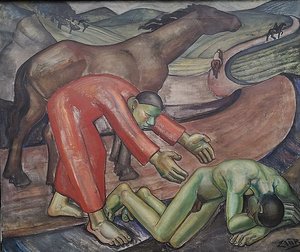
elisa johanne rosa maria maioli
1905 - 2002 , Denmark
Quick Facts
- Artistic Movement Or Style: Abstract expressionism, Color field painting
- Artists Or Movements Influenced By This Artist: ['Mark Rothko']
- Artists Who Influenced This Artist:
- Paul Gauguin
- Vincent van Gogh
- Arthur Dow
- Date Of Birth: January 29, 1905
- Date Of Death: July 4, 1970
- Full Name: Barnett Newman
- Nationality: American
- Notable Artworks:
- Vir Heroicus Sublimis
- The Stations of the Cross
- Place Of Birth: New York City, USA

