

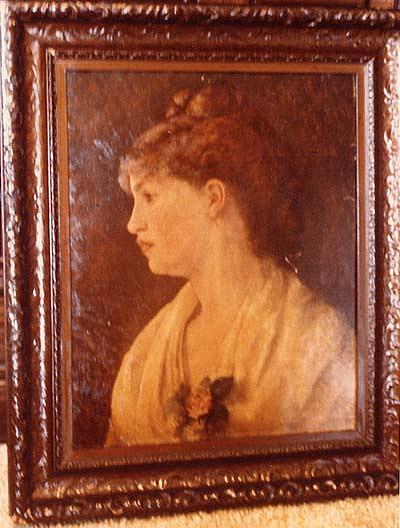
 Preview
 Send
Send Share
Share
 Details

 Download
 Similars
 X-Ray
X-Ray Diaporama
Lady Bloodgood, (painting)

 Read More
Purchase a high-resolution, enhanced digital image, far superior to the online preview.
Each file is meticulously prepared by our in-house specialists using advanced tools and expert manual retouching. We ensure every image has exceptional clarity, precise color accuracy, and fine detail.
The final file is delivered via email within 72 hours, optimized for immediate use in professional, editorial, and print environments. This is the same quality trusted by top-tier design studios, publishers, and galleries.
Digital Image
Download a high-resolution file for personal display, printing, and creative projects. ( Buy Print Buy Hand Made Painting)
Included in Every Digital Image Order
Expert Digital Delivery, Guaranteed
When you choose ArtsDot.com, you're not just getting an image - you're receiving a professionally enhanced digital artwork, crafted with precision and backed by a satisfaction guarantee. Here's everything that comes with your order, automatically:

Fast Email Delivery
Your high-resolution digital image file will be emailed to you within 72 hours of ordering - ready for immediate use.

AI-Enhanced Digital File
Your artwork is professionally optimized using advanced AI tools and manual editing, ensuring maximum detail, clarity, and color accuracy.

Free Lifetime Re-Delivery
Accidentally deleted or lost your file? No worries - we'll resend it to you anytime, free of charge.

No Import Fees - Ever
Enjoy your artwork instantly with zero customs, duties, or delivery fees - digital downloads are always tax-free.

Color Accuracy Guarantee
We ensure your digital image reflects the original colors as closely as possible using professional tools and color management.

60-Day Satisfaction Guarantee
If you're not satisfied with your digital image, we'll revise it or refund 100% within 60 days - no questions asked.

100% Money-Back Guarantee
Not satisfied? Get a full refund within 60 days of receiving your digital file - no questions asked.

Bulk Order Discounts
Buy 3 images, save 10% - Buy 5, save 15% - Buy 10+, save 20%. Great for creative projects, galleries, and agencies.
Related Artworks

Artist Biography
Giuseppe De Nittis: A Painter of Light and Italian Soul
Giuseppe De Nittis (1846 – 1884) stands as a pivotal figure in the transition between academic tradition and the burgeoning Impressionism that swept across Europe during the latter half of the 19th century. More than simply an artist, he was a conduit between the vibrant, often turbulent, spirit of Southern Italy—specifically his birthplace, Barletta—and the evolving artistic currents of Paris. His work, characterized by a luminous palette, fleeting moments captured in light and shadow, and a profound sensitivity to the natural world, reveals a unique synthesis of influences, making him a truly distinctive voice within Italian art.
Born into a family deeply rooted in Barletta’s prosperous port trade, De Nittis' early life was shaped by both privilege and political dissent. His father, Raffaele, a landowner with strong republican sympathies, faced imprisonment for his outspoken opposition to the Bourbon monarchy. This familial environment instilled in young Giuseppe a sense of social awareness and a willingness to challenge established norms – qualities that would later manifest in his artistic practice. He received his initial artistic training under Giovanni Battista Calò, a local painter who provided him with a solid foundation in technique, but was swiftly expelled from the prestigious Reale Istituto di Belle Arti in Naples for insubordination, an act of defiance mirroring his father’s political stance.
De Nittis' early career saw him navigating the complexities of the Parisian art scene. Initially bound to the influential art dealer Adolphe Goupil, he was compelled to produce works aligned with Salon tastes – genre scenes depicting everyday life—a constraint that ultimately stifled his artistic freedom. However, after breaking free from this contractual obligation, De Nittis embraced a more liberated approach, allowing him to explore his own vision and dedicate himself to painting *en plein air*, directly from nature. This shift proved transformative, leading to the creation of some of his most celebrated works, including evocative depictions of Vesuvius and its surrounding landscapes.
The Influence of Macchiaioli and Impressionism
De Nittis’ artistic development was profoundly shaped by two key movements: the *Macchiaioli* and Impressionism. The *Macchiaioli*, a group of Italian painters based in Pisa, championed a technique of “macchia,” or dabbing, using loose brushstrokes and vibrant colors to capture the essence of a scene rather than meticulously rendering every detail. De Nittis’ early exposure to this approach instilled in him an appreciation for direct observation and the expressive potential of color. Simultaneously, he was deeply influenced by the Impressionist painters of Paris – artists like Monet and Pissarro—whose focus on capturing fleeting moments of light and atmosphere resonated with his own artistic sensibilities.
His Parisian years were crucial to this evolution. He cultivated relationships with prominent *Macchiaioli* figures, including Telemaco Signorini, and actively participated in Salon exhibitions. The influence of Impressionism is evident in De Nittis’ use of broken color, his emphasis on capturing the effects of light, and his loose, painterly brushstrokes—qualities that distinguish his work from the more polished academic style prevalent at the time. However, unlike many of his Impressionist counterparts, De Nittis retained a distinctly Italian sensibility, infusing his paintings with a sense of warmth, drama, and an intimate understanding of the Southern landscape.
A Palette of Light and Emotion
De Nittis’ artistic style is immediately recognizable by its luminous palette and evocative use of light. He was particularly adept at capturing the shifting qualities of sunlight—the dappled shadows cast by trees, the golden glow of a sunset, the cool brilliance of a winter morning. His paintings are not simply representations of scenes; they are imbued with emotion, conveying a sense of atmosphere and mood through subtle shifts in color and tone.
His subjects often included landscapes—particularly those of his native Barletta and the surrounding region—as well as portraits of friends, family, and members of the local bourgeoisie. He frequently depicted scenes of everyday life – market stalls, cafes, and gatherings in public squares—but always with a keen eye for detail and an ability to capture the essence of human interaction. His paintings are characterized by a remarkable sensitivity to color and light, creating works that are both visually stunning and emotionally resonant.
Legacy and Historical Significance
Giuseppe De Nittis’ career was tragically cut short at the age of 37, succumbing to tuberculosis. Despite his relatively brief time as an artist, he left behind a significant body of work that continues to be admired for its beauty, originality, and emotional depth. He played a crucial role in bridging the gap between academic tradition and modernism in Italian art, paving the way for subsequent generations of artists who embraced Impressionistic techniques and explored new ways of representing the world around them.
Today, De Nittis’ paintings are housed in major museums throughout Italy and Europe, including the Pinacoteca di Brera in Milan and the Galleria Nazionale d'Arte Moderna in Rome. His work stands as a testament to his artistic vision—a celebration of light, color, and the enduring spirit of Southern Italy.
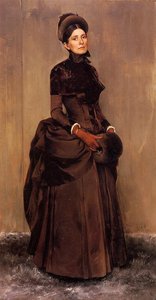
elizabeth boott duveneck
1846 - 1888 , United States of America
Quick Facts
- Artistic Movement Or Style: Impressionism/Salon
- Artists Or Movements Influenced By This Artist:
- Macchiaioli
- Impressionism
- Artists Who Influenced This Artist: ['Giovanni Battista Calò']
- Date Of Birth: February 25, 1846
- Date Of Death: August 21, 1884
- Full Name: Giuseppe De Nittis
- Nationality: Italian
- Notable Artworks:
- Che freddo!
- Vesuvius views
- Place Of Birth: Barletta, Italy

