Menu
FREE ART CONSULTATION
PreviewPreview AR previewAR preview Buy Hand Made Painting Buy Hand Made PaintingBuy Image Buy Image SendSend
DetailsDetails Add to favorites Add to favorites DownloadDownload SimilarsSimilars X-RayX-Ray DiaporamaDiaporama

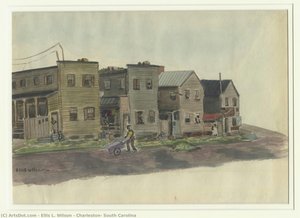
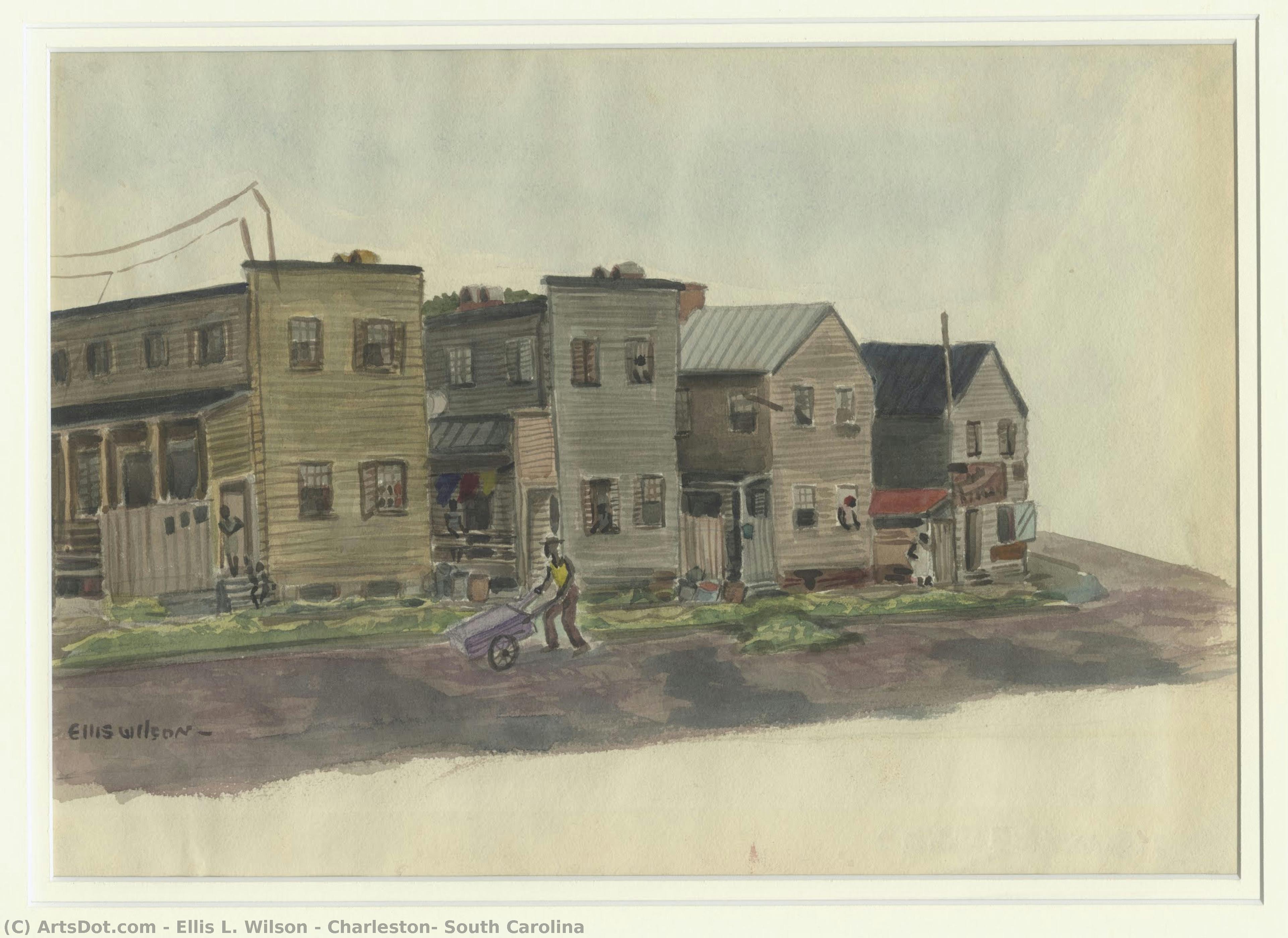
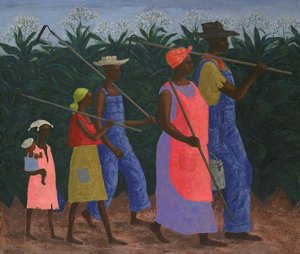
Charleston, South Carolina

Discover Ellis L. Wilson, a Harlem Renaissance artist known for 'Funeral Procession.' His evocative paintings capture the African-American experience & influenced later artists.

Giclée / Art Print

Museum-quality giclée or canvas print with fast production and flexible finish options. (Buy Hand Made Painting Buy Hand Made PaintingBuy Image Buy Image)

Standard
custom
CM
INCH

Pick from our preset sizes that match the artwork's original proportions.

width
height

You may enter your own dimensions to fit a specific frame or space. If your selected size does not match the original image's proportions, we will either crop the artwork or extend the image with a mirrored or solid-fill edge. A digital mockup will be sent for your approval before production begins.
Please note that the on-screen preview does not reflect the actual cropping or extension. Only the mockup will accurately show the final composition.
While custom sizes are available, we recommend selecting a dimension from the predefined list to preserve the original proportions.

Worldwide Delivery () in 2 weeks instead of standard 4/5 weeks. (21 August)

why_choose_icon
Free Worldwide Express Shipping
why_choose_icon
High-Quality Linen Canvas
why_choose_icon
Full Shipping Insurance
why_choose_icon
Customs Tax Refund Guarantee
why_choose_icon
True Color Matching Guarantee
why_choose_icon
60-Day Return Policy (Defects Only)
why_choose_icon
100% Money-Back Guarantee
why_choose_icon
Bulk Discount Offer

Total Price

$ 63

reproduction

Charleston, South Carolina

Giclée / Art Print

Reproduction Size

-

Total Price

$ 63

Collectible Description

Ellis Wilson is best known for paintings that presented African American subjects with objectivity and dignity, devoid of idealization, caricature, or mythical attributes. A colorist with a preference for simplified modern compositions, Wilson wrote in a 1939 Guggenheim fellowship application that he was “most interested in painting the Negro. Unfortunately, this type of painting hasn’t a large following at present. I am desirous of both making a name for myself in the Art World and to create paintings which will be a credit to my Race and my time.”Wilson attributed his artistic inclinations to his father, an amateur painter who worked in what Wilson described as a primitive style. Growing up in Mayfield, Kentucky, young Ellis held a variety of odd jobs and constantly looked for creative outlets in the midst of the mundane. While employed as the janitor for a local dress shop, for example, Wilson drew pictures on the store window using cleaning soap, an exercise that was subsequently encouraged by the shop owner as a promotional ploy. In 1916, Wilson enrolled at Frankfurt’s Kentucky Normal and Industrial Institute for Colored Persons (now Kentucky State University). Frustrated that his studies were limited to either agriculture or education, he left after two years, embarking on a decade-long residency in Chicago. There, Wilson earned a degree from the Art Institute of Chicago in 1923 and participated in the Chicago Art League. The typically shy and reserved youth blossomed during these years. It was a time of inspiration for Wilson, who was interacting with other creative African Americans.After briefly working as a commercial artist in Chicago, Wilson moved to New York. There, he became involved with the Harmon Foundation, exhibiting his work in the 1933 and 1935 annuals. From 1935 to 1940, Wilson found steady employment, as did so many artists of the day, with the Works Progress Administration’s Federal Art Project. Once again, Wilson’s relationships with other African American artists, such as Joseph Delaney, proved fruitful. Undoubtedly inspired by the early work of Abstract Expressionist painters also working for the WPA, Wilson’s academic style gradually became more abstract. A series of works of airplane factory laborers created during these years won him a Guggenheim Fellowship in 1944 and, again, in 1945. Wilson used these funds to travel throughout the South and capture the “poise and simple dignity” of African Americans at work. He painted men making turpentine in Georgia, laborers hewing lumber in South Carolina, and field hands harvesting tobacco in Kentucky.With prize monies from the 1952 National Terry Art Exhibition, Wilson took the first of several trips to Haiti. Invigorated by African-Caribbean culture, Wilson abandoned his representational style in favor of an almost fauvist abstraction executed in heightened color. His subjects appear as black silhouetted forms devoid of facial features and clothed in basic geometric shapes absent of folds and other details, as evidenced by African Princesses.Although Wilson continued to paint until his death in 1977, his work fell into relative obscurity in the 1950s. Interest was renewed, however, in the 1980s when his painting Funeral Procession (circa 1950) was used on the set of the popular television series, The Cosby Show. His paintings have since been featured in numerous national exhibitions and, in 2000, Kentucky Educational Television produced a documentary titled Ellis Wilson: So Much to Paint. Today, Wilson’s work can be found in the collections of the Smithsonian American Art Museum, the North Carolina Museum of Art, and the Amistad Research Center at Tulane University, among others.

Artist Biography

early life and career

ellis l. wilson, an african-american artist associated with the harlem renaissance, was born on april 20, 1899, in mayfield, kentucky. his life trajectory is a testament to his perseverance and contribution to american art history.

artistic contributions

wilson's most notable work, 'funeral procession', gained significant attention in 1986 when it was featured on an episode of the cosby show. this painting, originally owned by wilson's grandmother and sold to pay for her medical bills, encapsulates the essence of his artistic style, which often reflected the african-american experience.

association with the harlem renaissance

as a key figure in the harlem renaissance, wilson's work embodies the spirit of this pivotal movement. his association with other notable artists, such as allan randall freelon, further solidifies his place within this artistic era.

legacy and influence

wilson's influence on subsequent generations of african-american artists is undeniable. his work has been displayed at the amistad research center at tulane university in new orleans, louisiana, a testament to his lasting impact.
  • key art movement: harlem renaissance
  • notable work: 'funeral procession'
  • art style: reflective of the african-american experience
  • legacy: influence on subsequent generations of african-american artists

further exploration at ArtsDot

for a deeper dive into wilson's work and the harlem renaissance, explore these resources: - art movements 1/2 - wahoo art timeline note: the provided links are relevant to the topic and from https://ArtsDot.com as per the instruction.
ellis l. wilson

ellis l. wilson

1899 - 1977 , United States of America

Quick Facts

  • Artistic Movement Or Style: Harlem Renaissance
  • Artists Or Movements Influenced By This Artist: ['Modernism']
  • Artists Who Influenced This Artist:
    • Claude Monet
    • Eugène Boudin
  • Date Of Birth: May 26, 1899
  • Date Of Death: 1977
  • Full Name: Aaron Douglas
  • Nationality: American
  • Notable Artworks:
    • Saudade
    • Funeral
    • Signing the Mayflower Compact
  • Place Of Birth: Topeka, Kansas, USA

Explore artworks organized by themes, styles, and characteristics.