 Preview
 Send
Send Share
Share
 Details

 Download
 Similars
 X-Ray
X-Ray Diaporama
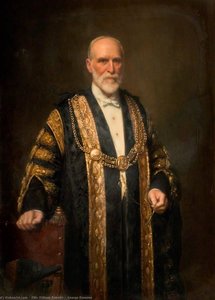
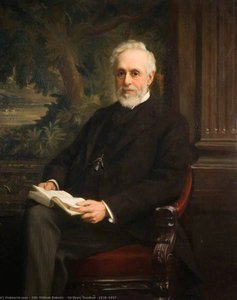
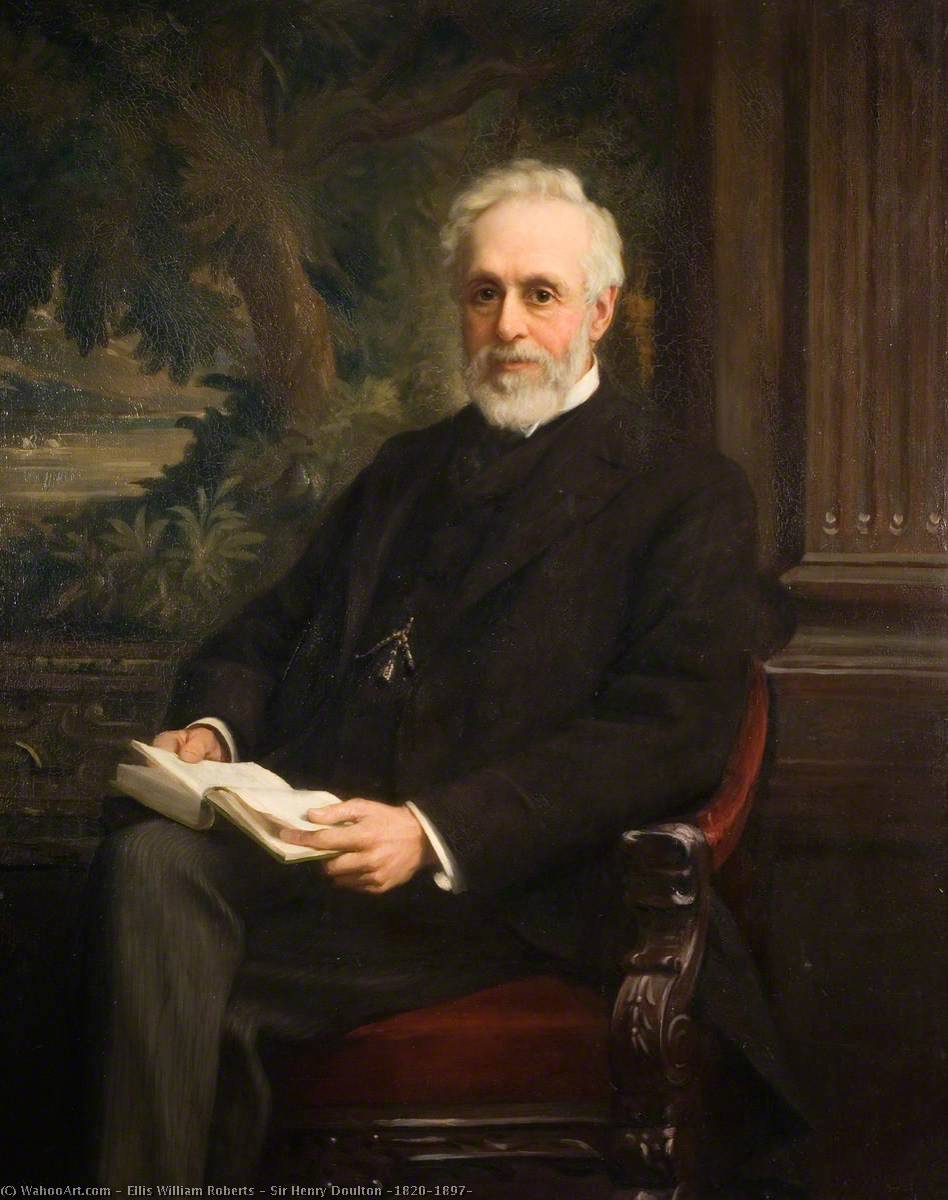
Sir Henry Doulton (1820–1897)
 1898
1898 125.0 x 100.0 cm
 Read More
Hand Made Oil Reproduction
Hand-painted oil on canvas in your size and frame, made to order by our artists. ( Buy Print Buy Image)




































Pick from our preset sizes that match the artwork's original proportions.

You may enter your own dimensions to fit a specific frame or space. If your selected size does not match the original image's proportions, we will either crop the artwork or extend the painting with additional hand-painted elements. A digital mockup will be sent for your approval before production begins.
Please note that the on-screen preview does not reflect the actual cropping or extension. Only the mockup will accurately show the final composition.
While custom sizes are available, we recommend selecting a dimension from the predefined list to preserve the original proportions.
After order, ArtsDot.com team will email client for instructions and provide a mockup preview
Worldwide Delivery () in 3/4 weeks instead of standard 5 weeks. (17 August). No compromise on quality.

Free Worldwide Express Shipping

High-Quality Linen Canvas

Full Shipping Insurance

Customs Tax Refund Guarantee

True Color Matching Guarantee

60-Day Return Policy (Defects Only)

100% Money-Back Guarantee

Bulk Discount Offer
 Glass option is only available in size under 110 CM

Sir Henry Doulton (1820–1897)
Reproduction Medium
Reproduction Size
-


Total Price
$ 263
Related Artworks
Artist Biography
Ellis William Roberts: A Welsh Voice in Victorian Portraiture
Ellis William Roberts (1860-1930) emerges from the artistic landscape of late 19th and early 20th century Wales as a significant, though often overlooked, portrait painter. Born in Burslem, Staffordshire, his journey to becoming a prominent artist was marked by a deliberate shift towards London and a keen observation of Victorian society – particularly its women – reflected in his distinctive satirical and evocative works. Roberts’ career wasn't defined by grand exhibitions or widespread fame initially; instead, it unfolded through a series of commissions, meticulous studies, and a growing reputation for capturing the nuances of character and social standing.
Roberts’ early artistic training began at the Wedgwood Institute in Stoke-on-Trent, a center for ceramic art. This initial exposure to craftsmanship instilled a strong sense of detail and technical skill, which he later applied to his portraiture. However, it was his subsequent studies at the Minton Memorial Art School and, crucially, the Royal College of Art in London that truly shaped his artistic vision. The influence of the Academy’s rigorous training combined with Parisian exposure to Impressionistic techniques provided him with a sophisticated palette and an understanding of light and shadow – elements he skillfully employed to render his subjects with remarkable realism and psychological depth.
A Portrait of Victorian Society
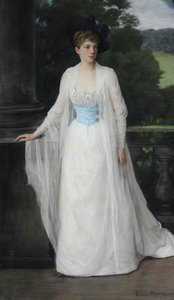
Roberts' subject matter primarily revolved around the women of London society, a demographic he depicted with both admiration and subtle critique. He wasn’t simply producing flattering likenesses; rather, he presented portraits that revealed character, social status, and often, underlying tensions within the Victorian framework. His work frequently employed a satirical edge, subtly exposing the artificiality and constraints placed upon women of the era. Consider his portrait of Susannah West Wilson, later Lady Holford – a commission reflecting his growing success – where the subject’s gaze holds both dignity and a hint of melancholy, suggesting a life lived within the confines of societal expectations.
His depictions weren't limited to the upper echelons of society. Roberts also produced portraits of working-class individuals, offering glimpses into their lives and struggles. These works demonstrate his empathy and ability to capture the essence of ordinary people, showcasing a broader range of subjects than often associated with Victorian portraiture at the time.
Technique and Style
Roberts’ artistic style can be characterized as a blend of realism and Impressionism. He meticulously observed his subjects, rendering their features with remarkable accuracy – a testament to his training at the Royal College of Art. However, he also embraced loose brushstrokes and an emphasis on capturing fleeting moments of light and atmosphere, hallmarks of the Impressionist movement. His use of color was particularly noteworthy; he favored muted tones and subtle gradations, creating a sense of depth and realism while simultaneously conveying mood and emotion.
Roberts’ technique involved layering thin glazes of paint to achieve luminous effects and build up texture. He often worked on toned paper or canvas, allowing the surface to influence his color choices and create a richer visual experience. His portraits are not merely representations of appearance but rather carefully constructed narratives conveyed through subtle details – the angle of a hand, the expression in an eye, the arrangement of clothing – all contributing to a deeper understanding of the subject’s personality and social context.
Legacy and Recognition
Despite his talent and dedication, Roberts' work received relatively little attention during his lifetime. He primarily worked through commissions and smaller exhibitions, never achieving widespread fame or recognition. However, in recent decades, there has been a growing appreciation for his unique artistic vision and the valuable insights he offered into Victorian society. His portraits are now housed in collections such as the Potteries Museum & Art Gallery in Stoke-on-Trent and the National Trust, ensuring that his work continues to be studied and enjoyed by future generations.
Roberts’ legacy lies not only in his individual artworks but also in his contribution to a more nuanced understanding of Victorian portraiture. He was a keen observer of human nature, capable of capturing both the beauty and the complexities of his subjects – a testament to his artistic skill and perceptive eye.
ellis william roberts
1860 - 1930
Quick Facts
- Artistic Movement Or Style: Portraiture, Satirical Art
- Artists Or Movements Influenced By This Artist: ['Ashcan School']
- Artists Who Influenced This Artist: ['Havelock Ellis']
- Date Of Birth: 1860-10-27
- Date Of Death: 1930-09
- Full Name: Ellis William Roberts
- Nationality: British, English
- Notable Artworks:
- Lady Margaret Scott
- Susannah West Wilson
- Place Of Birth: Burslem, Staffordshire