 Preview
 Send
Send Share
Share
 Details

 Download
 Similars
 X-Ray
X-Ray Diaporama
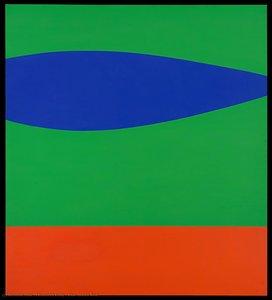
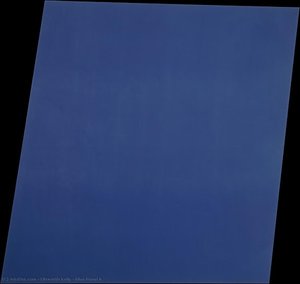
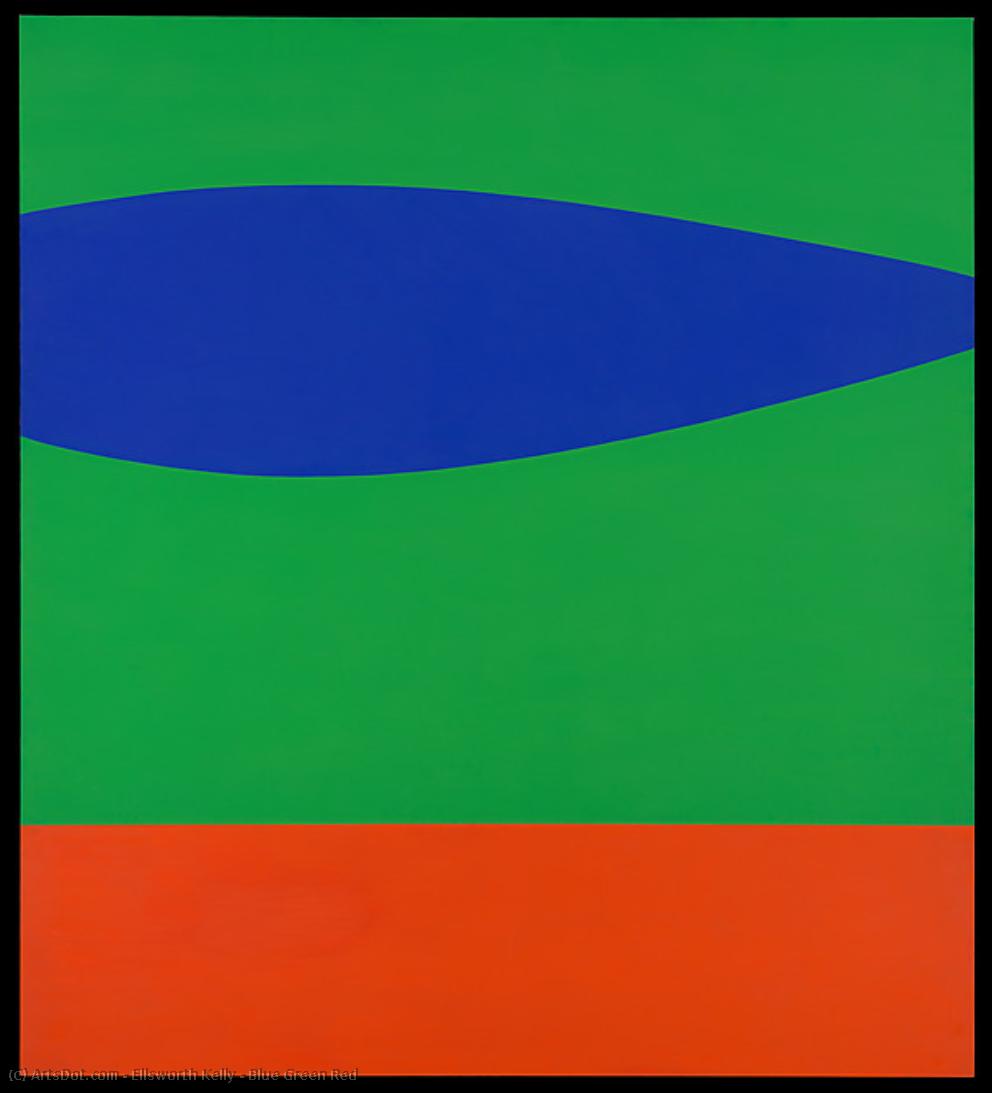
Blue Green Red
 Acrylic On Canvas
- WallArt
- Hard Edge Painting
 1963
1963 231.0 x 208.0 cm
 Metropolitan Museum of Art
 Read More
Hand Made Oil Reproduction
Hand-painted oil on canvas in your size and frame, made to order by our artists. ( Buy Print Buy Image)




P118B $10

P118H $10

P118W $10

P438Z $10

P508JH $12

P508YH $12

P805H $10

P805Z $10

P919BZ $10

P919G $10

P919XJ $10

P959ZH $10

P968JZ $12

W106C $8

W218G $10

W218JH $8

W218Y $10

W307PJ $10

W316G $10

W316PJ $8

W316Y $10

W398PJ $8

W4111J $10

W500HY $15

W500JH $15

W692G $12

W849H $8

W940BG $15

W953PJ $8




Pick from our preset sizes that match the artwork's original proportions.

You may enter your own dimensions to fit a specific frame or space. If your selected size does not match the original image's proportions, we will either crop the artwork or extend the painting with additional hand-painted elements. A digital mockup will be sent for your approval before production begins.
Please note that the on-screen preview does not reflect the actual cropping or extension. Only the mockup will accurately show the final composition.
While custom sizes are available, we recommend selecting a dimension from the predefined list to preserve the original proportions.
After order, ArtsDot.com team will email client for instructions and provide a mockup preview
Worldwide Delivery () in 3/4 weeks instead of standard 5 weeks. (17 August). No compromise on quality.

Free Worldwide Express Shipping

High-Quality Linen Canvas

Full Shipping Insurance

Customs Tax Refund Guarantee

True Color Matching Guarantee

60-Day Return Policy (Defects Only)

100% Money-Back Guarantee

Bulk Discount Offer
 Glass option is only available in size under 110 CM

Blue Green Red
Reproduction Medium
Reproduction Size
-


Total Price
$ 263
Artwork Description
A Study in Color and Geometry: Exploring Ellsworth Kelly’s “Blue Green Red”
Ellsworth Kelly's "Blue Green Red," created in 1963, stands as a cornerstone of Hard Edge Painting—a movement that championed uncompromising simplicity and directness within abstract art. Unlike many artists of his era who wrestled with illusionistic depth or expressive brushstrokes, Kelly approached abstraction by meticulously observing the world around him, translating visual sensations into geometric forms rendered in bold, unmodulated colors.
The genesis of this iconic piece lies in Kelly’s fascination with architectural spaces. Specifically, he drew inspiration from the Pont Neuf bridge in Paris—a structure renowned for its graceful curve and the way it reflects light onto the Seine River. This careful observation extended beyond mere visual representation; it instilled within him a profound appreciation for distilling complex environments into their essential elements – shapes and colors.
The Geometry of Perception
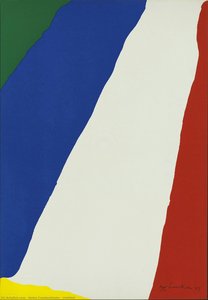
“Blue Green Red” isn’t merely about applying pigment to canvas; it's an exercise in perceptual control. Kelly deliberately avoids blending hues, opting instead for sharply delineated rectangles of blue, green, and red that intersect at right angles. This technique—known as Hard Edge Painting—was revolutionary at the time, rejecting traditional notions of painterly texture and prioritizing visual clarity.
The deliberate flatness of the surface contributes to a striking optical effect. The colors appear to vibrate against each other, creating an illusion of movement and depth without resorting to conventional shading or blending. This approach aligns perfectly with Kelly’s belief that painting should engage the viewer's senses directly, bypassing intellectual mediation.
Echoes of Mask and Landscapes
“Blue Green Red” possesses a subtle connection to other significant works by Kelly from the same period. It shares stylistic similarities with his 1958 painting “Mask,” which similarly utilized shadows cast across an open book as its source material—a visual metaphor for contemplation and intellectual engagement. Furthermore, the color palette recalls Kelly’s abstracted landscapes of the 1950s, where he sought to capture the essence of natural forms through simplified geometric shapes.
Ultimately, “Blue Green Red” embodies Kelly's unwavering commitment to minimalist aesthetics—a pursuit that continues to inspire artists and collectors alike. Its enduring appeal resides in its ability to convey profound emotional resonance through deceptively simple visual elements, reminding us that beauty can be found in the purest expression of form and color.
Related Artworks
Artist Biography
Early Life and the Seeds of Abstraction
Ellsworth Kelly, born in Newburgh, New York, in 1923, emerged as a pivotal figure in American art, renowned for his strikingly minimalist approach to painting, sculpture, and printmaking. His artistic journey wasn’t one of immediate declaration but rather a gradual unfolding, deeply rooted in the formative experiences of his childhood. Growing up in Oradell, New Jersey, Kelly developed an acute sensitivity to form and color through the simple act of birdwatching with his grandmother. This pastime instilled within him a fascination for the vibrant hues and simplified shapes found in nature – a world distilled to its essential elements. The meticulously detailed illustrations of John James Audubon proved particularly influential, shaping his aesthetic sensibilities and fostering an appreciation for precise observation and representation. Even early art classes emphasized materials and imaginative development, nurturing a budding artistic spirit. Despite initial parental reservations about pursuing a career in the arts, a supportive school teacher recognized Kelly’s potential and encouraged him to seek further training, setting him on a path that would redefine abstract art.From Camouflage to Color: War, Education, and Parisian Influences
Kelly's formal artistic education began at the Pratt Institute in Brooklyn, but was soon interrupted by the exigencies of World War II. His military service proved unexpectedly formative; he served with the 603rd Engineers Camouflage Battalion – part of the aptly named “Ghost Army.” This unit utilized artistic skills to create deceptive visual aids for Allied forces, employing illusions and spatial manipulation to mislead the enemy. The experience exposed Kelly to principles of camouflage, perspective, and the power of visual deception, concepts that would later subtly inform his art. Following the war, he continued his studies at the School of the Museum of Fine Arts in Boston before embarking on a transformative period in Paris. It was within the vibrant artistic milieu of post-war Paris that Kelly’s aesthetic truly solidified. Immersing himself in the city's rich cultural resources, he encountered influential figures like Jean Arp and Constantin Brâncuși, whose commitment to simplified forms resonated deeply with his own developing vision. Visits to the studios of artists such as Alberto Magnelli, Francis Picabia, Alberto Giacometti, and Georges Vantongerloo proved equally pivotal, exposing him to diverse approaches to abstraction and challenging conventional notions of representation.A Language of Form and Color: Defining a Minimalist Aesthetic
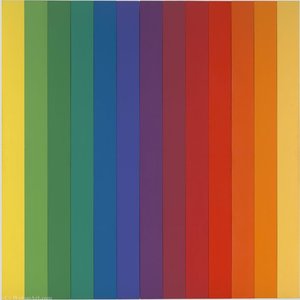
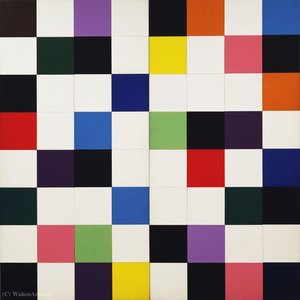
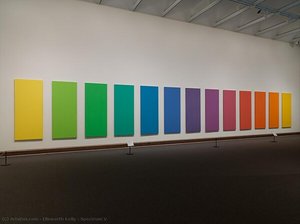
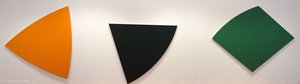
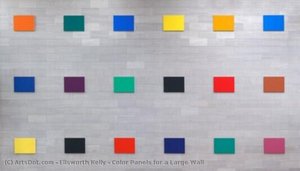
Ellsworth Kelly’s artistic style is characterized by its unwavering commitment to minimalist principles – an emphasis on line, color, and form with an almost unassuming simplicity. He became associated with hard-edge painting, color field painting, and minimalism, yet his work transcends easy categorization. His canvases often feature bold, saturated colors arranged in geometric shapes, creating a sense of spatial unity and visual harmony. *Three Panels: Red Yellow Blue, I* (1963) exemplifies this approach, showcasing vibrant hues across multiple panels to explore the interplay of color and form. *Blue Panel II* (1977), a monumental abstract work, demonstrates his mastery of layered blues and subtle textures, evoking a sense of depth and contemplation. And works like *Colors for a Large Wall* reveal his ability to create large-scale installations that interact dynamically with architectural spaces. Kelly’s exploration wasn't merely about aesthetics; it was an investigation into the fundamental elements of perception, seeking to distill complex ideas into essential forms. He aimed not to represent the world but to present pure visual experience, free from narrative or symbolic content.Recognition and Legacy: A Lasting Impact on American Art
Throughout his prolific career, Ellsworth Kelly received widespread acclaim for his groundbreaking contributions to American art. His work was showcased in solo exhibitions at prestigious institutions such as the Museum of Modern Art and the Whitney Museum of American Art, solidifying his position within the canon of modern masters. He participated in significant group shows like “Young America 1957” at the Whitney, gaining recognition among a new generation of artists. Kelly’s innovative approach challenged conventional notions of painting and sculpture, earning him a reputation as an essential innovator and contributor to the American art movement. He received numerous accolades, including honorary doctoral degrees from several universities, the Praemium Imperiale in 2000, and the National Medal of Arts in 2012 – testaments to his enduring influence. Ellsworth Kelly’s legacy lies in his pioneering minimalist aesthetic and his profound impact on subsequent generations of artists. His emphasis on pure form, color, and spatial relationships redefined the boundaries of abstract art, influencing a wide range of artistic practices. He is remembered as a key figure in American abstraction, whose unwavering commitment to simplicity and clarity resulted in a body of work that remains both visually striking and intellectually stimulating – a testament to the power of reduction and the enduring beauty of essential forms.
Ellsworth Kelly
1923 - 2015 , United States of America
Quick Facts
- Artistic Movement Or Style: Minimalism, Color Field
- Artists Or Movements Influenced By This Artist: American abstraction
- Artists Who Influenced This Artist:
- Jean Arp
- Constantin Brâncuși
- John James Audubon
- Date Of Birth: May 31, 1923
- Date Of Death: December 27, 2015
- Full Name: Ellsworth Kelly
- Nationality: American
- Notable Artworks:
- Three Panels: Red Yellow Blue, I
- Blue Panel II
- Colors for a Large Wall
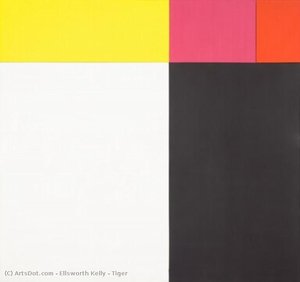
- Tiger
- Place Of Birth (City And Country): Newburgh, USA
Related Articles

Geometric Abstraction's 10 Defining Masterpieces | Art for Your Home - ArtsDot
Explore 10 defining masterpieces of Geometric Abstraction! Discover Kandinsky, Mondrian & Malevich’s iconic works. Find museum-quality art reproductions and curated decor ideas to elevate your home at ArtsDot.com.
Abstract Expressionism's 10 Defining Masterpieces |
Explore 10 defining Abstract Expressionism masterpieces by Pollock, Rothko & de Kooning. Discover the stories behind these iconic paintings and find museum-quality art reproductions to elevate your home decor on .
Chromatic Atmospheres: Exploring the Philosophical Foundations of Color Field Painting
Explore the philosophical and aesthetic foundations of Color Field painting with ArtsDot. Discover key artists like Rothko & Newman, its spiritual influences, and lasting impact on modern art. Expert insights for collectors.
Navigating Abstract Expression: A Guide to Contemporary Movements for Emotional Resonance in Art Selection
Explore the evolution of Abstract Expressionism & discover contemporary movements for emotional resonance. Expert guidance for discerning art collectors seeking lasting value. ArtsDot.
Mark Rothko's Masterpieces: 25 Paintings That Define Abstract Expressionism | ArtsDot
Explore 25 iconic Mark Rothko paintings that define Abstract Expressionism. Discover the stories, colors & emotions behind these masterpieces. Find museum-quality art reproductions and curated decor ideas at ArtsDot.com.