 Preview
 Send
Send Share
Share
 Details

 Download
 Similars
 X-Ray
X-Ray Diaporama
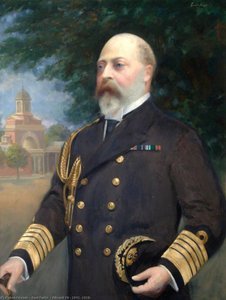
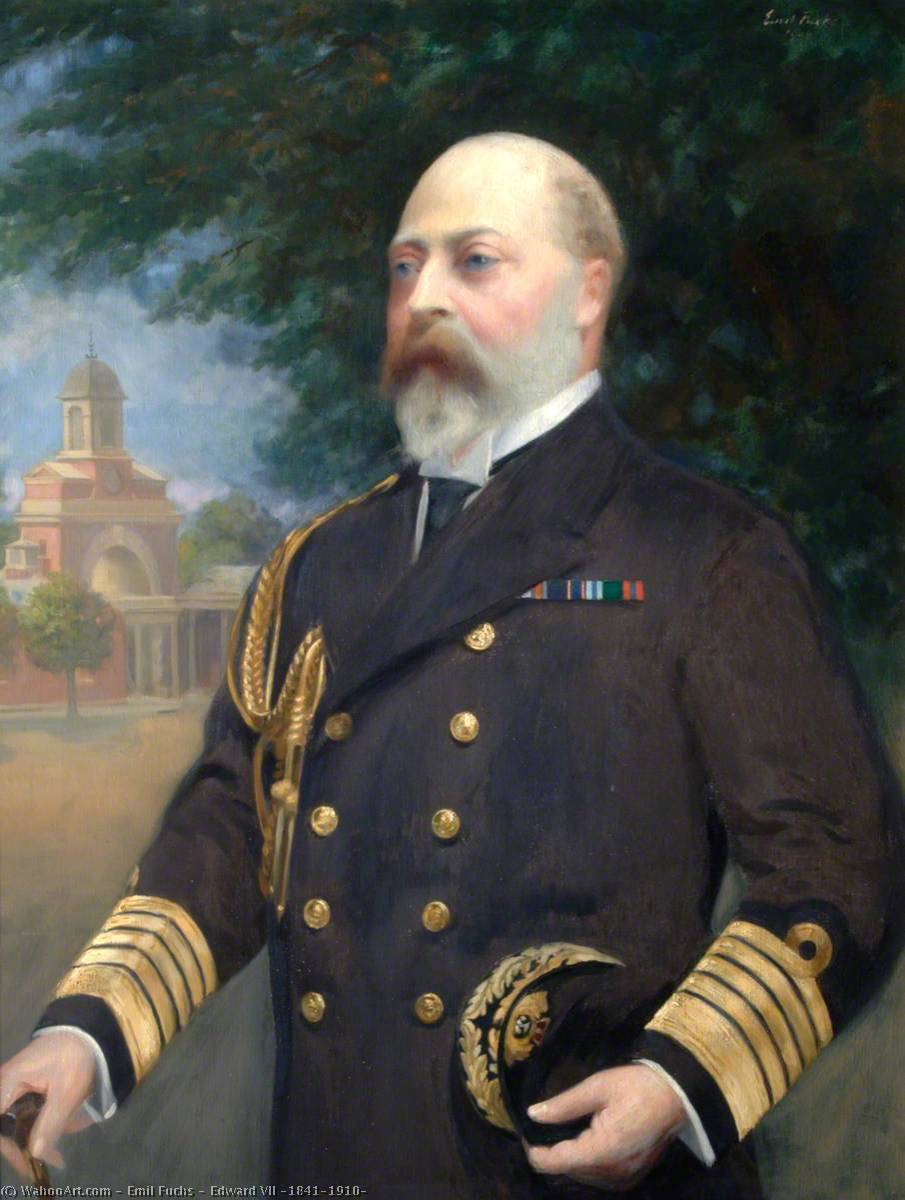
Edward VII (1841–1910)
 1904
1904 110.0 x 90.0 cm
 Read More
Hand Made Oil Reproduction
Hand-painted oil on canvas in your size and frame, made to order by our artists. ( Buy Print Buy Image)




































Pick from our preset sizes that match the artwork's original proportions.

You may enter your own dimensions to fit a specific frame or space. If your selected size does not match the original image's proportions, we will either crop the artwork or extend the painting with additional hand-painted elements. A digital mockup will be sent for your approval before production begins.
Please note that the on-screen preview does not reflect the actual cropping or extension. Only the mockup will accurately show the final composition.
While custom sizes are available, we recommend selecting a dimension from the predefined list to preserve the original proportions.
After order, ArtsDot.com team will email client for instructions and provide a mockup preview
Worldwide Delivery () in 3/4 weeks instead of standard 5 weeks. (27 August). No compromise on quality.

Free Worldwide Express Shipping

High-Quality Linen Canvas

Full Shipping Insurance

Customs Tax Refund Guarantee

True Color Matching Guarantee

60-Day Return Policy (Defects Only)

100% Money-Back Guarantee

Bulk Discount Offer
 Glass option is only available in size under 110 CM

Edward VII (1841–1910)
Reproduction Medium
Reproduction Size
-


Total Price
$ 263
Related Artworks








Artist Biography
Early Life and Artistic Training
Emil Fuchs (1866 – 1929) emerged from Vienna, Austria, a city renowned for its artistic heritage and fostering innovation in sculpture and painting. Born on August 9th, 1866, Fuchs’s formative years were marked by intensive study at the Academy of Fine Arts Vienna under the tutelage of Edmund von Hellmer and Viktor Oskar Tilgner—influential figures who instilled in him a foundational understanding of classical aesthetics and sculptural technique. Recognizing his burgeoning talent beyond Viennese traditions, he pursued further education at the Prussian Academy of Arts in Berlin, collaborating with Fritz Schaper and Anton von Werner, broadening his artistic horizons and exposing him to diverse stylistic approaches. This dual academic grounding proved crucial for shaping Fuchs’s subsequent career trajectory.Roman Influences and Artistic Experimentation
From 1891 to 1897, Fuchs embarked on a transformative journey to Rome—a pilgrimage that cemented his commitment to artistic exploration and experimentation. Having secured the prestigious German Prix de Rome in 1891, he immersed himself in the Roman artistic milieu, absorbing inspiration from Michelangelo and Leonardo da Vinci alike. During this period, he cultivated an affair with Elvira Fraternali, a relationship documented in the film *D’Annunzio*, reflecting the bohemian spirit of the era. His sister Renee and his brother-in-law Gustav Freytag further enriched his social circle—connections that undoubtedly influenced his artistic sensibilities. The Roman experience solidified Fuchs's fascination with blending classical ideals with modern techniques, foreshadowing his distinctive ‘mischtechnik’ style.London Years: Portraiture and Patronage
Between 1897 and 1915, Fuchs established himself in London—a city buzzing with artistic energy and attracting prominent patrons from the aristocracy and high society. He cultivated a collaborative relationship with Lawrence Alma-Tadema, engaging in lively discussions about art and technique. Employed by the Birmingham Mint during this time, he continued to hone his craft while simultaneously teaching at institutions across Europe – Paris, Berlin, Munich, and Rome—undertaking winter excursions to the United States. This period witnessed a significant shift towards portraiture in oils; John Singer Sargent served as an early mentor, guiding Fuchs’s artistic development and shaping his signature style. His portraits gained considerable acclaim, becoming emblems of Victorian elegance and reflecting the tastes of influential figures. Notably, he was honored with the Royal Victorian Order (MVO) in 1909—a testament to his contribution to British culture.American Period: War Effort and Artistic Legacy
Driven by shifting social currents during World War I – specifically “a wave of anti-german sentiment” – Fuchs relocated permanently to New York City in 1915, seeking refuge from prejudice and furthering his artistic pursuits. He embraced the American landscape and incorporated it into his oeuvre, demonstrating versatility and adaptability. Recognizing the urgent need for support during wartime, he actively engaged in humanitarian endeavors—a characteristic that underscored his humanist values. By 1924, Fuchs had become a US citizen—solidifying his connection to the nation’s artistic landscape. He underwent surgery for cancer in 1928, marking the final chapter of his life's journey. Despite facing personal challenges, Emil Fuchs left an indelible mark on art history—primarily through his masterful portraits and sculptures that continue to captivate audiences today. His distinctive ‘mischtechnik,’ blending traditional and experimental methods, exemplifies a pioneering spirit and remains a cornerstone of Viennese Secession’s artistic vision.
emil fuchs
1866 - 1929
Quick Facts
- Artistic Movement Or Style: Vienna Secession
- Artists Or Movements Influenced By This Artist: ['Gustav Freytag']
- Artists Who Influenced This Artist:
- Edmund von Hellmer
- Viktor Oskar Tilgner
- John Singer Sargent
- Date Of Birth: 1866
- Date Of Death: 1929
- Full Name: Emil Fuchs
- Nationality: Austrian-American
- Notable Artworks:
- Freeman Freeman Thomas, MP
- John Harvey Kellogg
- Mrs Olga Myers
- Place Of Birth: Vienna, Austria