 Preview
 Send
Send Share
Share
 Details

 Download
 Similars
 X-Ray
X-Ray Diaporama
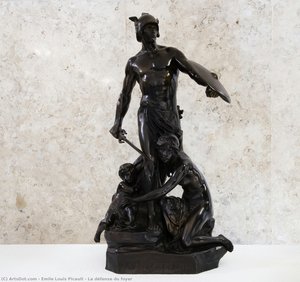
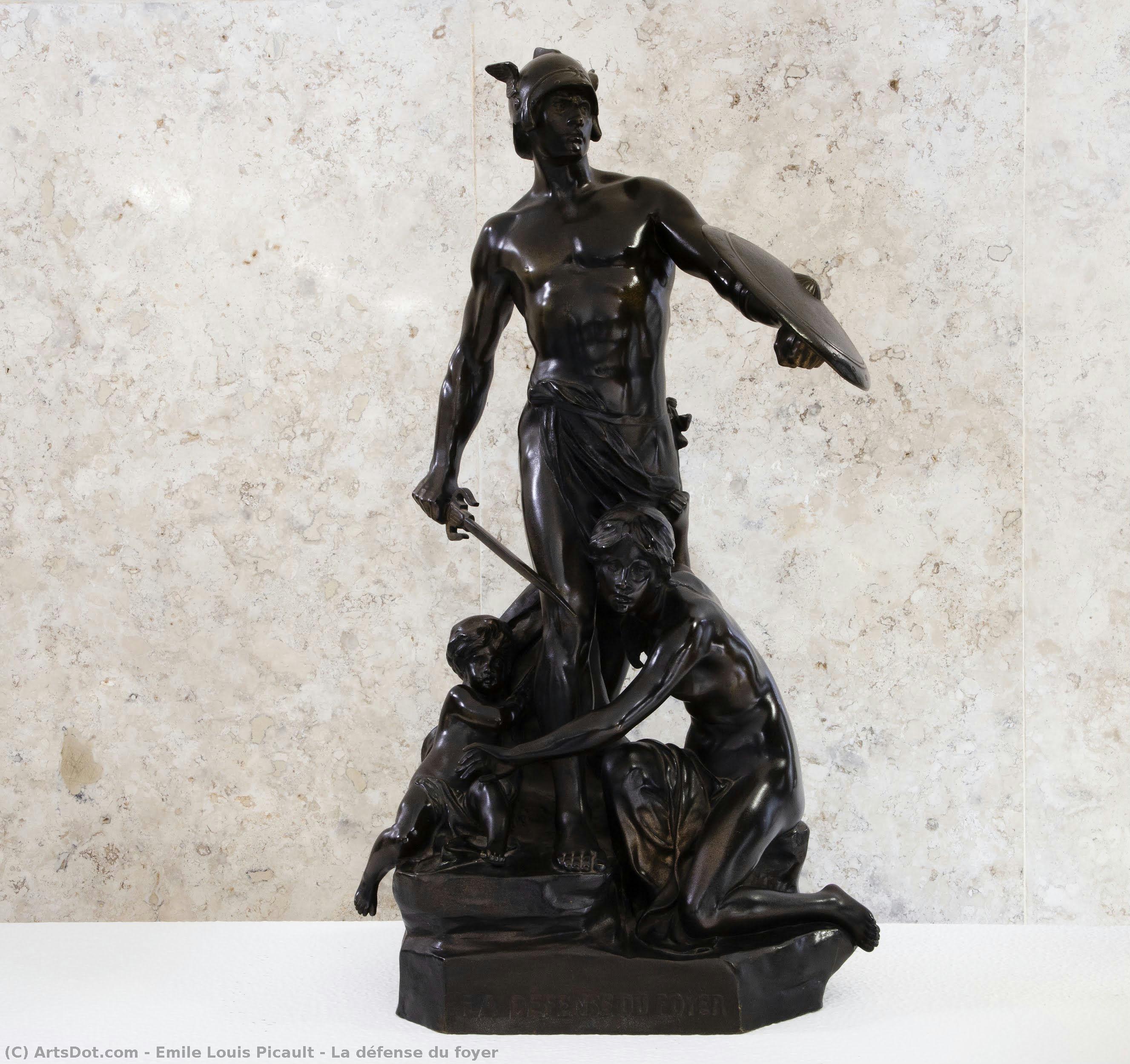
La défense du foyer
 1880
1880 5.0 x 28.0 cm
 Музей Вищого Суду Федерації
 Read More
Giclée / Art Print
Museum-quality giclée or canvas print with fast production and flexible finish options. ( Buy Hand Made Painting Buy Image)




































Pick from our preset sizes that match the artwork's original proportions.

You may enter your own dimensions to fit a specific frame or space. If your selected size does not match the original image's proportions, we will either crop the artwork or extend the image with a mirrored or solid-fill edge. A digital mockup will be sent for your approval before production begins.
Please note that the on-screen preview does not reflect the actual cropping or extension. Only the mockup will accurately show the final composition.
While custom sizes are available, we recommend selecting a dimension from the predefined list to preserve the original proportions.
Worldwide Delivery () in 2 weeks instead of standard 4/5 weeks. (23 August)

Free Worldwide Express Shipping

High-Quality Linen Canvas

Full Shipping Insurance

Customs Tax Refund Guarantee

True Color Matching Guarantee

60-Day Return Policy (Defects Only)

100% Money-Back Guarantee

Bulk Discount Offer
 Glass option is only available in size under 110 CM

La défense du foyer
Giclée / Art Print
Reproduction Size
-


Total Price
$ 63
Related Artworks






Artist Biography
A Prolific Sculptor of Allegory and Patriotism: The Life and Legacy of Émile Louis Picault
Émile Louis Picault, born in Paris on August 24, 1833, emerged as a significant figure within the vibrant French sculptural landscape of the 19th century. His career unfolded across decades marked by shifting artistic tastes and profound societal change—from the Second Empire through the Belle Époque and into the First World War. Picault wasn’t merely a sculptor; he was a chronicler of his time, translating allegorical concepts, patriotic fervor, and mythological narratives into tangible form. He received his initial training under Henri Royer, a painter whose emphasis on classical principles would deeply influence Picault's developing aesthetic sensibility. While initially grounded in painting, the artist soon gravitated towards sculpture, embracing its capacity for three-dimensional expression and enduring presence.Early Career and Salon Recognition
Picault’s dedication to his craft led him to make his debut at the prestigious Paris Salon in 1863—a pivotal moment that signaled his entry into the established art world. This was a period of artistic ferment, with the controversial Salon des Refusés challenging traditional norms, yet Picault consistently presented work within the official framework, demonstrating an adherence to academic standards alongside a growing narrative vitality. He quickly distinguished himself through a prolific output, producing over 500 sculptural models throughout his career—a testament to both his skill and unwavering commitment. The majority of his works were signed simply as “E. Picault,” a mark of professional identity that became synonymous with quality and craftsmanship. His early successes laid the foundation for a long and respected career, establishing him as a reliable interpreter of popular themes and ideals.Themes and Artistic Style
Picault’s oeuvre is characterized by a consistent focus on allegorical subjects, patriotic narratives, and reinterpretations of classical mythology. He possessed a remarkable ability to imbue bronze and marble with emotional resonance, creating sculptures that were both technically refined and emotionally engaging. Warriors and heroes frequently populated his work—figures embodying courage, sacrifice, and civic virtue. La Défense Du Foyer (circa 1890), for example, exemplifies this patriotic inclination, celebrating the strength of family and nation. He often incorporated inscriptions in Latin or French into his sculptures, adding layers of meaning and didactic intent. Picault’s style balanced academic precision with a dynamic sense of movement, resulting in works that were both monumental and accessible. His compositions are typically harmonious and idealized, reflecting a belief in art's capacity to uplift and inspire.Influences and Historical Context
While not directly associated with any single dominant school or master, Picault absorbed the stylistic ethos of his milieu—the neoclassical lineage that permeated French academic training. This foundation instilled in him a reverence for classical proportion and compositional harmony. His work reflects the broader cultural currents of 19th-century France, responding to political events, social anxieties, and evolving aesthetic preferences. The sculptor’s consistent participation in the Paris Salon underscores his enduring relevance within the official art world, even as new artistic movements emerged. He navigated a period marked by industrialization, urbanization, and shifting public tastes, maintaining a steady output that resonated with a broad audience.Legacy and Enduring Appeal
Émile Louis Picault died on August 24, 1915—his 82nd birthday—leaving behind a substantial body of work that continues to captivate audiences today. His sculptures are preserved in regional French museums, including the Musée des beaux-arts de Chambéry and the Musée des beaux-arts de Troyes, institutions that attest to his lasting integration into the national artistic heritage. Picault’s legacy lies not only in the sheer volume of his output but also in his ability to capture the spirit of his time—to translate complex ideas into tangible forms that spoke to a sense of national identity, moral virtue, and enduring human values. His sculptures remain powerful reminders of a bygone era, offering insights into the artistic sensibilities and cultural preoccupations of 19th-century France.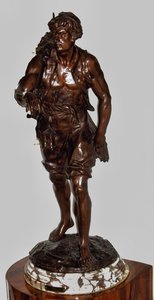
Emile Louis Picault
1833 - 1915 , France
Quick Facts
- Artistic Movement Or Style: Orientalist Sculpture
- Artists Who Influenced This Artist: ['Henri Royer']
- Date Of Birth: August 24, 1833
- Date Of Death: August 24, 1915
- Full Name: Émile Louis Picault
- Nationality: French
- Notable Artworks:
- Le Supplice de Tantale
- Persée délivrant Andromède
- Le Génie du progrès et Nicolas Flamel
- Place Of Birth: Paris, France