

 Preview
 Send
Send Share
Share
 Details

 Download
 Similars
 X-Ray
X-Ray Diaporama
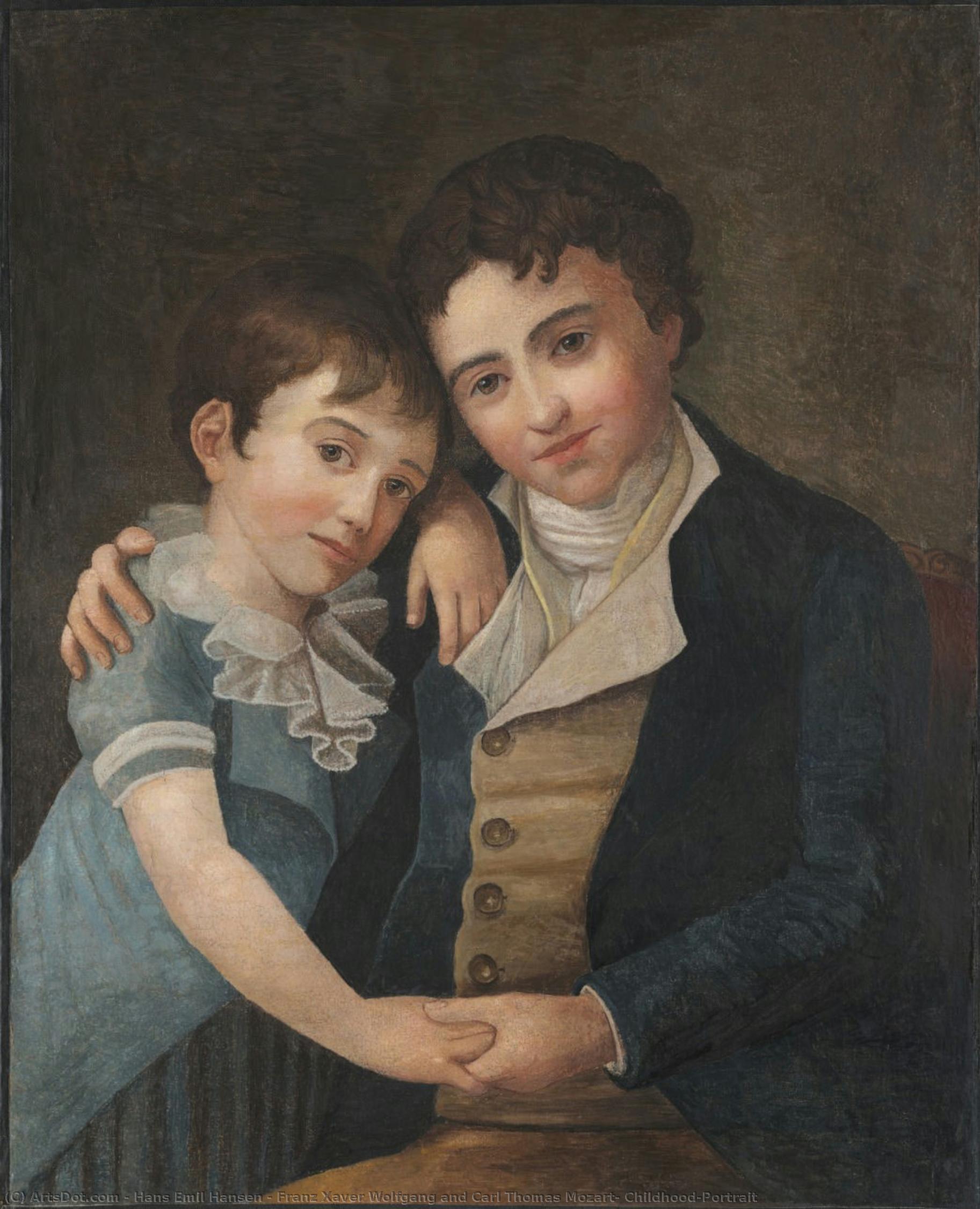
Franz Xaver Wolfgang and Carl Thomas Mozart, Childhood-Portrait
 Acrylic On Canvas
- WallArt
- Expressionism
 1798
1798 68.0 x 55.0 cm
 The Mozart-Museums of the International Mozarteum Foundation Salzburg
 Read More
Purchase a high-resolution, enhanced digital image, far superior to the online preview.
Each file is meticulously prepared by our in-house specialists using advanced tools and expert manual retouching. We ensure every image has exceptional clarity, precise color accuracy, and fine detail.
The final file is delivered via email within 72 hours, optimized for immediate use in professional, editorial, and print environments. This is the same quality trusted by top-tier design studios, publishers, and galleries.
Digital Image
Download a high-resolution file for personal display, printing, and creative projects. ( Buy Print Buy Hand Made Painting)
Included in Every Digital Image Order
Expert Digital Delivery, Guaranteed
When you choose ArtsDot.com, you're not just getting an image - you're receiving a professionally enhanced digital artwork, crafted with precision and backed by a satisfaction guarantee. Here's everything that comes with your order, automatically:

Fast Email Delivery
Your high-resolution digital image file will be emailed to you within 72 hours of ordering - ready for immediate use.

AI-Enhanced Digital File
Your artwork is professionally optimized using advanced AI tools and manual editing, ensuring maximum detail, clarity, and color accuracy.

Free Lifetime Re-Delivery
Accidentally deleted or lost your file? No worries - we'll resend it to you anytime, free of charge.

No Import Fees - Ever
Enjoy your artwork instantly with zero customs, duties, or delivery fees - digital downloads are always tax-free.

Color Accuracy Guarantee
We ensure your digital image reflects the original colors as closely as possible using professional tools and color management.

60-Day Satisfaction Guarantee
If you're not satisfied with your digital image, we'll revise it or refund 100% within 60 days - no questions asked.

100% Money-Back Guarantee
Not satisfied? Get a full refund within 60 days of receiving your digital file - no questions asked.

Bulk Order Discounts
Buy 3 images, save 10% - Buy 5, save 15% - Buy 10+, save 20%. Great for creative projects, galleries, and agencies.
Franz Xaver Wolfgang and Carl Thomas Mozart, Childhood-Portrait – An Exploration of Innocence and Artistic Vision
Emile Nolde’s “Franz Xaver Wolfgang and Carl Thomas Mozart, Childhood-Portrait” stands as a testament to the enduring power of observation and the transformative potential of artistic expression. Painted in 1908, this watercolor captures a tender moment between two young boys – Karl Thomas Mozart and Franz Xaver Wolfgang Mozart – sons of the prodigious composer Wolfgang Amadeus Mozart – offering viewers a glimpse into familial warmth amidst the burgeoning Expressionist movement.- Style & Movement: Nolde’s work firmly establishes itself within Die Brücke (The Bridge), a group of German artists who rejected academic conventions and sought to convey raw emotion through distorted forms and vibrant color palettes. This painting embodies the core tenets of Expressionism, prioritizing subjective experience over objective representation.
- Technique: Nolde’s masterful watercolor technique is characterized by loose brushstrokes and layering of translucent washes—a deliberate departure from meticulous detail. The artist skillfully utilizes a palette dominated by yellows and reds, creating an ethereal luminescence that contrasts sharply with the muted blues and greens of the background. This juxtaposition serves to heighten the emotional intensity of the scene.
- Historical Context: Created during the early years of Nolde’s artistic career, “Childhood-Portrait” reflects the broader intellectual climate of its time—a reaction against Impressionism's focus on capturing fleeting moments of light and color. Expressionists aimed to depict inner psychological states rather than external appearances, reflecting anxieties about societal change and a yearning for spiritual renewal.
- Symbolism & Emotion: The composition itself speaks volumes about the artist’s intentions. The boys are positioned close together, arms entwined in an embrace that conveys affection and protection—symbols of familial bonds and innocence. Nolde's deliberate use of color contributes to this emotional resonance, evoking feelings of warmth, serenity, and nostalgia.
- Legacy: “Franz Xaver Wolfgang and Carl Thomas Mozart, Childhood-Portrait” remains a captivating example of Expressionist art, celebrated for its emotive quality and technical brilliance. It continues to inspire artists and collectors alike, reminding us that true beauty lies in capturing the essence of human experience—a feat accomplished with remarkable sensitivity by Emil Nolde.
Further Insights into Emil Nolde’s Artistic Philosophy
Nolde's artistic vision was profoundly shaped by his encounters with primitive art forms, particularly masks and carvings from cultures around the globe. He believed that these objects possessed a primal energy—a direct connection to fundamental human emotions—that surpassed rational representation. This conviction fueled his experimentation with bold colors and distorted shapes, as evidenced throughout his oeuvre.Reproductions & Considerations
ArtsDot offers high-quality reproductions of “Franz Xaver Wolfgang and Carl Thomas Mozart, Childhood-Portrait,” meticulously crafted to preserve the original artwork's vibrancy and textural nuances. Selecting a size appropriate for your space will ensure that you experience the full impact of Nolde’s artistic vision—a timeless masterpiece capturing a precious moment of familial tenderness.Related Artworks
Artist Biography
Emil Nolde: Life and Legacy
Early Life and Artistic Beginnings
Emil Nolde, a renowned German-Danish painter, was born Hans Emil Hansen on August 7, 1867, in Nolde, Schleswig-Holstein, Germany. He came from a family with strong ties to rural life and religious beliefs, factors that would profoundly influence his artistic vision. Despite initial resistance from his parents, who preferred he pursue a more conventional career, Nolde relentlessly pursued his passion for art. He initially worked as a wood carver and furniture decorator before dedicating himself fully to painting in his late twenties.
Artistic Development and Influences
Nolde’s artistic journey was marked by self-education and exploration. He traveled extensively, absorbing influences from various cultures and art forms. Early influences included Vincent van Gogh, Paul Gauguin, and traditional folk art – particularly the expressive power of primitive masks and carvings. These encounters sparked his interest in bold colors, simplified forms, and emotionally charged subject matter. He initially experimented with Realism and Impressionism but quickly moved towards a more subjective and expressive style.
Die Brücke and Expressionist Breakthrough
In 1905, Nolde co-founded Die Brücke (The Bridge), a pivotal group of German Expressionist artists. This collective sought to break away from academic traditions and express inner emotions through radical artistic experimentation. Nolde’s contribution to Die Brücke was significant; his intense use of color and distorted forms pushed the boundaries of representation. However, he maintained a somewhat independent path within the group, often diverging in subject matter and stylistic approach.
Key Themes and Artistic Style
Nolde’s oeuvre is characterized by several recurring themes: religious scenes, landscapes, seascapes, and portraits. He was particularly fascinated by the power of masks – both as physical objects and symbolic representations of primal emotions. His artistic style is defined by:
- Bold, vibrant colors used to convey emotional intensity
- Distorted forms that emphasize expression over realistic representation
- Impasto technique - thick application of paint creating texture
- A focus on capturing inner psychological states
Notable Works and Achievements
Throughout his career, Nolde created a vast body of work. Some of his most celebrated paintings include:
- Masks (1906-1907) – showcasing his fascination with primitive art
- The Mocking of Christ (1909) – a powerful and emotionally charged religious scene
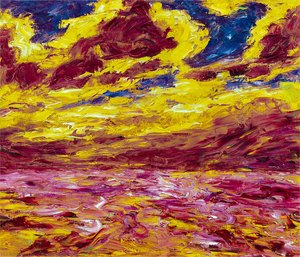
- Autumn Sea (1908) - demonstrating his expressive landscape painting.
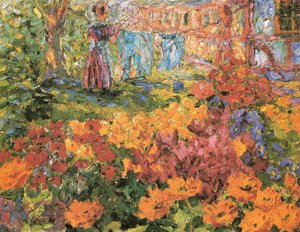
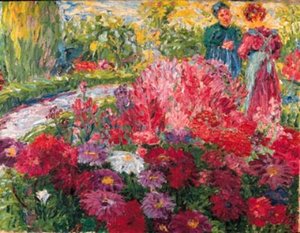
- Flower Garden (Girl and Washing) (1907)
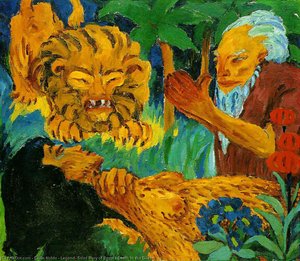
- Dance around the Golden Calf (1909)
Despite facing criticism and censorship during the Nazi regime – his work was deemed “degenerate” – Nolde continued to paint in secret. He produced a significant body of watercolor paintings during this period, demonstrating his unwavering commitment to artistic expression.
Historical Significance and Legacy
Emil Nolde’s innovative use of color and expressive brushwork profoundly influenced generations of artists. His work bridged the gap between traditional representational art and the abstract movements that followed. He remains a central figure in the history of German Expressionism, celebrated for his emotional intensity, bold experimentation, and enduring artistic vision. His legacy continues to inspire artists and art lovers worldwide.
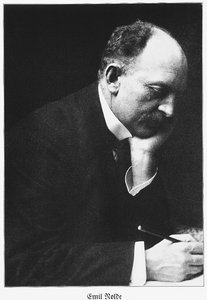
emile nolde
1867 - 1956 , Germany
Quick Facts
- Birth Date: August 7, 1867
- Birth Place: Nolde, Schleswig-Holstein, Germany
- Death Date: 1956
- Movement: Expressionism, Die Brücke
- Name: Emil Nolde
- Nationality: German-Danish
- Notable Works:
- Masks
- The Mocking of Christ
- Flower Garden (Girl and Washing)
- Autumn Sea
- Dance around the Golden Calf

