 Preview
 Send
Send Share
Share
 Details

 Download
 Similars
 X-Ray
X-Ray Diaporama
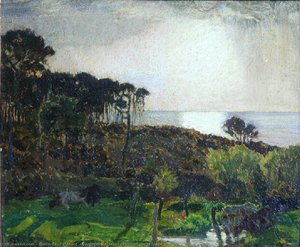
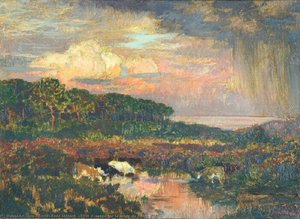
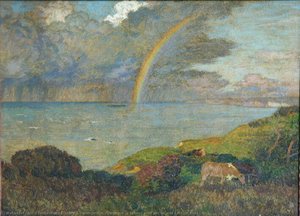
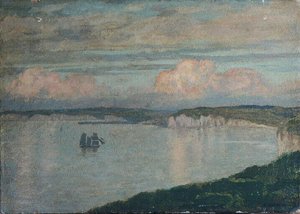
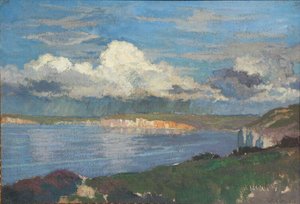
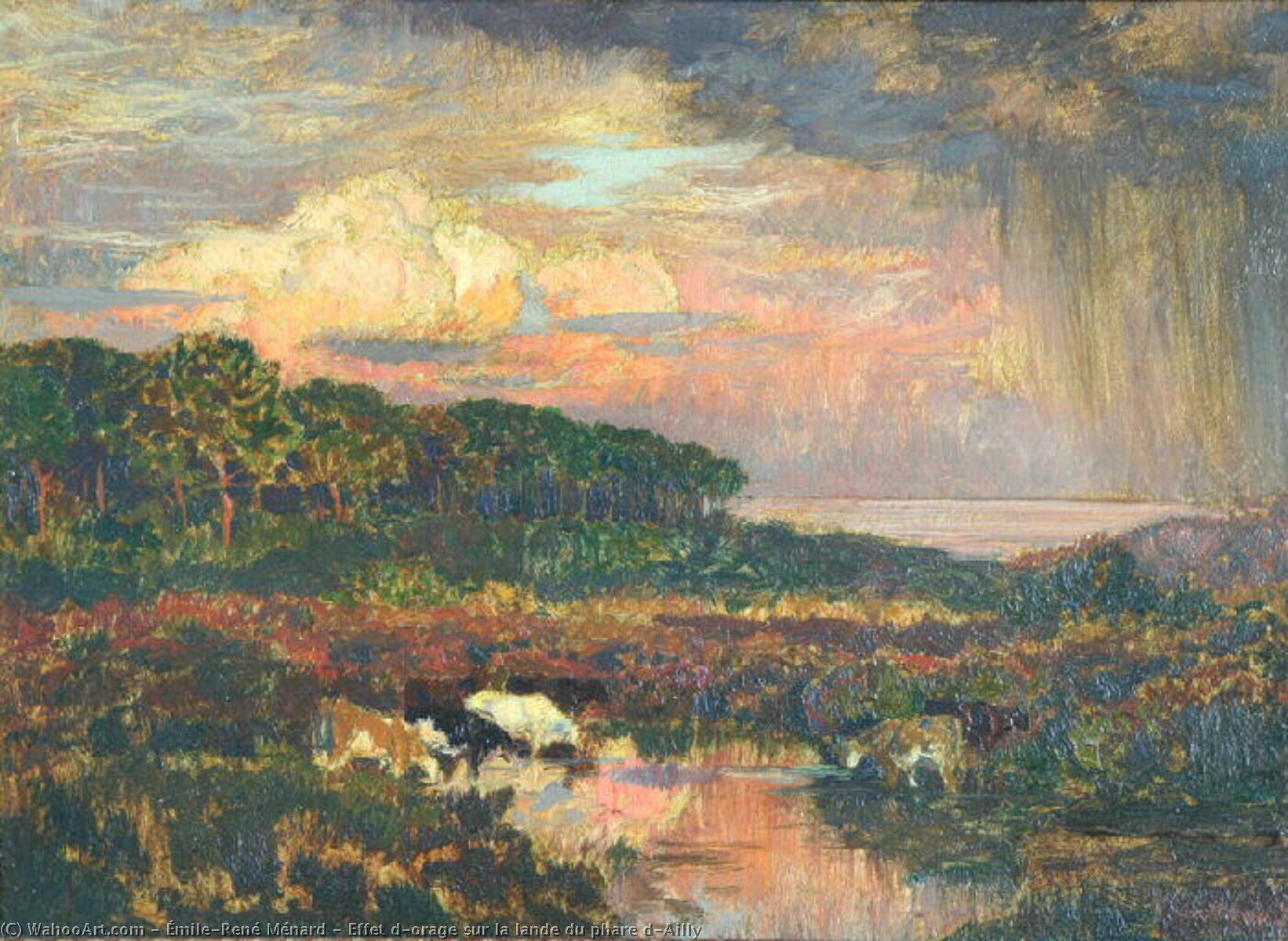
Effet d'orage sur la lande du phare d'Ailly

 Read More
Hand Made Oil Reproduction
Hand-painted oil on canvas in your size and frame, made to order by our artists. ( Buy Print Buy Image)




































Pick from our preset sizes that match the artwork's original proportions.

You may enter your own dimensions to fit a specific frame or space. If your selected size does not match the original image's proportions, we will either crop the artwork or extend the painting with additional hand-painted elements. A digital mockup will be sent for your approval before production begins.
Please note that the on-screen preview does not reflect the actual cropping or extension. Only the mockup will accurately show the final composition.
While custom sizes are available, we recommend selecting a dimension from the predefined list to preserve the original proportions.
After order, ArtsDot.com team will email client for instructions and provide a mockup preview
Worldwide Delivery () in 3/4 weeks instead of standard 5 weeks. (22 August). No compromise on quality.

Free Worldwide Express Shipping

High-Quality Linen Canvas

Full Shipping Insurance

Customs Tax Refund Guarantee

True Color Matching Guarantee

60-Day Return Policy (Defects Only)

100% Money-Back Guarantee

Bulk Discount Offer
 Glass option is only available in size under 110 CM

Effet d'orage sur la lande du phare d'Ailly
Reproduction Medium
Reproduction Size
-


Total Price
$ 263
Related Artworks
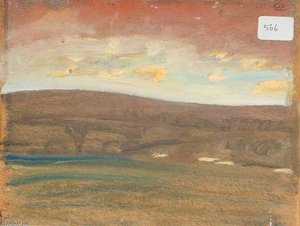
Artist Biography
Émile-René Ménard: A Painter of Tranquility and Dreamlike Vision
Émile-René Ménard (15 April 1862 – 13 January 1930) was a French painter born in Paris. From early childhood he was immersed in an artistic environment: Corot, Millet and the Barbizon painters frequented his family home, familiarizing him thus with both landscape and antique subjects. Ménard studied at the Académie Julian from 1880 after having been a student of Baudry, Bouguereau, and Henri Lehmann. He participated in the Salon of the Secession in Munich, and the Salon de la Libre Esthétique in Brussels during 1897. Several personal exhibitions were also devoted to him at the Georges Petit Gallery. In 1904, he was appointed professor at the Académie de la Grande Chaumière, and in that year welcomed the rising young Russian painter Boris Kustodiev, age 26, into his art studio. In 1921, he exhibited in the twelfth Salon alongside Henri Martin and Edmond Aman-jean. Galleries in Buffalo, New York and Boston, Massachusetts exposed Ménard and his art to the United States. However, the numerous commissions that Ménard received from the French government crowned his career; for example, the cycle for the hautes études à la Sorbonne, the faculté de droit, and the fresco Atoms for the Chemistry Institute, and finally the Caisse des Dépôts in Marseille.- Early Influences & Artistic Formation: Ménard’s formative years were marked by exposure to the Barbizon School’s luminism and Impressionism. He absorbed the stylistic principles of Corot, Millet, and Gustave Courbet, fostering a deep appreciation for capturing atmospheric effects and conveying emotion through subtle brushstrokes. This early training instilled in him a meticulous attention to detail and a commitment to portraying the natural world with sincerity and sensitivity.
- The Barbizon Landscape: Varengeville & Sainte Marguerite: Varengeville, a coastal village in Normandy, became Ménard’s favored subject. His paintings of this region exemplify his mastery of landscape painting—particularly the ethereal quality of twilight and dawn. The artist skillfully employed diffused light and delicate brushwork to evoke a sense of serenity and contemplation. Similarly, La Lande de Sainte Marguerite, depicting the Provençal scrubland, showcases Ménard’s ability to capture the grandeur of nature while maintaining an understated aesthetic.
- Symbolic Vision & Artistic Style: Ménard's artistic style distinguishes itself by a harmonious blend of classicism and Impressionistic techniques. He adhered to classical compositional principles—such as pyramidal structures—yet infused his canvases with dreamy brushwork reminiscent of Monet and Sisley. This stylistic duality reflects Ménard’s philosophical outlook: he sought to express profound spiritual truths through visual imagery, prioritizing atmosphere and emotion over mere representation.
- Major Commissions & Recognition: Ménard achieved considerable renown during his lifetime thanks to prestigious commissions from the French government. He undertook monumental fresco cycles for institutions like Sorbonne University and the Faculty of Law—demonstrating his technical prowess and artistic ambition. Furthermore, he created a striking artwork for the Chemistry Institute, aptly named “Atoms,” which cemented his reputation as one of France’s foremost painters.
- Legacy & Artistic Significance: Émile-René Ménard's oeuvre remains celebrated for its tranquil landscapes and evocative symbolism. His paintings continue to inspire admiration for their understated beauty and profound emotional resonance—a testament to his enduring contribution to French Impressionism and landscape art. He is remembered as a painter who elevated the genre through meticulous observation, refined technique, and an unwavering devotion to capturing the sublime qualities of nature.
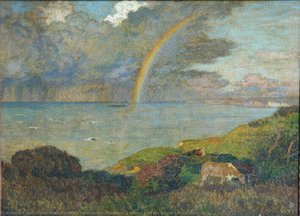
émile-rené ménard
1862 - 1930
Quick Facts
- Artistic Movement Or Style: Barbizon School
- Artists Or Movements Influenced By This Artist: ['Impressionism']
- Artists Who Influenced This Artist:
- Corot
- Millet
- Date Of Birth: 1862
- Date Of Death: 1930
- Full Name: Émile-René Ménard
- Nationality: French
- Notable Artworks:
- Varengeville. L’Eglise
- L'Arc en Ciel
- La lande de Sainte Marguerite
- Place Of Birth: Paris, France
Related Articles
Impressionistic Landscapes: 10 Masterpieces That Changed Art & Decor
Journey into the heart of Impressionism! Explore 10 masterpieces by Monet, Renoir & Degas that revolutionized landscape art. Discover their stories, techniques & find museum-quality reproductions to elevate your home decor on ArtsDot.com.
Impressionist Landscapes: 10 Masterpieces for Your Home | ArtsDot
Journey through 10 iconic Impressionist landscapes by Monet, Renoir & Degas. Explore the history, techniques & emotions behind these masterpieces. Find museum-quality reproductions for your home at ArtsDot.com – where art comes to life! Discover all masterpieces on ArtsDot.com
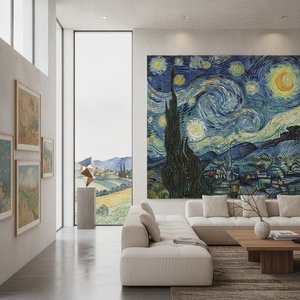
Beyond the Horizon: A Curated Guide to Integrating Post-Impressionist Landscapes into Modern Interiors
Transform your home with the emotive power of Post-Impressionist landscapes. Discover expert tips on selecting hand-painted oil reproductions to create a soulful, vibrant interior that reflects your unique style and connection to nature.

John Constable's Masterpieces: Explore 25 Iconic Landscapes for Your Home
Journey through John Constable's 25 most celebrated landscapes. Explore Romanticism, Dedham Vale & his masterful use of light in iconic paintings like 'Hay Wain'. Find museum-quality art reproductions and elevate your home decor on ArtsDot.com.

Evocations of Place: A Historical Journey Through Landscape Art
Explore the rich history of landscape art with ArtsDot. Discover renowned artists, movements like Impressionism & Romanticism, and expert guidance for collecting timeless pieces. Find your perfect serene escape today!