

 Preview
 Send
Send Share
Share
 Details

 Download
 Similars
 X-Ray
X-Ray Diaporama
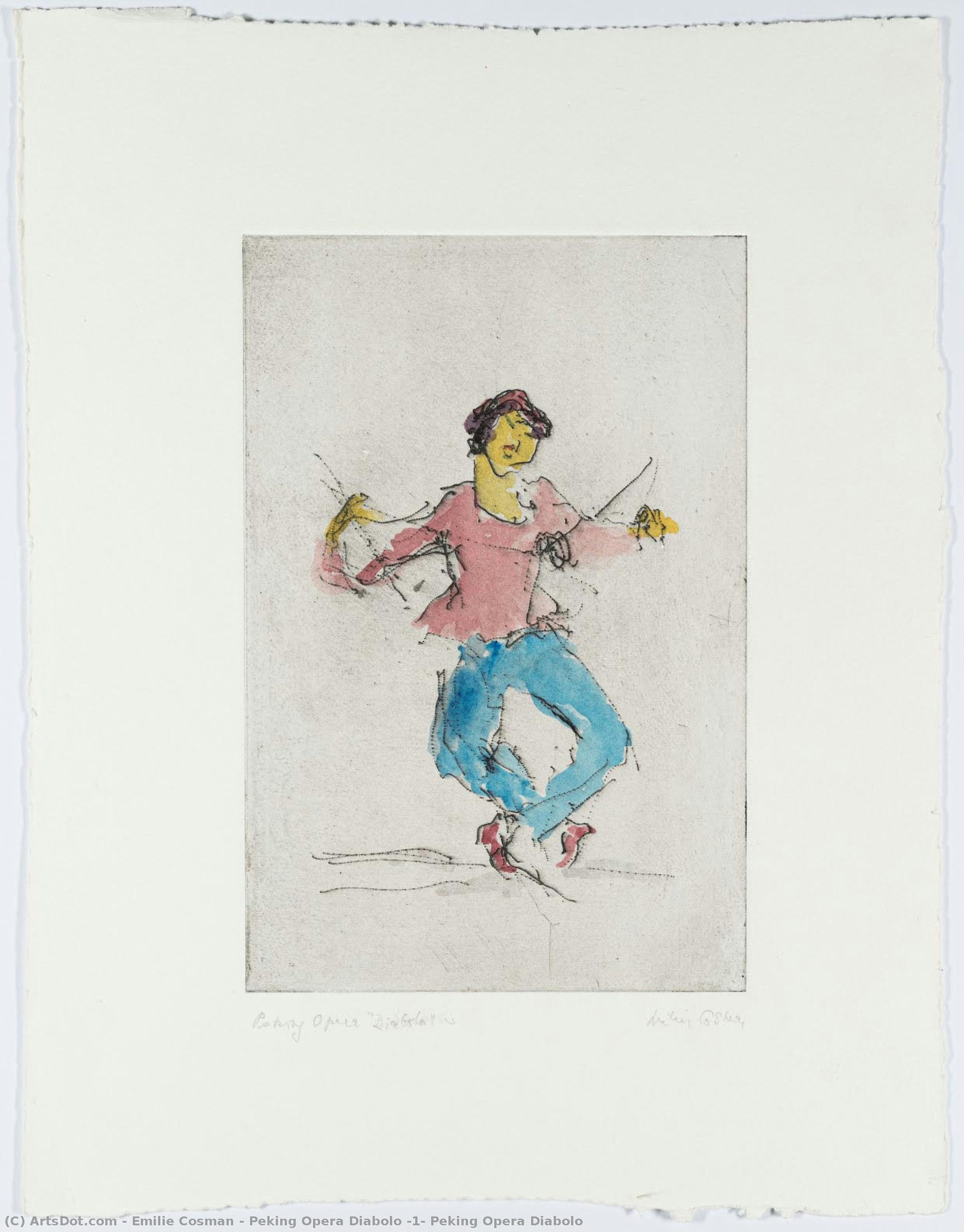
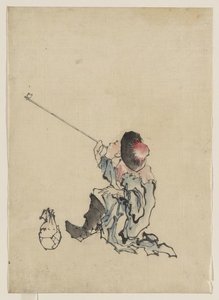
Peking Opera Diabolo (1) Peking Opera Diabolo
 7.0 x 27.0 cm
 Read More
Purchase a high-resolution, enhanced digital image, far superior to the online preview.
Each file is meticulously prepared by our in-house specialists using advanced tools and expert manual retouching. We ensure every image has exceptional clarity, precise color accuracy, and fine detail.
The final file is delivered via email within 72 hours, optimized for immediate use in professional, editorial, and print environments. This is the same quality trusted by top-tier design studios, publishers, and galleries.
Digital Image
Download a high-resolution file for personal display, printing, and creative projects. ( Buy Print Buy Hand Made Painting)
Included in Every Digital Image Order
Expert Digital Delivery, Guaranteed
When you choose ArtsDot.com, you're not just getting an image - you're receiving a professionally enhanced digital artwork, crafted with precision and backed by a satisfaction guarantee. Here's everything that comes with your order, automatically:

Fast Email Delivery
Your high-resolution digital image file will be emailed to you within 72 hours of ordering - ready for immediate use.

AI-Enhanced Digital File
Your artwork is professionally optimized using advanced AI tools and manual editing, ensuring maximum detail, clarity, and color accuracy.

Free Lifetime Re-Delivery
Accidentally deleted or lost your file? No worries - we'll resend it to you anytime, free of charge.

No Import Fees - Ever
Enjoy your artwork instantly with zero customs, duties, or delivery fees - digital downloads are always tax-free.

Color Accuracy Guarantee
We ensure your digital image reflects the original colors as closely as possible using professional tools and color management.

60-Day Satisfaction Guarantee
If you're not satisfied with your digital image, we'll revise it or refund 100% within 60 days - no questions asked.

100% Money-Back Guarantee
Not satisfied? Get a full refund within 60 days of receiving your digital file - no questions asked.

Bulk Order Discounts
Buy 3 images, save 10% - Buy 5, save 15% - Buy 10+, save 20%. Great for creative projects, galleries, and agencies.
Related Artworks

Artist Biography
Early Life and Artistic Foundations
Emilie Cosman, known professionally as Milein Cosman (Gotha, Germany, 1921 – London, 2017), was a remarkable artist whose life spanned a period of immense cultural upheaval. Born into a Jewish family, her early childhood in Düsseldorf was idyllic until the shadow of National Socialism began to fall across Europe. This formative experience profoundly shaped her trajectory, leading her family to seek refuge first in Holland and then, crucially, to England in 1939. The escape from persecution instilled within Cosman a deep appreciation for freedom—a theme that would subtly permeate her work throughout her career.
Her arrival at the Slade School of Art in Oxford (the school having relocated due to wartime conditions) proved pivotal. There, under the tutelage of Randolph Schwabe and Harold Jones, she honed her skills in drawing and lithography. The emphasis on draughtsmanship—on capturing essence through line—became a defining characteristic of her style. Cosman’s early studies weren't merely technical exercises; they were an exploration of form, movement, and the human condition, laying the groundwork for her later portraits of prominent cultural figures.
A Life Dedicated to Portraiture
Post-war London presented both challenges and opportunities. While the art market struggled, a demand remained for illustrated journalism. Cosman’s talent quickly found an outlet in magazines and newspapers, but it was her burgeoning fascination with music that truly set her artistic course. She began sketching musicians for the BBC's Radio Times, a commission that opened doors to a world of composers, conductors, and performers.
The most significant relationship in Cosman’s life—both personally and professionally—was her marriage to Hans Keller, the Austrian musicologist and broadcaster. Their collaboration was extraordinary: Keller possessed an unparalleled analytical understanding of music, while Cosman had the rare ability to visually capture its energy and emotional core. Their book, Stravinsky at Rehearsal (1962), stands as a testament to this synergy—Keller’s insightful commentary paired with Cosman’s dynamic sketches offered an intimate glimpse into the creative process.
Capturing Cultural Icons
Cosman's portraits weren't conventional likenesses; they were studies in character, capturing not just physical appearance but also the essence of her subjects. She drew Benjamin Britten deep in thought, Yehudi Menuhin lost in concentration, and Francis Bacon with a haunting intensity. Her ability to work swiftly—to distill a subject’s personality onto paper in a matter of minutes—was legendary. She famously said she could only draw fast, believing that slower attempts invariably lost their vitality.
She wasn't intimidated by fame; rather, she seemed to penetrate the public persona, revealing something more vulnerable and authentic. Her subjects included Sir Thomas Beecham, T.S. Eliot, Barbara Hepworth, Henry Moore, and Mstislav Rostropovich—a veritable who’s-who of 20th-century artistic luminaries. Cosman's work offered a unique record of these figures, not as icons but as individuals engaged in their craft.
Technique and Influences
Cosman primarily worked in ink, pencil, and conté crayon, favoring a direct, unpretentious style. Her drawings are characterized by bold lines, expressive shading, and a remarkable economy of means. While she admired the Old Masters—influenced by her studies at the Slade—her aesthetic was distinctly modern, reflecting the energy and dynamism of post-war Europe.
Her work wasn’t overtly symbolic or laden with hidden meanings; its power lay in its immediacy and honesty. She sought to capture “what people who work look like,” as she once stated, revealing a deep respect for dedication and creative endeavor. The influence of her émigré circle—including Fred Uhlman, John Heartfield, and Marie-Louise von Motesiczky—is also evident in her commitment to social commentary and artistic integrity.
Legacy and Historical Significance
Though Cosman’s work wasn't widely exhibited during her lifetime, it has gained increasing recognition in recent years. Her drawings are now held in numerous public collections, including the British Museum, the Royal College of Music Museum, and the National Portrait Gallery. She is remembered not only for her portraits of famous figures but also for her ability to capture the spirit of an era—a time of both profound loss and remarkable creativity.
- A Witness to History: Cosman’s life story, marked by displacement and resilience, adds a layer of depth to her artistic achievements. Her work serves as a visual record of a generation shaped by war and cultural transformation.
- The Power of Observation: Her drawings are a testament to the importance of direct observation—of capturing not just what things look like but how they feel.
- A Unique Collaboration: Her partnership with Hans Keller was exceptional, demonstrating the power of interdisciplinary collaboration and mutual inspiration.
Milein Cosman’s legacy lies in her ability to connect us—through her evocative drawings—to the artists who shaped our world. She wasn't merely a portraitist; she was a chronicler of culture, a witness to history, and a master of capturing the human spirit.
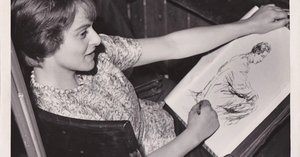
emilie cosman
1921 - 2017 , Germany
Quick Facts
- Artistic Movement Or Style: Graphic art
- Artists Who Influenced This Artist:
- Randolph Schwabe
- Harold Jones
- Date Of Birth: March 31, 1921
- Date Of Death: November 21, 2017
- Full Name: Emilie Cosman
- Nationality: German-British
- Notable Artworks:
- Peking Opera Diabolo
- Head of a Young Man
- Bugaku, Kabuki
- Place Of Birth: Gotha, Germany

