 Preview
 Send
Send Share
Share
 Details

 Download
 Similars
 X-Ray
X-Ray Diaporama
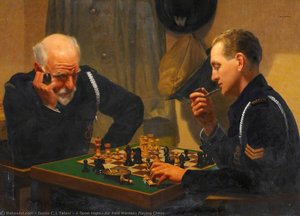
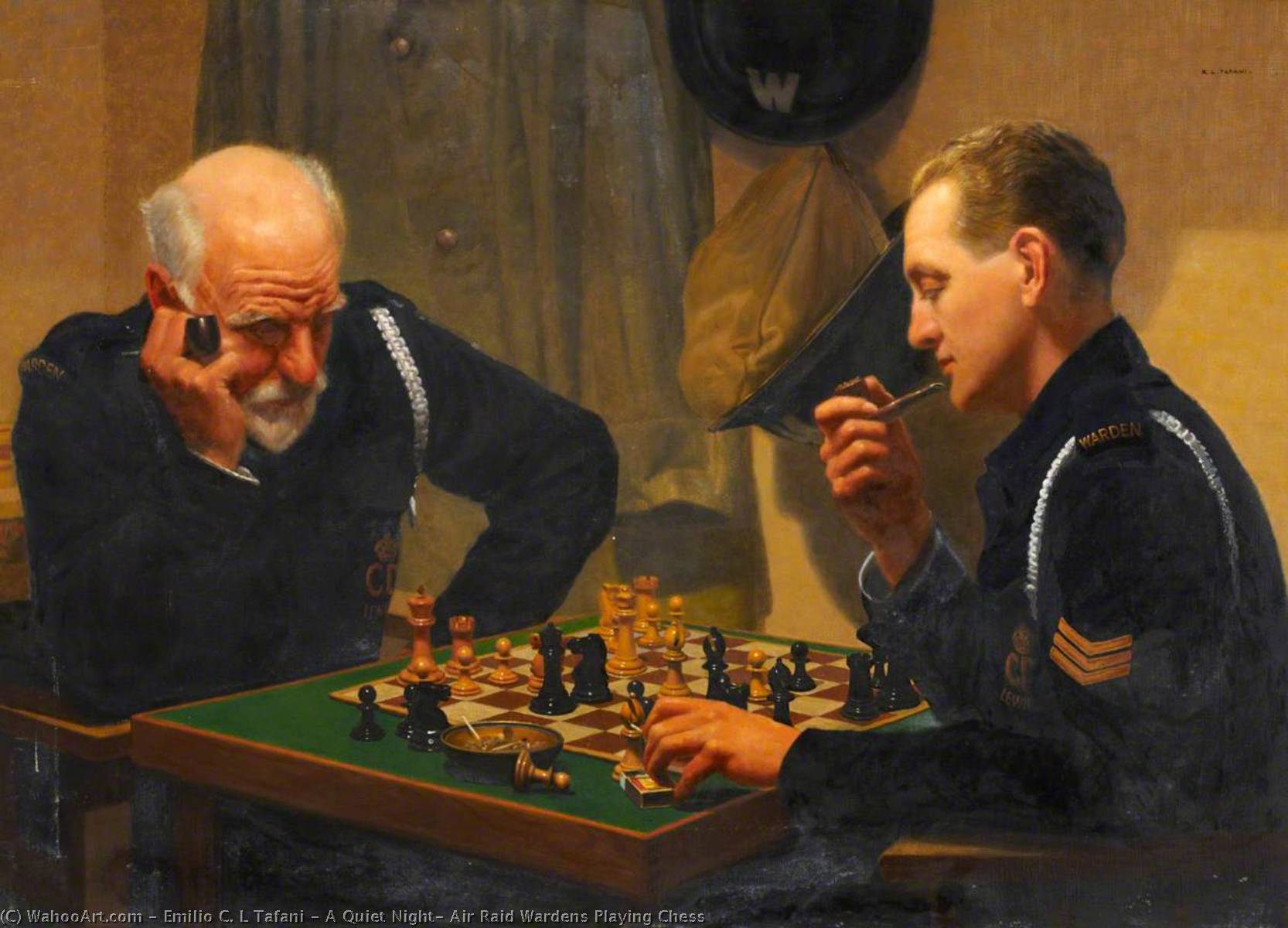
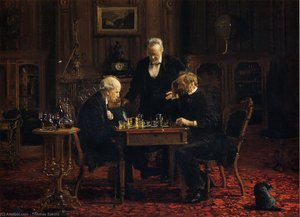
A Quiet Night, Air Raid Wardens Playing Chess
 70.0 x 100.0 cm
 Lewisham Local History And Archives Centre
 Read More
Giclée / Art Print
Museum-quality giclée or canvas print with fast production and flexible finish options. ( Buy Hand Made Painting Buy Image)




































Pick from our preset sizes that match the artwork's original proportions.

You may enter your own dimensions to fit a specific frame or space. If your selected size does not match the original image's proportions, we will either crop the artwork or extend the image with a mirrored or solid-fill edge. A digital mockup will be sent for your approval before production begins.
Please note that the on-screen preview does not reflect the actual cropping or extension. Only the mockup will accurately show the final composition.
While custom sizes are available, we recommend selecting a dimension from the predefined list to preserve the original proportions.
Worldwide Delivery () in 2 weeks instead of standard 4/5 weeks. (21 August)

Free Worldwide Express Shipping

High-Quality Linen Canvas

Full Shipping Insurance

Customs Tax Refund Guarantee

True Color Matching Guarantee

60-Day Return Policy (Defects Only)

100% Money-Back Guarantee

Bulk Discount Offer
 Glass option is only available in size under 110 CM

A Quiet Night, Air Raid Wardens Playing Chess
Giclée / Art Print
Reproduction Size
-


Total Price
$ 63
Related Artworks








Artist Biography
Emilio Grau Sala: A Catalan Colorist Between Modernisme & Symbolism
Emilio Grau Sala (1885–1963) stands as a pivotal figure in Catalan art history, bridging the gap between the stylistic fervor of Modernisme and the evocative mysticism of Symbolism. Born in Barcelona, Sala’s artistic journey unfolded against the backdrop of a transformative era—a period marked by fervent debates over artistic expression and fueled by an unwavering belief in its capacity to convey profound emotional truths. His formative years were steeped in the intellectual currents circulating within Catalonia's avant-garde circles, where discussions centered on reconciling tradition with innovation and embracing both beauty and psychological depth.- Early Influences: Sala’s artistic sensibilities were profoundly shaped by Impressionism and Neoimpressionism, particularly the pioneering efforts of Claude Monet and Georges Seurat. These movements instilled in him a meticulous attention to observation and a commitment to capturing fleeting moments of light—principles that would permeate his subsequent oeuvre.
- Modernisme Embrace: Recognizing the dynamism inherent in Modernisme’s rejection of academic conventions, Sala wholeheartedly adopted its aesthetic ideals. He collaborated closely with Antoni Gaudí on architectural projects—most notably Sagrada Familia—where he skillfully blended geometric precision with organic forms to create structures that resonated with spiritual grandeur.
The Anatomy of Emotion: Tafani’s Distinctive Style
Emilio C. L. Tafani distinguished himself from his contemporaries through a singular artistic approach characterized by visceral realism and an uncompromising exploration of human anatomy—a fascination that would propel him to create groundbreaking depictions of the human form. His canvases pulsated with palpable energy, conveying not merely visual representation but also profound psychological insight. Sala’s technique involved painstaking dissection studies combined with masterful brushwork—resulting in portraits imbued with both anatomical accuracy and expressive nuance.- Dissection Studies: Tafani's dedication to anatomical precision began with meticulous dissection exercises—a practice considered controversial at the time but viewed by him as essential for unlocking the secrets of human beauty and conveying its underlying structure.
- Brushwork Mastery: Sala’s brushstrokes were remarkably expressive, capturing subtle variations in tone and texture to imbue his subjects with a sense of movement and vitality. He skillfully employed layering techniques—creating depth and luminosity that captivated viewers and cemented his reputation as a visionary artist.
Demonstration in Dissection: A Revolutionary Vision
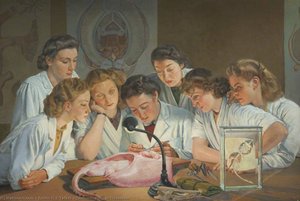
“Demonstration in Dissection” exemplifies Tafani’s artistic ambition—a bold undertaking that challenged conventional notions of portraiture and elevated anatomical study to the forefront of artistic endeavor. The painting depicts a human torso laid out on an operating table—a scene rendered with unflinching detail and imbued with palpable emotion. Sala's masterful execution captures not only the physical contours of the body but also its psychological essence—revealing the complexities of human vulnerability and resilience.- Symbolic Significance: The choice to portray a dissected torso was deliberate—serving as a metaphor for confronting mortality and embracing the transformative power of knowledge. Sala’s artistic vision transcended mere anatomical representation; it sought to communicate profound philosophical ideas about the relationship between science and art.
Legacy and Enduring Influence
Emilio Grau Sala's contribution to Catalan art remains undeniable—his pioneering explorations of color, form, and anatomy continuing to inspire artists today. Tafani’s unwavering commitment to artistic integrity—coupled with his profound understanding of human psychology—established him as a beacon of innovation and sensitivity within the Modernisme movement. His enduring legacy resides not only in his celebrated paintings but also in his courageous embrace of challenging artistic conventions—a stance that cemented his place among Catalonia's most influential artists.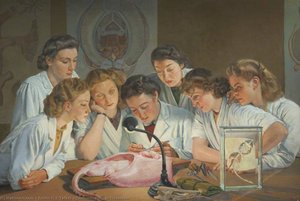
Quick Facts
- Artistic Movement Or Style: Modernisme & Symbolism
- Artists Or Movements Influenced By This Artist:
- Henri Matisse
- Pablo Picasso
- Artists Who Influenced This Artist:
- Georges Seurat
- Paul Cézanne
- Date Of Death: 1963
- Full Name: Emilio Grau Sala
- Nationality: Spanish
- Notable Artworks:
- Demonstration in Dissection
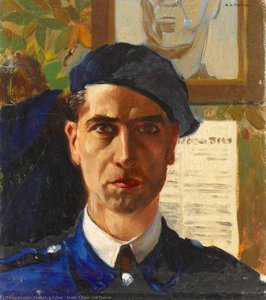
- Emilio Tafani, Self Portrait
- Place Of Birth: Barcelona, Spain