 Preview
 Send
Send Share
Share
 Details

 Download
 Similars
 X-Ray
X-Ray Diaporama
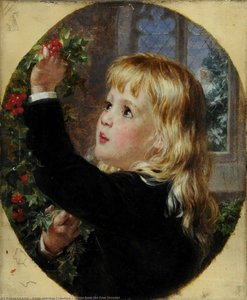
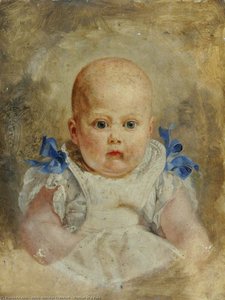
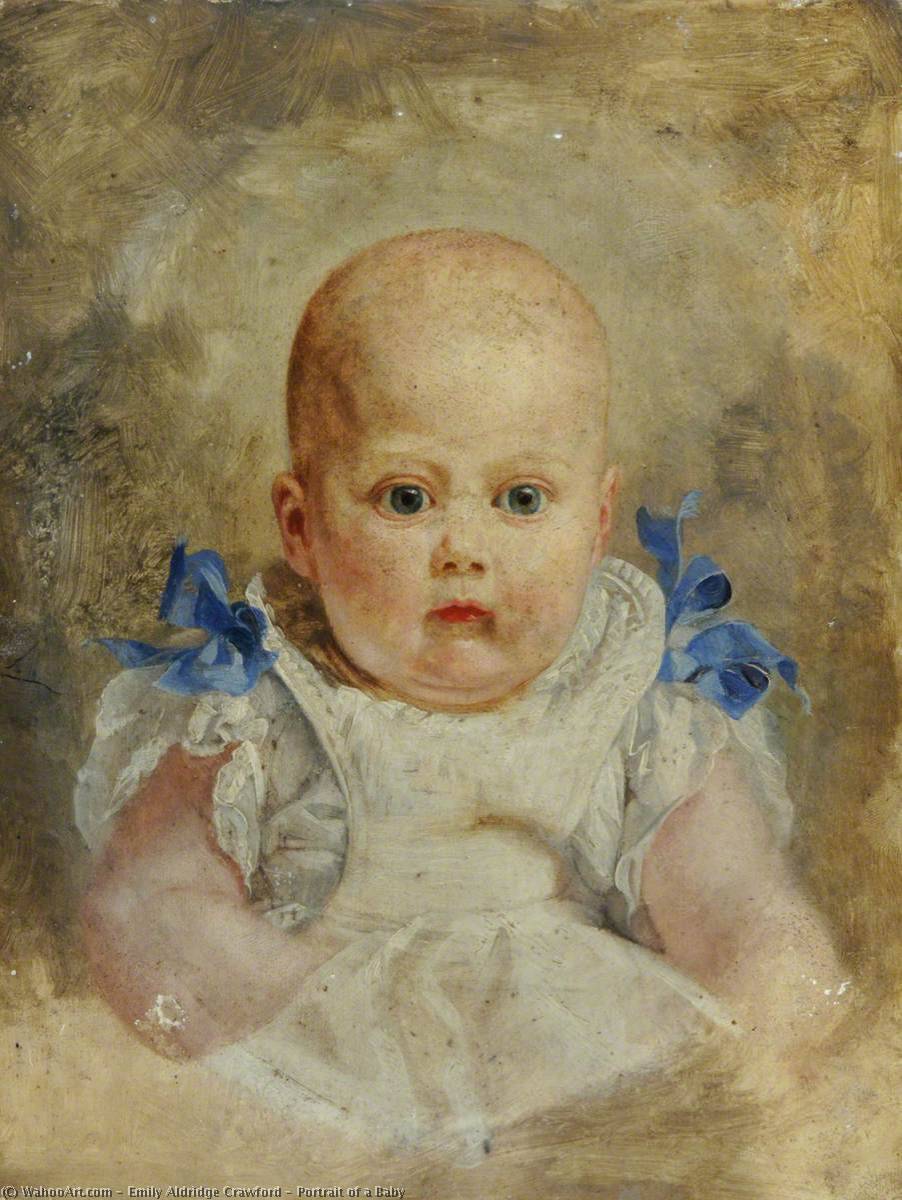
Portrait of a Baby
 23.0 x 18.0 cm
 Read More
Giclée / Art Print
Museum-quality giclée or canvas print with fast production and flexible finish options. ( Buy Hand Made Painting Buy Image)




































Pick from our preset sizes that match the artwork's original proportions.

You may enter your own dimensions to fit a specific frame or space. If your selected size does not match the original image's proportions, we will either crop the artwork or extend the image with a mirrored or solid-fill edge. A digital mockup will be sent for your approval before production begins.
Please note that the on-screen preview does not reflect the actual cropping or extension. Only the mockup will accurately show the final composition.
While custom sizes are available, we recommend selecting a dimension from the predefined list to preserve the original proportions.
Worldwide Delivery () in 2 weeks instead of standard 4/5 weeks. (27 August)

Free Worldwide Express Shipping

High-Quality Linen Canvas

Full Shipping Insurance

Customs Tax Refund Guarantee

True Color Matching Guarantee

60-Day Return Policy (Defects Only)

100% Money-Back Guarantee

Bulk Discount Offer
 Glass option is only available in size under 110 CM

Portrait of a Baby
Giclée / Art Print
Reproduction Size
-


Total Price
$ 63
Related Artworks








Artist Biography
A Vision of Victorian Grace: The Life and Art of Emily Aldridge Crawford
In the heart of the late nineteenth century, a period defined by both rigid social structures and a burgeoning fascination with the fleeting beauty of nature, Emily Aldridge Crawford emerged as a delicate yet powerful voice in British art. Born in London in 1869, Crawford possessed an innate ability to bridge the gap between the classical traditions of her era and the soft, emotive qualities of the Impressionist movement. While she maintained a respectful distance from the more radical, fragmented aesthetics of the avant-garde, her work breathed with a luminous vitality that captured the very essence of the Victorian soul. Her artistic journey was not merely one of technical mastery, but a profound exploration of the quiet, domestic moments that constitute the fabric of human existence.
The foundation of Crawford’s remarkable skill was laid under the watchful and prestigious eye of Frederic Leighton. As a celebrated sculptor and the president of the Royal Academy, Leighton provided Crawford with an education rooted in classical ideals and meticulous naturalism. From him, she inherited a profound respect for form and composition, learning to observe the world with a precision that allowed her to render textures—the softness of a child's skin, the weight of a heavy fabric, or the crispness of a winter morning—with breathtaking accuracy. This rigorous training ensured that even her most tender subjects were anchored by a structural integrity that commanded respect from her contemporaries.
The Poetry of the Seasons and the Domestic Sphere
Perhaps Crawford’s most enduring contribution to the art world is her ambitious “Four Seasons” series, a monumental achievement that serves as a testament to her mastery of light and atmosphere. In these works, she moved beyond simple landscape painting to create evocative seasonal narratives that mirrored the cyclical nature of life itself. Through her use of luminous hues and carefully balanced compositions, she captured the verdant promise of spring, the sweltaining warmth of summer, the golden decay of autumn, and the stark, quiet stillness of winter. These canvases do more than depict rural England; they embody the Romantic fascination with the idealized natural world, inviting the viewer into a space of nostalgic reflection.
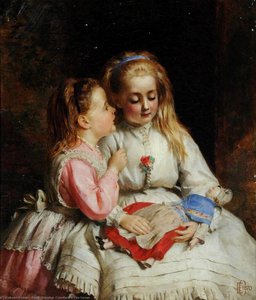
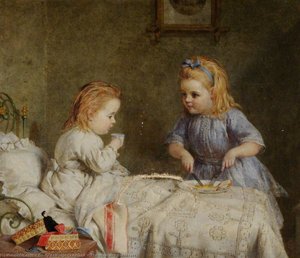
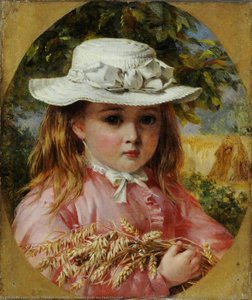
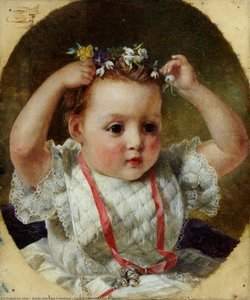
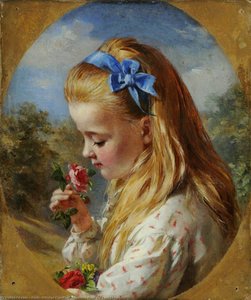
Beyond the sweeping vistas of her seasonal landscapes, Crawford found deep inspiration in the intimate realms of genre painting and portraiture. She possessed a rare gift for capturing the innocence of childhood, creating portraits of infants and young girls that are imbued with a profound sense of tenderness and emotional resonance. Her ability to find the extraordinary within the ordinary is evident in works such as “The Invalid’s Breakfast,” where a simple domestic scene is elevated to a moment of serene, familial tranquility. In these smaller, more intimate compositions, Crawford utilized warm tones and soft lighting to evoke a sense of safety and nostalgia, making her work deeply relatable to the Victorian sensibility.
Legacy and Artistic Significance
Though her life was tragically short, ending in 1906, the impact of Emily Aldridge Crawford’s artistry remains palpable. She occupied a unique position in the art history of her time, acting as a bridge between the disciplined traditions of the Royal Academy and the emotive, light-driven explorations of the modern era. Her work stands as a significant pillar of Victorian genre painting, offering a window into a world that valued both the dignity of classical form and the sentimental beauty of everyday life.
The enduring fascination with her oeuvre can be seen in the themes that continue to resonate with collectors and historians alike:
- Mastery of Light: Her ability to manipulate color and luminosity to define atmosphere.
- Emotional Naturalism: The seamless blend of realistic detail with deep, empathetic subject matter.
- Narrative Depth: The capacity to transform domestic scenes into universal stories of human connection.
- Classical Foundation: A technical precision inherited from the great masters of the nineteenth century.
emily aldridge crawford
1869 - 1906
Quick Facts
- Artistic Movement Or Style: Genre Painting
- Date Of Death: 1906
- Full Name: Emily Aldridge Crawford
- Nationality: British
- Notable Artworks:
- Autumn from the Four Seasons
- The Invalid’s Breakfast
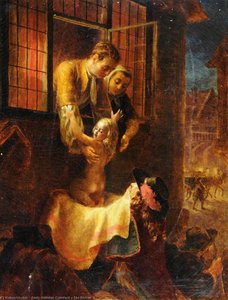
- The Rescue
- Place Of Birth: London, England