 Preview
 Send
Send Share
Share
 Details

 Download
 Similars
 X-Ray
X-Ray Diaporama
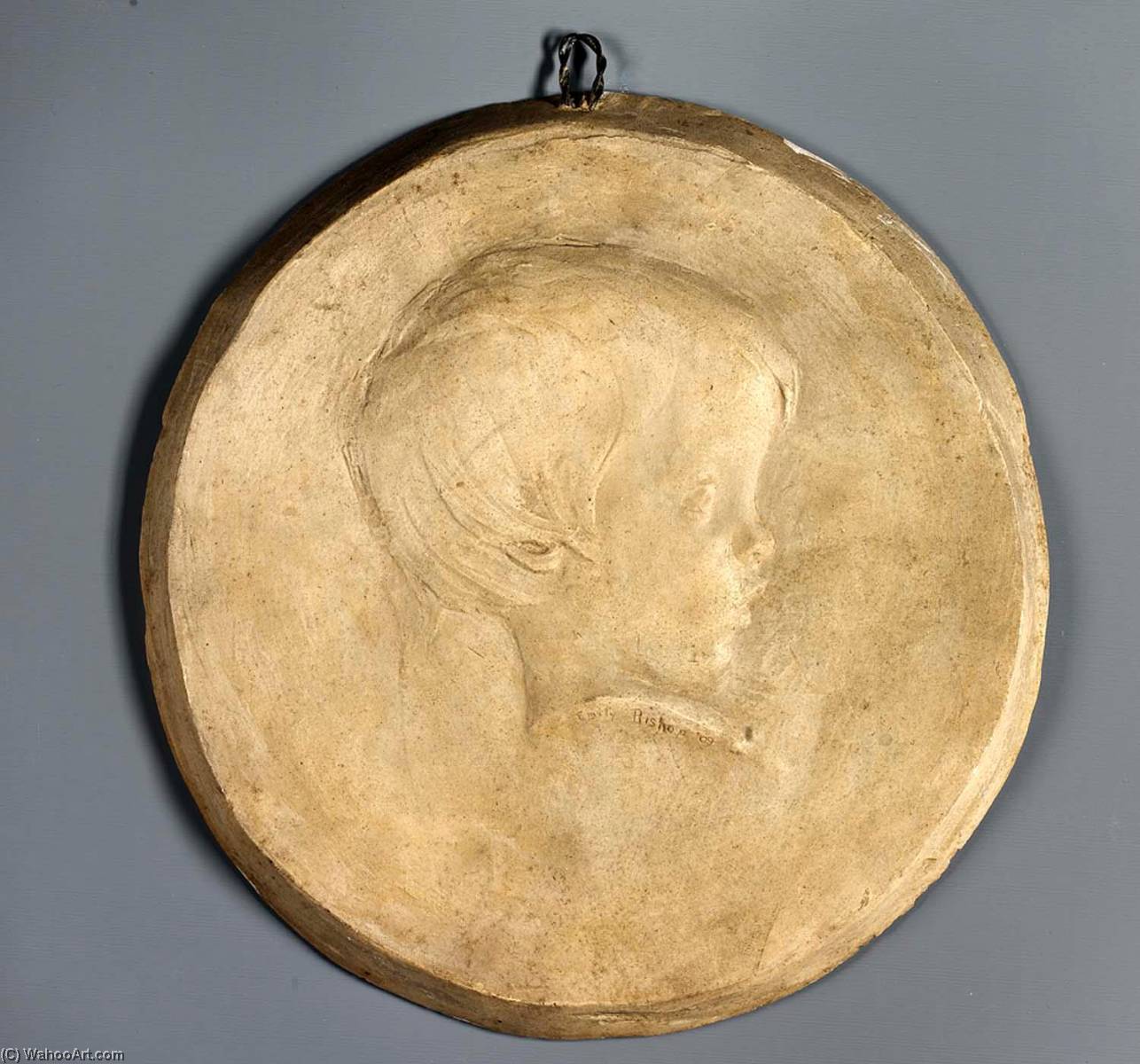
Baby Joe


 Read More
Hand Made Oil Reproduction
Hand-painted oil on canvas in your size and frame, made to order by our artists. ( Buy Print Buy Image)




P118B $10

P118H $10

P118W $10

P438Z $10

P508JH $12

P508YH $12

P805H $10

P805Z $10

P919BZ $10

P919G $10

P919XJ $10

P959ZH $10

P968JZ $12

W106C $8

W218G $10

W218JH $8

W218Y $10

W307PJ $10

W316G $10

W316PJ $8

W316Y $10

W398PJ $8

W4111J $10

W500HY $15

W500JH $15

W692G $12

W849H $8

W940BG $15

W953PJ $8




Pick from our preset sizes that match the artwork's original proportions.

You may enter your own dimensions to fit a specific frame or space. If your selected size does not match the original image's proportions, we will either crop the artwork or extend the painting with additional hand-painted elements. A digital mockup will be sent for your approval before production begins.
Please note that the on-screen preview does not reflect the actual cropping or extension. Only the mockup will accurately show the final composition.
While custom sizes are available, we recommend selecting a dimension from the predefined list to preserve the original proportions.
After order, ArtsDot.com team will email client for instructions and provide a mockup preview
Worldwide Delivery () in 3/4 weeks instead of standard 5 weeks. (20 August). No compromise on quality.

Free Worldwide Express Shipping

High-Quality Linen Canvas

Full Shipping Insurance

Customs Tax Refund Guarantee

True Color Matching Guarantee

60-Day Return Policy (Defects Only)

100% Money-Back Guarantee

Bulk Discount Offer
 Glass option is only available in size under 110 CM

Baby Joe
Reproduction Medium
Reproduction Size
-


Total Price
$ 263
Artwork Description
About the Artist
Emily Clayton Bishop was a talented American sculptor, born on April 23, 1883, in Cavetown, Maryland. She studied at the Pennsylvania Academy of the Fine Arts (PAFA) in Philadelphia, where she honed her craft under the guidance of renowned artist William Merritt Chase. Bishop's work is characterized by its exceptional quality and emotional depth, making her one of the most promising students of her time.The 'Baby Joe' Sculpture
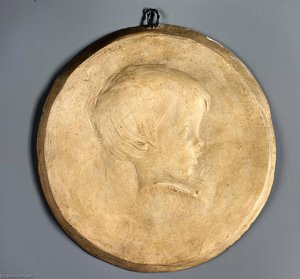
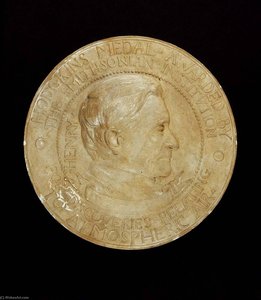
The Baby Joe relief sculpture is a masterpiece that exemplifies Emily Clayton Bishop's skill in capturing the subtleties of human emotion. The sculpture features a baby's face, exuding a sense of curiosity and innocence. The level of detail and texture achieved by Bishop is truly remarkable, making the piece feel incredibly lifelike. Key Features:- Created in 1909 using relief/plaster/cast and varnished techniques
- Measures 22.8 cm in diameter
- Currently housed at the Smithsonian American Art Museum
Explore More Artworks
To discover more about Emily Clayton Bishop and her artworks, visit /art/list/?Filter=AQTVFZ-Emily-Clayton-Bishop-Baby-Joe or learn more about the artist on Wikipedia. For a wide range of handmade oil painting reproductions, including works by Emily Clayton Bishop, browse the extensive collection at https://ArtsDot.com.The Baby Joe sculpture is a testament to Emily Clayton Bishop's exceptional talent and dedication to her craft. This captivating piece of art continues to inspire and delight audiences, solidifying its place as a treasured work in the world of art.
Related Artworks

Artist Biography
The Ethereal Legacy of Emily Clayton Bishop
In the vibrant, transformative landscape of early twentieth-century American art, few figures possess a story as poignant and bittersweet as Emily Clayton Bishop. Born on April 23, 1883, in the quiet enclave of Cavetown, Maryland, Bishop emerged as a prodigious talent whose life was tragically cut short before she could reach her full artistic maturity. Despite a career that spanned only a few decades, she carved out a space for herself within the prestigious circles of American sculpture, leaving behind a body of work that breathes with an enduring, quiet vitality. Her journey began with an early spark of ambition; by the age of sixteen, she had already entered the Maryland Institute of Art, signaling the arrival of a sculptor who would eventually master the delicate balance between classical form and modern emotional depth.
The trajectory of Bishop’s development was profoundly shaped by her time at the Pennsylvania Academy of Fine Arts (PAFA). It was here, amidst the rigorous academic atmosphere of Philadelphia, that she came under the mentorship of the legendary William Merritt Chase. While Chase is often celebrated for his Impressionistic paintings, his influence on Bishop’s sculptural approach was transformative. He instilled in her a reverence for capturing the fleeting essence of life—the subtle shift of a muscle, the soft curve of a cheek, or the momentary stillness of a gesture. Under his guidance, Bishop learned to synthesize the structural discipline of traditional sculpture with an Impressionistic sensitivity to light and texture, allowing her bronze and plaster works to transcend mere representation and achieve a sense of living breath.
Mastery of Form and the Human Experience
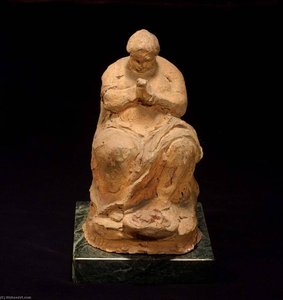
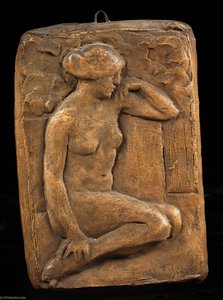
Bishop’s artistic repertoire was characterized by a profound dedication to realism, particularly through her exploration of the human figure. Her subjects often centered on women, rendered with a meticulous attention to detail that highlighted both their physical grace and their internal emotional landscapes. She possessed a rare ability to imbelle her sculptures with an understated elegance, making even the most mundane scenes feel monumental. This is perhaps most beautifully realized in works such as “Woman Shelling Peas,” where the repetitive, rhythmic labor of domestic life is elevated to a moment of quiet dignity. Through such pieces, Bishop acted as a chronicler of the female experience, finding profound beauty in the textures of everyday existence and the subtle nuances of motherhood and domesticity.
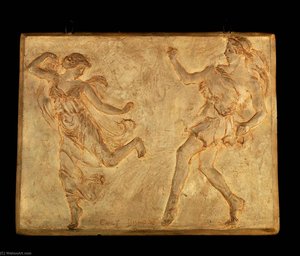
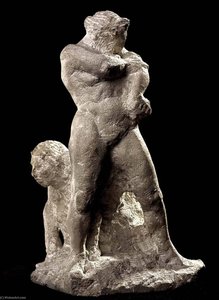
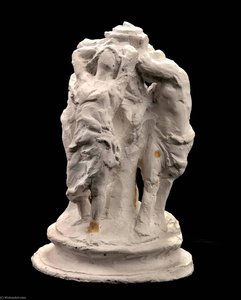
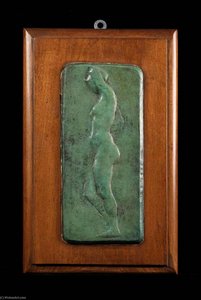
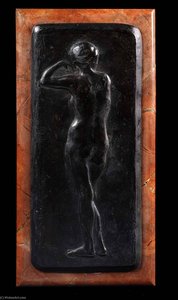
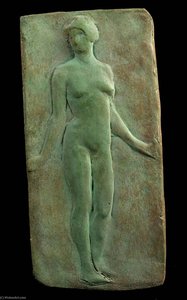
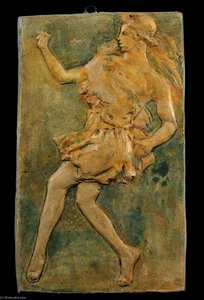
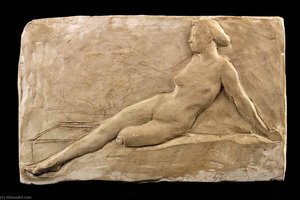
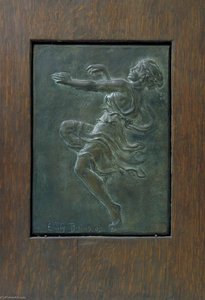
Beyond the domestic sphere, her work often reached toward more classical and mythological inspirations. In sculptures like “Bacchic Dancer,” one can witness her command over movement and energy; the bronze relief captures an ecstatic, swirling vitality that speaks to the joy of freedom and the primal rhythms of life. Conversely, her more serene compositions, such as “Standing Female Nude,” demonstrate a mastery of repose and anatomical precision. Whether working in the permanence of bronze or the delicate malleability of plaster, Bishop’s technical skill allowed her to manipulate medium and light to evoke a wide spectrum of human feeling, from the innocent curiosity found in the relief of “Baby Joe” to the more complex, mythic narratives of nymphs and fauns.
A Place in the American Canon
Though her life ended prematurely in 1912 at the age of twenty-eight, Emily Clayton Bishop’s impact on the American sculptural tradition remains undeniable. Her achievements were recognized during her lifetime through participation in major exhibitions at PAFA and the inclusion of her works in esteemed collections. Today, her legacy is preserved within the halls of the Smithsonian American Art Museum, where her sculptures continue to serve as vital touchstones for understanding the evolution of American realism and the burgeoning role of female artists in the early twentieth century.
The historical significance of Bishop lies not only in her technical prowess but in her ability to bridge the gap between the classical past and a modern, more empathetic way of seeing. Her work stands as a testament to a period of intense artistic experimentation, where the boundaries of subject matter were expanding to include the intimate, the domestic, and the deeply human. While she may have been a "forgotten pioneer" for a time, the enduring strength of her bronze and plaster figures ensures that her voice—one of grace, resilience, and profound observation—continues to resonate within the grand narrative of American art history.
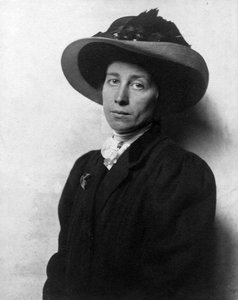
emily clayton bishop
1883 - 1912
Quick Facts
- Artistic Movement Or Style: Early 20th century art
- Artists Who Influenced This Artist: ['William Merritt Chase']
- Date Of Birth: 1883
- Full Name: Emily Clayton Bishop
- Nationality: American
- Notable Artworks:
- Nymph and Faun
- Woman Shelling Peas
- Baby Joe
- Place Of Birth: Maryland
Related Articles

Bronze Sculptures That Defined Art History | ArtsDot
Journey through art history with our Top 10 bronze sculptures! Explore masterpieces by Rodin, Michelangelo & more. Discover stories behind iconic statues and find museum-quality reproductions for your home decor at ArtsDot.com.

The Enduring Form: Exploring Themes & Techniques in Sculpture Across Historical Periods
Explore the rich history of sculpture from ancient masterpieces to contemporary innovations. Discover key techniques, influential artists & investment potential for discerning art collectors.

Bronze Age to Modern Masters: 10 Sculptures That Redefined Art | ArtsDot
Journey through art history with 10 legendary bronze sculptures – from Michelangelo's David to Rodin’s Thinker. Explore the stories, techniques & timeless beauty of these masterpieces. Find museum-quality reproductions & elevate your home decor on ArtsDot.com.
The Enduring Form: Sculpture Across History, Technique & Emotional Resonance
Explore the rich history of sculpture with ArtsDot. Discover key techniques, influential artists & investment potential for discerning collectors. Expert insights into valuing and collecting timeless masterpieces.
The Enduring Legacy of Bronze Sculpture: History, Techniques & Contemporary Interpretations
Explore the rich history & enduring appeal of bronze sculpture. Learn about casting techniques, iconic artists, collecting tips, & contemporary interpretations. Expert insights for discerning art collectors.