 Preview
 Send
Send Share
Share
 Details

 Download
 Similars
 X-Ray
X-Ray Diaporama
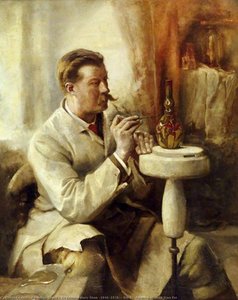
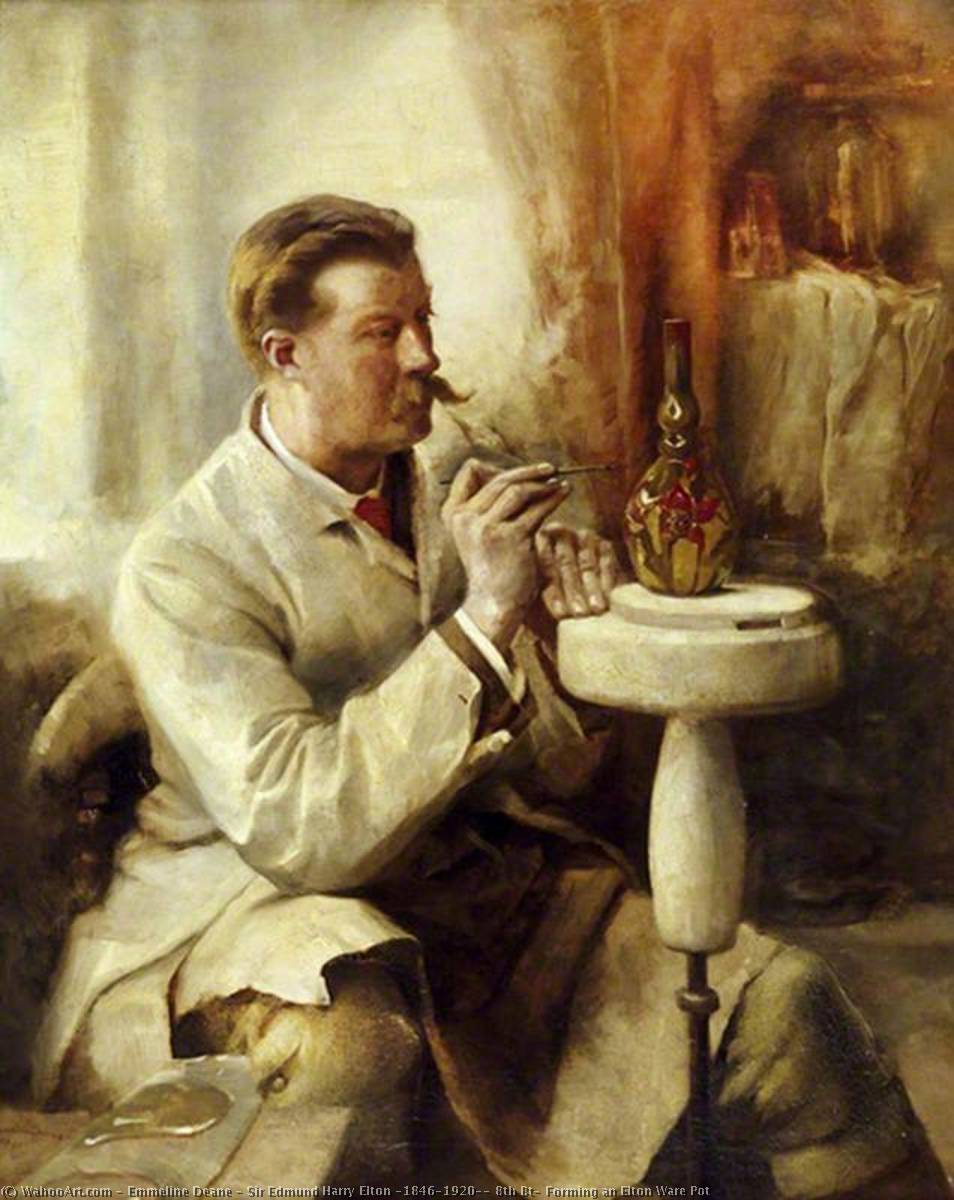
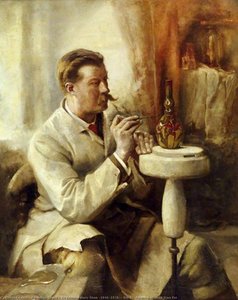
Sir Edmund Harry Elton (1846–1920), 8th Bt, Forming an Elton Ware Pot
 1891
1891 112.0 x 89.0 cm
 National Trust
 Read More
Giclée / Art Print
Museum-quality giclée or canvas print with fast production and flexible finish options. ( Buy Hand Made Painting Buy Image)




































Pick from our preset sizes that match the artwork's original proportions.

You may enter your own dimensions to fit a specific frame or space. If your selected size does not match the original image's proportions, we will either crop the artwork or extend the image with a mirrored or solid-fill edge. A digital mockup will be sent for your approval before production begins.
Please note that the on-screen preview does not reflect the actual cropping or extension. Only the mockup will accurately show the final composition.
While custom sizes are available, we recommend selecting a dimension from the predefined list to preserve the original proportions.
Worldwide Delivery () in 2 weeks instead of standard 4/5 weeks. (24 August)

Free Worldwide Express Shipping

High-Quality Linen Canvas

Full Shipping Insurance

Customs Tax Refund Guarantee

True Color Matching Guarantee

60-Day Return Policy (Defects Only)

100% Money-Back Guarantee

Bulk Discount Offer
 Glass option is only available in size under 110 CM

Sir Edmund Harry Elton (1846–1920), 8th Bt, Forming an Elton Ware Pot
Giclée / Art Print
Reproduction Size
-


Total Price
$ 63
Related Artworks




Artist Biography
The Visionary Brush of Emmeline Deane
Emmeline Deane, born Mary Bathurst Deane in 1858, remains a captivating and singular figure within the tapestry of British art history. Her life was a journey of profound transitions, moving from her early years in Melbourne, Australia, to the vibrant, intellectually charged atmosphere of London and Paris. As a painter, she did not merely observe the world; she sought to interpret the very essence of human perception. While many of her contemporaries remained tethered to traditional realism, Deane ventured into a realm where landscape and psychology converged, creating works that whispered of the surreal long before the movement gained its formal footing in the twentieth century. Her artistic identity was deeply intertwined with her scholarly pursuits, particularly her fascination with the burgeoning field of psychoanalysis, which allowed her to infuse her canvases with a subtle, dreamlike quality that speaks to the complexities of the subconscious mind.
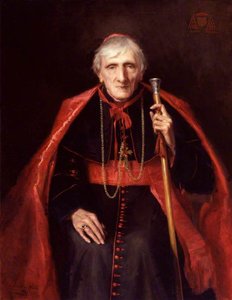
Her formal training provided the technical foundation upon which her more experimental visions were built. Studying at the prestigious Académie Julian in Paris, Deane mastered the rigorous techniques of classical portraiture and landscape, a skill set evident in her meticulous attention to detail and light. This period of her life was marked by an increasing command over oil on canvas, enabling her to capture both the physical majesty of nature and the delicate nuances of human expression. Her early exhibitions at the Royal Academy between 1879 and 1892 established her reputation as a formidable talent in the British art scene, particularly through her striking portraits, such as her notable depiction of Cardinal John Henry Newman. These works demonstrated an ability to render the subject with a dignity and psychological depth that hinted at the deeper explorations to come.
A Convergence of Art and Psychology
The true evolution of Deane’s style emerged through her profound engagement with the intersection of visual stimuli and human emotion. Her most significant contribution to the art world arrived through her collaboration on the Penrose Collection, a groundbreaking initiative led by the mathematician and collector Sir Roland Penrose. This project was not merely an exercise in documentation but a deep dive into how visual elements impact the human psyche. For Deane, this necessitated a departure from purely representational painting toward a method of capturing subjective experience. Her landscapes began to transform; they were no longer just topographical records but became vehicles for conveying how a scene feels rather than just how it appears. This approach imbued her work with an evocative, almost haunting atmosphere, where the natural world serves as a mirror for internal emotional states.
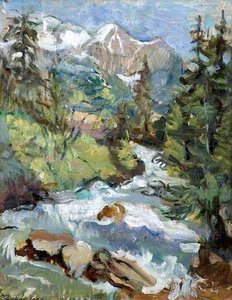
This period of development saw her absorbing the influences of mentors and the broader cultural shifts of her time, including the works of figures like Frank Auerbach and Cecil Pigott. Her canvases became layered with meaning, utilizing light and texture to evoke the tension between tranquility and power. In pieces such as Mountain Torrent, Haute Savoie, one can witness this mastery of the Impressionistic spirit blended with a deeper, more introspective intent. The movement of water and the ruggedness of the terrain are rendered with an intensity that suggests the turbulent nature of thought itself. Through her work, Deane bridged the gap between the tangible landscape and the intangible realm of the mind, securing her legacy as a pioneer who dared to paint the unseen dimensions of reality.
Legacy and Historical Significance
The historical significance of Emmeline Deane lies in her ability to anticipate the psychological shifts of the modern era through her brushstrokes. She stands as a bridge between the Victorian tradition of portraiture and the more experimental, symbolic approaches of the early twentieth century. Her life, marked by a dedication to exploring the complexities of consciousness, left behind a body of work that continues to resonate with those drawn to the mysteries of the human spirit. Her connection to notable figures—from her familial links to the author P. G. Wodehouse to her professional ties to the Penrose circle—places her at the heart of a significant cultural epoch.
Today, Deane’s work is celebrated not just for its technical brilliance but for its intellectual bravery. She remains an artist whose vision was never confined by the boundaries of a single movement, instead choosing to navigate the fluid space between reality and dream. Her contribution to the study of visual perception through art ensures that her name remains etched in the annals of British art as a pioneer of a deeply personal and psychologically resonant style.
emmeline deane
1858 - 1944
Quick Facts
- Artistic Movement Or Style: Surrealist Painting
- Artists Or Movements Influenced By This Artist: ['Mary Bathurst Deane']
- Artists Who Influenced This Artist: ['John Newman']
- Date Of Birth: 1858
- Date Of Death: 1944
- Full Name: Emmeline Deane
- Nationality: British
- Notable Artworks: ['Mountain Torrent, Haute Savoie']
- Place Of Birth: England